Christian Albrecht Jensen
1792 – 1870
In short
Christian Albrecht Jensen (1792–1870) was a Danish portrait painter of the Golden Age who produced more than 400 portraits of the era's leading cultural figures. Though commercially successful, his work was criticised by contemporary art officials for an unfinished style.
Notable works

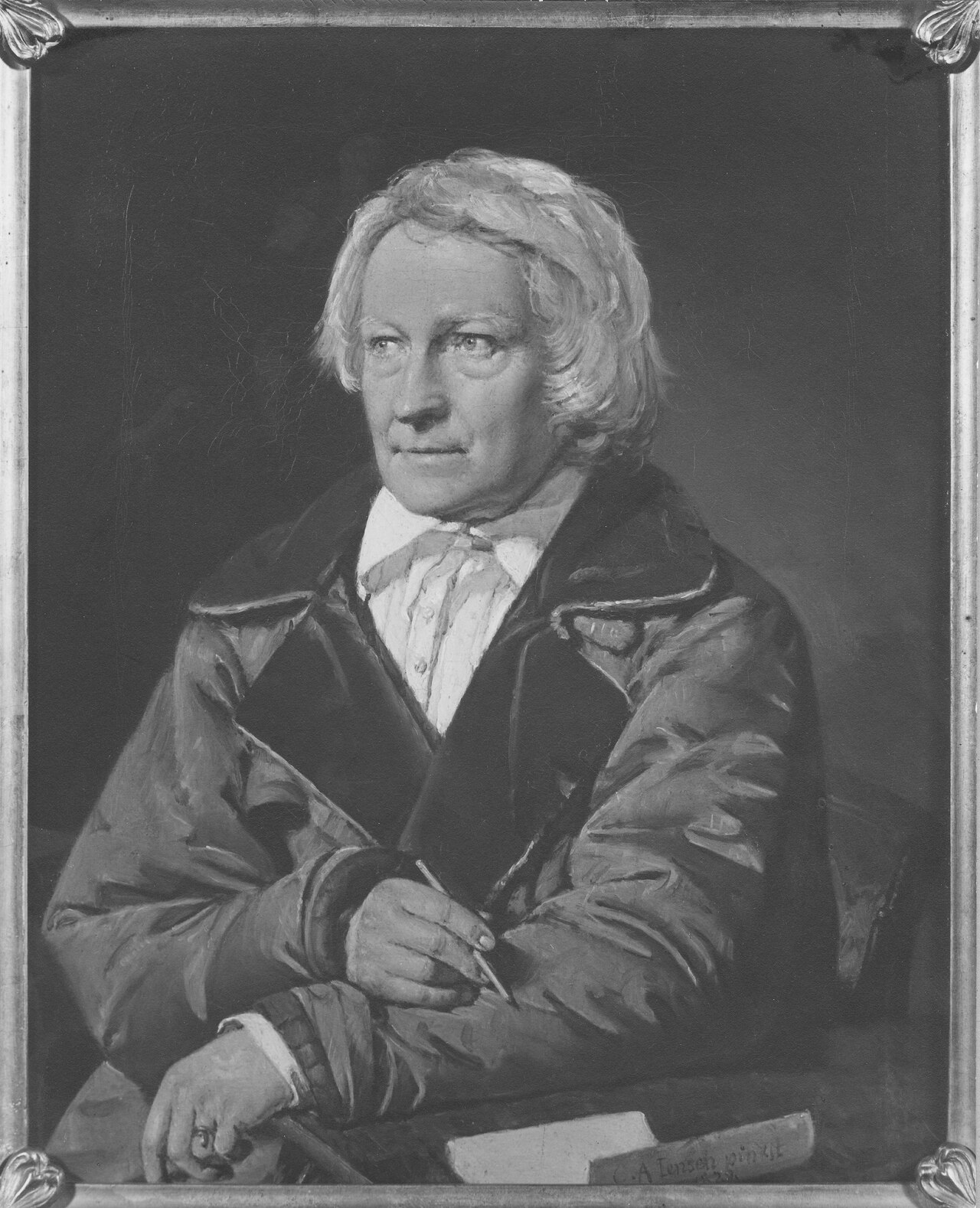
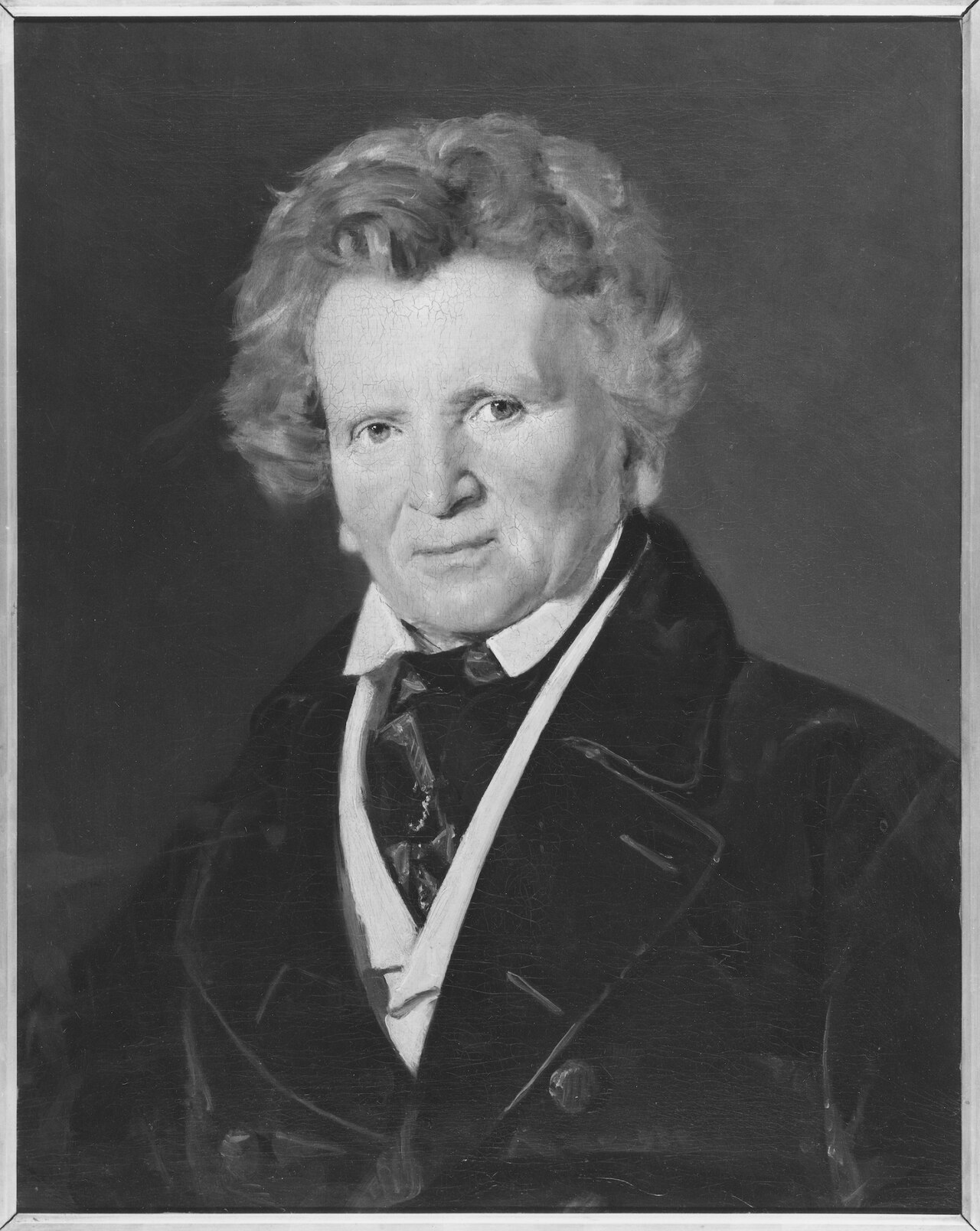


Early life Christian Albrecht Jensen was born in 1792 in the North Frisian town of Bredstedt, then part of the Kingdom of Denmark. His family moved to Copenhagen when he was a child, where he was exposed to the city's burgeoning artistic community. Jensen entered the Royal Danish Academy of Fine Arts in his teens, receiving formal training in drawing and painting. The Academy's curriculum emphasized classical drawing, anatomy, and the study of Old Masters, laying a solid technical foundation that would later underpin his prolific portrait practice. Jensen's early years were marked by a modest upbringing, but his talent earned him scholarships and the patronage of local merchants who commissioned his first small-scale studies.
Career and style After completing his studies, Jensen established himself as a portraitist in Copenhagen's competitive art market. The Danish Golden Age—a period of cultural flourishing from the early 19th century to the 1850s—provided a steady stream of intellectuals, artists, and public figures eager to commemorate their achievements. Jensen responded with a steady output, ultimately painting more than four hundred portraits. His clientele included writers such as Hans Christian Andersen, painters like Christoffer Wilhelm Eckersberg, sculptors including Bertel Thorvaldsen, scientists such as Hans Christian Ørsted, and theologians exemplified by N. F. S. Grundtvig.
Jensen's style blended the Academy's emphasis on accurate likeness with a softer, more atmospheric handling of light and colour. While his contemporaries often pursued idealised classical poses, Jensen preferred a naturalistic approach, capturing subtle facial expressions and the texture of fabrics. Critics of the day, most notably the influential art historian Niels Lauritz Høyen, accused him of leaving his canvases 'unfinished', a comment that reflected a tension between academic expectations and Jensen's more immediate, observational technique. Despite such criticism, his portraits were in high demand, and he enjoyed considerable commercial success throughout his career.
Signature techniques Jensen's portraiture is distinguished by several recurring technical choices. First, he employed a restrained palette dominated by earth tones, allowing the subject's skin tones and the sheen of clothing to become the focal points. Second, his handling of brushwork often shifted from tight, controlled strokes in the facial features to looser, more fluid applications in the background and drapery, creating a sense of depth without over‑detailing the surroundings. Third, Jensen favoured a shallow, three‑dimensional modelling of the head, achieved through delicate chiaroscuro that suggested volume while preserving a sense of immediacy. Finally, he frequently positioned his sitters against muted, neutral backdrops, a compositional decision that emphasised the individual's presence and reduced visual competition from decorative elements.
Major works Among Jensen's most celebrated pieces are a series of portraits that illustrate both his technical skill and his connection to the cultural elite of his time. *Violinspilleren* (1821) portrays a young musician with a contemplative gaze, the soft lighting highlighting the curve of the violin and the subtle tension in the player's hands. *Maria Magdalena Jensen, née Jessen, the Artist's Mother* (1823) offers a tender, intimate view of his mother, rendered with gentle brushwork that captures the texture of her clothing and the warmth of her expression.
His 1839 portrait of *Bertel Thorvaldsen, the Danish Sculptor* stands as a testament to his ability to convey artistic gravitas; Thorvaldsen is depicted in a dignified pose, his sculptor's tools subtly hinted at, while the background remains understated. The following year, Jensen painted *Konstantin Andreevitch Thon, the Russian Architect* (1840), a work that reflects his capacity to render foreign dignitaries with the same respect afforded to Danish luminaries. In 1842, he completed a portrait of *Christian A. Bang*, a prominent physician, whose composed demeanor and crisp attire demonstrate Jensen's skill in portraying professional authority.
These works, alongside numerous lesser‑known commissions, collectively map the intellectual and artistic landscape of 19th‑century Denmark. They also reveal Jensen's consistent focus on the psychological presence of his subjects, rather than mere decorative representation.
Influence and legacy Christian Albrecht Jensen's legacy rests on his extensive documentary record of the Danish Golden Age. By painting over four hundred portraits, he created a visual archive that continues to inform historians, curators, and the public about the personalities who shaped Denmark's cultural identity. Though he never attained the institutional accolades granted to some of his peers, his work has been reassessed in recent decades, with scholars recognising the value of his naturalistic approach and his contribution to the development of portraiture in Scandinavia.
Modern exhibitions of Danish Golden Age art frequently include Jensen's portraits, acknowledging his role in preserving the likenesses of key figures. His technique—particularly the balance between detailed facial rendering and atmospheric background treatment—has influenced subsequent generations of Danish portrait painters who seek to combine fidelity with expressive nuance. Moreover, the critical debate sparked by Høyen's dismissive remarks has become a case study in art historical curricula, illustrating how artistic standards evolve over time.
In sum, Jensen occupies a distinctive niche: a commercially successful portraitist whose prolific output offers an unparalleled glimpse into a formative period of Danish cultural history. His works remain valuable not only for their aesthetic qualities but also for their documentary significance, ensuring his continued relevance in both scholarly research and public appreciation.
Frequently asked questions
Who was Christian Albrecht Jensen?
Christian Albrecht Jensen (1792–1870) was a Danish portrait painter of the Golden Age, known for creating over 400 portraits of the era's leading cultural figures.
What artistic movement did he belong to?
He worked within the Danish Golden Age, a period characterised by a flourishing of national art, literature and science in the early‑to‑mid‑19th century.
What are his most famous works?
Key works include *Violinspilleren* (1821), *Maria Magdalena Jensen, née Jessen, the Artist's Mother* (1823), the portrait of *Bertel Thorvaldsen* (1839), *Konstantin Andreevitch Thon, the Russian Architect* (1840) and *Christian A. Bang* (1842).
Why does he matter in art history?
Jensen provides a visual record of Denmark's intellectual elite, and his prolific portraiture offers insight into the social and cultural networks of the Golden Age despite contemporary criticism of his style.
How can I recognise a Christian Albrecht Jensen portrait?
Look for a naturalistic likeness, a restrained colour palette, finely rendered facial features combined with looser brushwork in the background, and a neutral backdrop that keeps the sitter’s presence central.