Chen Shu
1660 – 1736
In short
Chen Shu (1660–1736) was a pioneering Qing‑dynasty Chinese painter, recognised as the first notable female artist of her era and the founder of the Xiushui School. She gained imperial patronage through her son Qian Chenqun and is celebrated for her refined flower‑and‑bird, figure, and landscape paintings.
Notable works


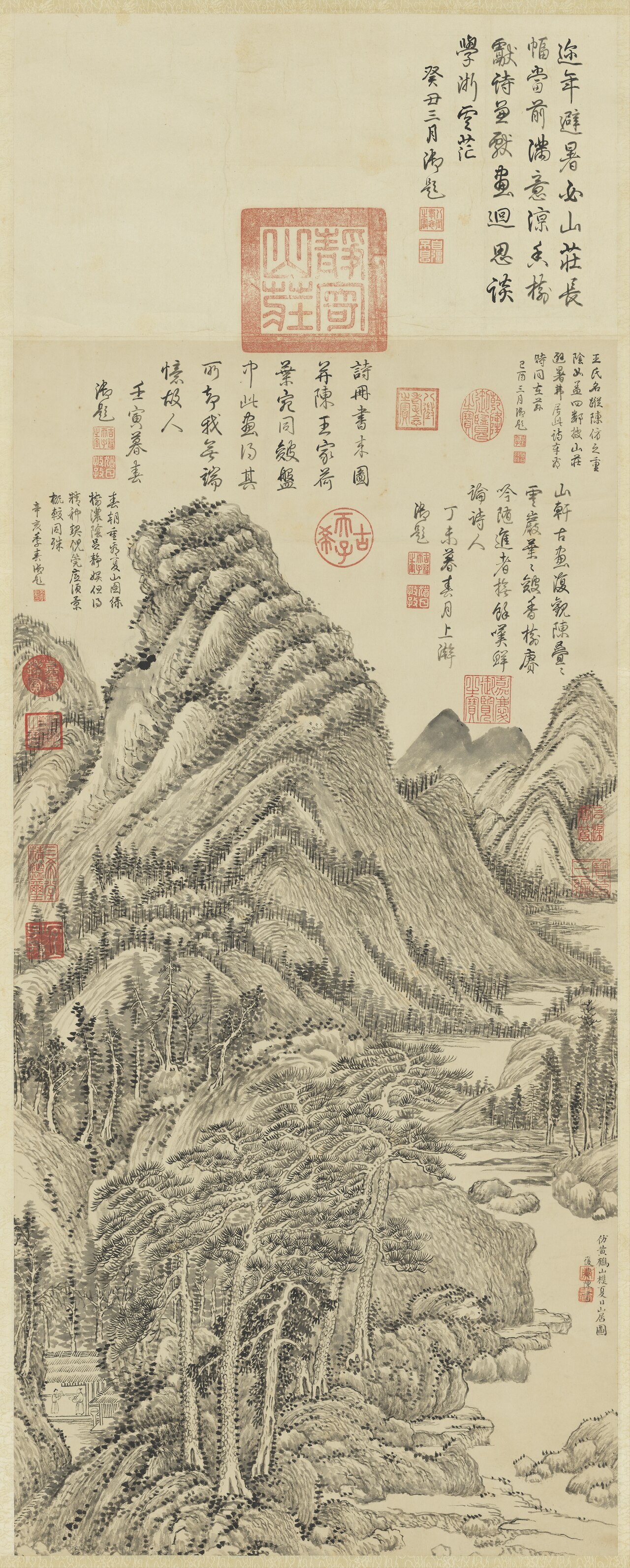
Early life Chen Shu was born in 1660 in Xiuzhou, a historic district of present‑day Zhejiang province. She came from a modest scholarly family and was given the courtesy name Nanlou, while her literary aliases included *Shangyuan Dizi* and *Nanlou Laoren*. Little is recorded about her childhood education, but the cultural milieu of Zhejiang—renowned for its literati painting traditions—provided a fertile environment for artistic development. Chen married at a young age, but her husband died early, leaving her a widow with a son to raise on her own.
Career and style Despite the constraints imposed on women in the early Qing period, Chen Shu cultivated a professional painting career that soon attracted the attention of elite circles. Her son, Qian Chenqun, grew to become a respected statesman and poet in the court of the Qianlong Emperor. When Qian presented his mother’s works to the emperor, Chen Shu earned imperial favour, and several of her pieces entered the imperial collection. This patronage allowed her to work with a degree of independence uncommon for women artists of her time.
Chen’s artistic output spans figures, landscapes, and the highly prized flower‑and‑bird genre. She is associated with the Xiushui School, a regional style that emphasized elegant brushwork, subtle colour modulation, and an intimate, lyrical approach to natural subjects. While the school’s formal principles were still coalescing during her lifetime, Chen is credited with inaugurating its aesthetic, blending the restrained brushstrokes of the early Qing literati with a softer, more decorative sensibility that appealed to court tastes.
Signature techniques Chen Shu’s technique is characterised by several recurring elements:
* Delicate line work – She employed fine, flowing lines to render petals, feathers, and foliage, often using a dry brush to suggest texture without heavy ink washes. * Layered pigments – Her colour palette favoured muted greens, pinks, and blues, applied in thin washes that build depth while preserving the translucency of the paper. * Controlled composition – Works are frequently organised around a central motif—such as a branch of wisteria or a perched bird—allowing negative space to enhance the overall balance. * Integration of poetry – Many of her paintings include inscribed verses, a practice that links visual and literary arts and underscores her scholarly background.
These techniques combine to produce a serene, almost poetic atmosphere, distinguishing her work from the more vigorous, bold strokes of some male contemporaries.
Major works
1. Wisteria and Rose (1711) – This early masterpiece demonstrates Chen’s mastery of the flower‑and‑bird genre. A cascading wisteria vine intertwines with a solitary rose, each rendered with precise, airy brushstrokes. The composition balances the luxuriant purple blossoms against the delicate pink rose, while a faint inscription poetically reflects on the fleeting nature of beauty.
2. Bird and Flower – Although undated, this piece exemplifies her signature integration of fauna and flora. A small crane or pheasant (scholars differ) perches among blooming peonies, the bird’s plumage suggested by subtle ink washes that convey both movement and stillness.
3. Cockatoo (1721) – One of the few surviving works that focus on an exotic subject, the cockatoo is depicted with vivid orange and black plumage against a plain background, highlighting Chen’s ability to capture texture. The bird’s eye is rendered with a single, sharp dot, providing a striking focal point.
4. Painting for the New Year (1735) – Created near the end of her life, this celebratory work combines auspicious symbols—such as plum blossoms, lanterns, and a stylised dragon—into a harmonious composition intended for imperial festivities. The piece reflects both her continued relevance at court and her adaptability to ceremonial themes.
5. Landscape after Wang Meng’s ‘Summer Retreat in the Mountains’ – In this homage, Chen reinterprets the renowned Yuan‑dynasty master’s composition, employing her characteristic soft brushwork while preserving the original’s complex, layered mountain forms. The work underscores her scholarly engagement with classical models and her capacity to adapt them within her own aesthetic framework.
Influence and legacy Chen Shu’s legacy operates on several levels. As the first female painter to achieve imperial recognition in the Qing dynasty, she broke gender barriers and set a precedent for women artists who followed. Her role as the founder of the Xiushui School established a regional style that would influence subsequent generations of Zhejiang painters, who admired her elegant synthesis of literati restraint and decorative flourish.
Through her son Qian Chenqun, Chen’s works entered the imperial collection, ensuring their preservation and visibility to later collectors and scholars. Contemporary exhibitions of Qing‑period art frequently include her pieces, and academic studies cite her as a pivotal figure in the transition from Ming to Qing artistic sensibilities.
Moreover, her practice of inscribing poetry on her paintings reinforces the ideal of the scholar‑artist, a model that continues to inform Chinese art historiography. Modern Chinese women painters often reference Chen Shu as an early exemplar of artistic agency, and her techniques—particularly her delicate handling of line and colour—remain subjects of technical analysis in conservation labs.
In sum, Chen Shu’s contributions lie not only in the aesthetic quality of her surviving works but also in the symbolic importance of her career: a testament to female artistic achievement within a historically male‑dominated field, and a catalyst for the development of a distinct regional painting tradition.
Frequently asked questions
Who was Chen Shu?
Chen Shu (1660–1736) was a pioneering Qing‑dynasty Chinese painter, recognised as the first notable female artist of her era and the founder of the Xiushui School.
What style or movement is she associated with?
She is linked to the Xiushui School, a regional style noted for elegant brushwork, subtle colour modulation, and a lyrical approach to natural subjects.
What are her most famous works?
Key works include *Wisteria and Rose* (1711), *Cockatoo* (1721), *Painting for the New Year* (1735), and her landscape reinterpretation of Wang Meng’s ‘Summer Retreat in the Mountains.’
Why is Chen Shu important in art history?
She broke gender barriers as the first female painter to gain imperial patronage, founded a regional painting school, and helped bridge Ming and Qing artistic traditions.
How can I recognise a painting by Chen Shu?
Look for delicate, flowing lines, layered translucent pigments, balanced compositions with ample negative space, and often a poetic inscription that ties the visual and literary elements together.