Adam van Noort
1562 – 1641
In short
Adam van Noort (1562–1641) was a painter from the Southern Netherlands, primarily active in Antwerp. He is best known today as a significant teacher, notably instructing Peter Paul Rubens and Jacob Jordaens. Van Noort's own artistic output focused mainly on history paintings, though he also produced portraits and designed for printmakers.
Notable works


# Adam van Noort
Adam van Noort (1562–1641) was a painter and draughtsman from the Southern Netherlands, renowned for his contributions to history painting and his pivotal role as an educator. Active in Antwerp during a dynamic period of artistic production, he shaped the careers of some of the most important Baroque artists.
Early life
Born in Antwerp, Adam van Noort entered the art world in a city that was a major European centre for trade and culture. While specific details of his early life and initial artistic training are not extensively documented, it is understood that he became a master painter in Antwerp. His birth year is generally accepted as either 1561 or 1562, with his death occurring in 1641, also in Antwerp. This longevity allowed him a substantial period to develop his artistic practice and establish his reputation within the guild system.
Career and style
Van Noort's career was primarily dedicated to painting, with a strong emphasis on history paintings. These large-scale works often depicted biblical, mythological, or historical narratives, demanding a sophisticated understanding of composition, anatomy, and dramatic expression. While his oeuvre is not as widely preserved or recognized today as those of his famous pupils, contemporary accounts and surviving works suggest a style rooted in the traditions of the Low Countries but open to the emerging trends of the Baroque. He also engaged in portraiture, demonstrating versatility in his artistic output. Furthermore, Van Noort made significant contributions as a designer for engravings, collaborating with prominent families of printmakers and publishers, such as the Collaerts, who were instrumental in disseminating images across Europe.
His artistic affiliation with a specific movement or current is not definitively established, placing him in a category of artists whose work bridges established traditions and the burgeoning Baroque era. This position is typical of many artists of his generation who absorbed influences from various sources and developed individual interpretations.
Signature techniques
While a detailed analysis of 'signature techniques' for Adam van Noort is challenging due to the limited surviving body of his personal works and the focus on his teaching legacy, certain aspects can be inferred. His mastery of history painting suggests a strong command of draughtsmanship, essential for planning complex compositions and rendering dynamic figures. The nature of his work for printmakers also implies skill in creating detailed designs that could be translated into line engravings. In his paintings, a focus on narrative clarity and robust figure drawing would have been paramount. The dramatic potential inherent in his chosen subjects likely led to compositions that balanced detailed observation with expressive gestures and a sense of monumental presence, characteristic of the era's grand style, even if his execution remained more grounded than some of his more flamboyant contemporaries or pupils.
Major works
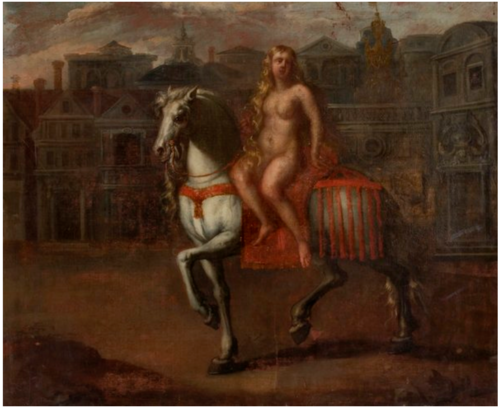
Among the known works attributed to Adam van Noort are several significant history paintings. "Lady Godiva" from 1586 is an early example, showcasing his engagement with narrative subjects. "Christ blessing the children" and a similarly titled work, "Christ among children" (dated to around 1700, though this date seems late for the artist's lifespan and may refer to a later copy or a different artist), highlight his ability to depict religious themes with a focus on compassion and spiritual guidance. "Noemi at the crossroads" (1620) is another notable history painting, likely drawing from biblical narrative to explore themes of fate and resilience. "Final battle of the siege of Troy" (1625) demonstrates his capacity for large-scale, dramatic compositions, depicting conflict and heroism.
These works, primarily history paintings, underscore his commitment to narrative storytelling and the depiction of human emotion and action within grand historical or biblical contexts. His engagement with these subjects required a thorough understanding of composition and a skilled hand in rendering figures and their dramatic interactions.
Influence and legacy
Adam van Noort's most profound and enduring legacy lies in his role as a teacher. He was the sole instructor of the celebrated Flemish Baroque painter Jacob Jordaens, a pivotal figure whose work would significantly shape the art of the 17th century. Van Noort also served as a teacher to the even more famous Peter Paul Rubens, alongside other masters like Otto van Veen. The rigorous training imparted by Van Noort provided the foundational skills and artistic vision that enabled Rubens and Jordaens to develop their distinct and influential styles. By nurturing these exceptional talents, Van Noort indirectly shaped the course of Baroque art not only in the Southern Netherlands but across Europe. His own artistic output, while perhaps overshadowed by his pupils, contributed to the rich artistic landscape of Antwerp and demonstrated a commitment to the grand tradition of history painting.
Frequently asked questions
Who was Adam van Noort?
Adam van Noort (1562–1641) was a painter and draughtsman from the Southern Netherlands, primarily active in Antwerp. He is most recognized today for being a key teacher of prominent Baroque artists Peter Paul Rubens and Jacob Jordaens.
What art movement or style is Adam van Noort associated with?
Adam van Noort's specific art movement is not definitively known. His work is generally considered within the context of late Mannerism and the emerging Baroque period in the Southern Netherlands, with a focus on history painting.
What are Adam van Noort's most famous works?
While many of his works are not widely known today, notable paintings attributed to him include 'Lady Godiva' (1586), 'Noemi at the crossroads' (1620), and 'Final battle of the siege of Troy' (1625). He is perhaps more famous for teaching Rubens and Jordaens.
Why is Adam van Noort considered important in art history?
Adam van Noort holds significant importance as a teacher. He provided essential training to two of the most influential Flemish Baroque painters, Jacob Jordaens (as his only teacher) and Peter Paul Rubens, thereby shaping the next generation of artists.
How can I recognize a painting by Adam van Noort?
Recognizing a painting by Adam van Noort involves looking for robust figure drawing, clear narrative composition in history paintings, and a style that balances traditional Flemish detail with the dramatic energy of the early Baroque. His works often depict religious, mythological, or historical scenes.