Zhou Chen
1450 – 1535
In short
Zhou Chen (1450–1535) was a Ming‑dynasty Chinese painter born in Wu County. He is noted for his genre scenes and landscape works that blend literati brushwork with vivid narrative detail.
Notable works



Early life Zhou Chen was born in 1450 in Wu County, a region that forms part of modern‑day Jiangsu province. Little is known about his family background, but contemporary records indicate that he received a traditional Confucian education, which included instruction in calligraphy and painting. This scholarly training was typical for aspiring artists of the Ming period, where the literati ideal—combining literary cultivation with artistic practice—was highly prized. Zhou’s early exposure to both the classical texts and the visual arts laid the foundation for a career that would straddle the worlds of scholarly brushwork and popular visual narrative.
Career and style Zhou Chen emerged as a professional painter during the middle of the Ming dynasty, a time when court patronage and private collecting were flourishing. While his name does not appear in the official court registers, he was active in the vibrant artistic circles of the Jiangnan region, which included Suzhou, Hangzhou and the surrounding towns. This environment encouraged a synthesis of the refined, monochrome literati style with more decorative, colour‑rich approaches favoured by wealthy merchants.
Zhou’s style is characterised by a balanced composition that often juxtaposes detailed human figures with expansive natural settings. He employed the brush techniques of the Wu school—known for its fluid, expressive strokes—while also incorporating the more meticulous line work associated with the Southern School of painting. His palette, when colour was used, tended toward muted earth tones, allowing the ink washes to dominate the visual impact. The resulting works convey a sense of calm observation, reflecting the Confucian ideal of measured, moral contemplation.
Signature techniques Zhou Chen’s paintings are distinguished by several technical hallmarks:
1. Layered Ink Washes – He built depth through successive layers of diluted ink, creating atmospheric effects that suggest mist, distant mountains or water reflections. This technique allowed him to render the subtle gradations of light and shadow that give his landscapes a lyrical quality.
2. Expressive Figure Rendering – In genre scenes, Zhou depicted figures with a loose yet purposeful line, capturing gestures and postures that convey narrative without excessive detail. The faces are often rendered with minimal ink strokes, leaving much to the viewer’s imagination.
3. Integration of Calligraphic Elements – Titles, poetical inscriptions and seals are seamlessly woven into the composition, reinforcing the scholarly context of his work. The calligraphy itself mirrors the brushwork of the painting, creating a visual harmony between text and image.
4. Use of Negative Space – Zhou employed empty areas strategically, allowing the paper’s texture to suggest clouds, water or open sky. This restraint contributes to the contemplative mood that pervades his oeuvre.
Major works Zhou Chen’s surviving corpus includes a handful of dated pieces that illustrate his range.
- The North Sea (1500) – This landscape presents a sweeping view of a coastal scene, with a distant horizon rendered in soft ink washes. Small boats dot the water, while distant cliffs rise in muted tones. The composition balances activity in the foreground with a tranquil, expansive background, exemplifying Zhou’s skill at integrating human presence within nature.
- Beggars and Street Characters (1516) – A vivid genre painting that captures a bustling urban street populated by beggars, merchants and children. Zhou’s brushwork conveys the diversity of social classes, while his subtle use of colour highlights the clothing of the more affluent figures. The work is both a social document and a moral commentary, reflecting the artist’s awareness of contemporary life.
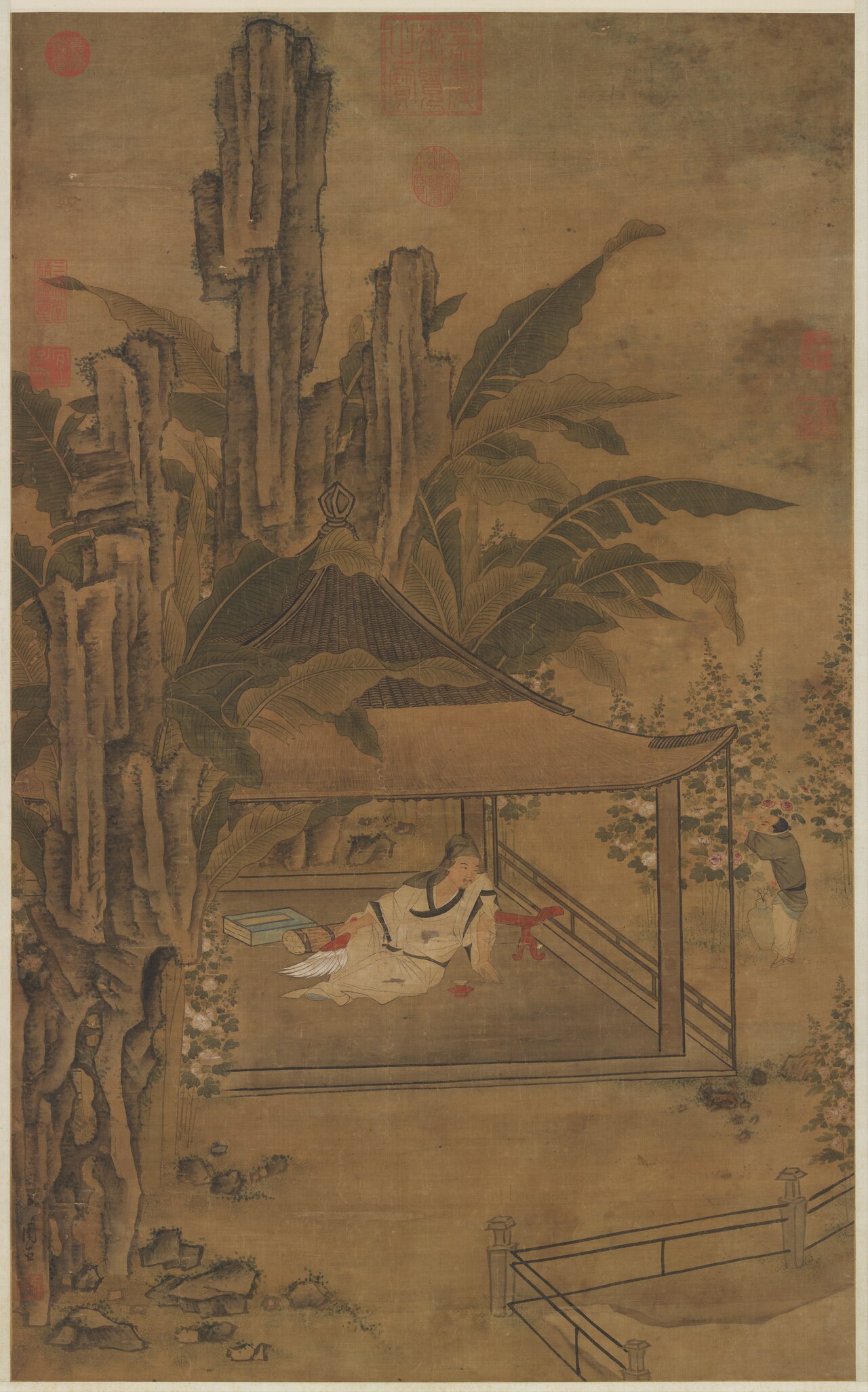
- Cooling off in the Mountain Pavilion – This piece portrays a scholar‑official reclined in a pavilion perched among mist‑shrouded peaks. The pavilion’s architectural details are rendered with precise line, while the surrounding mountains dissolve into atmospheric ink. The painting embodies the literati ideal of withdrawal from worldly concerns to enjoy nature’s serenity.
- After the Line "Idly Watching Children Catch Willow Flowers" – In this narrative scene, Zhou illustrates a garden setting where children chase willow branches, their movements captured in fluid strokes. The title, inscribed in the painting, suggests a poetic contemplation of fleeting childhood moments. The work’s delicate balance of line and wash demonstrates Zhou’s ability to translate literary sentiment into visual form.
These works, though varied in subject, share a consistent visual language: a restrained palette, layered washes, and an emphasis on the interplay between human activity and the natural environment.
Influence and legacy Zhou Chen did not found a distinct school, but his paintings contributed to the ongoing dialogue between the literati and professional painter traditions in late Ming China. Later artists in the Jiangnan region drew upon his balanced compositions and his method of integrating narrative detail within atmospheric landscapes. Scholars note that his genre scenes anticipate the more vivid street‑life depictions of early Qing painters, while his landscapes echo the meditative qualities found in the works of Shen Zhou and other Wu‑school masters.
Although the precise details of his later life and death remain unknown, Zhou’s surviving paintings continue to be studied for their technical proficiency and their insight into everyday Ming society. They are regularly featured in museum exhibitions that explore the interaction between elite culture and popular visual culture in pre‑modern China. Contemporary curators value Zhou Chen’s work for its ability to bridge scholarly aesthetics with accessible storytelling, making his oeuvre a useful reference point for understanding the diversity of Ming artistic production.
In academic literature, Zhou Chen is often cited as an exemplar of the middle‑period Ming painter who navigated the expectations of both the scholarly elite and the burgeoning merchant class. His paintings remain in major Chinese and international collections, and they are reproduced in scholarly catalogues, ensuring that his contributions to Chinese art history are recognised and preserved for future generations.
Frequently asked questions
Who was Zhou Chen?
Zhou Chen (1450–1535) was a Chinese painter of the Ming dynasty, born in Wu County, known for his balanced landscapes and genre scenes.
What artistic style or movement is Zhou Chen associated with?
He worked within the literati tradition while also embracing decorative elements of the professional school, creating a hybrid style typical of late‑Ming Jiangnan painters.
What are Zhou Chen’s most famous works?
His most cited pieces are *The North Sea* (1500), *Beggars and Street Characters* (1516), *Cooling off in the Mountain Pavilion*, and *After the Line "Idly Watching Children Catch Willow Flowers"*.
Why is Zhou Chen important in art history?
He illustrates the blending of scholarly brushwork with narrative genre painting, offering insight into both elite aesthetics and everyday life in the Ming period.
How can I recognise a painting by Zhou Chen?
Look for layered ink washes, expressive yet restrained figure lines, integrated calligraphic inscriptions, and a calm, balanced composition that juxtaposes human activity with atmospheric natural settings.