Zhang Lu
1464 – 1538
In short
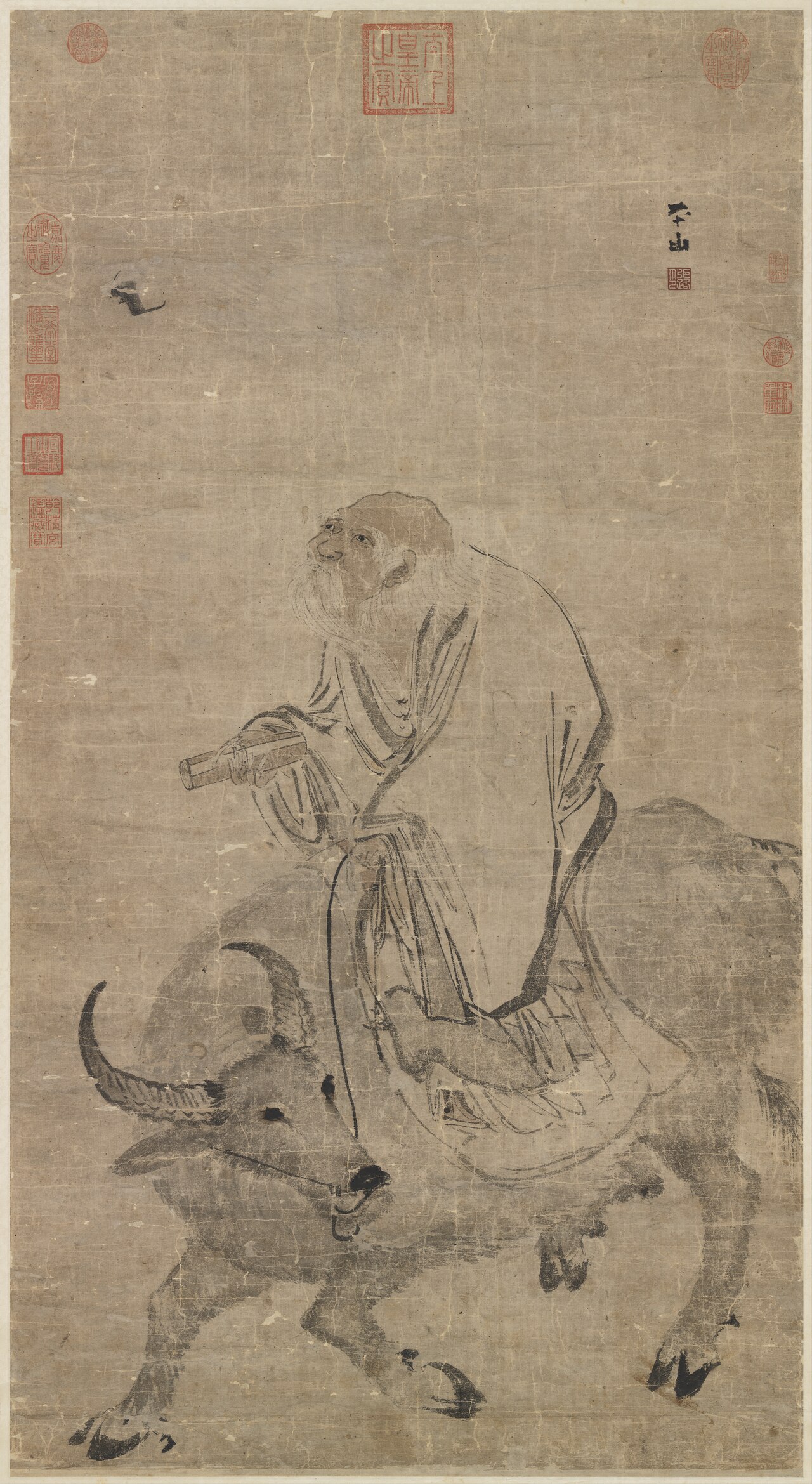
Zhang Lu (1464–1538) was a Chinese landscape painter of the Ming dynasty, born in Kaifeng. He is noted for his lyrical ink paintings that blend Daoist motifs with scholarly themes, and for works such as Lao‑tzu Riding an Ox and A Scholar Contemplating a Waterfall.
Notable works


.jpg)
Early life Zhang Lu was born in 1464 in the historic city of Kaifeng, a centre of cultural exchange in the late Ming period. Little is recorded about his family background, but like many aspiring artists of his time he would have received a classical education that included calligraphy, poetry and the study of earlier masters. The intellectual climate of Kaifeng, with its vibrant literati circles, provided a fertile ground for Zhang to develop the scholarly sensibilities that later informed his paintings.
Career and style Zhang Lu emerged as a professional painter in the early decades of the 16th century, a time when the Ming court encouraged a revival of the literati tradition. He specialised in landscape (shānshuǐ) paintings, a genre that allowed him to express both personal reflection and philosophical ideas. His style is characterised by a restrained use of ink, subtle tonal variations and an emphasis on atmospheric perspective. While he did not belong to a formally defined movement, his work aligns with the broader trend of the Wu School, which prized spontaneity, brush economy and the integration of poetry and painting.
Signature techniques Zhang Lu’s most recognisable technical traits include: - **Thin, dry brush strokes** that suggest distant mountains or foliage, creating a sense of depth without heavy pigment. - **Layered washes of light ink**, which convey mist and water, often leaving the paper’s white surface to suggest clouds or distant horizons. - **Controlled modulation of line**, where bold, confident outlines are balanced by softer, feather‑like touches, reflecting the duality of strength and humility valued in Daoist thought. - **Incorporation of calligraphic elements**, such as occasional inscriptions that blend seamlessly with the visual composition, reinforcing the scholar‑artist identity. These techniques combine to produce paintings that feel both meditative and dynamically alive.
Major works Zhang Lu’s surviving oeuvre is modest but highly regarded. Among his most celebrated pieces are:
- Lao‑tzu Riding an Ox – A contemplative scene that depicts the Daoist sage traversing a misty landscape on a humble ox. The composition uses sparse brushwork to evoke the timelessness of Lao‑tzu’s teachings, while the ox serves as a symbolic vehicle of simplicity. - Studying a Painting (1531) – This work shows a figure seated before a scroll, absorbed in artistic contemplation. The painting within the painting is rendered with delicate ink washes, creating a meta‑narrative about the act of creation itself. The date, 1531, anchors the piece in the later period of Zhang’s career. - Fisherman and Family (1526) – A genre scene that balances human activity with natural surroundings. The fisherman’s boat is rendered with precise line work, while the surrounding hills dissolve into mist, illustrating Zhang’s skill at integrating narrative detail with atmospheric space. - A Scholar Contemplating a Waterfall (1525) – Here a lone scholar stands before a cascading waterfall, a classic motif symbolising the flow of knowledge. The waterfall is depicted with a cascade of thin strokes that suggest both movement and the ethereal quality of water. - Immortal with Deer – Though undated, this painting portrays an immortal figure accompanied by a graceful deer, an emblem of longevity. The piece demonstrates Zhang’s ability to blend mythological subject matter with his characteristic ink technique.
Influence and legacy Zhang Lu’s paintings were collected by both private scholars and imperial patrons, ensuring that his approach to landscape continued to circulate throughout the Ming court. Later artists, particularly those of the early Qing period, cited his restrained brushwork and poetic integration as models for their own practice. His works are now housed in several major Chinese museums and appear in scholarly catalogues that examine the evolution of literati painting. Though not as widely known in the West as some of his contemporaries, Zhang’s contributions remain a touchstone for specialists studying the synthesis of Daoist philosophy and visual art in late imperial China.
Frequently asked questions
Who was Zhang Lu?
Zhang Lu was a Ming‑dynasty Chinese painter (1464–1538) noted for his lyrical landscape ink paintings.
What style or movement is he associated with?
He worked within the literati tradition, sharing aesthetic values with the Wu School but without belonging to a formal movement.
What are his most famous works?
His best‑known paintings include Lao‑tzu Riding an Ox, Studying a Painting (1531), Fisherman and Family (1526), A Scholar Contemplating a Waterfall (1525) and Immortal with Deer.
Why does Zhang Lu matter in art history?
He exemplifies the integration of Daoist thought and scholarly brushwork, influencing later Chinese painters and enriching the Ming landscape genre.
How can I recognise a Zhang Lu painting?
Look for thin, dry brush strokes, layered light ink washes that suggest mist, subtle calligraphic inscriptions, and a calm, contemplative atmosphere that unites figure and landscape.