Wang Fu
1362 – 1416
In short
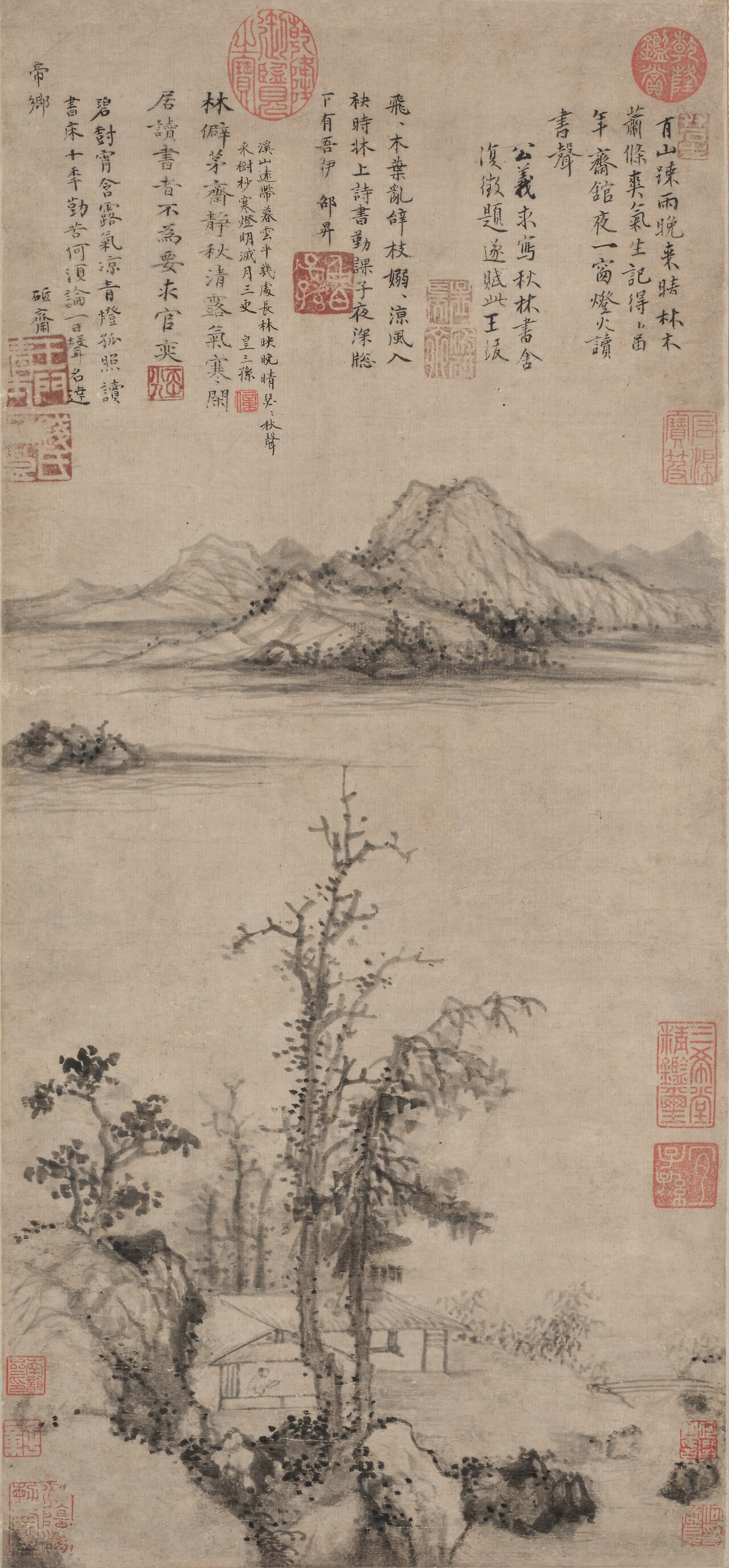
Wang Fu (1362–1416) was a Chinese landscape painter, calligrapher and poet of the Ming dynasty, born in Wuxi and active in the early 15th century. He is noted for his refined brushwork, poetic sensibility and a handful of surviving works such as A Scholar's Retreat amid Autumn Trees and Joys of the Fisherman.
Notable works


Early life Wang Fu was born in 1362 in the city of Wuxi, a region that historically supplied many scholars and artists to the imperial courts. His family belonged to the literati class, which meant that he received a classical education that combined poetry, calligraphy and the study of painting. The cultural atmosphere of his hometown, situated near the Yangtze delta, exposed him to the natural scenery that would later dominate his canvases. Wang adopted the courtesy name Mengduan (孟端) and was also known by his art names Youshisheng (友石生) and Jiulong Shanren (九龍山人), reflecting the common practice among Chinese scholars of assuming multiple identifiers to signal personal aspirations and philosophical alignments.
Career and style By the turn of the 15th century Wang Fu had moved to the capital, then known as Beijing, where he entered the circle of court painters and literati scholars. The Ming dynasty, having restored native rule after the Yuan period, encouraged a revival of classical styles while also allowing individual expression. Wang's work illustrates this synthesis: he adhered to the disciplined brush techniques of earlier masters such as Wang Meng and Li Cheng, yet he infused his landscapes with a lyrical, almost contemplative atmosphere. His paintings are characterised by a muted palette, delicate ink washes and a compositional balance that favours spaciousness over narrative drama. Unlike some contemporaries who pursued bold, colourful court portraiture, Wang remained committed to the ideals of the scholar‑artist, using painting as an extension of his poetry and calligraphic practice.
Signature techniques Wang Fu’s brushwork is distinguished by three main technical approaches. First, he employed a ‘wet‑brush’ method for foliage, allowing ink to bleed slightly on the paper and create a soft, atmospheric effect that suggests mist‑cloaked mountains or autumnal canopies. Second, his handling of bamboo and reeds demonstrates a controlled, almost calligraphic stroke: each line is executed with a swift, confident movement that captures the plant’s inner spirit while maintaining structural clarity. Third, he often used layering of light ink washes to build depth, allowing distant hills to recede into a gentle tonal haze. This layered approach, combined with occasional touches of colour—typically muted reds or greens—helps to delineate focal points without breaking the overall serenity of the composition.
Major works Wang Fu’s surviving oeuvre, though limited, offers insight into his artistic evolution. **A Scholar's Retreat amid Autumn Trees (1403)** depicts a reclusive figure seated beneath a canopy of turning leaves, the composition balanced between the human presence and the surrounding natural world. The painting exemplifies his wet‑brush foliage technique and his ability to convey a sense of quiet contemplation.
Joys of the Fisherman (1410) presents a small group of anglers on a tranquil river, their boats rendered with delicate line work that hints at movement while the surrounding reeds and water surface are treated with subtle ink washes. This work highlights Wang’s skill in integrating figure and landscape, a hallmark of literati painting.
Spray of Bamboo is a monochrome study of bamboo stalks, each blade rendered with swift, tapered strokes that echo his calligraphic training. The piece is often cited as a pedagogical example of how to capture the spirit of a subject with minimal means.
Autumn Sense in Xiao and Xiang (1412) portrays the famous Xiao and Xiang rivers during the autumn season, employing muted colours to suggest the crisp air and falling foliage. The composition’s expansive perspective reflects Wang’s interest in rendering vast natural spaces while maintaining an intimate, poetic tone.
Literary Gathering in a Mountain Pavillion brings together scholars engaged in literary pursuits within a mountain pavilion, a common motif that underscores the connection between intellectual activity and natural setting. The painting’s balanced architecture and surrounding landscape illustrate Wang’s mastery of spatial harmony.
Each of these works demonstrates Wang Fu’s consistent aesthetic: a restrained palette, an emphasis on atmospheric depth, and a poetic sensibility that aligns visual and literary expression.
Influence and legacy Wang Fu’s paintings, though not as widely reproduced as those of some of his more famous contemporaries, have been studied by later generations of Chinese artists for their subtle blend of technical precision and lyrical content. His approach to bamboo and foliage influenced subsequent scholar‑artists who sought to convey the spirit of nature through understated brushwork. Moreover, his integration of poetry, calligraphy and painting exemplifies the ideal of the “three perfections” that continued to shape Chinese artistic theory well into the Qing dynasty. While his name may not appear in every mainstream art‑history textbook, specialists regard Wang Fu as a representative figure of early Ming literati painting, bridging the transitional period between Yuan artistic traditions and the fully developed Ming aesthetic. His surviving works are preserved in several major collections, where they continue to be examined for their contribution to the development of Chinese landscape painting and the enduring dialogue between visual art and literary culture.
Frequently asked questions
Who was Wang Fu?
Wang Fu (1362–1416) was a Ming‑dynasty Chinese landscape painter, calligrapher and poet, born in Wuxi and active in Beijing.
What style or movement is he associated with?
He worked within the scholar‑artist tradition of the early Ming period, blending classical brush techniques with a poetic, atmospheric style.
What are his most famous works?
His best‑known paintings include A Scholar's Retreat amid Autumn Trees (1403), Joys of the Fisherman (1410), Spray of Bamboo, Autumn Sense in Xiao and Xiang (1412) and Literary Gathering in a Mountain Pavillion.
Why does Wang Fu matter in art history?
He exemplifies the integration of poetry, calligraphy and painting that defined the literati ideal, and his subtle brushwork influenced later Chinese landscape painters.
How can I recognise a painting by Wang Fu?
Look for muted ink washes, delicate wet‑brush foliage, controlled bamboo strokes, and a tranquil, poetic composition that balances human figures with expansive natural scenery.