Pieter van Lint
1609 – 1690
In short
Pieter van Lint (1609–1690) was a Flemish Baroque painter, draughtsman and tapestry designer from Antwerp, known for history paintings, genre scenes and portraits with a classicising touch.
Notable works


Early life
Pieter van Lint was born in 1609 in Antwerp, a major centre of artistic production in the Habsburg Netherlands. Little is recorded about his family background, but like many aspiring artists of his generation he would have begun his training in a local guild workshop, most likely under a master who was active in the city's flourishing Baroque milieu. Antwerp’s academies and the Guild of Saint Luke provided a structured environment for apprentices to learn drawing, composition and the technical skills required for both easel painting and tapestry design.
Career and style
Van Lint established himself as a versatile painter in the mid‑17th century, working principally in Antwerp but also spending periods in Italy, where the influence of the Italian Baroque and classicising currents left a discernible mark on his work. His oeuvre spans religious history paintings, secular genre scenes and portraiture, all rendered in the rich colour and dramatic lighting associated with Flemish Baroque. While his compositions display the dynamism and emotional intensity typical of the period, they are tempered by a classical restraint that recalls the works of Rubens’ younger contemporaries and the Italian Carracci school. This synthesis of Baroque vigor and classicising balance became a hallmark of his style.
In addition to painting, van Lint was a competent draughtsman and contributed designs for tapestries, a lucrative sector in Antwerp’s economy. His designs often featured biblical or mythological subjects, rendered with the same attention to figure and drapery as his panel paintings. The dual practice of easel painting and tapestry design reflects the interdisciplinary nature of Flemish art production in the 17th century.
Signature techniques
Van Lint’s paintings are characterised by several recurring technical approaches:
* Chiaroscuro modelling – He employed strong contrasts of light and shadow to give his figures a three‑dimensional presence, a technique that heightened the narrative drama of his religious scenes. * Rich palette – A warm, saturated palette dominated by deep reds, ochres and blues creates a lush visual texture, while localized highlights of gold or white accentuate focal points. * Classical composition – Many works display balanced, symmetrical arrangements reminiscent of Renaissance compositional rules, with carefully positioned architectural elements that guide the viewer’s eye. * Detailled drapery – Van Lint’s handling of cloth shows meticulous attention to the folds and sheen of fabrics, a skill honed through his tapestry work where such details were essential. * Expressive faces – Even in larger narrative scenes, the faces of principal figures are rendered with subtle psychological nuance, allowing the viewer to connect emotionally with the story.
Major works
### Adoration of the Shepherds (1650)
One of van Lint’s most celebrated compositions, this painting depicts the biblical scene of the shepherds visiting the infant Christ. The work demonstrates his mastery of light, with the infant’s haloed light source illuminating the surrounding figures. The shepherds are rendered in earthy tones, their garments and gestures contrasting with the luminous presence of the Holy Family.
### Christ Healing the Lame at the Pool of Bethesda (1640)
This religious narrative captures a moment of miraculous healing. Van Lint places Christ at the centre, his compassionate expression emphasised by a soft, radiant light. The surrounding crowd is arranged in a semi‑circular formation, allowing a clear view of the interaction while showcasing the artist’s skill in depicting varied human reactions.
### Saint Catherine of Alexandria
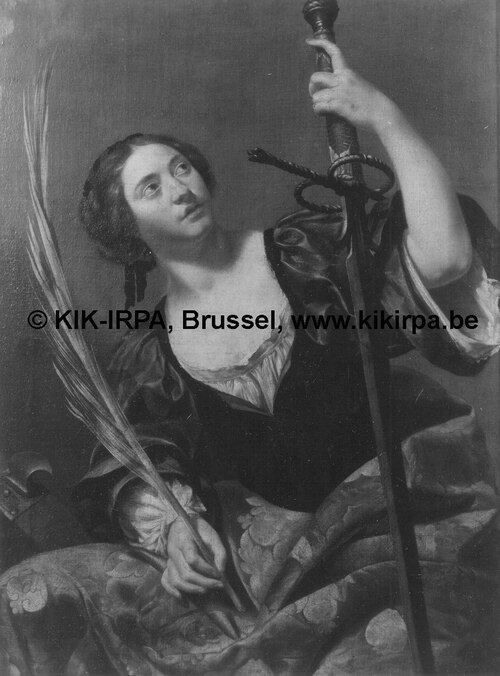
In this portrait of the early‑Christian martyr, van Lint combines a devotional aura with a dignified, almost regal representation. Saint Catherine is shown holding a wheel, her attribute, against a darkened backdrop that accentuates the luminous quality of her skin and the rich reds of her mantle.
### At the Watering Hole (1650)
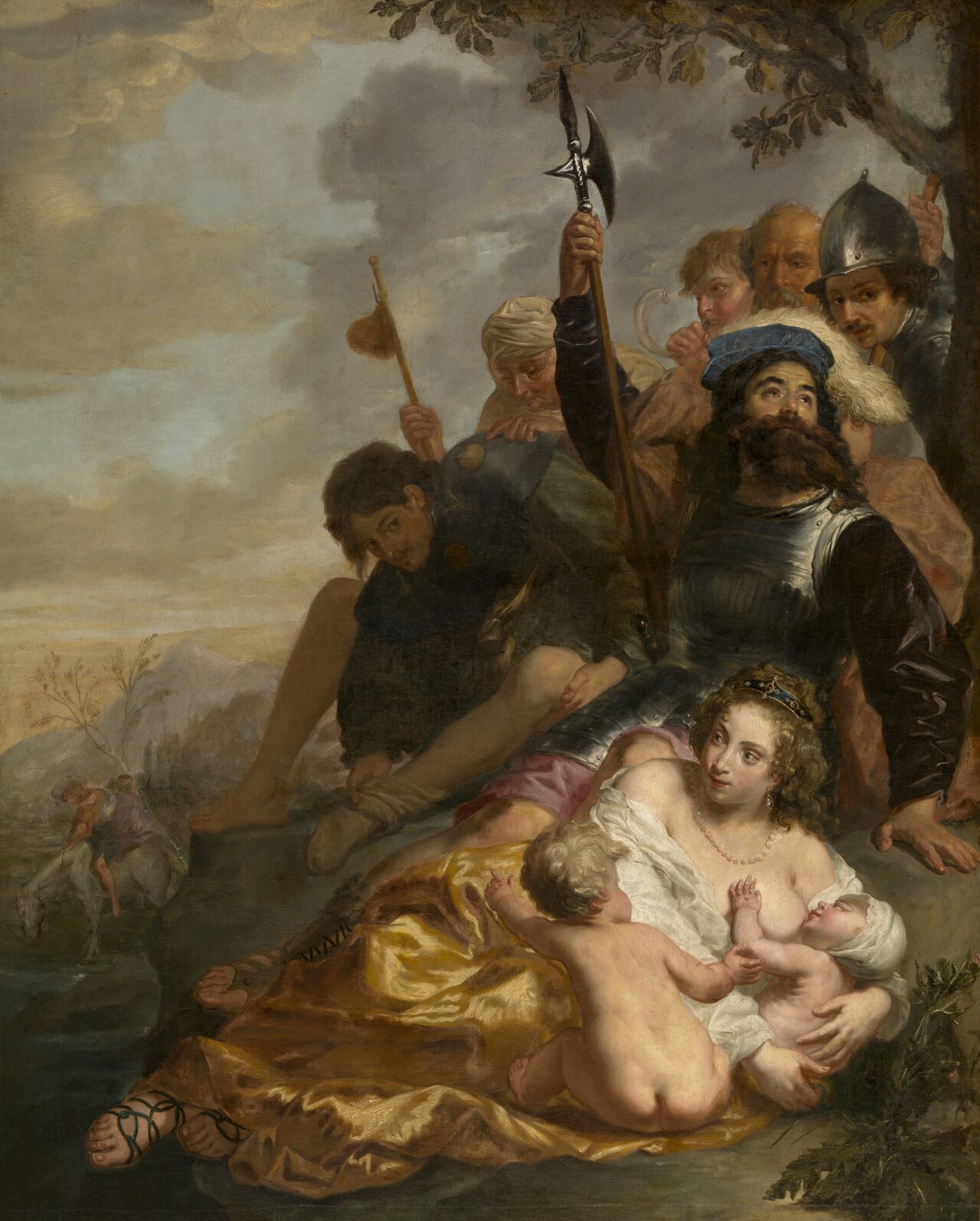
A departure from strictly religious subjects, this genre scene portrays a group of figures gathered around a natural spring. The composition reflects van Lint’s ability to render everyday life with the same compositional rigor as his biblical works. The play of sunlight on water and foliage demonstrates his keen observation of natural light.
These works collectively illustrate van Lint’s range—from solemn sacred narratives to lively genre scenes—while maintaining a consistent visual language.
Influence and legacy
Pieter van Lint remained active in Antwerp until his death in 1690, contributing to the city’s artistic output during a period when Flemish painting was transitioning from the high Baroque of Rubens to a more restrained classicism. Though he did not achieve the fame of Rubens or Van Dyck, his paintings and tapestry designs were well regarded by contemporaries and patrons, particularly for their balanced compositions and refined execution.
His legacy lies in the synthesis of Baroque drama with classical order, a combination that influenced younger Flemish artists who sought to temper the exuberance of the early 17th century with a more measured aesthetic. The surviving works of van Lint, now held in regional museums and private collections, continue to provide insight into the artistic currents of the Habsburg Netherlands and the cross‑cultural exchange between Flemish and Italian art.
In scholarly assessments, van Lint is recognised as a competent practitioner whose oeuvre reflects the broader trends of his era rather than groundbreaking innovation. Nevertheless, his contributions to tapestry design and his ability to adapt Baroque sensibilities to a classicising framework ensure his place within the narrative of Flemish Baroque art history.
Frequently asked questions
Who was Pieter van Lint?
Pieter van Lint (1609–1690) was a Flemish painter, draughtsman and tapestry designer from Antwerp, active in the Baroque period.
What artistic style or movement is he associated with?
He worked in the Flemish Baroque style, incorporating a classicising restraint that balanced dramatic lighting with harmonious composition.
What are his most famous works?
His best‑known paintings include the *Adoration of the Shepherds* (1650), *Christ Healing the Lame at the Pool of Bethesda* (1640), *Saint Catherine of Alexandria*, and the genre scene *At the Watering Hole* (1650).
Why is Pieter van Lint important in art history?
He exemplifies the transition from the exuberant Baroque of Rubens toward a more measured classicism, and his tapestry designs illustrate the interdisciplinary nature of Flemish art production.
How can one recognise a Pieter van Lint painting?
Look for strong chiaroscuro, a rich but balanced colour palette, meticulous drapery, and compositions that combine Baroque dynamism with classical symmetry.