Jan Frans van Bloemen
1662 – 1749
In short
Jan Frans van Bloemen (1662–1749) was a Flemish Baroque landscape painter who spent most of his career in Rome, becoming the pre‑eminent creator of classical vedute of the Roman countryside. His work blends the dramatic chiaroscuro of the Flemish tradition with the idealised harmony of classical antiquity.
Notable works


Early life Jan Frans van Bloemen was born in 1662 in Antwerp, a city that was then part of the Habsburg Netherlands and a thriving centre of Flemish art. He grew up in a milieu dominated by the legacy of Peter Paul Rubens and the later influence of the Dutch Golden Age. Little is known about his family background, but archival records indicate that he received his initial artistic training in Antwerp, likely within a workshop that specialised in landscape painting. This early exposure to the Flemish tradition of detailed, atmospheric scenery laid the foundation for his later synthesis of Northern technique with Italian classicism.
Career and style Around the turn of the 18th century van Bloemen moved to Rome, a city that attracted many Northern artists seeking patronage and the inspiration of its ancient ruins. In Rome he joined the community of expatriate painters that included his brother Pieter and the celebrated landscape artist Gaspard Poussin. Van Bloemen quickly established a reputation for rendering the Roman Campagna with a measured, idealised approach that echoed the classical landscapes of Annibale Carracci and Nicolas Poussin, while retaining the rich colour and textural fidelity of his Flemish roots.
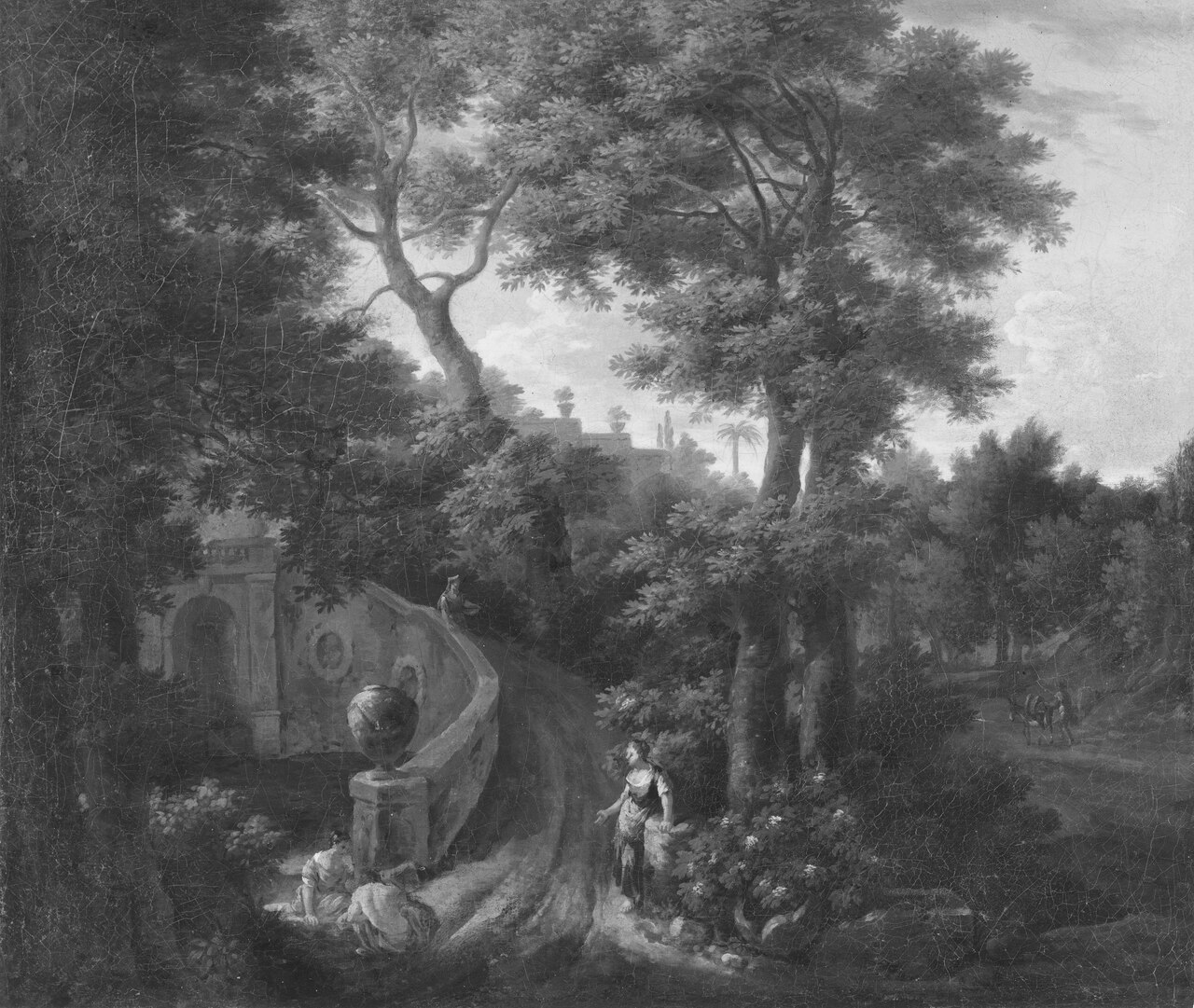
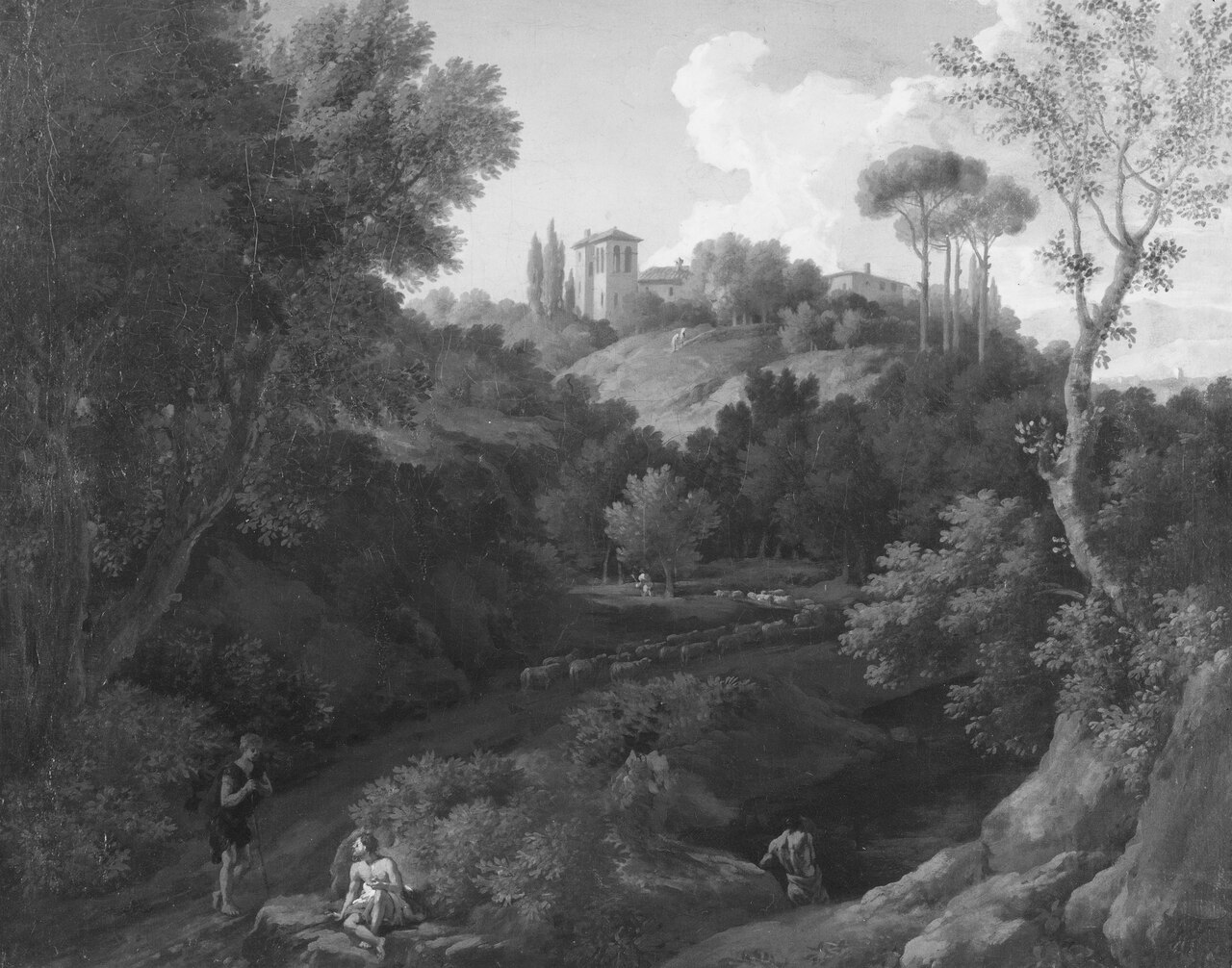
His mature style is characterised by a calm, balanced composition in which foreground, middle ground and background are orchestrated to guide the viewer’s eye across the canvas. The light is often diffused, creating a gentle chiaroscuro that enhances the sense of depth without resorting to dramatic contrasts. Architectural elements—such as ruins, aqueducts and churches—are rendered with an archaeological precision that reflects van Bloemen’s keen interest in antiquity. The overall effect is a harmonious blend of naturalistic observation and idealised vision, positioning him as a central figure in the classical landscape tradition of the early 18th century.
Signature techniques Van Bloemen’s technique combines a layered underpainting with glazes of transparent oil, a method that allows subtle modulation of atmospheric perspective. He frequently employed a limited palette dominated by earth tones, ochres and muted greens, reserving brighter accents for foliage or distant horizons. This restrained colour scheme reinforces the timeless quality of his scenes. His brushwork varies between fine, almost pointillist strokes for distant foliage and broader, more confident passages for architectural structures, giving each element a distinct tactile quality.
The artist also made extensive use of compositional devices derived from the classical canon: the inclusion of a shepherd or a small group of figures to provide narrative interest, the placement of a winding path or river to lead the eye, and the strategic positioning of ruins to suggest a dialogue between past and present. These devices, together with his meticulous rendering of light, create a sense of serenity that is both realistic and idealised.
Major works Among van Bloemen’s most celebrated paintings are several that directly reference the Roman landscape. **Italian Park** showcases a lush, verdant setting where the interplay of light through trees creates a dappled effect, while a distant view of the city’s skyline anchors the scene in Rome. **Landscape with a Monastery** presents a tranquil monastic complex perched on a hill, surrounded by gently rolling hills and a river that reflects the soft sky, exemplifying his ability to integrate architecture into a natural environment.
Landscape of the Roman "Compagna" (1720) is a mature example of his vedute, depicting the Campagna with a measured perspective that balances open fields, shepherds at work, and the faint silhouette of the Vatican dome. The date of 1720 aligns with the period when van Bloemen’s reputation in Rome was at its height, and the work reflects his mastery of atmospheric depth.
Classical Landscape with the Vatican Belvedere (1767) is traditionally attributed to van Bloemen, although the date post‑dates his death in 1749. Scholars generally consider the painting a later copy or a workshop piece that faithfully follows his compositional conventions. Its inclusion in his oeuvre underscores the lasting influence of his style, as later artists continued to emulate his balanced treatment of light and architecture.
Finally, Imaginary View of the Roman "Campagna" (1700) illustrates van Bloemen’s skill in inventing idealised scenery. Though not a direct topographical record, the painting captures the poetic essence of the Roman countryside, employing a gentle horizon line and a calm sky that convey both realism and imagination.
Influence and legacy Jan Frans van Bloemen’s impact on landscape painting extended well beyond his lifetime. By merging the Flemish emphasis on colour and detail with the classical ideals of Italian art, he helped shape a transnational aesthetic that influenced both his contemporaries and subsequent generations of European painters. His works were collected by aristocratic patrons across Italy and the Habsburg territories, ensuring a wide dissemination of his visual language.
In the decades after his death, artists such as Giovanni Paolo Panini and later the German landscape painter Johann Zoffany drew upon van Bloemen’s compositional formulas, particularly his use of serene light and the integration of architectural motifs. The continued popularity of his vedute in the 18th‑century Grand Tour market attests to his role in defining the visual representation of the Roman countryside for foreign visitors.
Modern scholarship recognises van Bloemen as a pivotal figure in the development of the classical landscape genre. His paintings are held in major museum collections, including the Galleria Nazionale d'Arte Antica in Rome and the Royal Museum of Fine Arts in Brussels, where they serve as exemplars of the cross‑cultural exchange that characterised the Baroque period. Through his balanced synthesis of Northern technique and Southern classicism, Jan Frans van Bloemen remains a reference point for understanding the evolution of landscape art in the early modern era.
Frequently asked questions
Who was Jan Frans van Bloemen?
Jan Frans van Bloemen (1662–1749) was a Flemish Baroque painter who specialised in classical landscapes and spent most of his career in Rome, where he became renowned for his idealised views of the Roman countryside.
What artistic movement or style is he associated with?
He worked within the Flemish Baroque tradition but is best known for his contribution to the classical landscape style, blending Flemish colouristic richness with the serene composition of Italian classicism.
Which of his works are the most famous?
Key works include *Italian Park*, *Landscape with a Monastery*, *Landscape of the Roman "Compagna" (1720)*, *Imaginary View of the Roman "Campagna" (1700)* and the later‑attributed *Classical Landscape with the Vatican Belvedere*.
Why is Jan Frans van Bloemen important in art history?
He helped define the classical veduta of the Roman landscape, influencing both his contemporaries and later artists, and his paintings exemplify the successful fusion of Northern European technique with Italian classicism.
How can I recognise a van Bloemen painting?
Look for balanced compositions with gentle chiaroscuro, a limited earthy palette, precise architectural details, and a tranquil, idealised atmosphere that unites natural scenery with classical ruins.