Clara Peeters
1587 – 1657
In short
Clara Peeters (1587–1657) was a Flemish Baroque painter from Antwerp, recognised as one of the earliest female artists to specialise in still‑life. Her meticulously detailed compositions of food, metalwork and flowers helped define the genre in the early 17th century.
Notable works

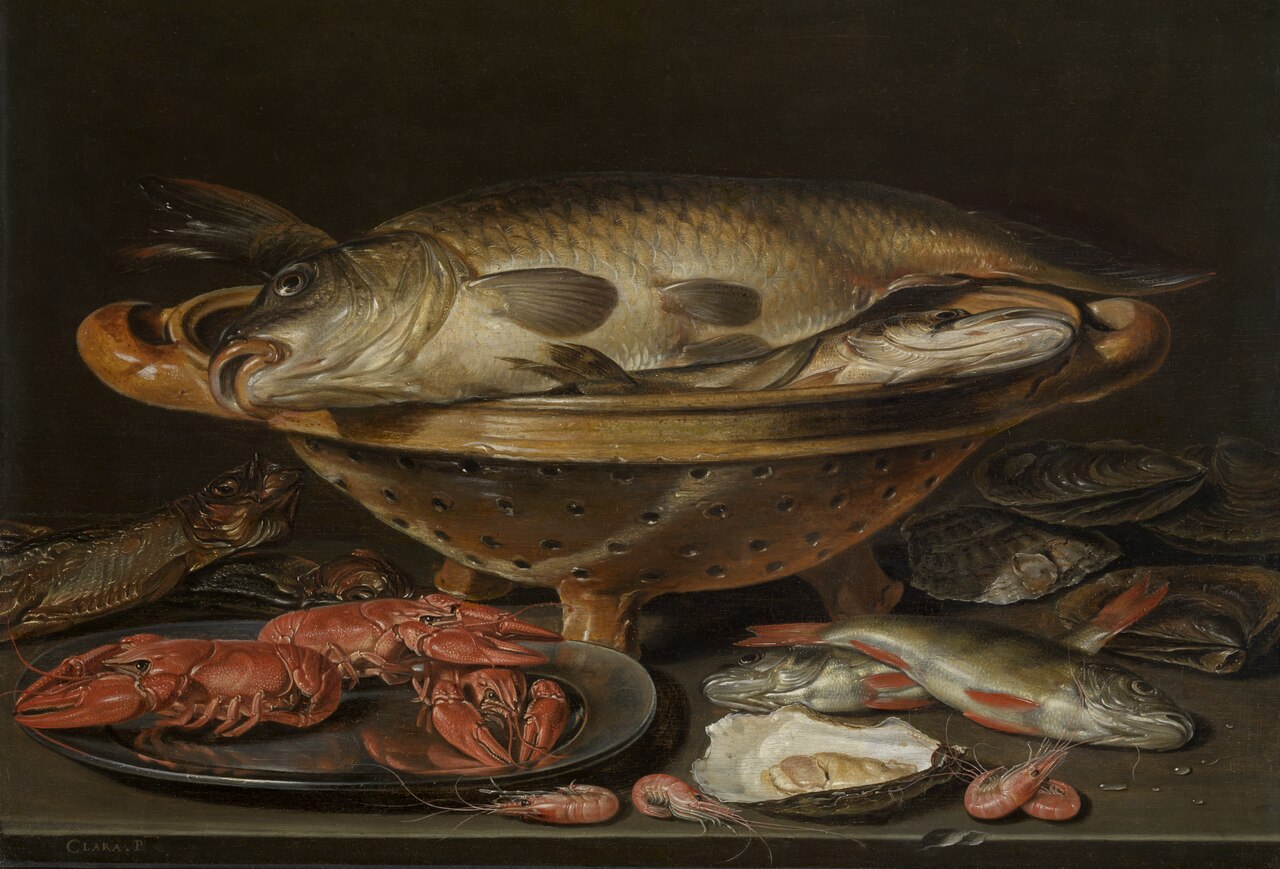


_02.jpg)
Early life Clara Peeters was born in 1587 in Antwerp, a bustling commercial centre of the Habsburg Netherlands. Little is known about her family, but archival records suggest she may have been the daughter of a merchant or a gold‑smith, occupations that would have familiarised her with the objects that later dominate her paintings. Antwerp’s thriving art market offered a rich environment for apprenticeship, and it is probable that Peeters entered a workshop in her teens, receiving training in drawing, oil painting and the handling of precious materials. By the turn of the century she was already producing works that displayed a confidence usually reserved for male contemporaries.
Career and style Peeters established herself as a specialist in the still‑life genre, a field that enjoyed high demand among the affluent merchant class. Her career spanned the transition from the late Renaissance to the early Baroque, and her style reflects that shift. She combined the meticulous observation of Dutch realism with the sumptuous, dramatic lighting typical of Flemish Baroque painting. Her canvases often feature a carefully arranged array of luxury foods—cheeses, nuts, fruit—and metal objects such as goblets, candlesticks and reflective plates. The compositions are balanced on a shallow plane, allowing the viewer to examine each element in close detail while still perceiving a harmonious overall design.
Peeters worked both in the Spanish Netherlands and later in the Dutch Republic, moving to The Hague sometime after 1625. The relocation may have been motivated by marriage or by the search for new patronage, but it also placed her within a network of collectors who prized the intricate realism of her work. Throughout her career she maintained a consistent approach to colour, favouring warm, earthy tones punctuated by the bright reds and golds of ripe fruit and polished metal.
Signature techniques Peeters distinguished herself through a number of technical innovations. She employed a fine, almost microscopic brushwork to render the texture of cheese rinds, the delicate veining of fruit skins and the reflective sheen of metal. Her handling of light is particularly noteworthy; she often positioned a single source—such as a candle or a window—so that it catches the surfaces of metal objects, creating vivid highlights that enhance the illusion of three‑dimensionality. This chiaroscuro effect, while common in Baroque painting, is applied with a precision that underscores her interest in materiality.
Another hallmark of her practice is the inclusion of self‑portraiture within the still‑life. In several early works Peeters painted a small, reflected image of herself holding a brush, a subtle assertion of authorship in a genre dominated by male artists. She also frequently added symbolic elements—such as a peeled orange or a wilting flower—to convey themes of transience and the fleeting nature of earthly pleasures, aligning her work with vanitas traditions.
Major works - **Still Life with Cheeses, Almonds and Pretzels (1615)** – This composition showcases a generous spread of dairy products, nuts and baked goods arranged on a dark wooden table. The cheeses are rendered with a buttery sheen, while the pretzels display a crisp, golden surface. A polished silver goblet reflects the surrounding items, demonstrating Peeters’s skill in depicting reflections. - **Still Life with Fish (1600)** – One of her earliest dated pieces, it presents a silver‑scaled fish lying beside a candlestick. The fish’s scales are painted with such precision that they appear almost tactile, and the candlestick’s flame provides the sole light source, casting soft shadows across the table. - **Still life with flowers and gilt goblets (1612)** – In this work Peeters combines a bouquet of fresh blossoms with opulent gilt goblets. The flowers, rendered in vivid reds and yellows, contrast with the warm glow of the metal, creating a visual dialogue between natural and manufactured beauty. - **Still life with cheese, artichoke and cherries (1625)** – This later piece reflects a mature compositional balance, juxtaposing the rough texture of cheese and artichoke with the smooth, glossy cherries. The work’s muted background allows the colours of the fruit to dominate, emphasizing Peeters’s continued fascination with colour contrast. - **Still life of fish with a candlestick (1611)** – Similar to the 1600 fish painting, this canvas features a larger fish and a more elaborate candlestick. The candle’s flame illuminates the fish’s scales, highlighting Peeters’s mastery of light on reflective surfaces.
Each of these works demonstrates her consistent focus on texture, light and the tactile qualities of everyday objects, while also revealing subtle developments in her handling of colour and composition over the course of her career.
Influence and legacy Clara Peeters occupies a singular position in art history as one of the first women to achieve recognition as a professional still‑life painter. Her meticulous approach set a benchmark for subsequent generations of Flemish and Dutch still‑life artists, influencing figures such as Jan van Huysum and Rachel Ruysch. The inclusion of a self‑portrait within her compositions prefigures later discussions of gender and authorship in art, and her works continue to be cited in scholarly debates about the role of women in early modern artistic production.
Modern exhibitions have revived interest in Peeters, positioning her alongside her male peers as a central figure in the development of the genre. Her paintings are held in major museum collections across Europe and North America, and they remain popular among collectors for their technical brilliance and the rare glimpse they offer into the domestic luxuries of the 17th‑century Low Countries. Peeters’s legacy endures not only through the visual appeal of her works but also through the broader narrative she provides about women’s contributions to the visual culture of the Baroque era.
Frequently asked questions
Who was Clara Peeters?
Clara Peeters (1587–1657) was a Flemish Baroque painter from Antwerp, renowned for being one of the earliest professional female artists specialising in still‑life.
What artistic style or movement is she associated with?
She worked within the Flemish Baroque tradition, combining realistic detail with dramatic lighting and rich colour to create sumptuous still‑life compositions.
What are her most famous works?
Key works include *Still Life with Cheeses, Almonds and Pretzels* (1615), *Still Life with Fish* (1600), *Still life with flowers and gilt goblets* (1612), *Still life with cheese, artichoke and cherries* (1625) and *Still life of fish with a candlestick* (1611).
Why does Clara Peeters matter in art history?
She pioneered the still‑life genre for women, set technical standards for texture and light, and her self‑portraiture within still‑life paintings foregrounds early discussions of gender and authorship.
How can I recognise a painting by Clara Peeters?
Look for meticulous rendering of food and metal objects, a single light source creating bright reflections, subtle self‑portraiture, and a balanced composition that highlights texture and colour contrast.