Peter van de Velde
1634 – 1723
In short
Peter van de Velde (1634–1723) was a Flemish marine painter from Antwerp, known for his detailed depictions of naval battles, harbours and shipwrecks. His work exemplifies the late‑Baroque interest in maritime subjects, and his paintings remain valuable records of 17th‑ and early‑18th‑century naval activity.
Notable works


Early life Peter van de Velde was born in Antwerp in 1634, a city that was a thriving centre of artistic production in the Southern Netherlands. Little is recorded about his family background, apprenticeship or formal training, but it is clear that he grew up in an environment where maritime commerce and naval warfare were part of everyday life. Antwerp’s bustling port and its connections to the wider Dutch Republic would have provided ample visual material for a young artist interested in ships and water‑scapes. Some scholars have suggested that the unusually long lifespan associated with van de Velde may conceal the activity of two painters—perhaps a father and son—working under the same name, but the surviving documentation does not allow a definitive separation.
Career and style Van de Velde emerged as a specialist in marine painting during the latter half of the 17th century, a period when the genre was gaining popularity across the Low Countries. His oeuvre reflects the late‑Baroque fascination with dramatic light, atmospheric effects and the technical precision of shipbuilding. Unlike the more idealised seascapes of earlier Flemish masters, van de Velde’s canvases often portray specific historical events, suggesting that he consulted contemporary naval reports or eyewitness accounts. His palette favours muted blues, greys and earthy tones, punctuated by the bright flashes of cannon fire or the warm glow of sunrise on hulls. The compositional balance typically places the horizon low, allowing the sky and clouds to dominate the visual field, while ships and harbours are rendered with careful attention to rigging, hull form and the play of water.
Signature techniques A number of technical hallmarks help to identify a van de Velde painting. First, his handling of water is distinguished by fine, almost stippled brushwork that captures the rippling surface and the reflections of masts and sails. Second, he employs a layered glazing method: thin washes of colour are built up to achieve depth, especially in the sky where subtle gradations convey weather changes. Third, the artist frequently includes minute details—such as flags, cannon positions and individual crew members—that lend narrative specificity. Finally, his signatures, when present, appear in a modest cursive script, often placed on a ship’s hull or a shoreline rock, underscoring his integration of the author’s mark into the scene itself.
Major works Among van de Velde’s most documented paintings are several that illustrate both his technical skill and his interest in contemporary naval affairs. *Naval battle near Elseneur in the Sound between the Dutch and the Swedish fleets, 8 November 1658* (dated 1670) captures a decisive encounter of the Second Northern War. The composition centres on a chaotic clash of vessels, with Dutch ships bearing orange‑red flags and Swedish galleons flying blue. Van de Velde renders the smoke of cannon fire with luminous whites that contrast against a storm‑laden sky, highlighting the drama of the moment.
The *Harbour in the Mediterranean* (1700) shifts focus to a peaceful commercial scene. Here, a tranquil basin is lined with warehouses and towers, while a fleet of merchantmen rests under a golden sunset. The work demonstrates van de Velde’s ability to convey a sense of place, with architectural details that suggest a generic Mediterranean port rather than a specific city, allowing the viewer to imagine any bustling harbour.
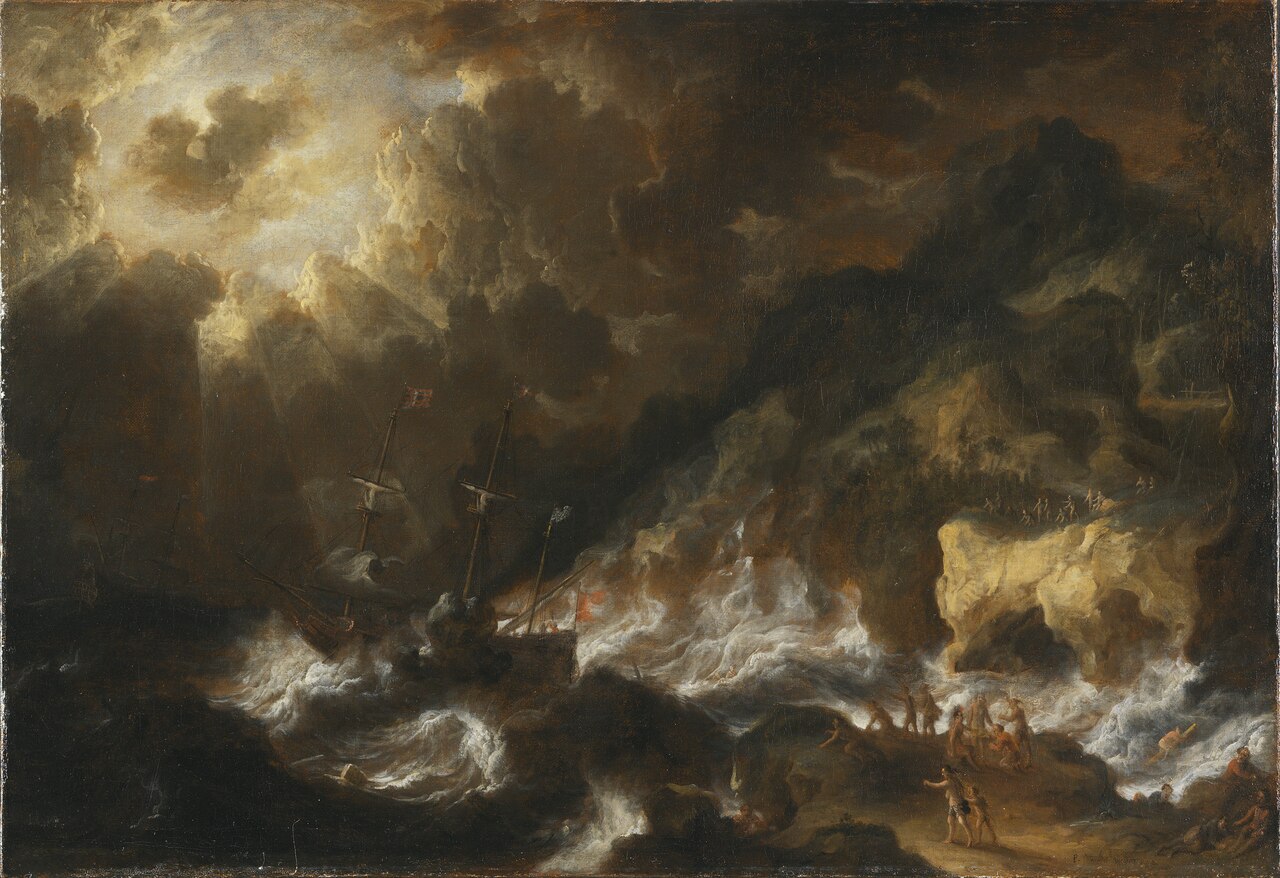
*Shipwreck* (1692) presents a more tragic tableau. A galleon is shown breaking apart on a rocky coastline, its crew struggling against the tide. The artist’s use of chiaroscuro accentuates the danger, with dark shadows enveloping the wrecked hull and bright highlights illuminating the desperate figures. This painting underscores van de Velde’s capacity to evoke emotion through maritime disaster.
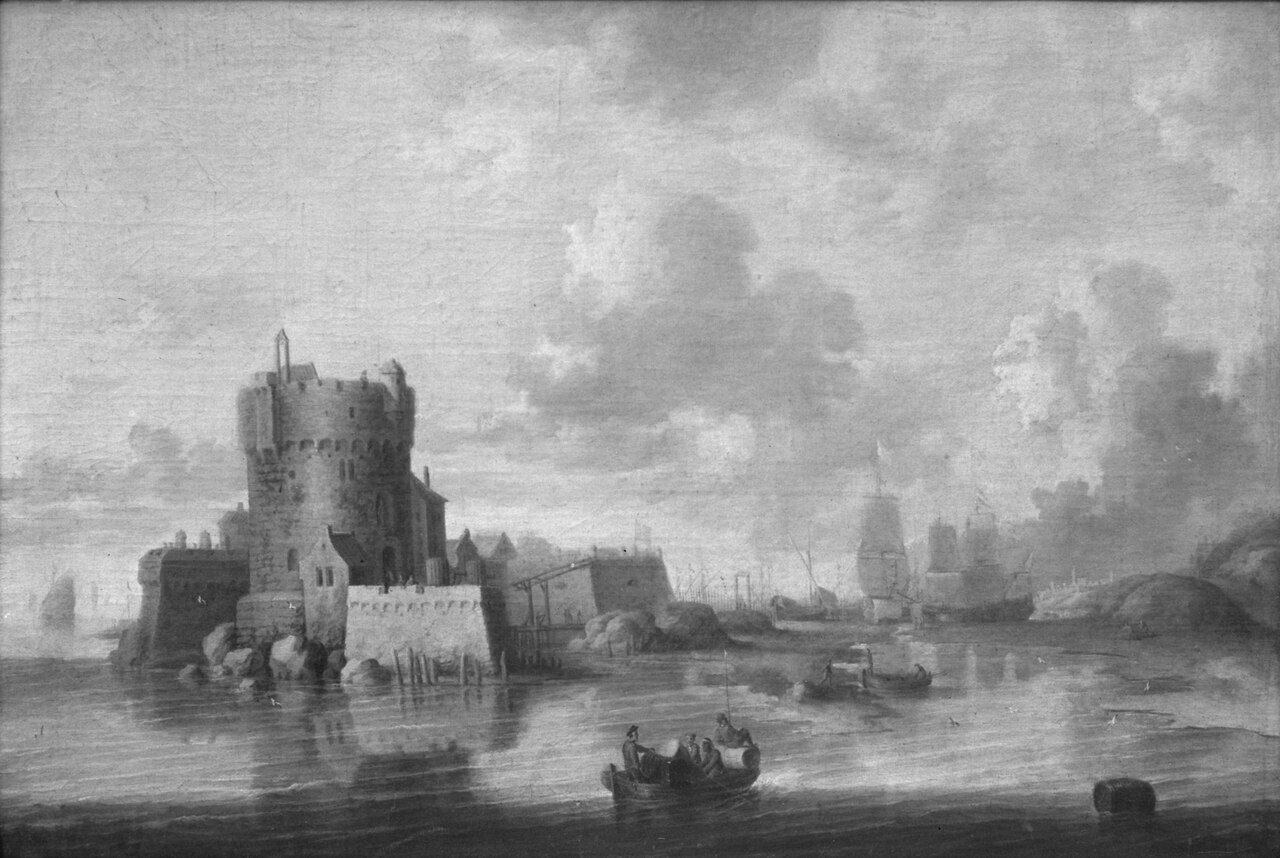
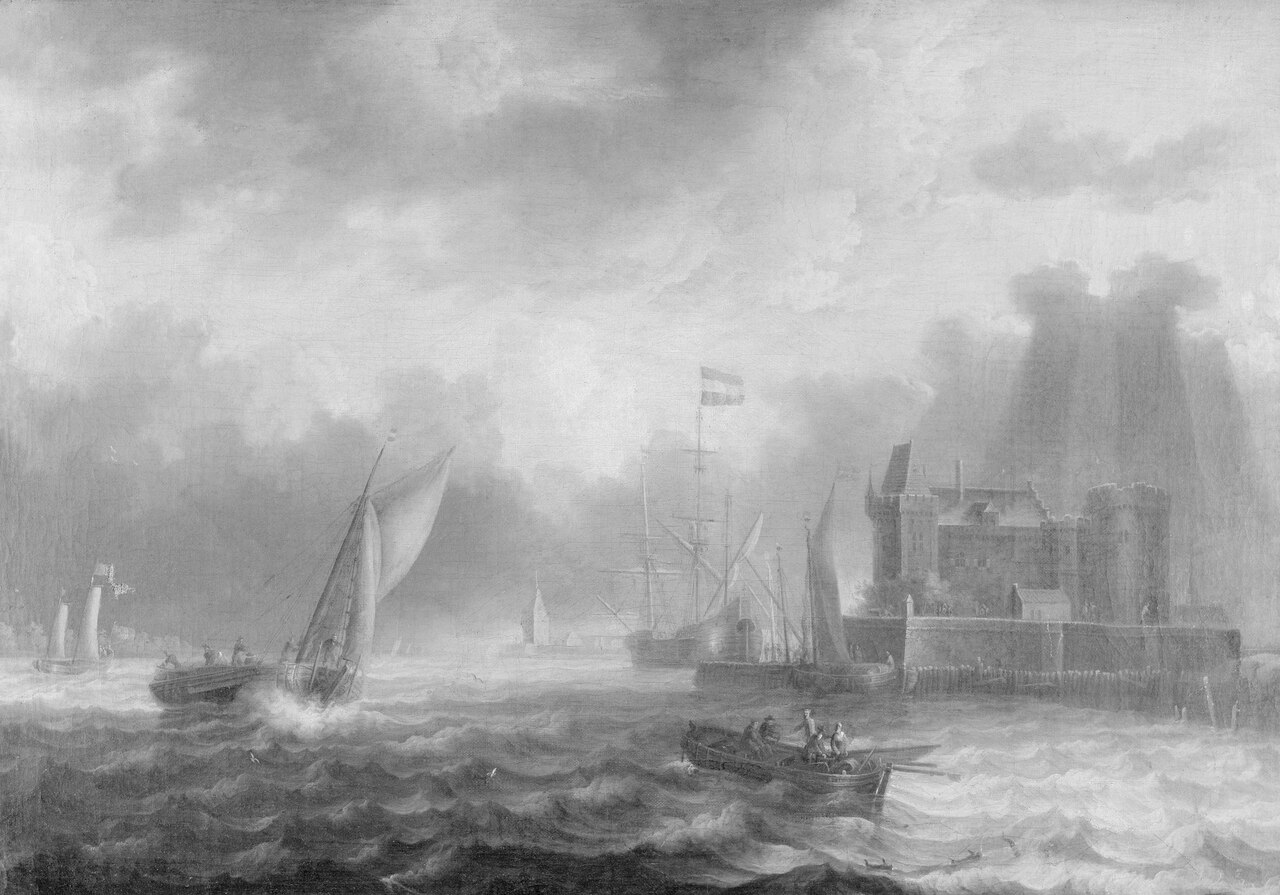
The *A Fortified Harbour* and *Fortress on a Riverbank* further attest to his interest in the interplay between naval and defensive architecture. Both works depict heavily armed forts guarding strategic waterways, with meticulous renderings of stone walls, cannon placements and the surrounding landscape. The fortified harbour scene is particularly notable for its panoramic view, which balances the solidity of the fortifications with the fluidity of the water.
Influence and legacy Peter van de Velde’s paintings contribute to the visual record of 17th‑ and early‑18th‑century maritime activity in the Southern Netherlands and beyond. While he was not formally aligned with a specific artistic movement, his work embodies the late‑Baroque emphasis on realism, drama and the documentation of contemporary events. His detailed approach influenced later marine painters in Antwerp and the broader Dutch sphere, who looked to his compositions for models of how to incorporate historical narrative into seascapes. The possible existence of two artists sharing his name may have amplified his output, ensuring a broader dissemination of his style.
In modern scholarship, van de Velde is recognised for his dual role as both artist and chronicler. His paintings are valuable to historians studying naval technology, ship design and the visual culture of warfare. Museums and private collections continue to acquire his works, and they are frequently cited in exhibitions that explore the maritime heritage of the Low Countries. Though not a household name, Peter van de Velde remains an essential figure for specialists seeking to understand the evolution of marine painting and its intersection with historical documentation.
Frequently asked questions
Who was Peter van de Velde?
Peter van de Velde (1634–1723) was a Flemish marine painter from Antwerp who specialised in detailed depictions of naval battles, harbours and shipwrecks.
What artistic style or movement is he associated with?
He worked in a late‑Baroque marine painting style, combining realistic ship detail with dramatic lighting and narrative composition.
What are his most famous works?
His notable paintings include *Naval battle near Elseneur in the Sound* (1670), *Harbour in the Mediterranean* (1700), *Shipwreck* (1692), *A Fortified Harbour* and *Fortress on a Riverbank*.
Why is Peter van de Velde important in art history?
He provides a visual record of 17th‑ and early‑18th‑century naval activity and influenced later marine painters with his precise ship rendering and narrative approach.
How can I recognise a painting by van de Velde?
Look for meticulous ship details, fine stippled water, layered glazes, dramatic light effects, and often a modest signature integrated into the scene, such as on a hull or rock.