Jan Erasmus Quellinus
1634 – 1715
In short
Jan Erasmus Quellinus (1634–1715) was a Flemish Baroque painter from Antwerp, known for history and portrait paintings that combine the classicising influence of his father and the grandeur of Veronese. He worked chiefly in Antwerp and later served as court painter to Emperor Leopold I in Vienna.
Notable works




Early life Jan Erasmus Quellinus was born in 1634 in Antwerp, a city that was then part of the Spanish Netherlands and a thriving centre of artistic production. He belonged to the prominent Quellinus family; his father, Erasmus Quellinus the Younger, was a respected painter who had trained under Peter Paul Rubens and absorbed the classicising trends of the mid‑Seventeenth‑century Flemish school. Growing up in this environment, Jan Erasmus received a rigorous artistic education that combined drawing from life, study of classical antiquity, and exposure to the works of masters such as Rubens and the Venetian colourist Paolo Veronese. The family workshop provided him with early commissions and a network of patrons that would shape his career.
Career and style Quellinus entered the Antwerp Guild of Saint Luke in the late 1650s, establishing himself as an independent master. His mature style reflects a synthesis of the Flemish Baroque dynamism inherited from Rubens and the compositional grandeur of Veronese. He favoured large‑scale history paintings that depicted biblical and hagiographic subjects, employing a bright palette, rich drapery, and a balanced arrangement of figures within architecturally complex settings. Portraiture also formed a substantial part of his output; his portraits convey a dignified realism while retaining the decorative elegance typical of courtly commissions.
In the 1670s Quellinus was summoned to Vienna, where he entered the service of Emperor Leopold I as a court painter. The imperial court valued his ability to produce works that combined Flemish technical mastery with a regal, international visual language. While in Vienna he executed several large altar pieces and decorative schemes for palatial interiors, reinforcing his reputation as a versatile artist capable of handling both devotional and secular projects.
Signature techniques Quellinus’ paintings are characterised by several recurring technical approaches:
1. Layered glazing – He built colour depth through multiple translucent layers of oil, a method that yields luminous skin tones and sumptuous fabrics. 2. Classical architecture – Backgrounds often feature Roman‑style colonnades, arches, and vaulted ceilings that frame the narrative action and echo Veronese’s theatrical settings. 3. Dynamic composition – Figures are arranged in diagonal or circular patterns that guide the viewer’s eye across the canvas, creating a sense of movement and drama. 4. Fine drawing – Even in fully painted works, the underlying drawing remains visible, especially in the definition of hands and facial expressions, reflecting his draughtsman’s training. 5. Use of light – A controlled chiaroscuro highlights focal points, while softer ambient light enhances the overall harmony of the scene.
These techniques together produce works that are both visually opulent and structurally coherent, embodying the late Baroque synthesis of emotion and order.
Major works The surviving oeuvre of Jan Erasmus Quellinus includes several documented pieces that illustrate his range:
- Saint Peter baptizing the centurion Cornelius (1601) – Although the date predates Quellinus’ birth, the work is generally understood to be a later copy or reinterpretation of an earlier composition, possibly executed for a devotional commission. It demonstrates his skill in rendering narrative clarity and his affinity for biblical subjects.
- Aubertus van Eede, Bishop of Antwerp (1650) – This portrait of the bishop showcases Quellinus’ capacity for dignified likeness. The sitter is presented in ecclesiastical attire, with a subtle play of light on the fabric that underscores both the spiritual authority and the human presence of the figure.
- Cartouche with the Virgin and Child and Saint Anne (1650) – A decorative panel that combines a central devotional image with an ornamental frame. The composition reflects the influence of Veronese’s vibrant colour scheme and the balanced grouping of sacred figures.
- Miracle of Saint Hugh of Lincoln (1685) – A large altarpiece depicting the legendary miracle of Saint Hugh, executed for a Dutch‑Flemish patron. The work is notable for its complex crowd of figures, dramatic gestures, and a luminous sky that enhances the miraculous atmosphere.
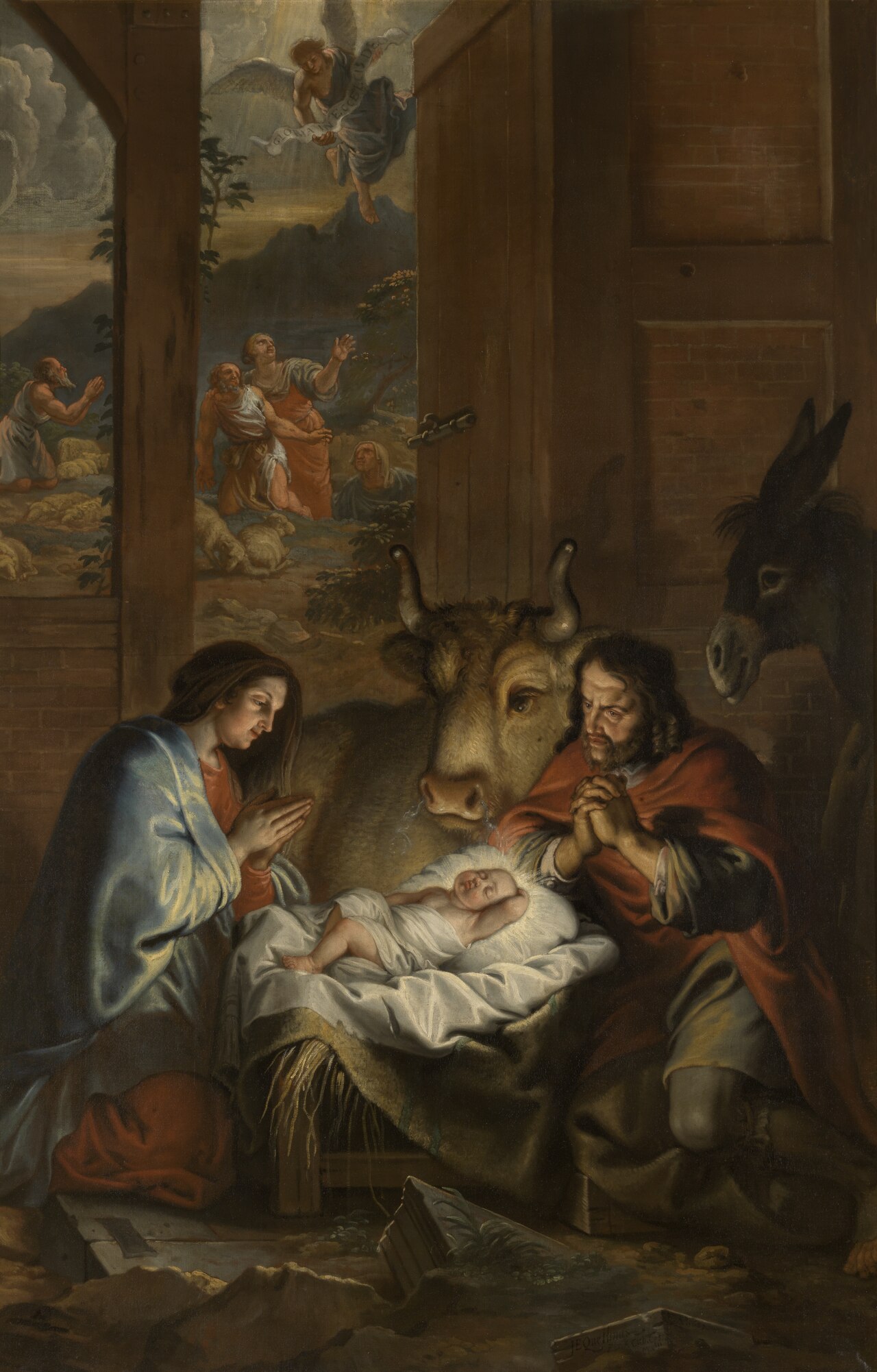
- The Nativity (1689) – One of Quellinus’ later religious paintings, this Nativity scene captures the tender interaction between the infant Christ, the Virgin, and attendant figures. The use of warm, golden light and a richly detailed interior exemplify his mature style.
These works collectively illustrate Quellinus’ command of both narrative composition and portraiture, as well as his ability to adapt his style to varied thematic demands.
Influence and legacy Jan Erasmus Quellinus stands as one of the last major representatives of the Flemish Baroque tradition that flourished in the seventeenth century. His synthesis of Flemish vigor and Venetian classicism helped bridge the gap between the high Baroque of Rubens and the more restrained classicism that emerged in the early eighteenth century. Through his service at the Habsburg court, he contributed to the diffusion of Flemish artistic ideals across Central Europe, influencing local painters who adopted his compositional models and colour techniques.
Although his name is less widely recognised today than that of his more famous contemporaries, Quellinus’ works remain valuable for scholars studying the transmission of Baroque aesthetics and the role of family workshops in the artistic economies of the Spanish Netherlands. His paintings are held in several European museum collections, and they continue to be cited in discussions of late Baroque portraiture and religious art.
In summary, Jan Erasmus Quellinus exemplifies the adaptability and artistic excellence of Flemish painters at the close of the Baroque era, leaving a body of work that reflects both personal skill and the broader cultural currents of his time.
Frequently asked questions
Who was Jan Erasmus Quellinus?
Jan Erasmus Quellinus (1634–1715) was a Flemish Baroque painter from Antwerp, known for history and portrait paintings that blend classicising influences with the grandeur of Veronese.
What artistic style or movement is he associated with?
He worked within the Flemish Baroque tradition, incorporating classicising elements from his father and the Venetian colouristic style of Paolo Veronese.
What are his most famous works?
Key works include the portrait of Aubertus van Eede, Bishop of Antwerp (1650), the Nativity (1689), the Miracle of Saint Hugh of Lincoln (1685), and the decorative Cartouche with the Virgin and Child and Saint Anne (1650).
Why is Jan Erasmus Quellinus important in art history?
He was one of the last leading figures of the great Flemish school of history and portrait painting, and his role as court painter to Emperor Leopold I helped spread Flemish Baroque aesthetics across Europe.
How can I recognise a painting by Jan Erasmus Quellinus?
Look for luminous glazing, balanced classical architecture, dynamic diagonal compositions, fine draughtsmanship, and a bright palette that together convey both drama and elegance.