Jacques d'Arthois
1613 – 1686
In short
Jacques d'Arthois was a 17th-century painter and tapestry designer from the Southern Netherlands, known for his detailed depictions of wooded landscapes, often featuring figures. He was particularly recognized for his scenes of the forests surrounding Brussels, and his influential style was emulated by many landscape artists of his time and beyond.
Notable works
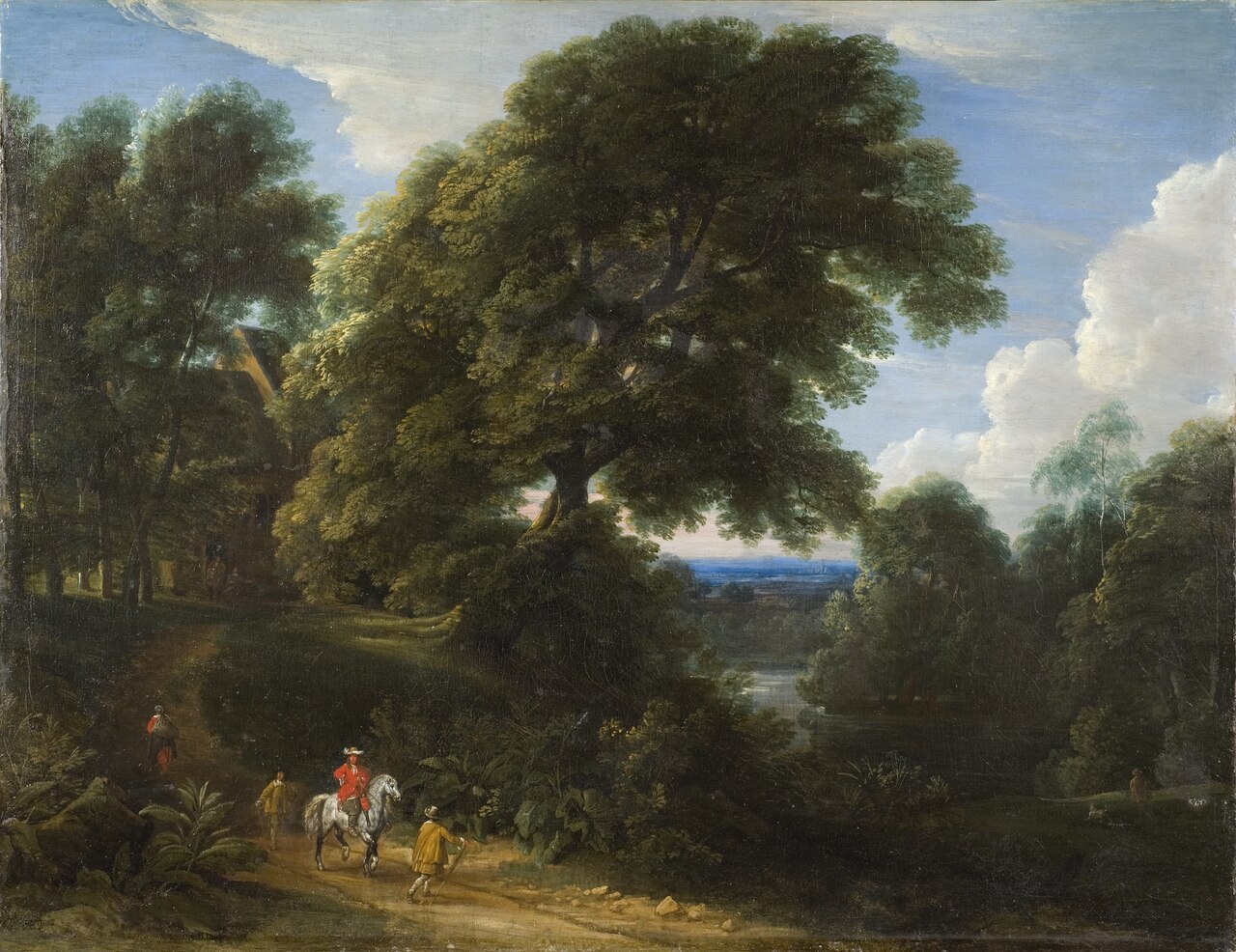


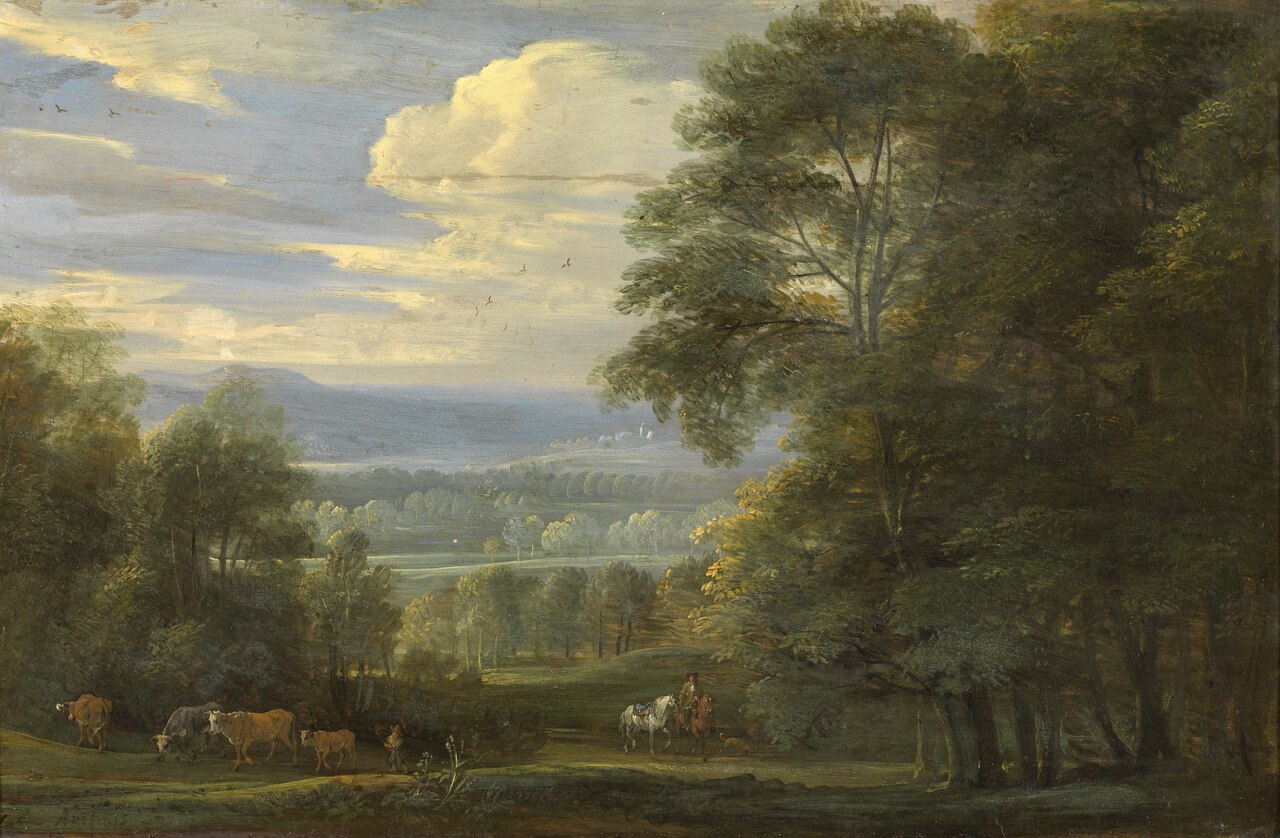
Early life Jacques d'Arthois was born in Brussels in 1613 and died in the same city in 1686. Details regarding his early life and artistic training are not extensively documented. However, his prolific output and mature style suggest a dedicated engagement with painting from a relatively young age. As a native of Brussels, the surrounding natural environment, particularly its extensive woodlands, likely played a significant role in shaping his artistic vision from his formative years.
Career and style Artois's career was primarily centered in Brussels, where he established himself as a significant landscape painter during the 17th century. While specific details about his apprenticeships or early commissions are scarce, his work demonstrates a deep understanding of the Flemish landscape tradition. He is primarily associated with the depiction of wooded scenes, often populated with figures that add narrative or scale to the natural settings. His nationality places him within the artistic milieu of the Southern Netherlands, a region renowned for its rich artistic heritage, though his specific affiliation with a particular art movement remains undefined.
His style is characterized by a meticulous attention to detail, particularly in rendering the textures of trees, foliage, and the play of light and shadow within dense forests. Unlike some of his contemporaries who focused on idealized or panoramic vistas, d'Arthois often preferred a more intimate and immersive approach to landscape, drawing the viewer into the depths of the woods. The figures he included, whether solitary riders, families, or hunting parties, are often rendered with a degree of naturalism, integrated seamlessly into their environment.
Signature techniques One of d'Arthois's signature techniques was his ability to capture the atmospheric qualities of woodland environments. He masterfully employed chiaroscuro, the interplay of light and shadow, to create a sense of depth and volume within his densely wooded compositions. This technique not only enhanced the realism of his forests but also imbued them with a dramatic intensity. The rendering of bark, leaves, and undergrowth was often executed with a fine brush, showcasing a remarkable level of precision and observation. He also demonstrated skill in depicting various atmospheric conditions, such as dappled sunlight filtering through canopies or the misty veils that could obscure distant elements within the landscape.
Furthermore, d'Arthois was adept at composing scenes that felt both specific and universal. While his landscapes are rooted in the observable world, particularly the environs of Brussels, they possess a timeless quality. The figures within his paintings, though sometimes small in scale, are crucial elements that provide a human presence and often suggest a narrative, inviting the viewer to speculate on their activities and their relationship with the depicted natural world.
Major works Among Jacques d'Arthois's notable works is "Landscape with a Rider in Red," a piece that exemplifies his skill in integrating human elements into natural settings. The vibrant red of the rider's attire likely serves as a focal point, drawing the eye through the carefully rendered woodland. "Family Group in a Landscape," dated 1645, showcases his ability to depict genre scenes within a natural context, highlighting the harmonious, or perhaps contrasting, relationship between humanity and nature. The composition likely emphasizes the domesticity of the figures against the backdrop of the expansive natural world.
"Wooded Landscape with Hunters," from 1657, further illustrates his recurring theme of human activity within the forest. This work would likely feature a hunting party, demonstrating d'Arthois's interest in capturing dynamic scenes and the textures of the forest floor and undergrowth. "Road through a Forest" and "Landscape" are more general titles that suggest his broad engagement with the genre, with each painting likely offering a unique perspective on the diverse aspects of woodland scenery, from the light-filled clearings to the more shadowed, dense thickets. These works collectively demonstrate his consistent exploration of the forest as a subject, rendered with distinct technical skill and compositional sensibility.
Influence and legacy Jacques d'Arthois holds a significant place in the history of 17th-century landscape painting, particularly within the context of Brussels. He is recognized as one of the few landscape artists from his city whose reputation endured beyond his lifetime, influencing subsequent generations of painters. His distinct style, characterized by its detailed rendering of wooded interiors and atmospheric effects, was widely admired and imitated. Artists who followed often adopted his compositional strategies and his meticulous approach to depicting the natural world, solidifying his impact on the development of landscape art in the Southern Netherlands. His work served as a valuable reference for artists seeking to capture the essence of the local environment with both fidelity and artistic flair, ensuring his legacy as a key figure in the genre.
Frequently asked questions
Who was Jacques d'Arthois?
Jacques d'Arthois was a 17th-century painter and tapestry designer from the Southern Netherlands, born and died in Brussels. He specialized in painting detailed wooded landscapes often featuring figures.
What art movement was Jacques d'Arthois associated with?
Jacques d'Arthois's specific art movement is not clearly defined. He worked within the broader tradition of landscape painting in the Southern Netherlands during the Baroque period.
What are some of Jacques d'Arthois's most famous works?
Some of his notable works include 'Landscape with a Rider in Red,' 'Family Group in a Landscape' (1645), and 'Wooded Landscape with Hunters' (1657).
Why is Jacques d'Arthois considered an important artist?
Artois is important because he was an influential landscape painter from Brussels whose style was imitated by many, ensuring his fame endured for centuries. He was known for his detailed and atmospheric depictions of woodlands.
How can I recognize a painting by Jacques d'Arthois?
Look for detailed, atmospheric renderings of dense wooded landscapes, often with figures integrated into the scene. His work typically features a masterful use of light and shadow, highlighting the textures of trees and foliage.