Jacob Denys
1644 – 1708
In short
Jacob Denys (1644–1708) was a Flemish Baroque painter from Antwerp, noted for his portraiture and occasional history and landscape works, who spent much of his career in Italy under the patronage of the Dukes of Mantua and Tuscany.
Notable works




Early life Jacob Denys was born in 1644 in Antwerp, a thriving centre of artistic production in the Southern Netherlands. He grew up in a family that was closely linked to the city's guild system, which regulated the training and professional life of painters. As was customary for aspiring artists of the period, Denys likely began his apprenticeship in his early teens, receiving instruction in drawing, composition and the handling of oil pigments. The Antwerp Guild of Saint Luke, to which his family had ties, would have provided both the practical framework for his apprenticeship and exposure to the works of leading Flemish masters such as Peter Paul Rubens and Anthony van Dyck.
Career and style After completing his training in Antwerp, Denys embarked on a career that quickly extended beyond the Low Countries. By the late 1660s he was travelling to Italy, a common pilgrimage for Northern artists seeking to study the classical heritage and the flourishing Baroque scene. In Italy he secured commissions from aristocratic patrons, most notably the Duke of Mantua, Ferdinando Gonzaga, and later the Duke of Tuscany, Cosimo III de' Medici. These patronage relationships anchored Denys in the Italian courtly milieu for several decades.
Denys’ painting style reflects the synthesis of Flemish precision and Italianate dynamism that characterised many expatriate artists of his generation. His portraits display a meticulous attention to facial features and costume detail, hallmarks of the Flemish tradition, while the handling of light and the inclusion of rich, dramatic backgrounds echo the Baroque sensibilities of his Italian contemporaries. Although he is primarily remembered for portraiture, his oeuvre also includes landscape and history paintings, suggesting a versatility that allowed him to respond to varied patron demands.
Signature techniques Denys employed several technical approaches that help to identify his hand. First, his brushwork in rendering flesh tones is fine and layered, creating a subtle modelling that conveys both texture and the translucency of skin. Second, he often used a limited but saturated colour palette for clothing, favouring deep reds, blues and ochres that contrast sharply with a darker, muted backdrop. Third, his compositions frequently incorporate symbolic objects—such as books, instruments or floral garlands—that serve both decorative and allegorical purposes. Finally, Denys demonstrated a deft skill in rendering reflective surfaces, particularly metal and glass, which adds a tactile realism to his portraits.
Major works Denys’ surviving works provide a window into his artistic development and the circles in which he moved.
* Gregorius Martens, Mayor of Antwerp and Dean of the Guild of Saint Luke (1650) – Although the date associated with this portrait refers to the subject’s period of office, the painting itself is attributed to Denys and showcases his capacity to convey civic authority. The sitter is depicted in formal attire, with a subtle play of light that accentuates the texture of the velvet coat and the polished brass insignia of the guild.
* Holy Family in a Flower Garland (1650) – This religious composition illustrates Denys’ occasional forays into devotional subjects. The central figures of the Virgin, Child and Saint Joseph are surrounded by a lush garland of blossoms, a motif that underscores the Baroque fascination with nature as a symbol of divine abundance. The painting’s delicate colour harmonies and gentle chiaroscuro reveal the influence of Italian masters.
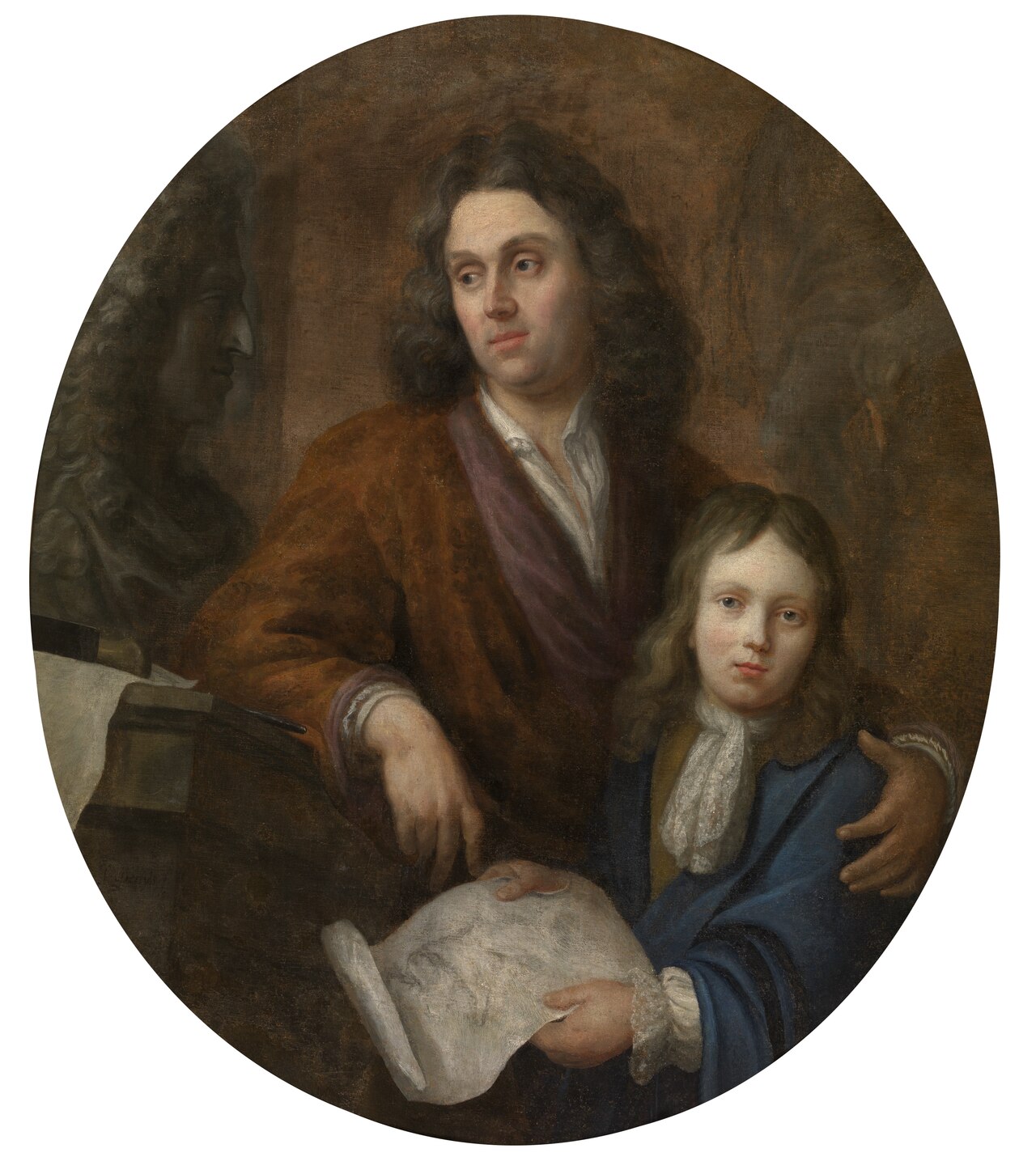
* The Sculptor Willem Kerricx and his Son Willem Ignatius (1691) – Executed later in Denys’ Italian period, this double portrait captures the intergenerational bond of a renowned Flemish sculptor and his son. Denys places the figures in a workshop setting, allowing the viewer to glimpse tools and unfinished marble, thereby linking the act of painting to the craft of sculpture. The composition’s balanced arrangement and the careful rendering of the figures’ expressions exemplify Denys’ mature portrait style.
* Portrait of Ranuccio II Farnese, Duke of Parma (1630‑1694) – While the dates in the title refer to the duke’s lifespan, Denys’ portrait of Ranuccio II demonstrates his ability to navigate high‑court portraiture. The duke is presented in sumptuous armour, with a regal bearing and an elaborate background that includes heraldic symbols. Denys’ treatment of the metallic surfaces and the subtle modelling of the duke’s facial features attest to his technical proficiency.
* Portrait of Alessandro Zoni (1668) – This work, dated to the year Denys was establishing his reputation in Italy, portrays a young gentleman in an elegant, dark‑coloured coat. The portrait is notable for its psychological depth; the sitter’s direct gaze and slight smile convey a sense of confidence. The restrained background and the focus on the sitter’s hands, which hold a document, hint at Zoni’s professional status.
These works collectively illustrate Denys’ range—from civic and courtly portraiture to religious and genre scenes—while also reflecting the cross‑cultural influences that shaped his career.
Influence and legacy Jacob Denys did not found a distinct school, nor is he associated with a specific artistic movement; however, his career exemplifies the broader phenomenon of Flemish artists integrating into Italian artistic circles during the Baroque era. By serving patrons such as the Gonzaga and Medici families, Denys contributed to the visual culture of Italian courts, bringing Northern precision and a keen eye for detail to the sumptuous environments of Mantua and Florence.
His portraits, particularly those of prominent figures, served as visual records of the political and cultural elite of the late 17th century. While his name is less widely recognised than that of his more famous contemporaries, scholars of Flemish Baroque painting acknowledge Denys for his reliable craftsmanship and his role in the artistic exchange between the Low Countries and Italy. Contemporary exhibitions of Baroque portraiture occasionally include his works to illustrate the transnational networks that underpinned the period’s artistic production.
In the centuries after his death, Denys’ paintings have been preserved in both public collections and private holdings across Europe. Their continued study offers insight into the stylistic hybridity of the era and the ways in which artists negotiated patronage, regional identity and the prevailing aesthetic trends of the Baroque. Today, his oeuvre remains a valuable resource for researchers exploring the diffusion of Flemish techniques into Italian courtly art and the enduring appeal of portraiture as a means of documenting status and personality.
Frequently asked questions
Who was Jacob Denys?
Jacob Denys (1644–1708) was a Flemish Baroque painter from Antwerp, best known for his portraits and for working extensively in Italy under the patronage of the Dukes of Mantua and Tuscany.
What artistic style or movement is he associated with?
Denys worked within the Baroque tradition, blending Flemish precision with the dramatic lighting and compositional vigor characteristic of Italian Baroque art.
What are his most famous works?
Key works include the portrait of Gregorius Martens, Mayor of Antwerp; Holy Family in a Flower Garland; The Sculptor Willem Kerricx and his Son Willem Ignatius; the portrait of Duke Ranuccio II Farnese of Parma; and the portrait of Alessandro Zoni.
Why does Jacob Denys matter in art history?
He exemplifies the cultural exchange between the Southern Netherlands and Italy in the 17th century, illustrating how Flemish artists contributed to the visual culture of Italian courts while maintaining their own regional techniques.
How can I recognise a Jacob Denys painting?
Look for finely rendered flesh tones, a limited but rich colour palette for clothing, subtle symbolic accessories, and a meticulous treatment of reflective surfaces such as metal or glass, all set within a balanced Baroque composition.