Gillis d'Hondecoeter
1575 – 1638
In short
Gillis d'Hondecoeter (1575–1638) was a Southern Netherlandish painter known for his Flemish‑influenced landscapes, animal scenes and bird studies. Working in Antwerp and later Amsterdam, he bridged the late Renaissance style of his native region with the emerging Dutch realism, and he founded a family line that produced several notable artists.
Notable works


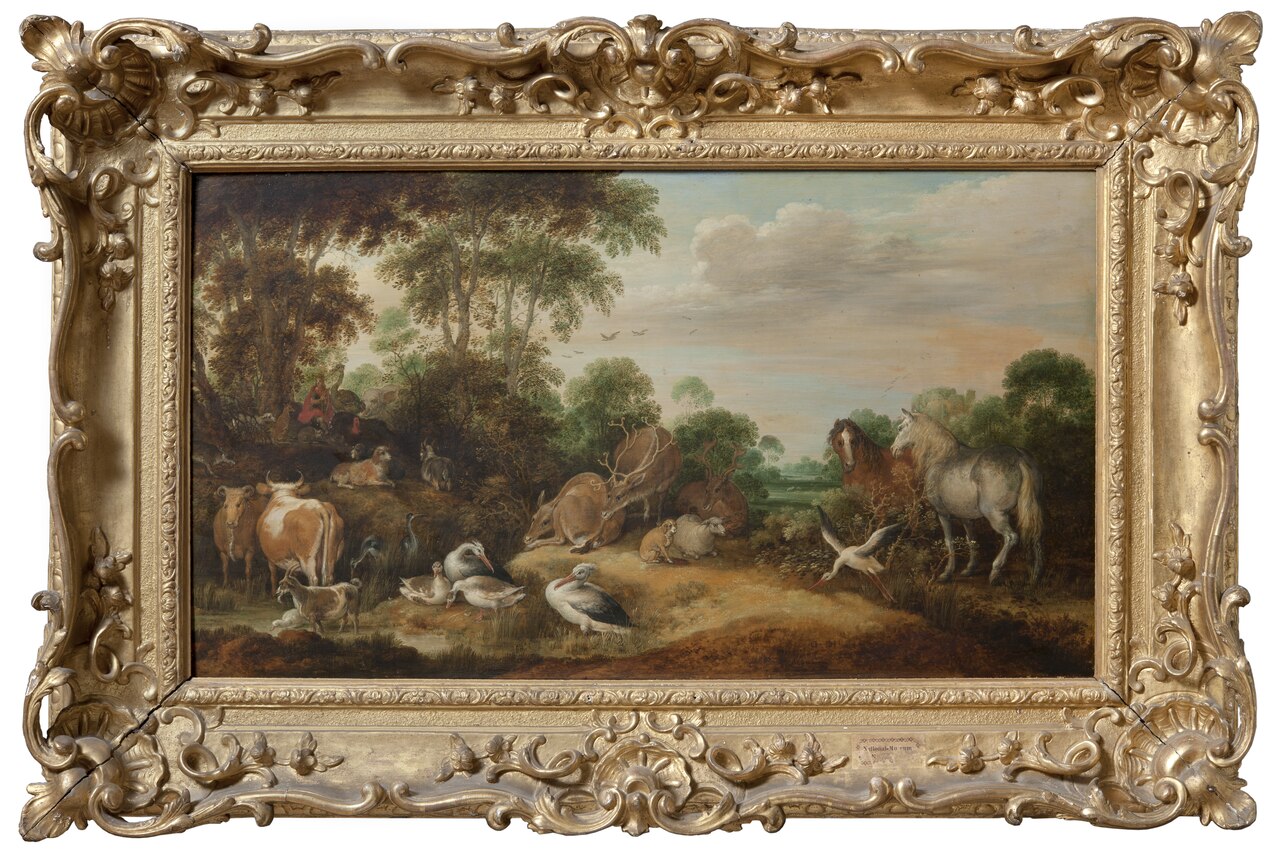
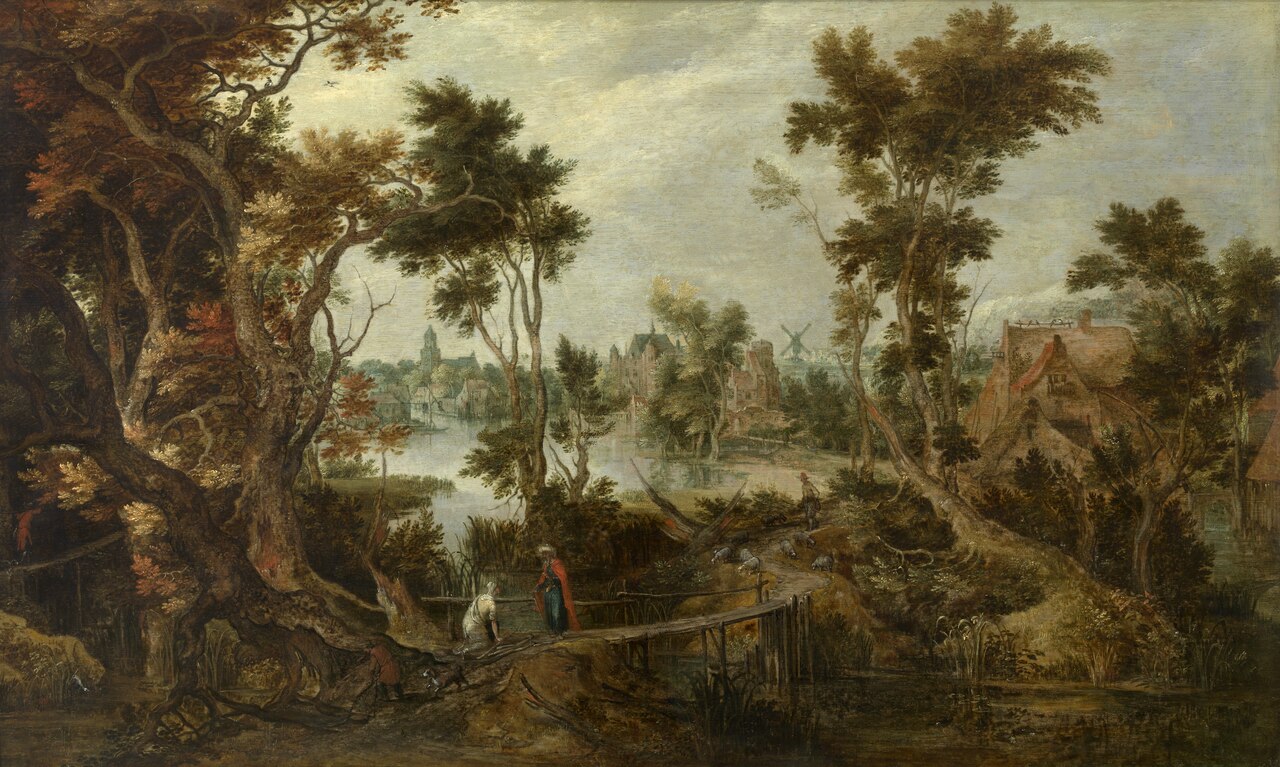

Early life Gillis Claesz. de Hondecoeter was born in 1575 in Antwerp, a major artistic centre of the Southern Netherlands. His family background is not extensively documented, but he grew up in an environment where the thriving Flemish painting tradition—characterised by meticulous detail, vibrant colour and a keen interest in natural subjects—was the dominant cultural force. Antwerp at the turn of the 17th century offered a bustling market for art, an extensive network of guilds, and a vibrant exchange of ideas between local masters and visiting artists. These conditions provided d'Hondecoeter with access to apprenticeships and training that would shape his early artistic development.
Career and style D'Hondecoeter began his professional life as a painter of landscapes, trees, fowl and other wildlife, employing a Flemish visual vocabulary that emphasized rich textures and decorative composition. His early works display a synthesis of the Northern Renaissance's attention to detail with the more picturesque, almost theatrical arrangements favoured by Flemish court painters. As the Dutch Republic’s artistic climate evolved, d'Hondecoeter gradually incorporated a more realistic, observation‑based approach. This transition is evident in the increasing naturalism of his animal depictions, where birds and mammals are rendered with a keen eye for anatomy and behaviour, reflecting the broader shift toward Dutch genre painting.
The artist’s career spanned several decades and saw him relocate to Amsterdam, where he died in 1638. In Amsterdam he joined a community of painters who were experimenting with light, atmosphere and the everyday world. While he never aligned himself with a formal movement, his work sits at the intersection of late Flemish Baroque and early Dutch realism, making him a stylistic bridge between the two regions.
Signature techniques D'Hondecoeter’s paintings are distinguished by a few recurring technical choices. First, he employed a layered glazing method, building colour through successive translucent layers to achieve depth in foliage and sky. Second, his handling of bird feathers and fur demonstrates a delicate, almost stippled brushwork that captures the subtle play of light on plumage. Third, he often composed his subjects within a clear spatial hierarchy: a foreground populated by animals, a middle ground of trees or buildings, and a distant landscape that recedes into atmospheric perspective. This structure guides the viewer’s eye and creates a narrative rhythm within each composition.
Another hallmark is his use of symbolic elements. In works such as "Orpheus Playing for the Animals," d'Hondecoeter integrates mythological or biblical themes, using animals as allegorical participants. This practice aligns him with the Flemish tradition of embedding moral or emblematic content within ostensibly natural scenes.
Major works - **Paradise (1610)** – One of his earliest dated pieces, "Paradise" presents an idealised garden teeming with birds, a setting that showcases his mastery of avian anatomy and his ability to orchestrate a harmonious natural tableau. - **Landscape with Prophet Elijah and the Widow of Zarephath (1613)** – This work merges biblical narrative with a lush landscape, placing the figures of Elijah and the widow amidst a richly detailed environment, illustrating d'Hondecoeter’s skill in integrating human subjects within his dominant natural motifs. - **Orpheus Playing for the Animals (1614)** – Here the legendary musician is surrounded by a variety of birds, each rendered with distinct species‑specific characteristics. The painting exemplifies his talent for combining mythological storytelling with precise animal studies. - **The Country Road (1620)** – A later work that reflects his shift toward Dutch realism, this composition depicts a rural pathway flanked by trees and grazing livestock, rendered with a more subdued palette and an emphasis on atmospheric effects. - **Rocky Landscape with Deer and Goats (1620)** – In this piece, d'Hondecoeter captures a rugged terrain populated by deer and goats, demonstrating his capacity to portray both the untamed natural world and the subtle interaction of light across stone and fur.
These works collectively trace the evolution of his style, from the decorative exuberance of early Flemish influences to a more restrained, observational realism.
Influence and legacy Gillis d'Hondecoeter’s significance lies not only in his own output but also in the artistic lineage he established. He fathered Gijsbert d'Hondecoeter, who continued the family’s focus on animal painting, and his grandchildren Melchior d'Hondecoeter and Jan Weenix became prominent figures in Dutch Baroque art. Melchior, in particular, achieved great fame for his dynamic bird and hunting scenes, a direct inheritance of his grandfather’s thematic interests. Moreover, through his daughter Josijntje’s marriage to Jan Baptist Weenix, the family network intertwined with another leading Dutch painter, further cementing their collective impact on 17th‑century art.
Art historians regard Gillis d'Hondecoeter as a transitional figure whose works embody the cross‑currents between Flemish decorative tradition and the burgeoning Dutch naturalism. His detailed animal studies contributed to the growing scientific interest in zoology, while his compositional strategies influenced subsequent generations of painters who specialised in wildlife and genre scenes. Today, his paintings are valued for their technical proficiency, narrative depth and as a testament to the artistic exchanges that shaped early modern European art.
Frequently asked questions
Who was Gillis d'Hondecoeter?
Gillis d'Hondecoeter (1575–1638) was a Southern Netherlandish painter noted for his landscapes, bird and animal scenes, bridging Flemish Baroque and early Dutch realism.
What artistic style or movement is he associated with?
He worked in a Flemish‑influenced style that later adopted Dutch realistic techniques, but he is not tied to a specific formal movement.
What are his most famous works?
Key works include "Paradise" (1610), "Landscape with Prophet Elijah and the Widow of Zarephath" (1613), "Orpheus Playing for the Animals" (1614), "The Country Road" (1620) and "Rocky Landscape with Deer and Goats" (1620).
Why is Gillis d'Hondecoeter important in art history?
He acted as a stylistic bridge between Flemish Baroque and Dutch realism and founded a family of artists—most notably Melchior d'Hondecoeter—who shaped 17th‑century Dutch painting.
How can I recognise a painting by Gillis d'Hondecoeter?
Look for meticulous bird and animal detail, layered glazing, a clear foreground‑middle‑background hierarchy, and often a narrative element that combines natural observation with symbolic or mythological themes.