Denis van Alsloot
1570 – 1626
In short
Denis van Alsloot (1570–1626) was a Flemish landscape and genre painter from Mechelen who worked mainly in Brussels as a court painter for the Habsburg elite. He is noted for his detailed winter scenes, festival depictions and contributions to the Sonian Forest school of landscape art.
Notable works


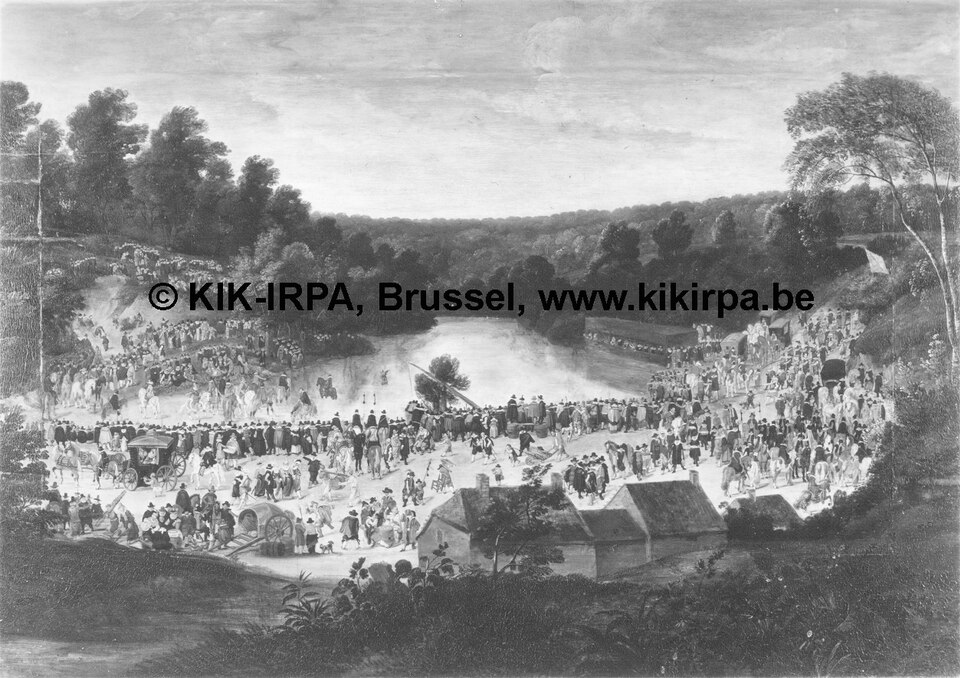
Early life Denis van Alsloot was born in 1570 in the city of Mechelen, in the Southern Netherlands. Little is recorded about his family or his initial artistic training, but it is likely that he began his apprenticeship in his native city, which was a thriving centre for painters and tapestry workshops in the late sixteenth century. By the turn of the century he had moved to Brussels, the political heart of the Spanish Netherlands, where a network of patronage offered opportunities for ambitious artists.
Career and style In Brussels van Alsloot quickly secured a position within the court of the Archdukes Albert VII and Isabella Clara Eugenia, serving as a painter for the ducal household and the city's elite. His work reflects the prevailing Flemish Baroque sensibility, characterised by a rich colour palette, vigorous brushwork and a strong emphasis on naturalistic detail. Van Alsloot specialised in landscape subjects, particularly the wooded scenery of the Sonian Forest that surrounded Brussels, and in genre scenes that captured civic ceremonies, local festivals and winter pastimes. His compositions often combine a broad, atmospheric vista with a lively gathering of figures, creating a narrative depth that was prized by his patrons.
Signature techniques Van Alsloot’s technique is distinguished by meticulous draughtsmanship and an acute observation of light on ice, water and foliage. He employed a layered glazing method to achieve subtle atmospheric effects, especially in his winter landscapes where pale blues and silvers convey the chill of the scene while warmer tones hint at human activity. His figures are rendered with careful attention to costume and gesture, allowing viewers to read the social context of each event. In tapestry designs he transferred his painterly approach to a medium that demanded clear outlines and a harmonious colour scheme, reinforcing his reputation as a versatile draughtsman.
Major works - **Skating Masquerade, or Carnival on Ice at the Kipdorppoort Moats in Antwerp (1620)** – This large canvas depicts a bustling winter carnival set against the fortified moats of Antwerp. Van Alsloot captures the exuberance of masked revelers gliding on skates, juxtaposing the architectural rigidity of the city walls with the fluid movement of the participants. The work is notable for its precise rendering of ice surface textures and the festive costumes of the figures. - **Winter masquerade with skaters (1610)** – An earlier example of his winter genre scenes, this painting shows a more intimate gathering of skaters in a frozen pond. The composition focuses on the interaction between the participants, whose elaborate masks and layered garments create a sense of communal celebration. Van Alsloot’s skill in depicting the translucency of ice and the crisp winter light is evident throughout. - **Paradise with the Four Elements (1608)** – Diverging from his typical landscape subjects, this allegorical piece arranges the four classical elements—earth, water, air and fire—in a harmonious, almost theatrical tableau. The work demonstrates his ability to blend figural allegory with a lush natural setting, employing a balanced composition that underscores the unity of the elements. - **Winter landscape with view on the castle of Tervuren (1614)** – Here van Alsloot combines his love for the Sonian Forest with a recognizable landmark, the castle of Tervuren. The painting presents a sweeping view of snow‑covered trees framing the distant castle, while a group of figures traverses a frozen path. The atmospheric perspective and subtle tonal gradations convey depth and a serene winter ambience. - **Garden Festival at Diesdelle** – Although the exact date is uncertain, this work illustrates a lively outdoor celebration set in a cultivated garden. The scene is populated with musicians, dancers and spectators, each rendered with careful attention to contemporary dress. Van Alsloot’s use of bright, saturated colours for the foliage and garments creates a vibrant contrast with the more subdued background.
Influence and legacy Denis van Alsloot is regarded as a central figure in the Sonian Forest school of landscape painters, a group that includes later artists such as Jacques d’Arthois and Cornelis Huysmans. His dedication to portraying the natural environment around Brussels helped establish a regional aesthetic that celebrated local scenery alongside courtly patronage. Van Alsloot’s winter scenes contributed to the development of the genre in the Low Countries, influencing subsequent painters who explored the interplay of light, ice and human activity. Moreover, his tapestries and drawings circulated among elite circles, reinforcing the visual language of festive and ceremonial imagery in early‑17th‑century Flemish art. Today, his works are valued for their documentary quality—providing insight into the social customs of his time—as well as for their artistic merit, which bridges the detailed observation of the Northern Renaissance with the dynamic energy of the Baroque.
Frequently asked questions
Who was Denis van Alsloot?
Denis van Alsloot was a Flemish painter (1570–1626) from Mechelen who worked in Brussels as a court artist, known for landscape, genre and tapestry designs.
What style or movement is he associated with?
He worked within the Flemish Baroque tradition and is linked to the Sonian Forest school of landscape painters, which focused on naturalistic depictions of the forest near Brussels.
What are his most famous works?
Key works include *Skating Masquerade, or Carnival on Ice at the Kipdorppoort Moats in Antwerp* (1620), *Winter masquerade with skaters* (1610), *Paradise with the Four Elements* (1608), *Winter landscape with view on the castle of Tervuren* (1614) and *Garden Festival at Diesdelle*.
Why is van Alsloot important in art history?
He helped define the visual vocabulary of winter and festival scenes in the Low Countries and influenced later Brussels landscape painters, bridging detailed Northern Renaissance observation with Baroque dynamism.
How can I recognise a van Alsloot painting?
Look for finely rendered ice or foliage, bright festive costumes, a clear atmospheric light, and often a background of the Sonian Forest or recognizable local landmarks.