Balthasar van den Bossche
1681 – 1715
In short
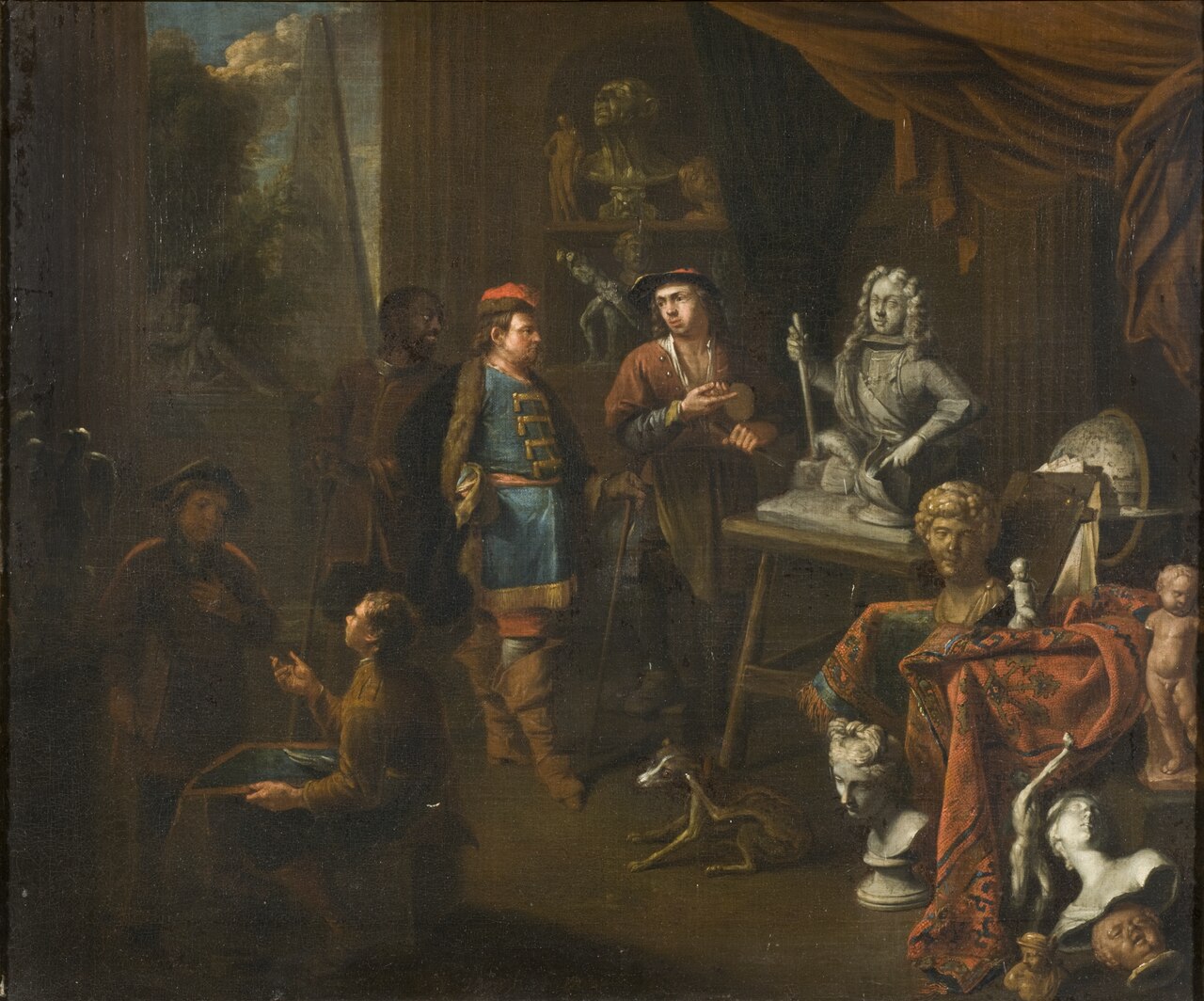
Balthasar van den Bossche (1681–1715) was a Flemish Baroque painter from Antwerp, noted for his genre scenes and occasional portraits. His oeuvre includes works such as Visit in a Sculptor's Studio (1704) and Artist's Studio (1706), which illustrate his interest in interior spaces and everyday activity.
Notable works


Early life Balthasar van den Bossche was born in 1681 in Antwerp, a city that was then part of the Habsburg Netherlands and a thriving centre of artistic production. Little is recorded about his family, but the city’s guild records indicate that he entered the local painters’ guild as an apprentice in his early teens. His training would have followed the traditional Flemish apprenticeship system, receiving instruction in drawing, composition and the handling of oil paint from a master painter—most likely a member of the Guild of Saint Luke, which regulated artistic practice in Antwerp.
Career and style By the turn of the eighteenth century van den Bossche had established himself as an independent artist. He worked primarily in Antwerp, where the demand for genre paintings—scenes of daily life, interiors, and market activity—remained strong among the city’s merchant class. His style aligns with the late Flemish Baroque tradition, characterised by a rich colour palette, vigorous brushwork and a keen interest in the play of light across surfaces. While the monumental religious compositions of earlier Flemish masters such as Peter Paul Rubens had waned in popularity, van den Bossche embraced the more intimate, narrative‑driven subjects favoured by his contemporaries.
His paintings often depict carefully staged interiors, populated by figures engaged in artistic or domestic tasks. The compositions are balanced, with a clear foreground‑background relationship that guides the viewer’s eye through the scene. Van den Bossche’s work shows the influence of contemporaries such as David Teniers the Younger, whose genre scenes of taverns and workshops were widely admired, yet he also brings a distinctive attention to the textures of material objects—wood, fabric, metal—rendered with a tactile realism that enhances the immediacy of his narratives.
Signature techniques Van den Bossche’s technique rests on several recurring devices. First, he employs a luminous chiaroscuro that models forms through subtle shifts in tone rather than stark contrasts; this creates a warm, inviting atmosphere within interior spaces. Second, his colour handling is nuanced: he favours earth tones punctuated by vibrant accents—deep reds, blues and golds—that draw attention to focal points such as a sculptor’s tools or a performer’s costume. Third, he demonstrates a meticulous approach to detail, particularly in the rendering of architectural elements like cornices, mouldings and tiled floors. These details not only showcase his technical skill but also serve as narrative clues, indicating the social status of the figures or the function of the depicted space.
Another hallmark of his practice is the inclusion of symbolic objects. For example, a sculptor’s studio might contain a partially finished statue, hinting at the creative process, while a street theatre scene could feature banners or masks that allude to contemporary festivals. By embedding such items, van den Bossche enriches the visual story without resorting to overt allegory.
Major works - **Visit in a Sculptor's Studio (1704)** – This early work presents a young patron observing a sculptor at work. The composition centers on the sculptor’s bench, where a marble figure emerges from stone. Light filters through a high window, illuminating the sculptor’s tools and the patron’s inquisitive expression. The painting exemplifies van den Bossche’s interest in artistic production as a subject and demonstrates his skill in rendering the texture of stone and the sheen of metal tools.
- In the Studio of the Sculptor (1751) – Although dated after the artist’s death, this piece is traditionally attributed to his workshop or a close follower, suggesting that the composition was popular enough to be reproduced. It revisits the theme of a bustling workshop, this time adding a group of apprentices and a more elaborate background of shelves filled with sketches and plaster casts. The work illustrates the continuity of van den Bossche’s motifs within the Antwerp artistic community.
- Artist's Studio (1706) – In this painting the viewer is invited into a well‑lit studio where an artist is at his easel, surrounded by canvases and a collection of finished works. The careful arrangement of objects creates a sense of order and creative focus. Van den Bossche’s handling of light on the canvas surfaces underscores his fascination with the act of painting itself, a meta‑commentary that was relatively rare for the period.
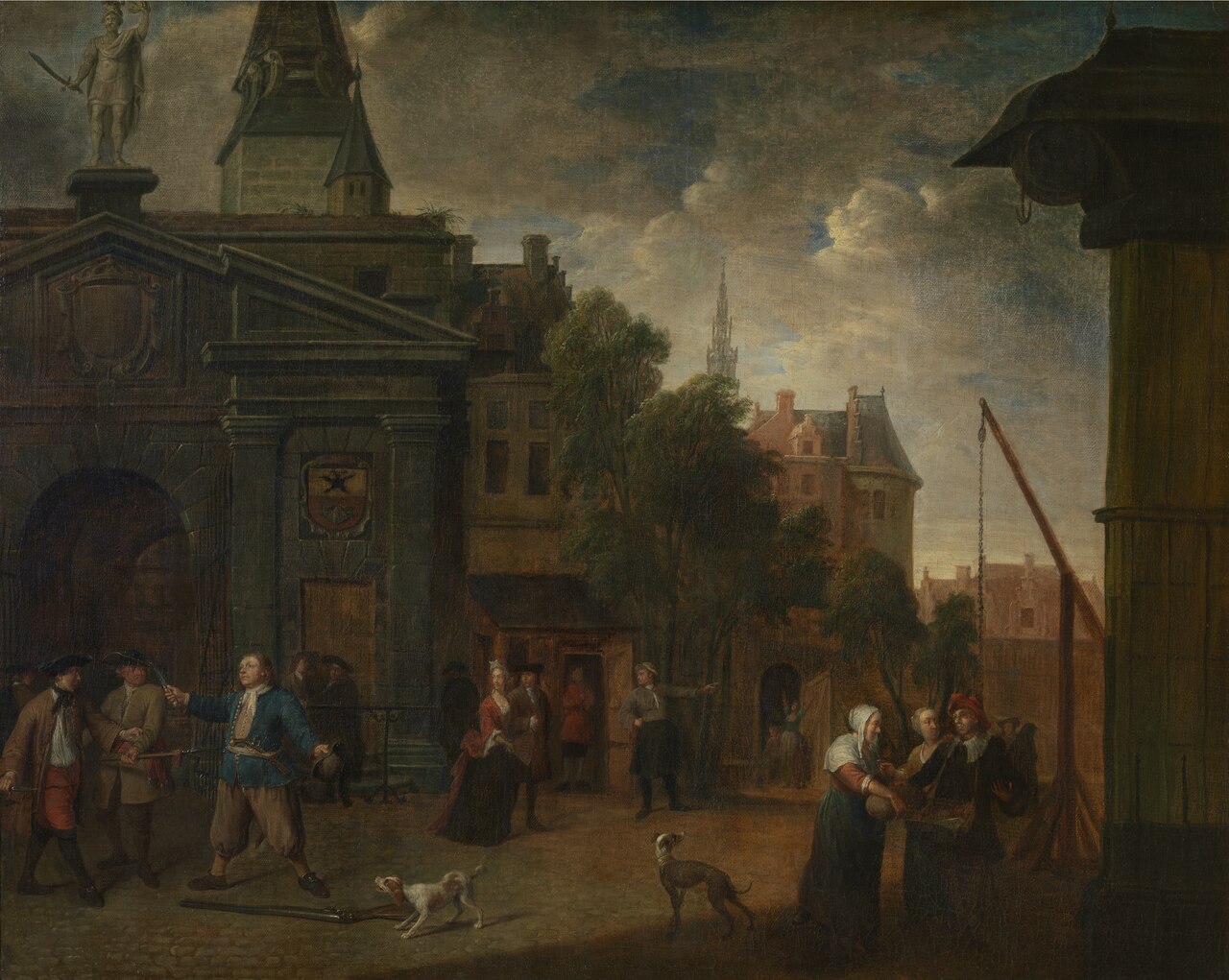
- The reception of Jan Karel de Cordes at the guild hall (1711) – This larger composition records a ceremonial event in the Antwerp Guild of Saint Luke. Van den Bossche captures the formal procession of Jan Karel de Cordes, a noted contemporary, being welcomed by guild officials. The scene is populated with a crowd of onlookers, ceremonial banners and the richly decorated interior of the guild hall. The painting serves both as a documentary record and a celebration of artistic camaraderie, highlighting van den Bossche’s ability to blend portraiture with genre narrative.
- Street theatre on the Werf in Antwerp (1705) – Here the artist turns his eye to public spectacle. The work depicts a lively street performance on the Werf, a bustling quay area of Antwerp. Performers in colourful costumes, musicians and a crowd of spectators animate the canvas. Van den Bossche captures the movement of the crowd and the play of sunlight on the water‑logged streets, offering a vivid snapshot of urban entertainment in early eighteenth‑century Antwerp.
Each of these works demonstrates van den Bossche’s command of composition, his interest in artistic and social rituals, and his capacity to render both interior intimacy and public festivity with equal skill.
Influence and legacy Balthasar van den Bossche’s career, though relatively brief, left a discernible imprint on the genre painting tradition of the Southern Netherlands. His focus on the interior of the artist’s workshop prefigured later Dutch and Flemish painters who explored similar themes, such as Jan van der Heyden and later members of the Antwerp Academy. Moreover, his meticulous rendering of material texture contributed to a broader appreciation for realism in genre scenes, a quality that would become a hallmark of eighteenth‑century Flemish art.
Collectors of the period prized his works for their narrative charm and technical finesse, and several pieces entered the inventories of prominent Antwerp merchants. While his name faded from mainstream art historical narratives in the nineteenth century, recent scholarship has revived interest in his contributions, recognising him as a bridge between the grand Baroque tradition of Rubens and the more intimate, domestic focus of later Flemish painters.
Today, van den Bossche’s paintings are held in regional museums and private collections, valued both for their aesthetic qualities and for the insight they provide into the cultural life of early eighteenth‑century Antwerp. His legacy endures in the way he captured the everyday artistry of his city, preserving moments of creation, performance and communal celebration for future generations.
Frequently asked questions
Who was Balthasar van den Bossche?
Balthasar van den Bossche (1681–1715) was a Flemish Baroque painter from Antwerp, best known for genre scenes and occasional portraits.
What artistic movement did he belong to?
He worked within the Flemish Baroque tradition, emphasizing rich colour, lively composition and a focus on everyday life.
What are his most famous works?
His most cited paintings include Visit in a Sculptor's Studio (1704), Artist's Studio (1706), The reception of Jan Karel de Cordes at the guild hall (1711), Street theatre on the Werf in Antwerp (1705) and the workshop‑scene In the Studio of the Sculptor (1751).
Why is he important in art history?
Van den Bossche documented the artistic and social practices of early‑18th‑century Antwerp, influencing later genre painters with his detailed interiors and narrative depth.
How can I recognise a Balthasar van den Bossche painting?
Look for warm chiaroscuro, meticulous texture of materials, interior settings with artists or craftsmen at work, and a balanced composition that highlights everyday activity.