Xavier Mellery
1845 – 1921
In short
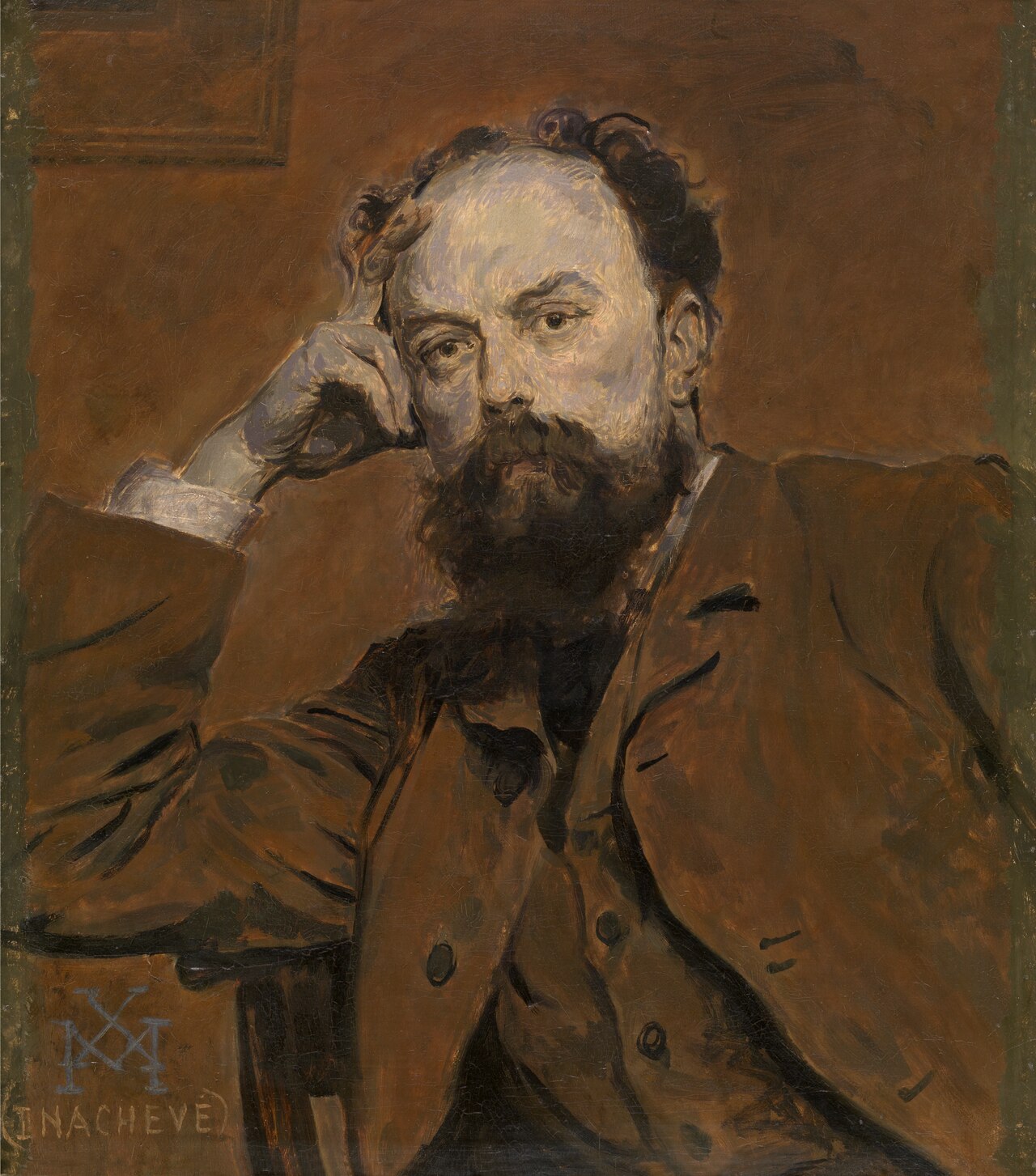
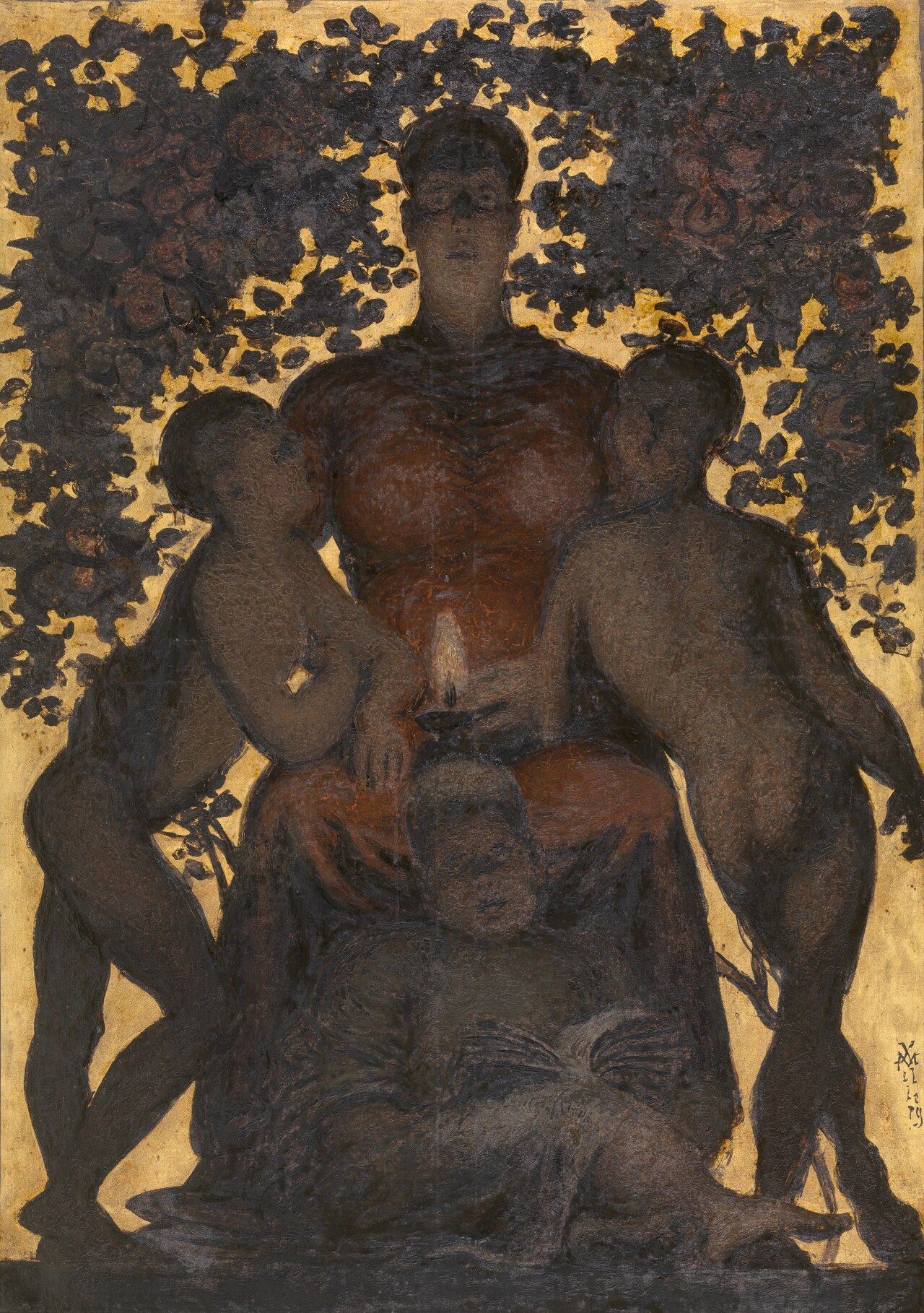
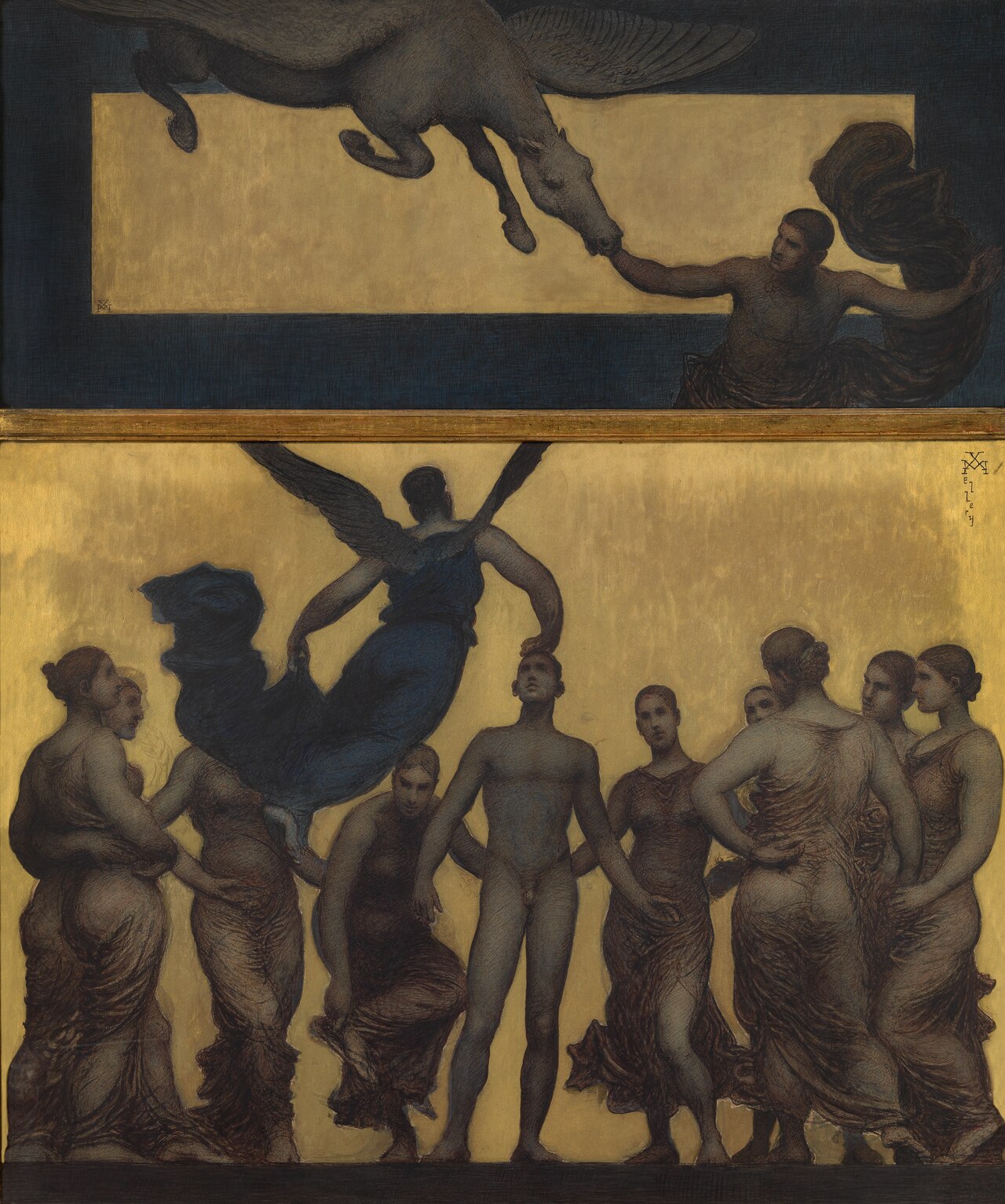
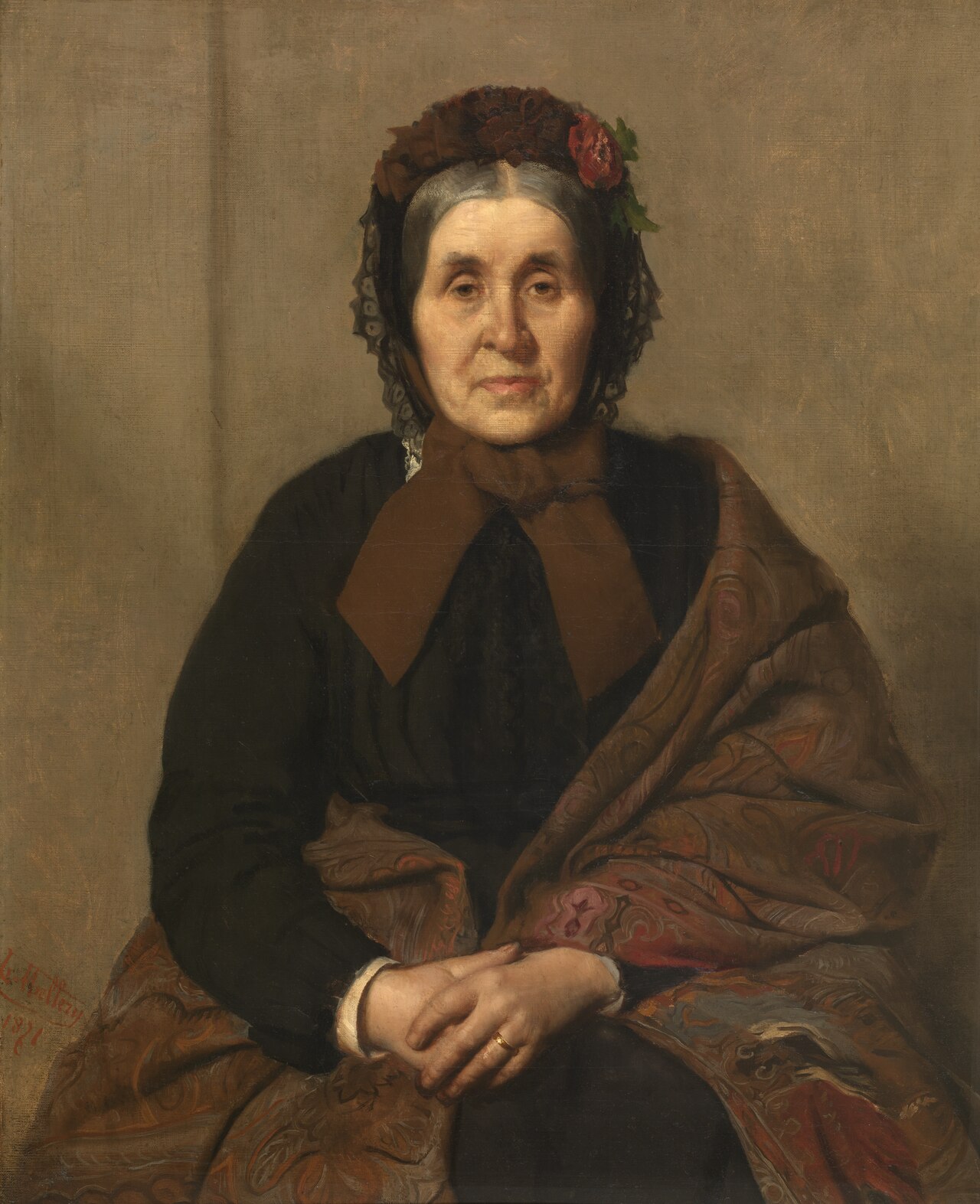
Xavier Mellery (1845–1921) was a Belgian Symbolist painter born and died in Laeken. He is known for intimate, allegorical works such as The Artist's Mother (1871) and The Sculptor Paul De Vigne, and he helped shape Belgian Symbolism in the late 19th and early 20th centuries.
Notable works
Early life Xavier Mellery was born in 1845 in the Laeken district of Brussels, Belgium. He grew up in a modest household that valued education and the arts, an environment that nurtured his early fascination with drawing. After completing his primary schooling, Mellery entered the Royal Academy of Fine Arts in Brussels, where he received formal training in drawing, composition, and the classical techniques that underpinned academic painting of the period. His teachers recognised his meticulous approach and encouraged him to explore the emerging currents of modern art, setting the stage for his later involvement with Symbolism.
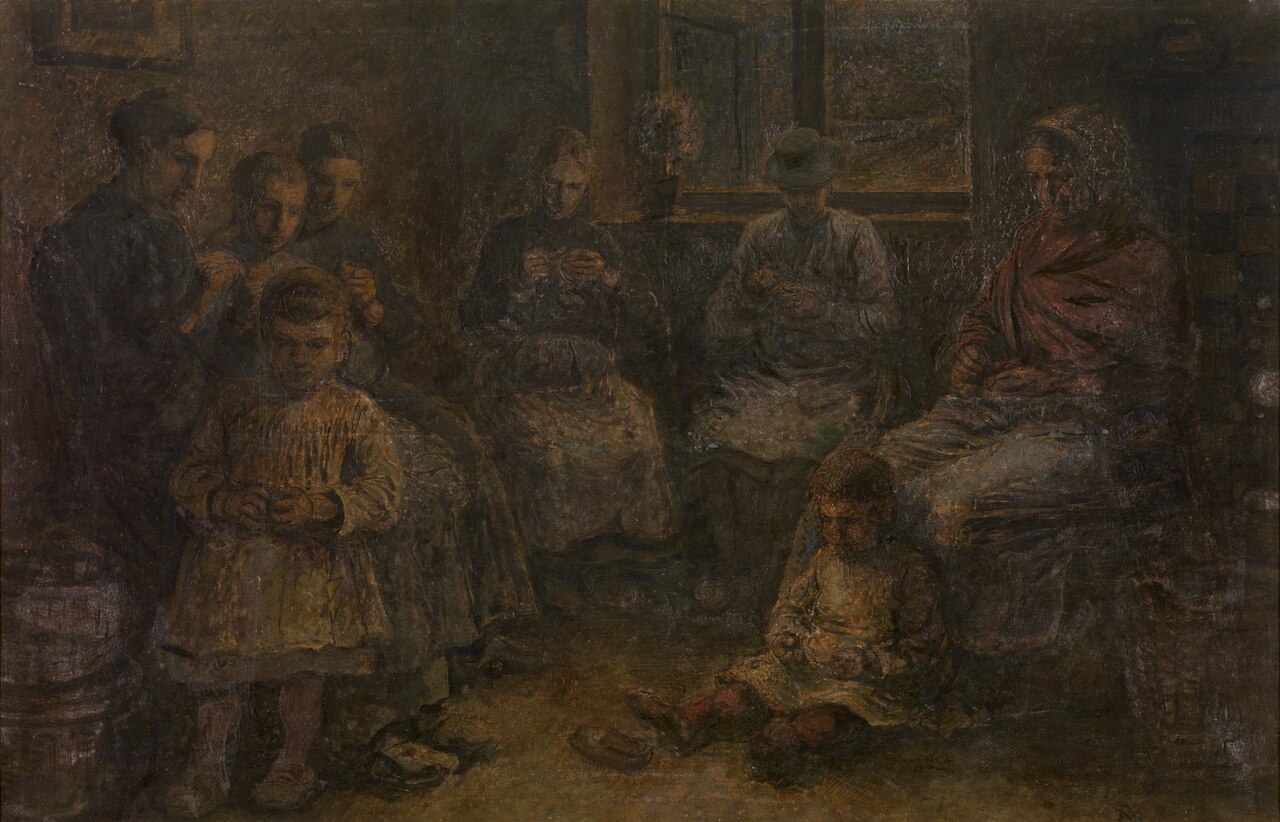
Career and style Mellery began his professional career in the 1860s, initially working as a portraitist for private patrons. By the 1880s, he had gravitated toward the Symbolist movement, which sought to convey ideas, emotions, and metaphysical concepts through visual metaphor rather than literal representation. In Mellery’s work, this shift manifested as a subtle, lyrical quality: figures are often placed in quiet interiors, surrounded by objects that hint at deeper narratives. He favoured muted palettes, soft lighting, and a restrained use of colour to create a contemplative atmosphere. While his subjects remained rooted in everyday life—family scenes, portraits of acquaintances, and genre studies—Mellery imbued them with symbolic resonance, inviting viewers to contemplate themes such as memory, motherhood, and artistic vocation.
Signature techniques Mellery’s technique combined academic precision with a poetic sensibility. He employed fine, almost invisible brushwork to model forms, achieving a smooth surface that allowed light to glide across skin and fabric. His compositions frequently use a shallow depth of field, focusing attention on a central figure while the background recedes into a gentle blur. This approach heightens the emotional intimacy of the scene. Mellery also made extensive use of chiaroscuro, employing soft shadows to suggest interior spaces without overt drama. In terms of material, he preferred oil on canvas, which afforded him the ability to layer glazes and achieve the luminous quality characteristic of Symbolist works. His palette typically featured earth tones, warm ochres, and occasional touches of muted blues or greens to accentuate mood.
Major works Among Mellery’s most celebrated pieces are several that exemplify his Symbolist concerns. **The Artist's Mother (1871)** captures a tender moment between a mother and child, rendered with delicate modelling and a restrained colour scheme that underscores the intimacy of the relationship. The painting’s subtle symbolism lies in the careful placement of objects—a modestly lit interior, a window hinting at the outside world—suggesting the nurturing role of the mother as both caretaker and conduit to broader experience.
The Sculptor Paul De Vigne portrays the renowned Belgian sculptor in his studio, surrounded by tools of his trade. Mellery’s rendering emphasizes the sculptor’s concentration, while the surrounding space is softened by diffused light, creating an almost reverent atmosphere that elevates the act of creation to a symbolic gesture.
Motherly Upbringing continues the theme of familial affection, depicting a mother teaching a child. The work’s compositional balance—central figures framed by a calm domestic setting—reinforces the notion of education as a foundational, almost sacred, act.
The Inspiration presents an allegorical figure, often interpreted as a muse, guiding the artist’s hand. Here Mellery’s use of muted tones and gentle illumination underscores the ethereal quality of creative impulse, aligning with Symbolist attempts to visualise intangible ideas.
Portrait of a Family offers a broader view of domestic life, grouping several figures within a single frame. The painting’s careful arrangement of each individual, coupled with the subtle interplay of light and shadow, creates a narrative of unity and shared experience, reflecting the Symbolist interest in the collective emotional undercurrents of family.
These works collectively demonstrate Mellery’s capacity to blend realistic observation with symbolic depth, establishing him as a key figure in Belgian Symbolism.
Influence and legacy Xavier Mellery’s influence extended beyond his own canvas. As a teacher at the Royal Academy, he mentored a generation of artists who absorbed his emphasis on subtle narrative and technical rigour. His commitment to integrating symbolic content into everyday subjects helped shape the trajectory of Belgian art at the turn of the century, bridging the gap between academic realism and the more avant‑garde movements that followed. Though he never achieved the fame of some contemporaries, his paintings remain valued for their quiet emotional power and their embodiment of Symbolist ideals. Collections in Belgian museums, as well as private holdings, continue to exhibit his work, ensuring that his contribution to the Symbolist vocabulary is recognised by scholars and art lovers alike.
Frequently asked questions
Who was Xavier Mellery?
Xavier Mellery was a Belgian Symbolist painter (1845–1921) born and died in Laeken, known for intimate, allegorical works that blend realistic observation with poetic meaning.
What artistic movement did he belong to?
Mellery worked within the Symbolist movement, which sought to express ideas and emotions through visual metaphor rather than literal representation.
What are his most famous works?
His most notable paintings include The Artist's Mother (1871), The Sculptor Paul De Vigne, Motherly Upbringing, The Inspiration, and Portrait of a Family.
Why is Xavier Mellery important in art history?
He helped shape Belgian Symbolism by integrating symbolic depth into everyday subjects, influencing younger artists through his teaching and preserving a contemplative, lyrical approach to painting.
How can I recognise a Xavier Mellery painting?
Look for soft, muted colour palettes, gentle chiaroscuro, finely modelled figures, and a quiet interior setting that conveys an underlying symbolic narrative.