William Blair Bruce
1859 – 1906
In short
William Blair Bruce (1859–1906) was a pioneering Canadian painter who studied in France and became one of Canada’s first Impressionist artists. He spent much of his career in Europe, notably on Gotland, Sweden, where he and his wife created the Brucebo estate, now a nature reserve.
Notable works

Early life William Blair Bruce was born in 1859 in Hamilton, Canada West (now Ontario). His family was part of the emerging middle class, and Bruce showed an early aptitude for drawing, copying sketches from local newspapers and sketchbooks. After completing his basic education, he pursued formal artistic training, first in Canada and then abroad. In the early 1880s he travelled to Europe, a common step for North American artists seeking exposure to the continent’s artistic centres.
Career and style Bruce settled in Paris, where he enrolled at the Académie Julian and later attended ateliers that were frequented by the avant‑garde. The vibrant atmosphere of late‑19th‑century Paris, with its salons, cafés, and the burgeoning Impressionist movement, profoundly shaped his artistic outlook. He absorbed the principles of plein‑air painting, the emphasis on fleeting light, and the loose, spontaneous brushwork championed by Claude Monet, Pierre-Auguste Renoir and their peers. Although he never signed a manifesto, Bruce is now recognised as one of Canada’s first Impressionist painters, bringing a modern, colour‑driven approach back to his native country.
In the mid‑1880s Bruce married the Swedish sculptor and painter Carolina Benedicks, whose family owned a summer house on the island of Gotland. The couple moved to the island, establishing an artists’ retreat that they called Brucebo. The remote, light‑filled landscape of Gotland provided an ideal setting for Bruce’s outdoor work, and he continued to travel between France, Sweden and Canada, exhibiting in Paris salons, the Royal Canadian Academy of Arts, and other European venues.
Signature techniques Bruce’s paintings are characterised by a delicate handling of colour and light. He often employed a light, almost translucent palette, layering thin washes of pigment to capture atmospheric effects. His brushwork is fluid yet controlled, allowing forms to emerge through suggestion rather than precise delineation. The artist favoured a high key tonal range, especially in his coastal scenes, where the interplay of sky, water and stone is rendered with subtle shifts in hue. He also embraced the practice of painting directly from nature, setting up a portable easel to work outdoors—a method that reinforced his commitment to immediacy and visual truth.
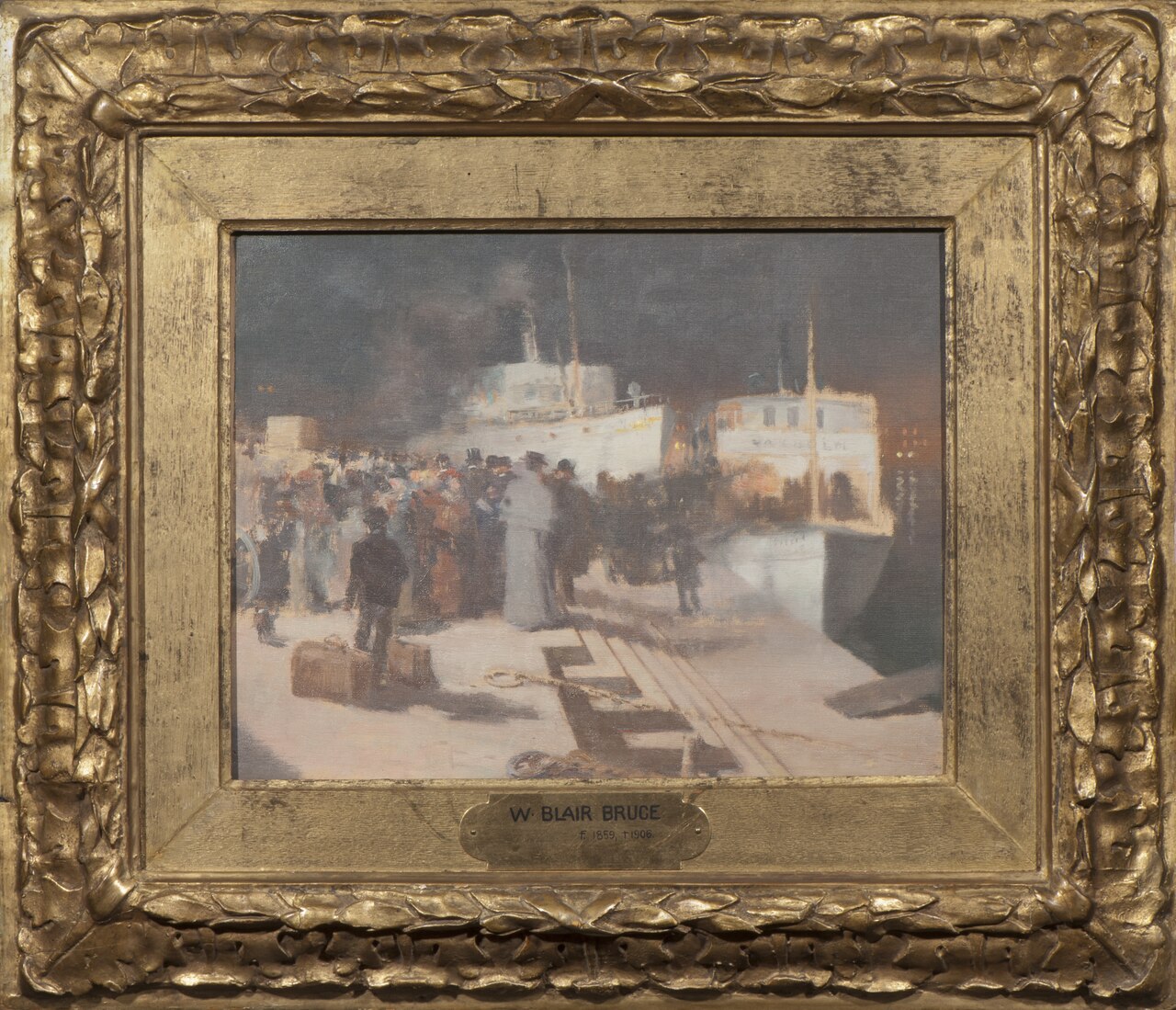
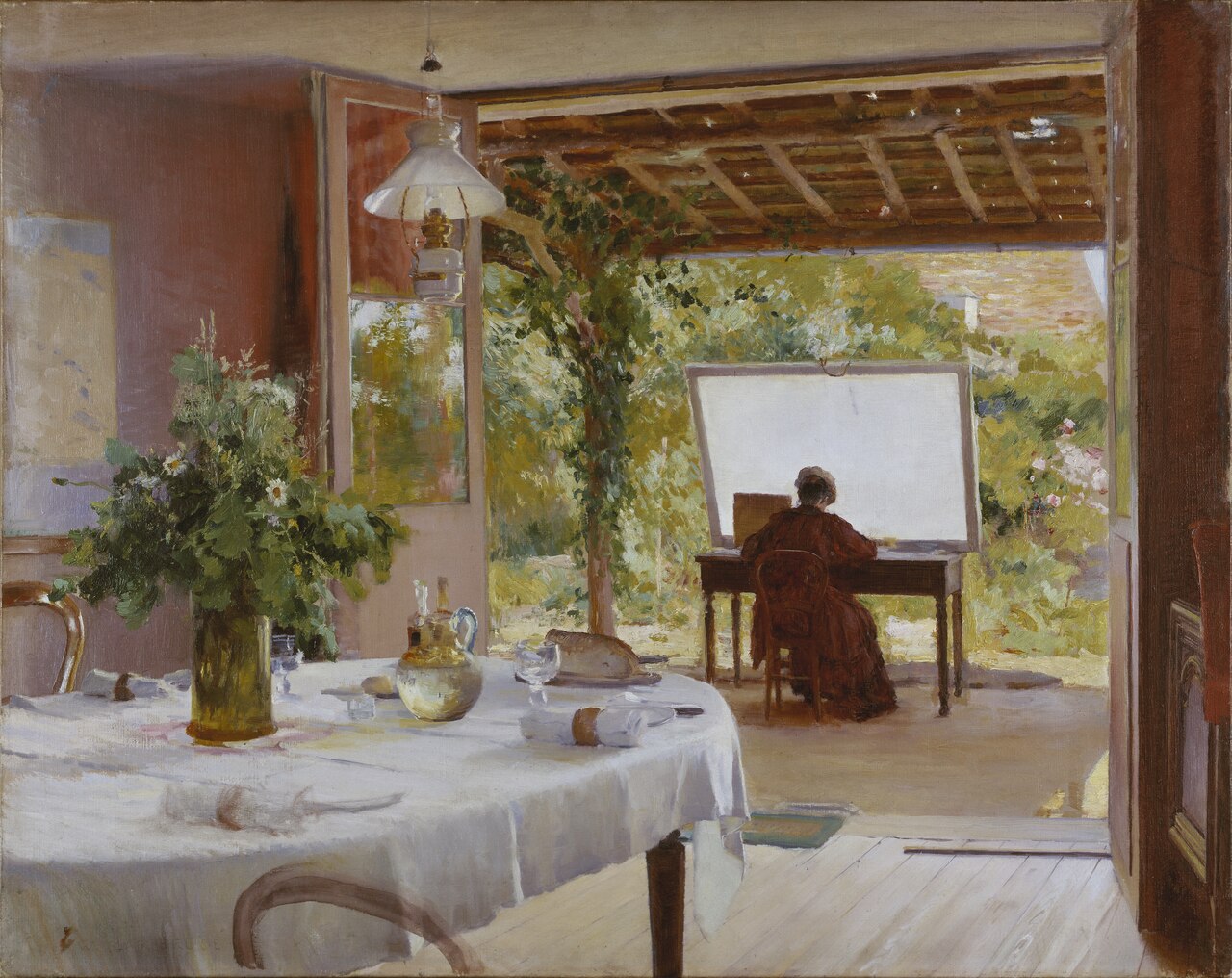
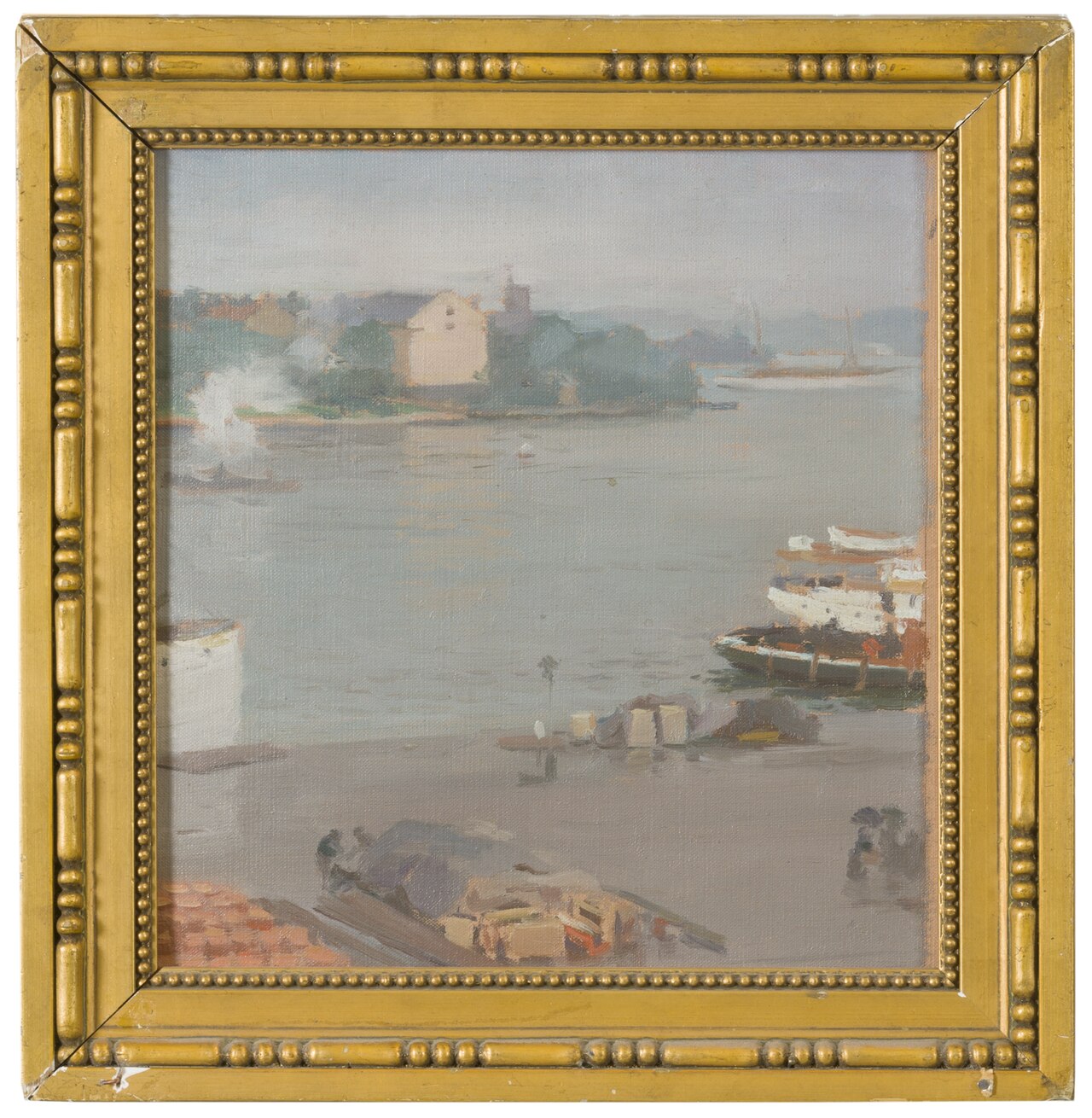
Major works - **The Phantom Hunter (1888)** – This early work demonstrates Bruce’s interest in narrative and mythic subjects, rendered with a soft, impressionistic touch. The composition depicts a spectral figure on a misty shoreline, the figure’s form dissolving into the surrounding fog, illustrating Bruce’s skill at merging atmosphere with storytelling. - **The Departure of the Ship** – Though the precise date is uncertain, this canvas portrays a bustling harbour scene where vessels are silhouetted against a luminous sky. Bruce captures the movement of the crowd and the shimmering water with brisk, gestural strokes, emphasizing the transient moment of departure. - **Open‑air Studio** – In this self‑referential piece, Bruce depicts his own makeshift studio on Gotland’s cliffs. The work is a study in light, with the sunlit walls and open windows allowing a flood of colour into the interior space, reflecting his belief that the studio itself could become a conduit for natural light. - **On the Quay** – This painting presents a quiet quay bathed in the golden glow of evening. The muted colours of the stone and boats contrast with the warm sky, showcasing Bruce’s mastery of colour harmony and his capacity to convey a sense of stillness within a bustling environment.
Influence and legacy William Blair Bruce’s career bridged two continents and helped introduce Impressionist techniques to Canadian art. Although he spent much of his adult life abroad, his work was exhibited in Canada and influenced a generation of Canadian painters who later embraced modernist sensibilities. Bruce’s marriage to Carolina Benedicks-Bruce and their joint creation of Brucebo cemented his legacy in Sweden as well. After his death in Stockholm in 1906, the Brucebo estate was transformed into a cultural centre and, eventually, a nature reserve, preserving both his artistic heritage and the surrounding landscape. Today, his paintings are held in major Canadian and European collections, and scholars cite him as a key figure in the transatlantic exchange of Impressionist ideas.
Frequently asked questions
Who was William Blair Bruce?
William Blair Bruce (1859–1906) was a Canadian painter who studied in France and became one of Canada’s first Impressionist artists.
What artistic style or movement is he associated with?
He is associated with Impressionism, especially the plein‑air approach that emphasises light, colour and rapid brushwork.
What are his most famous works?
His notable works include *The Phantom Hunter* (1888), *The Departure of the Ship*, *Open‑air Studio* and *On the Quay*.
Why does William Blair Bruce matter in art history?
He helped introduce Impressionist techniques to Canada, influencing later Canadian modernists, and his Brucebo estate in Sweden remains a cultural and natural landmark.
How can I recognise a painting by William Blair Bruce?
Look for a light, translucent palette, fluid brushwork, and a focus on atmospheric effects—especially scenes of water, sky and open‑air settings rendered with subtle colour shifts.