Wilhelm von Hanno
1826 – 1882
In short
Wilhelm von Hanno (1826–1882) was a German‑born Norwegian architect, sculptor and painter who became one of Norway’s leading architects in the mid‑19th century. He worked on a range of civic projects, from stamp designs to urban planning, and left a lasting imprint on the built environment of Christiania (now Oslo).
Notable works

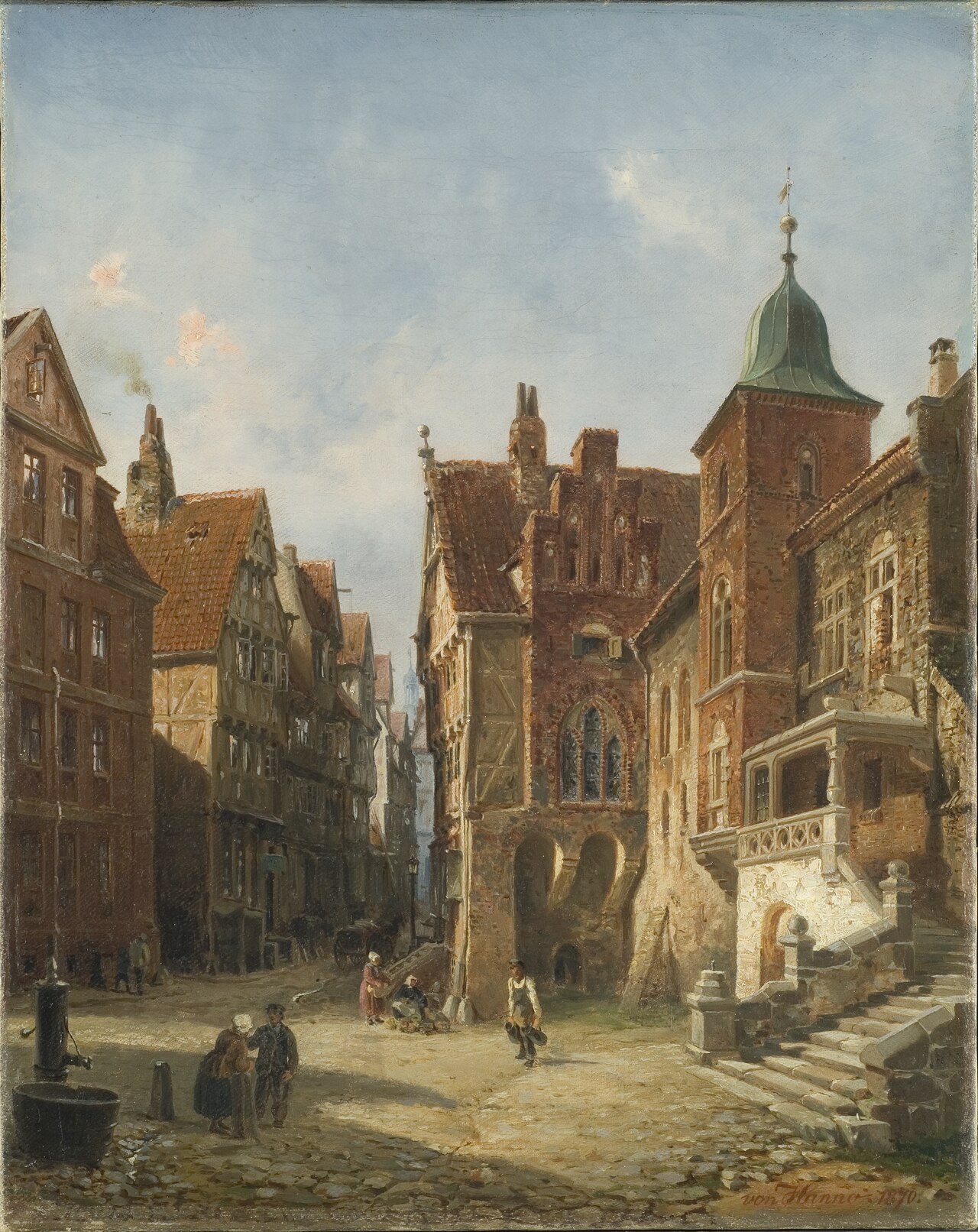


Early life Wilhelm von Hanno was born in 1826 in the port city of Hamburg, then part of the German Confederation. Little is recorded about his family background, but the von Hanno name suggests a lineage with ties to the city’s mercantile and artistic circles. He received a conventional education for a young man of his class, showing early aptitude for drawing and geometry. By his early twenties he had begun formal studies in architecture, a discipline that combined his interests in engineering, sculpture, and visual art.
Career and style After completing his architectural training, von Hanno moved to Norway, a country undergoing rapid urban development after its independence from Denmark in 1814. Settling in Christiania, he quickly became involved in the city’s expanding public works program. His style cannot be pinned to a single movement; instead, it reflects a pragmatic synthesis of historicist eclecticism and functional design typical of mid‑19th‑century European architecture. He drew on classical motifs for monumental projects while employing more restrained detailing for utilitarian structures. This flexibility allowed him to work across a spectrum of commissions, from decorative stamp art to large‑scale urban planning.
Signature techniques Von Hanno’s architectural vocabulary is characterised by several recurring techniques. First, he favoured the use of sturdy stone façades punctuated by symmetrical window arrangements, a nod to Neoclassical ideals. Second, his sculptural work often incorporated local symbols – most famously the post horn, which he rendered on Norwegian stamps as an emblem of communication. Third, he employed careful proportional systems derived from classical orders, ensuring that even modest buildings possessed a sense of harmony. In his urban designs, von Hanno emphasised axial streets and open squares, anticipating later principles of city planning that would become standard in the Nordic region.
Major works - **Post horns on stamps** – In the 1860s, von Hanno was commissioned by the Norwegian postal service to design a series of postage stamps. He chose the post horn, a traditional symbol of mail delivery, and rendered it with a crisp, three‑dimensional quality that highlighted his sculptural skill. The stamps circulated widely, making his design instantly recognisable to the public. - **Street in Hamburg. Study in Architecture (1870)** – Although based in Norway, von Hanno maintained ties to his native Hamburg. In 1870 he produced a detailed architectural study of a Hamburg street, documenting its built environment with measured drawings. The work served both as a pedagogical tool for students and as a record of the city’s evolving streetscape. - **Christiania Skøitebane (1873)** – This project was Norway’s first dedicated skating venue, built on the outskirts of Christiania. Von Hanno’s design combined functional requirements for ice sport with ornamental touches, such as wrought‑iron railings and a modest pavilion that echoed the city’s civic architecture. - **Proposal for a Parliament Building (1857)** – In a competition to design a new parliamentary edifice, von Hanno submitted a grand, neoclassical scheme featuring a portico with Corinthian columns and a central dome. Although the design was not selected, it demonstrated his capacity to work on high‑profile national projects and revealed his ambition to blend symbolic grandeur with practical governance spaces. - **Design for Buildings in Grønland (1864)** – Grønland, a district of Christiania, was the focus of a comprehensive redevelopment plan. Von Hanno proposed a series of mixed‑use buildings that integrated residential apartments with commercial ground floors. The design promoted efficient land use while preserving streetscapes that allowed for natural light and ventilation, principles that were ahead of their time in the Norwegian context.
Influence and legacy Wilhelm von Hanno’s impact on Norwegian architecture lies less in a single iconic structure and more in the breadth of his contributions. By bridging German training with Norwegian civic needs, he introduced a disciplined, European‑wide perspective to a country still defining its architectural identity. His work on public symbols, such as the post‑horn stamp, helped forge a visual language for the emerging nation. Moreover, his urban proposals—particularly the Grønland scheme—anticipated later movements toward functionalist city planning that would dominate Nordic architecture in the early 20th century.
Von Hanno also mentored a generation of Norwegian architects, sharing his drafting techniques and encouraging a balance between aesthetic refinement and structural practicality. While many of his built projects have been altered or replaced, the archival drawings and surviving elements of his designs continue to be studied in architecture schools across Scandinavia. Contemporary scholars regard him as a transitional figure who helped steer Norway from a period of eclectic historicism toward a more rational, context‑sensitive approach to building.
In sum, Wilhelm von Hanno’s career encapsulates the dynamic exchange of ideas between Central Europe and Norway during a formative era. His diverse portfolio—ranging from stamp design to urban planning—reflects a versatile talent whose legacy endures in the visual and spatial fabric of modern Oslo.
Frequently asked questions
Who was Wilhelm von Hanno?
Wilhelm von Hanno (1826–1882) was a German‑born Norwegian architect, sculptor and painter who became one of Norway’s leading architects in the mid‑19th century.
What artistic style or movement is he associated with?
He is not linked to a single movement; his work blends historicist eclecticism with functional, rational design typical of mid‑1800s European architecture.
What are his most famous works?
His most notable projects include the post‑horn stamp design, the Christiania Skøitebane skating venue (1873), a 1857 parliamentary building proposal, and the 1864 urban design for buildings in Grønland.
Why is Wilhelm von Hanno important in art history?
He helped shape Norway’s architectural identity by introducing disciplined European design principles, influencing urban planning, and creating enduring visual symbols such as the post‑horn stamp.
How can I recognise a work by Wilhelm von Hanno?
Look for balanced, symmetrical façades, classical proportions, and the occasional use of local motifs like the post horn; his projects often combine functional clarity with modest ornamental detailing.