Vilhelm Rosenstand
1838 – 1915
In short
Vilhelm Rosenstand was a Danish painter and illustrator born in 1838 in Copenhagen, known for his diverse range of works including murals, and he died in 1915 in Copenhagen. His artistic contributions span various subjects, from everyday scenes to historical depictions. Rosenstand's work is notable for its representation of Danish life and culture.
Notable works
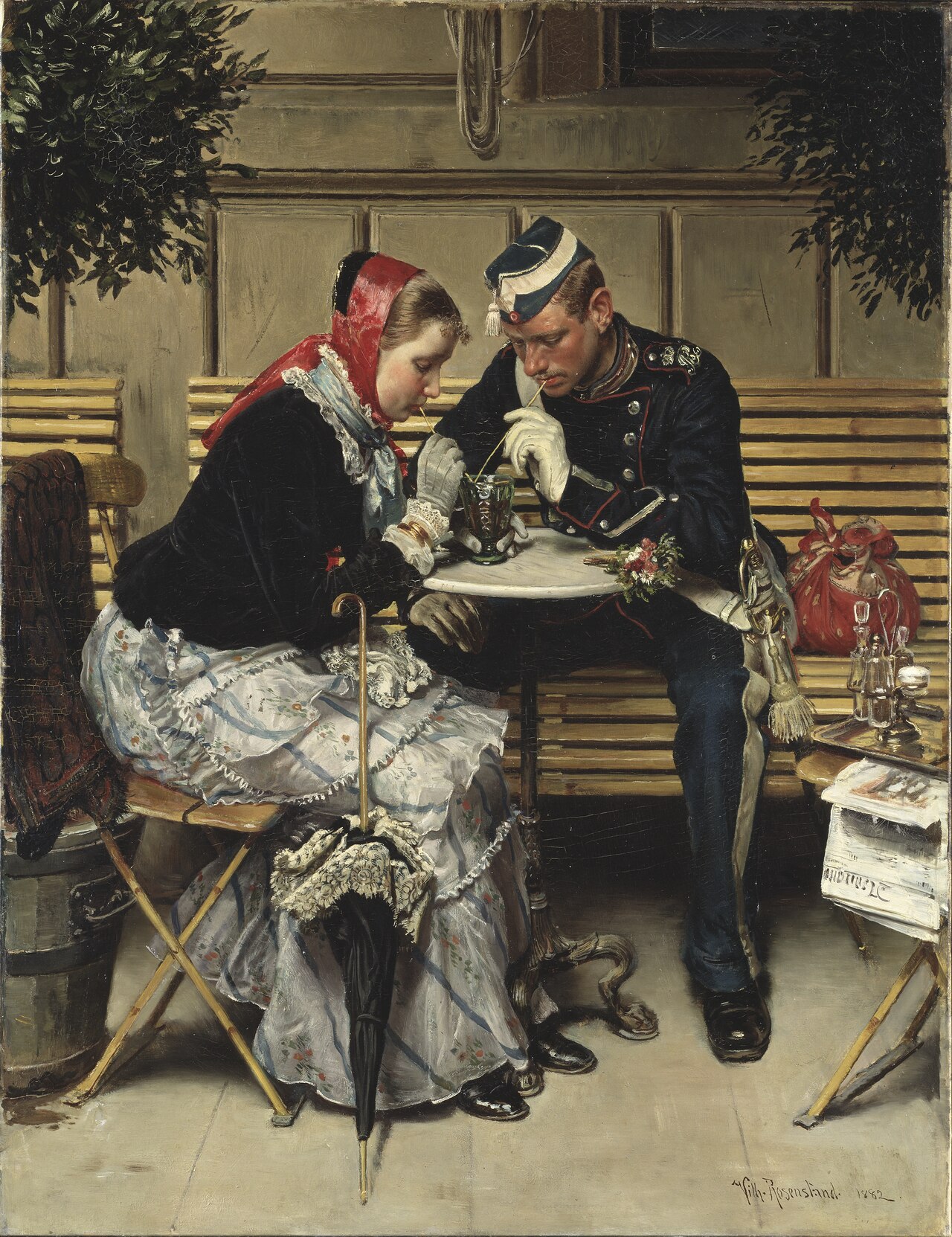


Early life Vilhelm Rosenstand was born in 1838 in Copenhagen, Denmark. Details about his early life and education are not extensively documented, but it is known that he developed an interest in art from a young age. Like many artists of his time, Rosenstand would have been influenced by the cultural and artistic movements prevalent in Copenhagen during the 19th century.
Career and style Rosenstand's career as a painter and illustrator flourished in Denmark. Although the specific art movement he is associated with is not clearly defined, his work reflects a realism and attention to detail that was common among many European artists of the period. His subjects ranged from everyday life scenes to historical and literary themes, showcasing his versatility as an artist.
Signature techniques Rosenstand's techniques and styles are evident in the way he composed his paintings, often focusing on the play of light and the portrayal of characters in their environments. While specific signature techniques are not well-documented, his ability to capture the essence of a scene, whether indoors or outdoors, suggests a mastery of perspective and color.
Major works Among Rosenstand's notable works are 'Outside the Café A Porta, Copenhagen' (1882), 'Udenfor et brasserie i Paris' (1881), 'Fra en præstegård' (1898), 'Holberg overværer en prøve på Erasmus Montanus' (1892), and 'Christian II og Dyveke' (1885). 'Outside the Café A Porta, Copenhagen' and 'Udenfor et brasserie i Paris' showcase his ability to depict urban life, highlighting the social aspects of city dwelling. 'Fra en præstegård' offers a glimpse into rural or pastoral settings, while 'Holberg overværer en prøve på Erasmus Montanus' and 'Christian II og Dyveke' demonstrate his interest in historical and literary subjects.
Influence and legacy Vilhelm Rosenstand's influence on Danish art and his legacy as a painter and illustrator are marked by his contributions to the visual representation of Danish culture and history. His work in the University of Copenhagen, although not extensively detailed here, further cements his position as a significant figure in Danish art. Rosenstand's ability to engage with a wide range of subjects has made his work enduring, providing insights into 19th-century Danish society and beyond.
Frequently asked questions
Who was Vilhelm Rosenstand?
Vilhelm Rosenstand was a Danish painter and illustrator born in Copenhagen in 1838 and died there in 1915.
What style or movement is Vilhelm Rosenstand associated with?
The specific art movement Rosenstand is associated with is not clearly defined, but his work reflects realism and attention to detail common among European artists of the period.
What are Vilhelm Rosenstand's most famous works?
Rosenstand's notable works include 'Outside the Café A Porta, Copenhagen', 'Udenfor et brasserie i Paris', 'Fra en præstegård', 'Holberg overværer en prøve på Erasmus Montanus', and 'Christian II og Dyveke'.
Why does Vilhelm Rosenstand matter in the history of art?
Rosenstand matters for his contributions to the visual representation of Danish culture and history, offering insights into 19th-century Danish society through his diverse range of works.
How can I recognise Vilhelm Rosenstand's work?
You can recognise Rosenstand's work by looking for realistic depictions of Danish life, historical scenes, and literary themes, often with a focus on the play of light and character portrayal.