Victor Lagye
1825 – 1896
In short
Victor Lagye (1825–1896) was a Belgian painter and illustrator known for genre and historical scenes, as well as for decorative commissions for the Belgian state. He worked mainly in Ghent and Antwerp, and later contributed to art education in Belgium.
Notable works

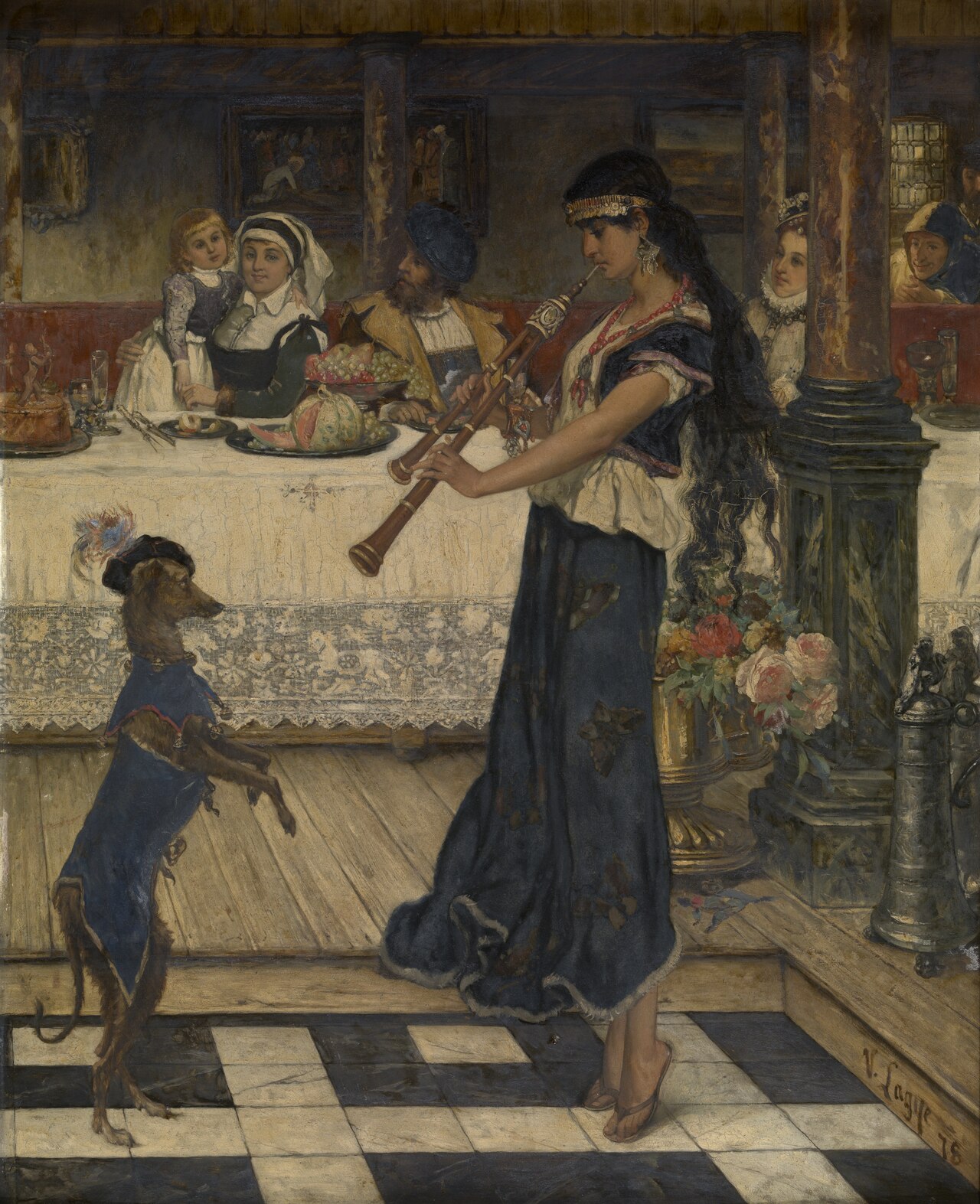
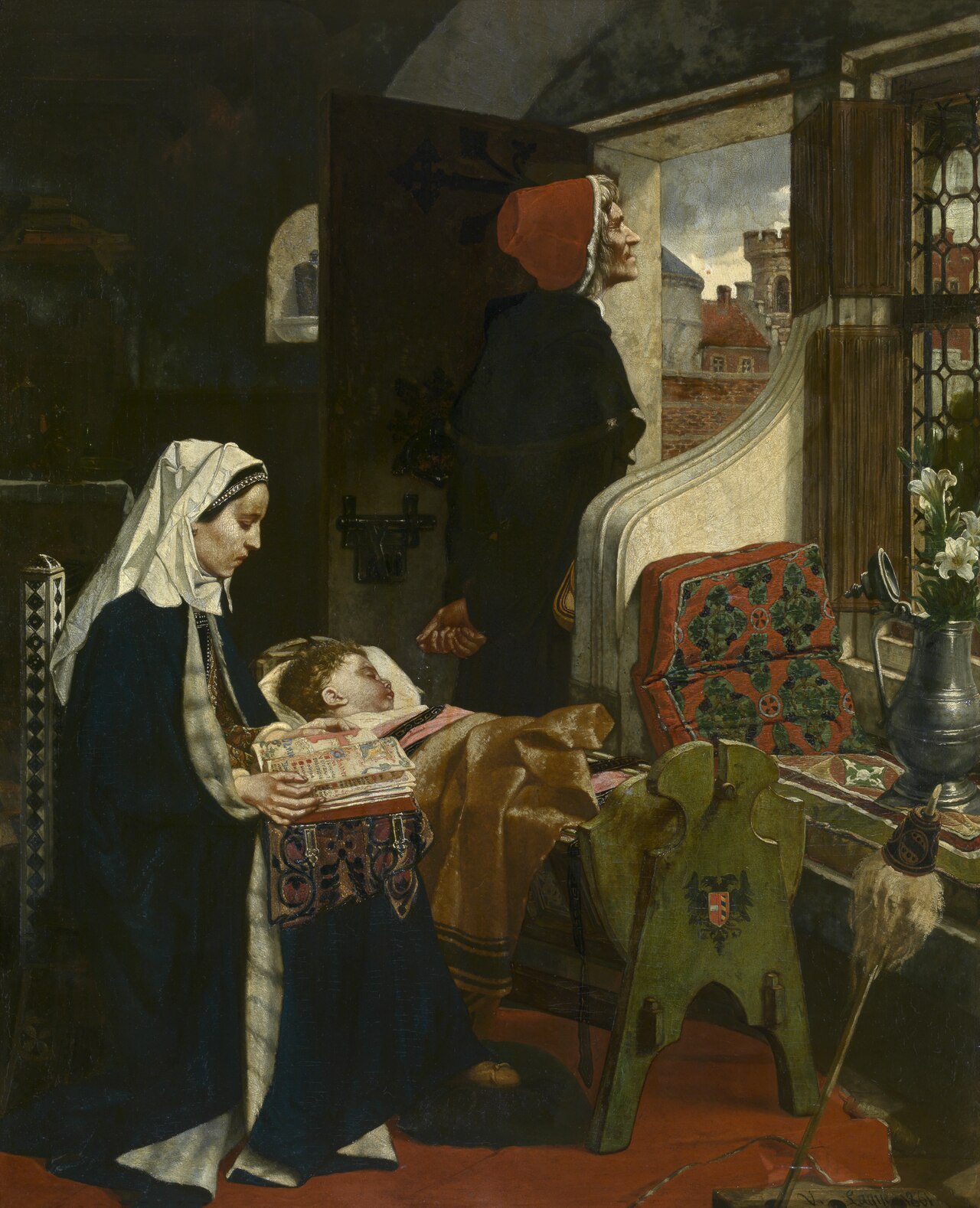


Early life Victor Lagye was born in 1825 in Ghent, a city that was then a vibrant centre of Flemish artistic activity. Little is recorded about his family background, but he entered the local art scene at a young age, receiving his first formal training at the Royal Academy of Fine Arts in Ghent. The academy provided a rigorous grounding in drawing, anatomy and the study of classical models, a curriculum that shaped Lagye’s lifelong commitment to academic techniques. By the early 1840s he was already exhibiting works at the academy’s annual salons, gaining notice for his careful draftsmanship and his ability to render domestic interiors with a keen sense of atmosphere.
Career and style In the late 1840s Lagye moved to Brussels, where he came into contact with the burgeoning network of state-sponsored art projects that followed Belgium’s independence in 1830. The new Belgian government commissioned a series of decorative programmes for public buildings, theatres and civic monuments, and Lagye secured several of these commissions. His style reflects the academic realism that dominated official Belgian art of the period, characterised by a clear narrative focus, precise rendering of figures, and a restrained colour palette that favoured earth tones and muted blues.
Lagye’s oeuvre straddles genre painting—scenes of everyday life—and history painting, which was considered the highest genre in the academic hierarchy. While he never aligned himself with a specific avant‑garde movement, his work shows the influence of the French academic tradition, particularly the teachings of Charles Le Brun, and the moralising approach of Belgian contemporaries such as Charles de Groux. Throughout his career he maintained a balance between a faithful representation of contemporary social customs and the idealised treatment of historical subjects, a duality that suited the expectations of both private patrons and public commissions.
Signature techniques Lagye’s paintings are marked by a meticulous approach to drawing. He employed a tight underdrawing, often executed in charcoal or graphite, which he would later glaze over with thin layers of oil to achieve depth without sacrificing line clarity. His handling of light is subtle; he favoured soft, diffused illumination that accentuates the textures of fabric, wood and stone rather than dramatic chiaroscuro. In genre scenes, he used a limited palette of ochre, sienna and muted greens to convey the modest interiors of the middle class, whereas his historical canvases often incorporate richer reds and golds to convey regal or ceremonial contexts.
Another recurring technique is the careful placement of symbolic objects within the composition. For example, in works that depict religious or moral subjects, Lagye frequently includes a small, illuminated candle or a book, elements that serve as visual cues to the narrative’s underlying theme. His brushwork is generally smooth, with invisible strokes that reinforce the academic ideal of an unbroken surface, though in later works one can detect a slightly looser handling of background foliage and landscape elements, suggesting a modest engagement with emerging naturalist trends.
Major works - **Prayers for a Sick Child (1864)** – This genre painting captures a poignant domestic scene in which a mother and a priest pray over a child lying on a modest bed. The composition is centred on the illuminated faces of the caregivers, while the surrounding interior is rendered with subdued colours that heighten the emotional intensity of the moment.
- Gipsy (1878) – In this work Lagye turns his attention to a solitary figure, a Romani woman seated against a plain backdrop. The painting is notable for its empathetic portrayal, eschewing exoticism in favour of a realistic depiction of the subject’s attire and expression. The subdued palette and the soft modelling of the figure’s features exemplify Lagye’s academic technique.
- Johanna van der Gheynst with her Child in the Cradle (1861) – This portrait combines the intimacy of a private family moment with a careful rendering of texture. Lagye captures the delicate folds of the mother’s dress and the tender grip of her hand on the cradle, while the background remains unobtrusive, allowing the viewer to focus on the relational dynamics.
- Family Scene at the Time of the Catholic League (1860) – Here Lagye addresses a historical subject, depicting a Flemish family caught in the turbulence of the Catholic League’s conflicts. The work blends genre detail—such as period clothing and domestic objects—with a broader narrative of political unrest, using a darker tonal scheme to convey the gravity of the era.
- Leopold I, king of the Belgians (1848) – This early portrait of Belgium’s first monarch demonstrates Lagye’s competence in official portraiture. The painting presents the king in a regal yet approachable pose, his attire rendered with meticulous attention to the folds of the cloak and the insignia of his office. The work was likely part of a series of state commissions intended to solidify national identity.
These works illustrate Lagye’s versatility, moving fluidly between intimate domestic scenes and grand historical narratives while maintaining a consistent academic style.
Influence and legacy Victor Lagye’s contribution to Belgian art lies primarily in his role as a bridge between the academic traditions of the early nineteenth century and the evolving tastes of the latter half of the century. By participating in state‑sponsored decorative programmes, he helped shape the visual language of public spaces in a newly independent Belgium, reinforcing a sense of national cohesion through art. His genre paintings, with their focus on everyday piety and family life, offered a model for later Belgian realist painters who sought to depict social realities without abandoning technical rigour.
In his later years Lagye turned to art education, teaching at the Royal Academy of Fine Arts in Antwerp. Through his teaching, he transmitted the principles of academic drawing and composition to a new generation of artists, many of whom would go on to explore more progressive styles such as Impressionism and Symbolism. While Lagye himself never embraced these movements, his emphasis on solid drawing and narrative clarity remained a reference point for students navigating the shifting artistic landscape.
Today, Lagye’s works are held in several Belgian museum collections, including the Royal Museums of Fine Arts of Belgium and the Museum of Fine Arts in Ghent. Art historians regard his paintings as valuable documents of mid‑nineteenth‑century Belgian society, offering insight into both the domestic interiors of the period and the nation‑building iconography promoted by the state. Though not as widely known internationally as some of his contemporaries, Lagye’s oeuvre continues to be studied for its technical proficiency and its role in the development of a distinctly Belgian artistic identity.
Frequently asked questions
Who was Victor Lagye?
Victor Lagye (1825–1896) was a Belgian painter and illustrator renowned for his genre and history paintings, as well as for decorative commissions for the Belgian government.
What style or movement is he associated with?
Lagye worked within the academic realism tradition, combining precise drawing with narrative clarity, and did not belong to a specific avant‑garde movement.
What are his most famous works?
His best‑known paintings include *Prayers for a Sick Child* (1864), *Gipsy* (1878), *Johanna van der Gheynst with her Child in the Cradle* (1861), *Family Scene at the Time of the Catholic League* (1860) and a portrait of *Leopold I, king of the Belgians* (1848).
Why is Victor Lagye important in art history?
Lagye helped shape Belgium’s visual identity after independence through state commissions and influenced later artists as a teacher at the Antwerp Academy, bridging traditional academic practice with emerging modern trends.
How can I recognise a Victor Lagye painting?
Look for tight, invisible brushwork, a restrained colour palette, careful modelling of light, and narrative scenes that balance domestic detail with a clear, moralising story.