Sophie Gengembre Anderson
1823 – 1903
In short
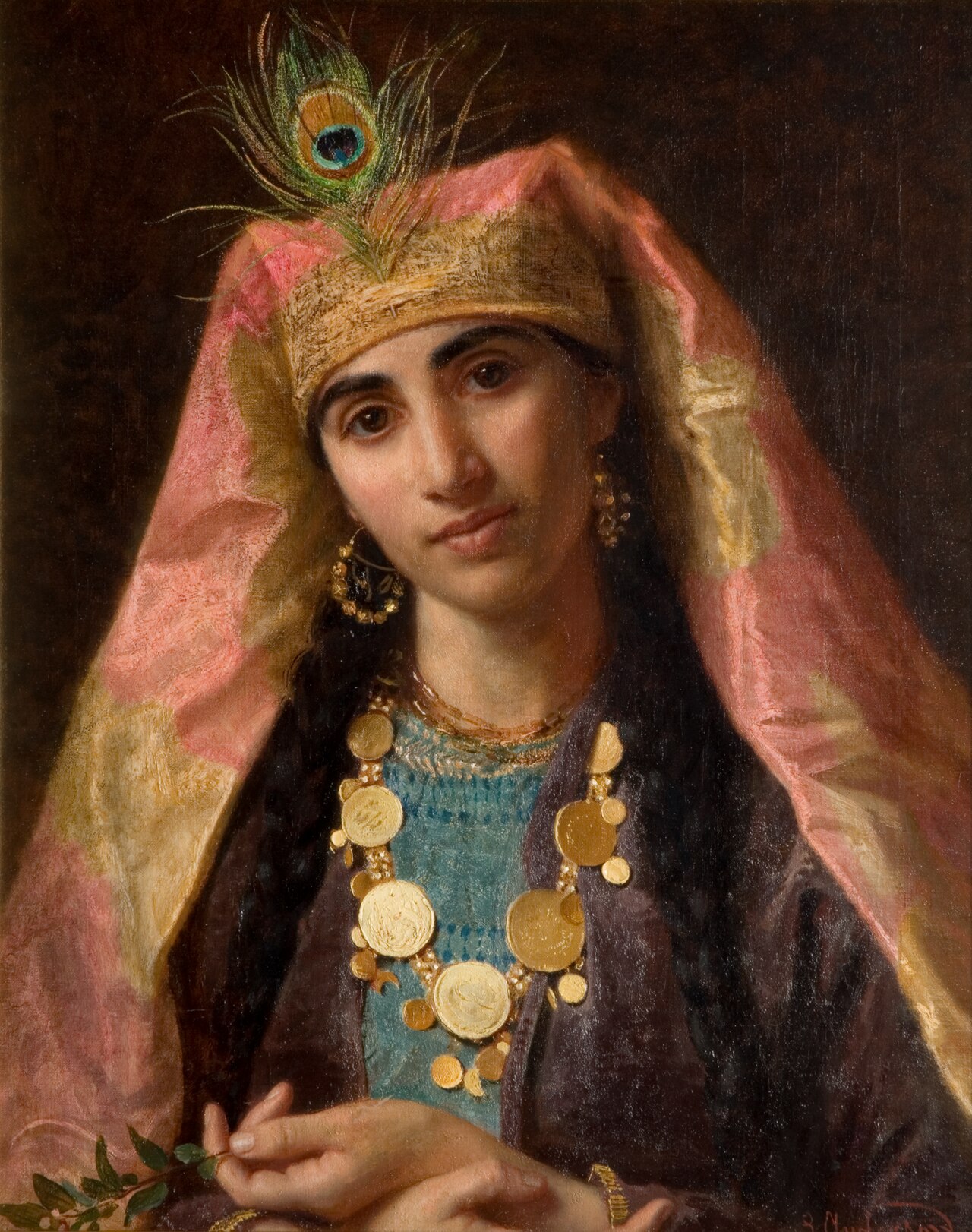
Sophie Gengembre Anderson (1823–1903) was a French‑born painter who worked mainly in Britain and the United States. She is best known for her Pre‑Romantic genre scenes of women and children, especially works such as Take the Fair Face of Woman (1850) and Scheherazade (1875).
Notable works

_1870.jpg)


Early life Sophie Gengembre was born in Paris in 1823 to a middle‑class family that valued artistic education. Her father, a civil servant, encouraged her drawing from an early age, and she received formal training in drawing and lithography in the capital's academies. The political upheavals of the 1840s prompted her family to relocate to England, where Sophie settled in London and later married the English artist Walter Anderson. The move introduced her to the burgeoning Victorian art scene and to the circles that would shape her career.
Career and style Anderson began her professional life as a lithographer, producing prints for illustrated journals and creating portrait commissions for American Episcopal bishops, a partnership that continued after her marriage. By the early 1850s she turned to oil painting, embracing the aesthetic of the Pre‑Romantic and early Pre‑Raphaelite movements. Although never a formal member of the Pre‑Raphaelite Brotherhood, her work shares their emphasis on meticulous detail, vivid colour, and moral narrative. She specialised in genre scenes that depicted women and children in idyllic rural settings, often imbued with a gentle, sentimental tone that appealed to Victorian taste. Her subjects range from domestic interiors to literary and historical episodes, allowing her to blend narrative content with a decorative sensibility.
Signature techniques Anderson’s paintings are characterised by a luminous palette, fine brushwork, and a strong attention to textile and botanical detail. She frequently employed a layered glazing technique to achieve depth of colour, a method popularised by the Pre‑Raphaelites. Light is often rendered with a soft, diffused quality that highlights the delicate features of her figures. In addition, she used compositional devices such as diagonal lines and gentle curves to guide the viewer’s eye toward focal points, typically a young heroine or a symbolic object (a flower, a bird, a book). Her background landscapes are rendered with a restrained realism that supports, rather than overwhelms, the central narrative.
Major works - **Take the Fair Face of Woman (1850)** – One of Anderson’s earliest major paintings, this work presents a young woman in a pastoral setting, her gaze directed toward the viewer. The composition demonstrates her skill in rendering fabric texture and natural light, while the subject’s modest posture reflects Victorian ideals of feminine virtue. - **The Lily Maid of Astolat (1870)** – Inspired by Arthurian legend, the painting shows a maiden holding a lily, a symbol of purity. Anderson’s use of rich, saturated greens and the intricate detailing of the maid’s dress exemplify her Pre‑Raphaelite influences, and the piece was widely reproduced in illustrated magazines of the era. - **Scheherazade (1875)** – This canvas captures the legendary storyteller of *One Thousand and One Nights* at the moment of narration. Anderson’s handling of exotic fabrics and the warm, amber lighting creates an atmosphere of intrigue and romance, while the composition balances narrative drama with her characteristic softness. - **Pet Canary** – A smaller genre piece, it depicts a young girl cradling a canary. The work showcases Anderson’s affection for children and domestic subjects, as well as her ability to render animal fur and feather with delicate precision. - **After the Earthquake (1884)** – Diverging from her usual tranquil themes, this painting portrays a scene of devastation and human resilience following an earthquake. Anderson’s treatment of smoke, rubble, and the anguished expressions of survivors demonstrates her capacity to address contemporary events while maintaining her refined style.
Influence and legacy Sophie Gengembre Anderson occupies a distinctive place in Victorian art history as one of the few women whose genre paintings achieved commercial success and critical recognition during her lifetime. Her early work, *Elaine*, was the first public collection purchase of a female artist in Britain, signalling a shift in institutional attitudes toward women painters. Later, *No Walk Today* fetched a record price at auction, confirming the lasting market interest in her oeuvre. Anderson’s paintings were reproduced in popular periodicals, extending her reach to a broad audience and influencing the visual culture of the era. Contemporary scholars cite her as a bridge between the Pre‑Raphaelite aesthetic and the later Victorian sentimental tradition, noting how her meticulous technique and narrative focus paved the way for later women artists who sought to combine technical skill with domestic subject matter. Today, her works are held in major museums in the United Kingdom, France, and the United States, and they continue to be studied for their contribution to the development of genre painting and the visibility of women artists in the nineteenth century.
Frequently asked questions
Who was Sophie Gengembre Anderson?
She was a French‑born Victorian painter (1823–1903) who worked mainly in Britain and the United States, known for genre scenes of women and children.
What artistic style or movement is she associated with?
Anderson’s work aligns with the Pre‑Raphaelite and early Pre‑Romantic movements, emphasizing detailed draftsmanship, bright colour, and moral narrative.
What are her most famous works?
Key paintings include *Take the Fair Face of Woman* (1850), *The Lily Maid of Astolat* (1870), *Scheherazade* (1875), *Pet Canary*, and *After the Earthquake* (1884).
Why does she matter in art history?
She broke gender barriers by achieving public collection purchases and high‑value auction sales, and she helped bridge Pre‑Raphaelite aesthetics with Victorian genre painting.
How can I recognise a Sophie Gengembre Anderson painting?
Look for luminous, layered colours, meticulous rendering of fabrics and foliage, gentle domestic subjects, and a soft, sentimental mood typical of her Pre‑Raphaelite‑inspired style.