Pieter Thijs
1616 – 1677
In short
Pieter Thijs (1616–1677) was a Flemish Baroque painter from Antwerp, renowned for portraits, religious and history paintings, and for a style that echoed the courtly elegance of Anthony van Dyck.
Notable works
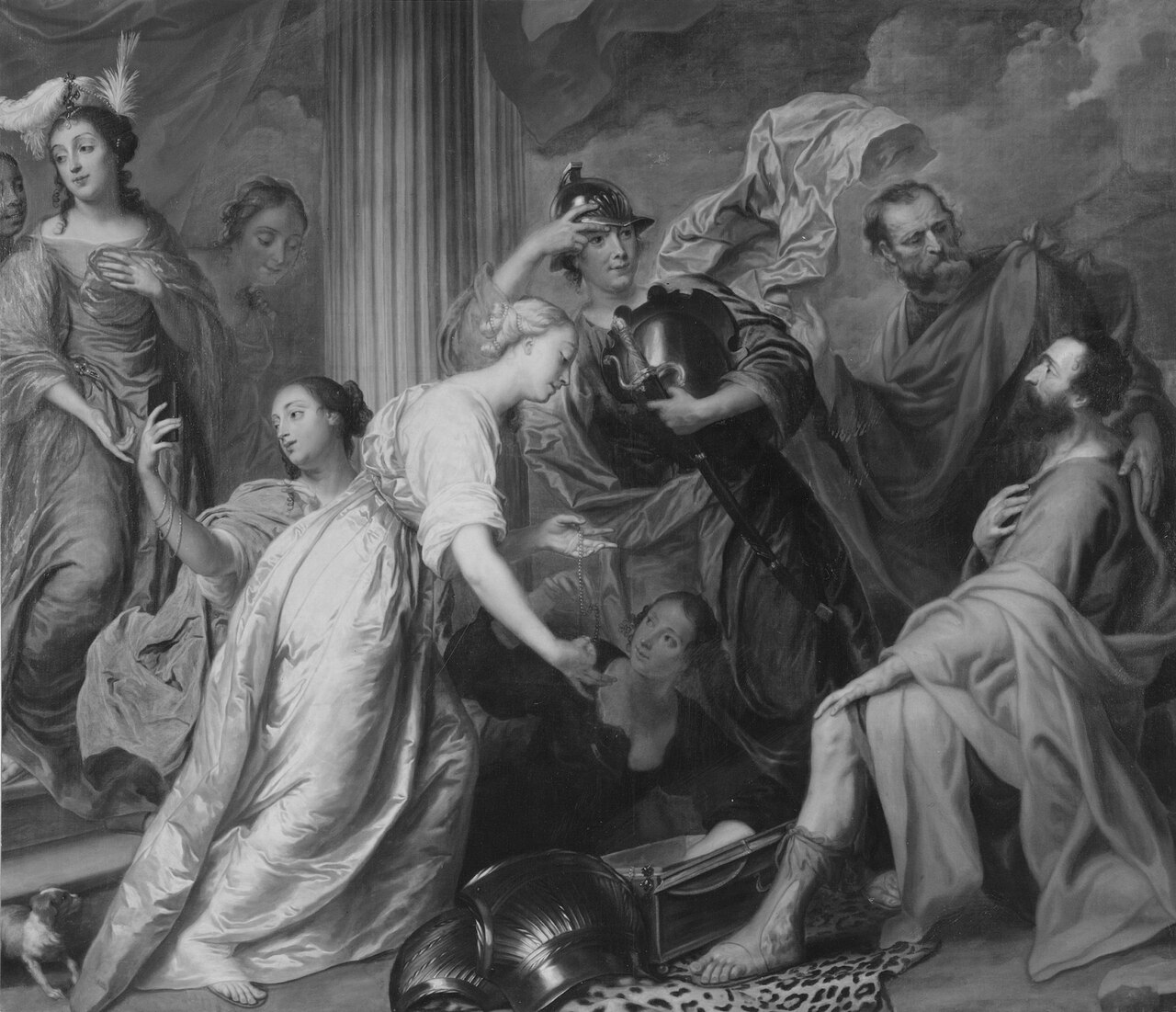


Early life Pieter Thijs was born in Antwerp in 1616, at a time when the city was a thriving centre of artistic production in the Habsburg Netherlands. He grew up in a milieu dominated by the legacy of the earlier Flemish masters and the burgeoning influence of the Baroque style. While specific details of his apprenticeship are not documented, it is clear that he received a thorough grounding in the techniques of drawing, oil painting, and the compositional principles that characterised Flemish art of the early 17th century. Antwerp’s guild system, dominated by the Guild of Saint Luke, would have provided the formal framework for his early training and entry into the professional world.
Career and style Thijs quickly established himself as a versatile painter capable of handling both secular and sacred commissions. His career flourished under the patronage of the aristocratic courts of Brussels and The Hague, as well as a range of religious institutions across the Southern Netherlands. The artist’s output reflects a synthesis of the courtly elegance associated with Anthony van Dyck and the more dramatic, narrative-driven tendencies of the Flemish Baroque.
His portraits, often commissioned by civic officials and members of the nobility, display a refined attention to texture and attire, capturing the status and personality of the sitter with subtle psychological insight. In religious works, Thijs favoured a clear, luminous palette, employing chiaroscuro to model figures while maintaining an overall sense of compositional harmony. History paintings, such as mythological or biblical scenes, reveal his capacity for dynamic storytelling, arranging multiple figures in complex yet readable arrangements.
Signature techniques Thijs’s technique is distinguished by several recurring elements:
1. Elegant modelling of flesh – using thin, layered glazes to achieve a smooth, almost porcelain quality that recalls van Dyck’s portraiture. 2. Rich, yet restrained, colour palette – deep reds, golds, and blues dominate his drapery, while the backgrounds often recede in muted earth tones, allowing the central figures to command attention. 3. Controlled use of light – a soft, diffused illumination that highlights facial features and the folds of garments, creating a sense of three‑dimensionality without dramatic contrast. 4. Meticulous attention to detail – particularly in the rendering of textiles, jewellery, and architectural elements, which serve both decorative and symbolic functions. 5. Balanced composition – an underlying geometric order, often based on triangular or pyramidal arrangements, that guides the viewer’s eye through the narrative.
These methods combine to produce works that are both visually sumptuous and intellectually coherent, reflecting the expectations of elite patrons who prized both aesthetic refinement and moral or historical gravitas.
Major works Among Thijs’s extant oeuvre, several pieces exemplify his artistic range:
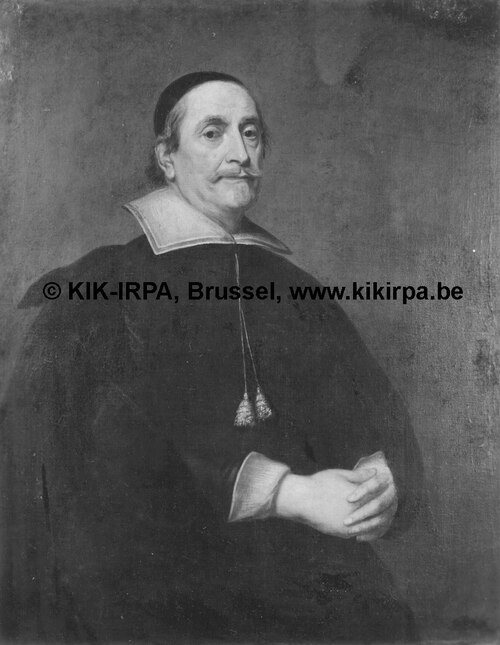
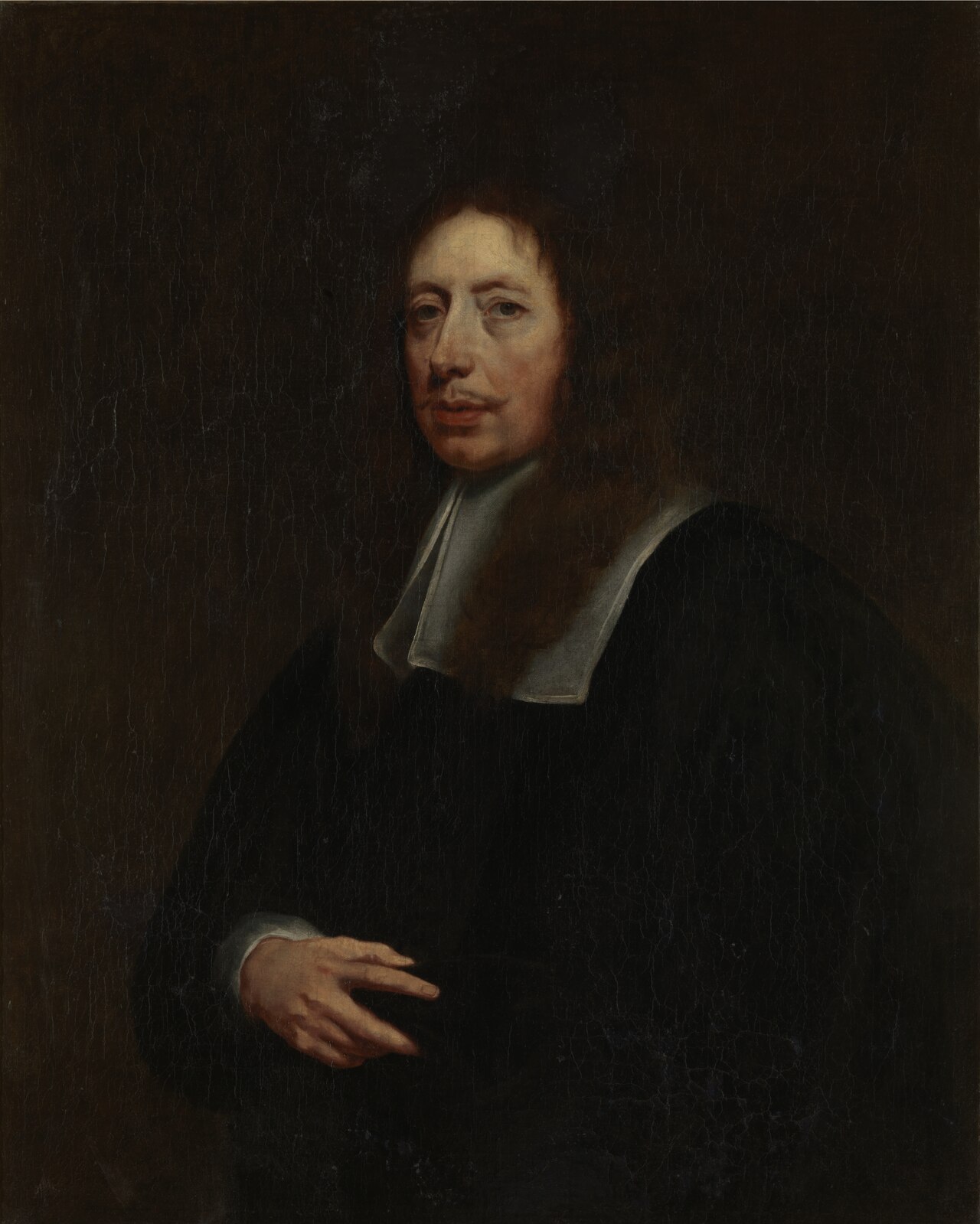
- Achilles recognised by Ulysses at the Court of Lycomedes – a history painting that captures a moment of dramatic tension. The composition centres on the youthful Achilles, whose muscular form is illuminated against a darker, opulent court setting, while Ulysses is rendered with a calm, persuasive demeanor. - Bathsheba (1650) – this work demonstrates Thijs’s skill in handling biblical subjects with sensual restraint. Bathsheba is portrayed in a richly draped pose, her gaze directed outward, while the surrounding figures and landscape are rendered with a subdued palette that emphasizes her centrality. - The Mystic Marriage of St Catherine (1650) – a devotional image where Thijs employs a luminous colour scheme and delicate modelling to convey the spiritual intimacy of the scene. The saint’s visage is softened by a gentle light that underscores the sanctity of the moment. - Hendrik van Halmale, Mayor of Antwerp (1661) – a civic portrait that showcases Thijs’s ability to convey authority through texture and posture. The mayor is depicted in formal attire, with meticulous attention to the embroidered details of his coat and the reflective quality of his insignia. - Maximus Gerardi (1662) – a portrait of the distinguished scholar, notable for its refined handling of skin tones and the subtle interplay of light on the subject’s hair and clothing, reflecting Thijs’s continued engagement with the portrait genre late in his career.
These works collectively illustrate Thijs’s commitment to a courtly aesthetic, his adeptness at both narrative and portraiture, and his capacity to adapt his style to the expectations of varied patrons.
Influence and legacy Pieter Thijs occupies a respected place within the continuum of Flemish Baroque painting. While he never achieved the international fame of contemporaries such as Peter Paul Rubens or Anthony van Dyck, his paintings were highly valued by the elite of his time and contributed to the diffusion of the courtly style throughout the Southern Netherlands. His careful synthesis of van Dyck’s elegance with a personal approach to colour and light influenced a generation of local artists who sought to balance grandeur with subtlety.
After his death in Antwerp in 1677, Thijs’s works continued to circulate in private collections and ecclesiastical settings, preserving his reputation as a master of refined portraiture and devotional imagery. Modern scholarship recognises him as a key figure in the transition from the high Baroque exuberance of the early 17th century to the more restrained classicism that characterised later Flemish art. His paintings remain objects of study for their technical proficiency and for the insight they provide into the tastes of the Habsburg court and the civic elite of Antwerp.
Today, Thijs’s works are housed in several European museums and private collections, where they are appreciated for their elegant composition, meticulous detail, and the subtle psychological depth that set his portraits apart from more formulaic contemporaries. His legacy endures as a testament to the enduring appeal of the Flemish Baroque’s courtly elegance.
Frequently asked questions
Who was Pieter Thijs?
Pieter Thijs (1616–1677) was a Flemish Baroque painter from Antwerp, known for portraits, religious, and history paintings that reflected a courtly, elegant style.
What artistic movement or style is he associated with?
He worked within the Flemish Baroque tradition, closely aligning his style with the courtly elegance of Anthony van Dyck and his followers.
What are his most famous works?
His notable works include *Achilles recognised by Ulysses at the Court of Lycomedes*, *Bathsheba* (1650), *The Mystic Marriage of St Catherine* (1650), *Hendrik van Halmale, Mayor of Antwerp* (1661) and *Maximus Gerardi* (1662).
Why is Pieter Thijs important in art history?
Thijs exemplifies the synthesis of high Baroque drama with refined courtly aesthetics, influencing later Flemish artists and providing insight into the tastes of the Habsburg court and Antwerp’s civic elite.
How can I recognise a painting by Pieter Thijs?
Look for smooth, porcelain‑like flesh tones, a restrained yet rich colour palette, careful rendering of fabrics and jewellery, and balanced compositions that often feature a soft, diffused light illuminating the central figures.