Master of the Von Groote Adoration
1500 – 1520
In short
The Master of the Von Groote Adoration was an anonymous early‑sixteenth‑century painter active in Antwerp, recognised for richly detailed religious triptychs that exemplify the extravagant Antwerp Mannerist style.
Notable works

.png)
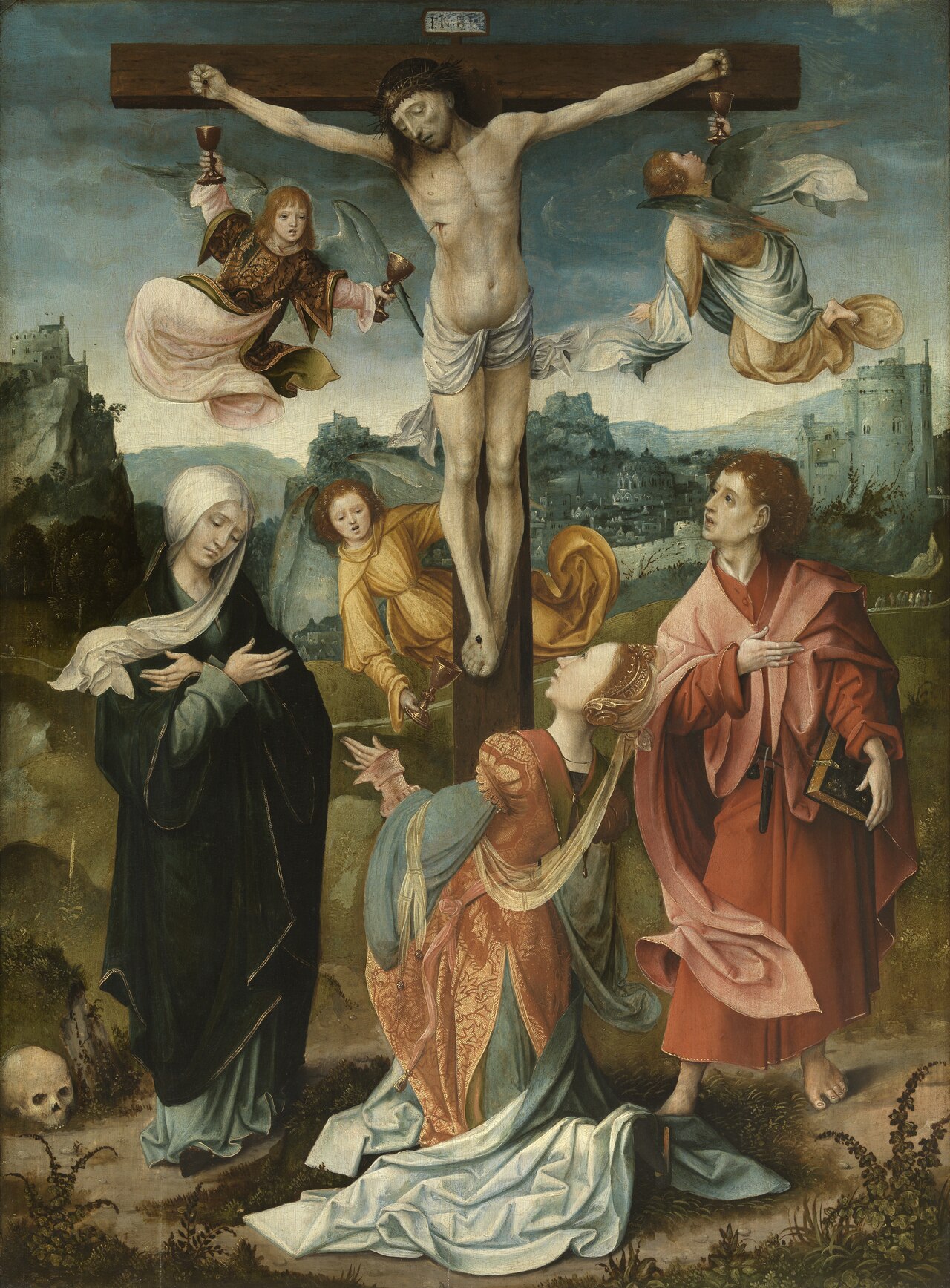


Early life The identity of the Master of the Von Groote Adoration remains unknown; neither a birth name nor a place of origin has been securely documented. Art historians assign the notname after a prominent work that once formed part of the collection of the Dutch collector Von Groote. The artist’s activity is placed between roughly 1500 and 1520, a period of intense religious and artistic production in the Southern Netherlands. Because no archival records link a single individual to the oeuvre, it is possible that the name conceals the output of a small workshop or a group of painters sharing a common visual vocabulary.
Career and style The Master worked in Antwerp, a thriving commercial centre where a distinctive visual culture – later termed the Antwerp Mannerist movement – flourished. This style blends the lingering Gothic tradition with emerging Renaissance influences, favouring dramatic compositions, vivid colour palettes, and elaborate costuming. The artist’s works display an extravagant handling of narrative scenes, with crowded interiors, intricate architectural settings, and a keen eye for the interplay of light and shadow. While the overall quality of the paintings varies, a recurring emphasis on theatricality and ornamental detail unites the corpus.
The Antwerp Mannerists, including the Master of the Von Groote Adoration, were not a formal school but rather a loosely connected circle of painters who responded to the same market demands: portable altarpieces for private devotion and larger panels for churches. The Master’s output reflects this commercial context; the majority of surviving pieces are triptychs intended for devotional use. The artist’s style shows an affinity for the vivid, almost flamboyant treatment of fabrics and jewellery, a hallmark of the period’s elite clientele.
Signature techniques Several visual traits help to attribute works to the Master of the Von Groote Adoration. First, the painter employs a distinctive modelling of figures, using a combination of delicate chiaroscuro and fine hatching to render flesh tones that appear luminous against richly patterned backgrounds. Second, the handling of drapery is particularly elaborate: folds are rendered with fine, almost linear strokes that suggest both movement and the luxurious texture of silk or velvet. Third, the architectural elements often feature exaggerated perspective – steep staircases, towering arches, and multi‑layered canopies – that create a sense of depth while retaining a decorative quality.
The artist also favours a specific palette, dominated by deep ultramarine blues, rich vermilion reds, and golden yellow tones. Gold leaf is occasionally applied to halos and ornamental details, enhancing the visual impact of the compositions. Finally, the compositional layout frequently centres on a central figure or event, flanked by secondary scenes that unfold in a narrative sequence across the wings of a triptych.
Major works - **Triptych of the Adoration of the Magi (1512)** – This early work demonstrates the Master’s command of complex crowd scenes. The central panel depicts the infant Christ receiving gifts, while the side panels show the Magi’s journey and the surrounding townspeople. The use of sumptuous fabrics and the careful placement of exotic gifts underscore the artist’s interest in material culture. - **Triptych Adoration of the Magi (deconstructed 1808) (1519)** – Originally a single altarpiece, this triptych was dismantled in the early nineteenth century, with its panels entering separate collections. The surviving panels retain the same dramatic lighting and intricate architectural backdrop as the 1512 triptych, confirming a consistent approach to the Adoration theme. - **Crucifixion (1524)** – Though dated after the generally accepted active period, the Crucifixion is attributed to the Master on stylistic grounds. The composition places the crucified Christ at the centre, surrounded by a densely populated foreground of mourners, soldiers, and onlookers. The painting’s emotional intensity and the meticulous rendering of the landscape echo the artist’s earlier works. - **The Lamentation over the dead Christ (1520)** – This work exemplifies the Master’s capacity for intimate devotional scenes. The figures are arranged in a tight, emotionally charged grouping, with careful attention to the soft modelling of flesh and the delicate handling of veils and cloth. - **Triptych with Calvary, Saint Anthony the Abbot and Saint Catherine (1520)** – Combining three distinct subjects, this triptych showcases the Master’s skill in integrating varied iconography within a single visual programme. The Calvary scene dominates the central panel, while the side panels present the austere hermit Saint Anthony and the scholarly Saint Catherine, each rendered with characteristic attention to costume and gesture.
These works collectively illustrate the Master’s preoccupation with religious narrative, his fascination with lavish detail, and his ability to adapt a single visual language across a range of devotional subjects.
Influence and legacy The Master of the Von Groote Adoration occupies an important, if enigmatic, position in the development of Northern European art. By synthesising Gothic decorative richness with emerging Renaissance spatial concepts, the artist helped to define the flamboyant visual language that characterised Antwerp Mannerism. The elaborate costuming and theatrical compositions found in the Master’s oeuvre influenced contemporaneous painters such as the Master of the St. Bartholomew Altarpiece and the anonymous Antwerp workshop that produced the so‑called "Lamentation" panels.
Although the artist’s anonymity limits personal biographical study, the body of work attributed to the Master provides valuable insight into the market‑driven nature of early sixteenth‑century art production in the Low Countries. The surviving panels continue to be exhibited in major European museums, where they serve as reference points for scholars examining the transition from late Gothic to early Renaissance aesthetics in the region.
In contemporary scholarship, the Master’s paintings are frequently cited in discussions of how commercial patronage shaped artistic output, and they are used as case studies for the identification of workshop practices. The distinctive visual signatures – the luminous modelling, the opulent drapery, and the dramatic architectural settings – remain key criteria for attributing anonymous works to this influential yet elusive figure.
Overall, the Master of the Von Groote Adoration exemplifies the creative vitality of Antwerp’s artistic community during a period of rapid cultural change, leaving a legacy of richly detailed religious art that continues to captivate scholars and visitors alike.
Frequently asked questions
Who was the Master of the Von Groote Adoration?
The Master of the Von Groote Adoration was an anonymous early‑sixteenth‑century painter active in Antwerp, known for richly detailed religious triptychs that exemplify the Antwerp Mannerist style.
What artistic style or movement is the Master associated with?
The artist is linked to the Antwerp Mannerist movement, a hybrid style that mixes late Gothic decoration with emerging Renaissance spatial ideas.
What are the most famous works by the Master?
Key works include the Triptych of the Adoration of the Magi (1512), the Triptych Adoration of the Magi (deconstructed 1808) (1519), the Crucifixion (1524), The Lamentation over the dead Christ (1520), and the Triptych with Calvary, Saint Anthony the Abbot and Saint Catherine (1520).
Why is the Master of the Von Groote Adoration important to art history?
The Master demonstrates how commercial demand shaped early‑sixteenth‑century Northern art, and his lavish, theatrical approach helped define the distinctive visual language of Antwerp Mannerism.
How can I recognise a painting by the Master of the Von Groote Adoration?
Look for luminous modelling of figures, elaborate drapery with fine linear folds, a rich palette of blues, reds and gold, and crowded, architecturally complex religious scenes typical of Antwerp Mannerist triptychs.