Master of 1518
1500 – 1530
In short
The Master of 1518 was an anonymous Flemish painter active around 1500‑1530, linked to the Antwerp Mannerist style. His oeuvre consists of a series of unsigned religious works, especially multiple versions of the Adoration of the Magi and a triptych for Dielegem Abbey, identified through stylistic analysis rather than documentary evidence.
Notable works


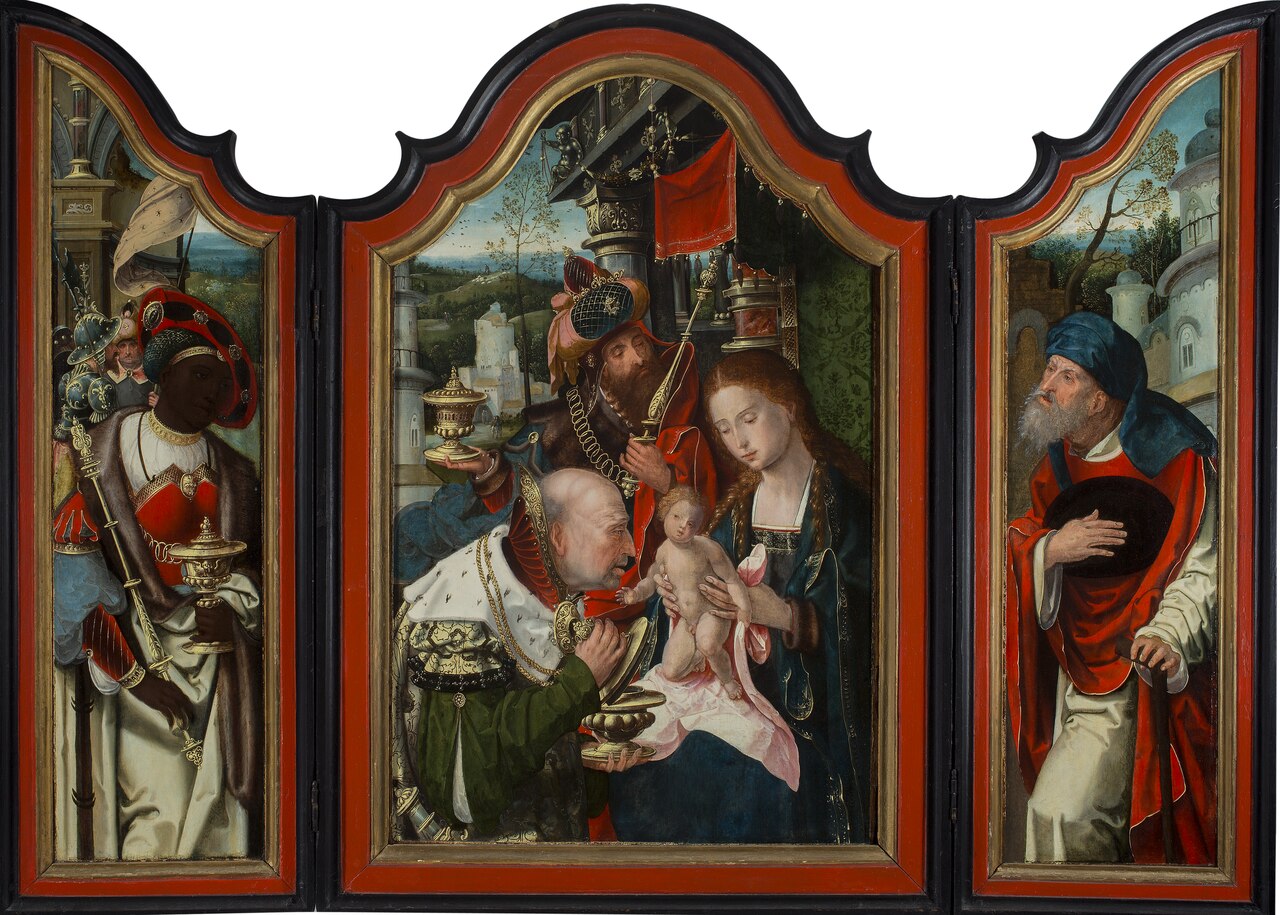


Early life The artist known today as the Master of 1518 remains a figure of mystery. Contemporary records do not reveal his birth name, place of origin, or family background. Scholars place his active period roughly between 1500 and 1530, based on the dates inscribed on works attributed to him and on stylistic parallels with documented painters of the early 16th‑century Low Countries. The moniker "Master of 1518" derives from the date that appears on the painted wings of a carved wooden altarpiece depicting the Life of the Virgin in St. Mary’s Church, Lübeck, Germany. This datum has become the anchor for grouping a number of otherwise unsigned panels that share a distinctive visual language.
Career and style Although the Master of 1518’s identity is not firmly established, his paintings are consistently linked to the Antwerp Mannerist school, a regional expression of the broader Northern Renaissance. Antwerp Mannerism is characterised by a hybrid aesthetic that fuses the lingering Gothic sensibility with emerging Renaissance forms. Within this framework the Master of 1518 produced crowded religious scenes that combine dramatic narrative with elaborate decorative detail. His figures often wear sumptuous, patterned garments that display a keen interest in contemporary fashion, while the architectural settings frequently incorporate crumbling classical ruins, a motif that underscores the transitional nature of the period.
The artist’s style is marked by a vivid colour palette dominated by deep reds, blues, and golds, which serve both devotional and visual purposes. The handling of light is comparatively flat, lending the compositions a theatrical quality that aligns with the devotional drama of the era. In addition, the Master of 1518 demonstrates a sophisticated use of perspective, albeit still experimental; architectural elements recede in a way that suggests an early grasp of linear perspective without the full mathematical rigour later achieved by Italian contemporaries.
Signature techniques Several technical traits help scholars attribute works to the Master of 1518. First, his brushwork is relatively fine and controlled, especially in the rendering of textiles and ornamental details. Second, he favours a particular type of underdrawing, visible under infrared reflectography, consisting of quick, gestural lines that outline the main forms before the painter applies colour. Third, the artist’s pigments include a distinctive mixture of lead-tin yellow and vermilion, creating a luminous orange‑red hue that recurs across his panels. Finally, the compositional balance often places the central holy figure slightly off‑centre, a compositional device that creates a sense of movement and narrative tension.
Major works The corpus attributed to the Master of 1518 includes several key pieces that illustrate his thematic preoccupations and technical skill.
- Triptych of the Dielegem Abbey (1520) – This work, commissioned for a monastic community, presents a central panel of the Virgin and Child flanked by saints. The side panels depict scenes from the life of Saint Benedict, rendered with the same intricate clothing and architectural ruin motifs that typify the artist’s style. The triptych’s dating aligns closely with the inscription that gave the master his name, reinforcing its attribution.
- Adoration of the Magi (1600) – Although the date falls well after the artist’s presumed active years, this panel is still linked to the Master of 1518 on stylistic grounds. The composition features a crowded gathering of magi, each adorned in richly patterned robes, set against a ruined classical arch. The anachronistic date likely reflects a later restoration or re‑dating rather than a true creation date.
- Triptych of the Adoration of the Magi (1522) – This three‑panel work expands the narrative of the 1600 panel, placing the Nativity scene at the centre and surrounding it with elaborate depictions of the three wise men. The use of gold leaf on the halos and the meticulous rendering of exotic gifts underscore the artist’s attention to devotional detail.
- Job and the musicians (1520) – A less conventional subject for a Flemish devotional painter, this piece juxtaposes the biblical figure of Job with a group of musicians, perhaps symbolising the transience of worldly pleasures. The painting’s composition mirrors the Master’s typical crowded arrangement, with figures occupying multiple planes and a background of fragmented architectural elements.
- The Adoration of the Magi (1512) – This early work predates the other dated pieces and demonstrates the development of the Master’s mature style. The scene is already populated with opulent costumes and a complex architectural backdrop, indicating that the artist had embraced the Antwerp Mannerist vocabulary from the outset of his career.
Collectively, these works illustrate the Master of 1518’s preoccupation with religious narrative, his fascination with luxurious material culture, and his willingness to experiment with compositional space.
Influence and legacy The Master of 1518 occupies a niche yet significant position within the study of Northern Renaissance art. By bridging Gothic devotional intensity with emerging Renaissance spatial concepts, his paintings embody the transitional character of early 16th‑century Flemish art. While his personal identity remains uncertain, the body of work attributed to him has informed scholarly understanding of Antwerp Mannerism’s stylistic range. Moreover, the artist’s emphasis on richly dressed figures and architectural ruins influenced later Flemish painters who sought to balance devotional content with visual spectacle.
Modern scholarship continues to debate whether the Master of 1518 might be synonymous with known artists such as Jan Mertens the Younger or Jan van Dornicke. Regardless of the outcome, the attribution of these works to a single hand provides a useful framework for analysing the diffusion of stylistic trends across workshops in Antwerp and beyond. In museum collections, the Master’s panels are valued both for their aesthetic qualities and for the insight they offer into the collaborative, workshop‑based nature of early Renaissance painting in the Low Countries.
The enduring appeal of the Master of 1518 lies in his ability to convey narrative drama through a richly ornamental visual language. Contemporary audiences, whether scholars or museum visitors, encounter his paintings as vivid snapshots of a period in flux—where the old Gothic world and the new Renaissance sensibility co‑existed, producing works of striking beauty and devotional intensity.
Frequently asked questions
Who was the Master of 1518?
The Master of 1518 was an anonymous Flemish painter active circa 1500‑1530, identified by scholars through stylistic analysis of a group of unsigned religious panels.
What artistic style or movement is the Master of 1518 associated with?
He is linked to Antwerp Mannerism, a regional style that blends Gothic decorative richness with emerging Renaissance spatial ideas.
What are the most famous works attributed to this artist?
Key works include the Triptych of the Dielegem Abbey (1520), several versions of the Adoration of the Magi (1512, 1522, and a later 1600 panel), Job and the musicians (1520), and the Triptych of the Adoration of the Magi (1522).
Why is the Master of 1518 important in art history?
He exemplifies the transitional phase of early 16th‑century Flemish art, illustrating how Gothic devotional traditions merged with Renaissance innovations, and his oeuvre helps scholars trace the development of Antwerp Mannerism.
How can I recognise a painting by the Master of 1518?
Look for crowded religious scenes, richly patterned garments, architectural ruins, a vivid red‑gold colour palette, and fine brushwork that emphasises decorative detail over naturalistic modelling.