Karel Ooms
1845 – 1900
In short
Karel Ooms was a Belgian painter born in 1845 in Dessel and died in 1900 in Cannes. He was known for his work in the Orientalism art movement, creating portraits, genre paintings, history paintings, and Orientalist scenes. Ooms' notable works include Philip II of Spain Honours Don John of Austria and Fantasia in Egypt.
Notable works


Early life Karel Ooms was born in 1845 in the town of Dessel, Belgium. While specific details about his early life are limited, it is known that he was born into a period of significant artistic and cultural change in Europe, which would later influence his work. As a young Belgian, Ooms would have been exposed to the rich cultural heritage of his country, including its history, architecture, and the works of earlier Belgian artists.
Career and style Ooms' career as a painter spanned multiple genres, including portraits, genre paintings, and history paintings. However, he is perhaps best known for his contributions to the Orientalism movement, a style that fascinated many European artists of his time. Orientalism involved depicting scenes and themes from the Middle East and North Africa, often romanticizing or exoticizing these regions. Ooms' work in this area reflects the broader European interest in exploring and understanding different cultures during the 19th century.
Signature techniques While specific signature techniques that define Ooms' work are not widely documented, his paintings, especially those within the Orientalism movement, likely featured meticulous attention to detail and a blend of realism and romanticism. Artists of the Orientalism movement often sought to capture the essence and mystique of the regions they depicted, which involved a combination of observed reality and imaginative interpretation. Ooms' use of color, light, and composition would have been critical in conveying the mood and atmosphere of his scenes.
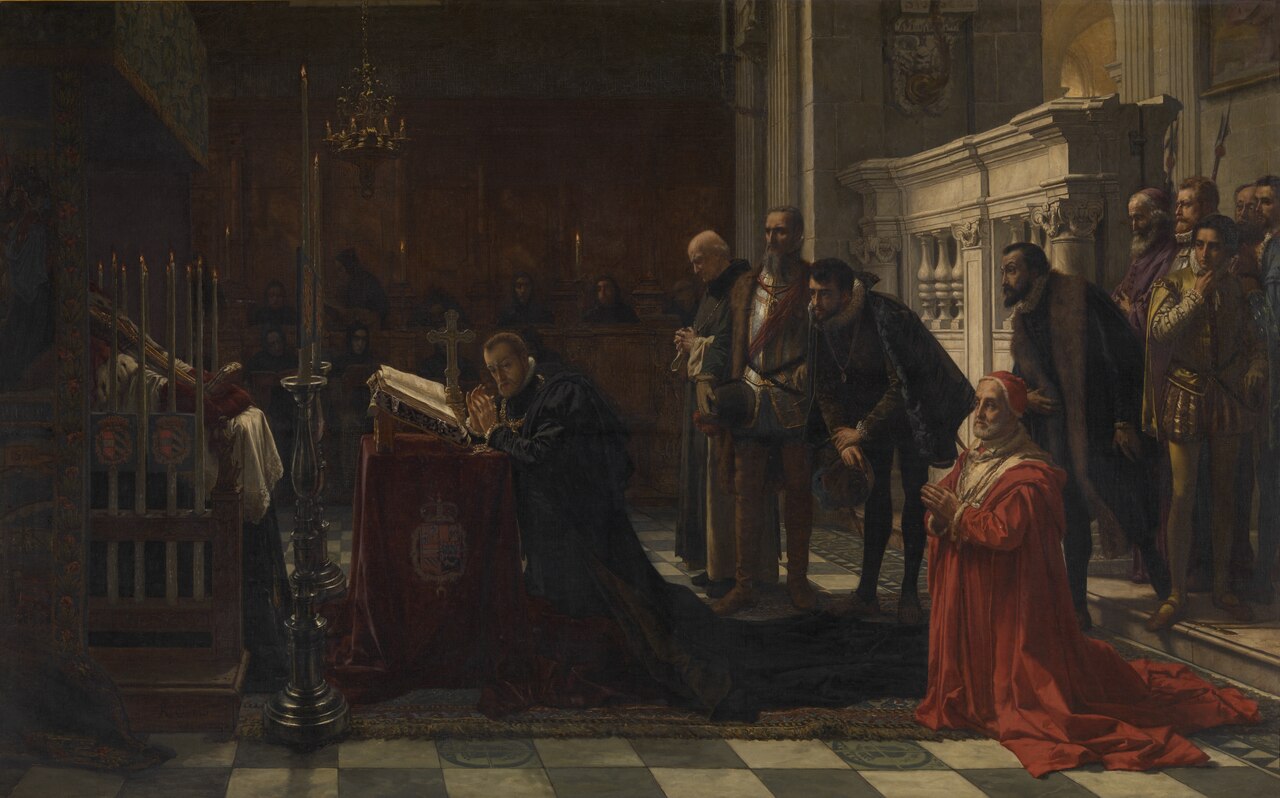
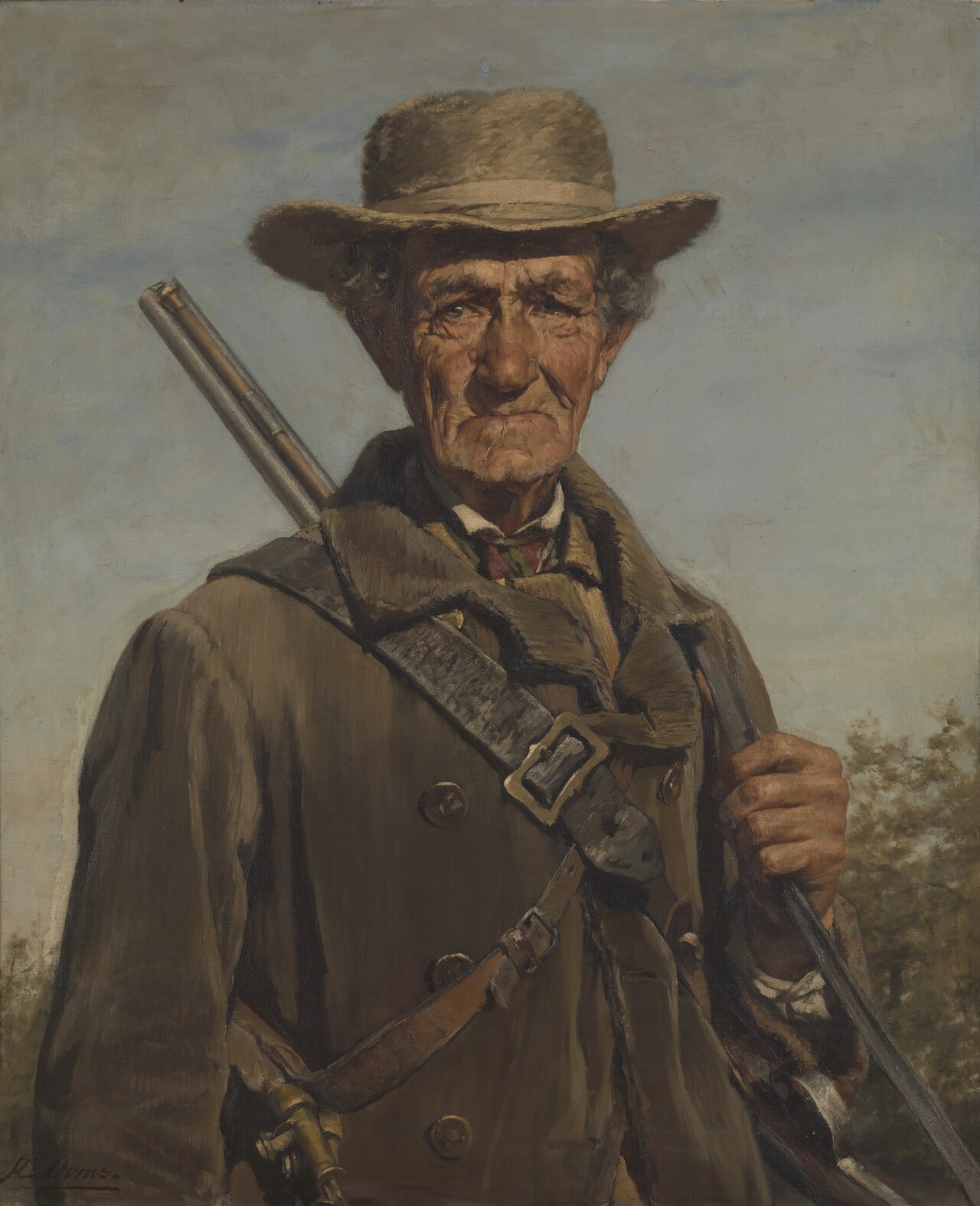
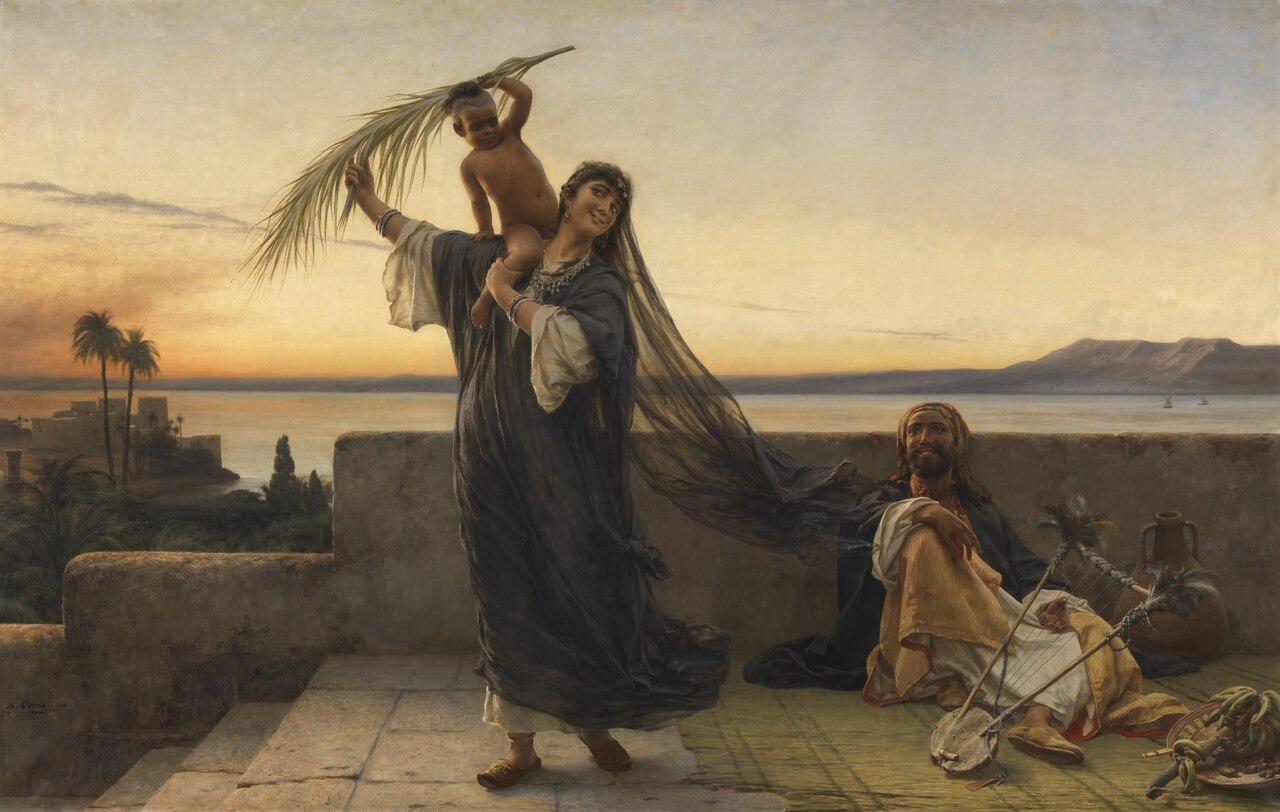
Major works Several of Ooms' works are notable for their historical significance and artistic merit. *Philip II of Spain Honours Don John of Austria* (1873) is a history painting that showcases Ooms' ability to depict grand, monumental scenes from history. *Fantasia in Egypt* (1882) exemplifies his work within the Orientalism movement, offering a glimpse into the exotic and mysterious world that fascinated European audiences. *The Forester* and *At the Nile* (1894) demonstrate his range, from genre scenes to landscapes inspired by his travels or studies of foreign lands. His *Self-portrait* (1896) provides a personal insight into the artist himself, reflecting on his life and career towards its end.
Influence and legacy Karel Ooms' contributions to the world of art, particularly through his Orientalist paintings, reflect the cultural and artistic currents of his time. His work, along with that of other Orientalist artists, helped shape the European public's perception of the Middle East and North Africa during the 19th century. While the Orientalism movement has been subject to critical reinterpretation in recent decades, with some critics viewing it as a reflection of colonialist attitudes, Ooms' paintings remain as testaments to the enduring fascination with cross-cultural exchange and understanding that defined an era.
Frequently asked questions
Who was Karel Ooms?
Karel Ooms was a Belgian painter known for his work in the Orientalism art movement, creating a variety of paintings including portraits, genre scenes, and history paintings.
What style or movement was Karel Ooms associated with?
Ooms was associated with the Orientalism movement, which involved depicting scenes and themes from the Middle East and North Africa, often with a sense of exoticism or romanticism.
What are some of Karel Ooms' most famous works?
Some of his most notable works include Philip II of Spain Honours Don John of Austria, Fantasia in Egypt, The Forester, At the Nile, and his Self-portrait.
Why does Karel Ooms matter in the history of art?
Ooms matters because his work reflects the cultural and artistic trends of his time, contributing to the broader movement of Orientalism and influencing how Europeans perceived and understood other cultures during the 19th century.
How can I recognize Karel Ooms' work?
You can recognize Ooms' work by looking for meticulous detail, a blend of realism and romanticism, and themes or settings inspired by the Middle East and North Africa, which are hallmarks of the Orientalism movement.