Anton Raphael Mengs
1728 – 1779
In short
Anton Raphael Mengs (1728–1779) was a German painter who became a leading figure of early Neoclassicism. He worked across Europe, producing portraits, religious and mythological scenes, and helped define the classical aesthetic that dominated late‑18th‑century art.
Notable works


.jpg)

Early life Anton Raphael Mengs was born on 5 October 1728 in Ústí nad Labem, then part of the Habsburg lands (now the Czech Republic). He was the son of a German merchant family and received his first artistic instruction from his father, who recognised his son's talent for drawing. In his teenage years Mengs moved to Dresden, where he studied under the court painter Johann Georg Schmidt and was exposed to the German Baroque tradition. His early training combined rigorous drawing exercises with an appreciation for the works of the Old Masters, especially Raphael and Michelangelo, which would later shape his neoclassical ideals.
Career and style Mengs' career accelerated after he secured a scholarship to study in Italy, first in Bologna and then in Rome. In Rome he entered the circle of the Accademia di San Luca and came under the influence of the Roman antiquarian Johann Joachim Winckelmann, whose writings advocated a return to the simplicity and moral clarity of classical art. Mengs embraced these ideas, positioning himself against the excesses of the Baroque and Rococo. His style is characterised by a restrained palette, clear modelling of forms, and a compositional balance that echoes antiquity. While he worked for Catholic patrons, his artistic language was secular in its emphasis on idealised anatomy and harmonious proportion, hallmarks of the emerging Neoclassical movement.
Signature techniques Mengs combined a meticulous drawing process with a subtle use of colour. He typically began with a precise charcoal or graphite study, ensuring anatomical accuracy before transferring the design onto canvas. His paintings employ a restrained chiaroscuro, using light to model forms without dramatic contrasts, thereby achieving a calm, rational atmosphere. Mengs also favoured a thin, almost invisible brushwork that gave his surfaces a polished finish, reminiscent of classical sculpture. The integration of classical motifs—such as draped garments, Roman architectural settings, and mythological symbolism—served to reinforce the intellectual content of his works.
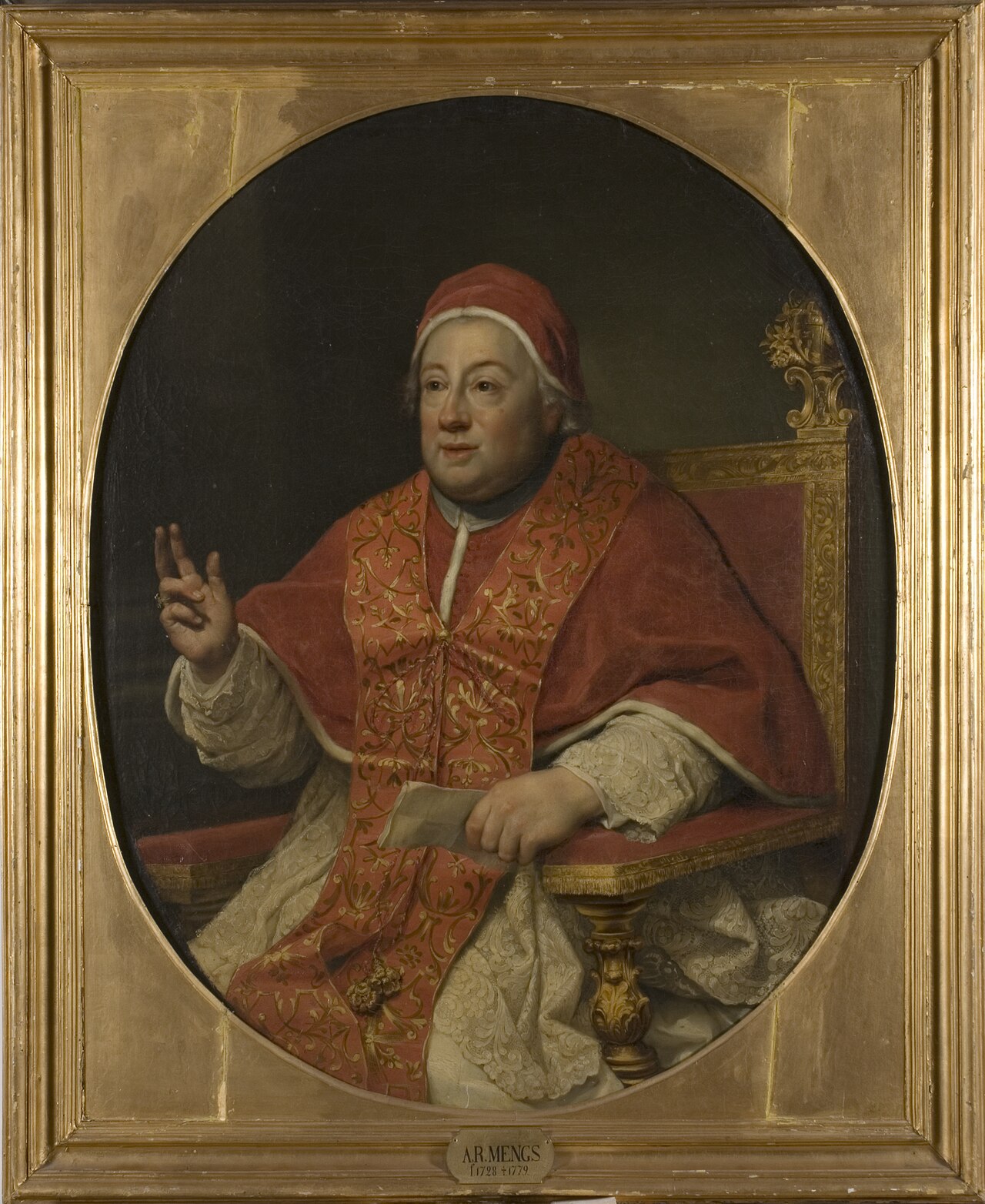
Major works - **Portrait of Ferdinand IV (1759)** – Executed while Mengs was in Rome, this portrait of the future King of Naples demonstrates his skill in rendering regal authority with a dignified restraint. The sitter is presented in a sober, classical pose, his features softened by Mengs' delicate modelling. - **Judgement of Paris (1757)** – A mythological canvas that illustrates Mengs' ability to translate ancient narratives into a neoclassical visual language. The composition balances the three goddesses and the shepherd Paris within a harmonious, architectural framework, emphasizing idealised anatomy over theatrical drama. - **Portrait of José Nicolás de Azara (1774)** – Painted during a later Roman period, this work captures the Spanish diplomat with a calm, intellectual demeanor. Mengs' handling of light on the subject’s face and the subtle rendering of the surrounding drapery highlight his mature technique. - **Portrait of Pope Clement XIII (1759)** – One of Mengs' most celebrated papal portraits, it portrays the pontiff with a serene, almost timeless quality. The pope’s robes are rendered with delicate folds, and the background features classical motifs that align the papacy with the virtues of antiquity. - **Pope Clement XIII (1693–1769)** – Though the date range refers to the pope’s lifespan, Mengs’ depiction of him in 1759 remains a key example of his ability to blend portraiture with neoclassical ideals, presenting the papal figure as both spiritual leader and embodiment of classical virtue.
Influence and legacy Anton Raphael Mengs is widely regarded as a pivotal bridge between the late Baroque and the rise of Neoclassicism. His theoretical writings, particularly his treatise on the principles of painting, circulated throughout European academies and informed the pedagogical reforms that emphasized drawing from antiquity. Mengs' approach influenced younger artists such as Jacques-Louis David, who adopted similar compositional clarity and moral seriousness. Moreover, his works contributed to the redefinition of papal and royal portraiture, setting a precedent for portraying authority through the lens of classical virtue rather than opulent extravagance. Today, Mengs is recognised for his role in shaping the visual language of the Enlightenment and for his contributions to the canon of European art history.
Frequently asked questions
Who was Anton Raphael Mengs?
Anton Raphael Mengs (1728–1779) was a German painter who became a leading figure of early Neoclassicism, known for his portraits, mythological scenes, and influence on academic art.
Which artistic movement is he associated with?
He is closely associated with Neoclassicism, a style that revived classical ideals of harmony, proportion, and moral clarity in the late 18th century.
What are his most famous works?
His most celebrated works include the Portrait of Ferdinand IV (1759), Judgement of Paris (1757), Portrait of José Nicolás de Azara (1774), and the Portrait of Pope Clement XIII (1759).
Why is Mengs important in art history?
Mengs helped define the visual vocabulary of Neoclassicism, influencing academies across Europe and shaping the approach to portraiture and history painting for later masters such as Jacques‑Louis David.
How can I recognise a painting by Mengs?
Look for a calm, balanced composition, precise drawing, restrained colour, subtle chiaroscuro, and classical references such as draped garments and architectural elements that convey an intellectual, idealised aesthetic.