Johan Vilhelm Gertner
1818 – 1871
In short
Johan Vilhelm Gertner (1818–1871) was a Danish painter noted for his exceptionally lifelike portraiture; as one of the final students of Christoffer Wilhelm Eckersberg, he bridged the Golden Age of Danish painting and the emerging realist tendencies of the mid‑19th century.
Notable works


Early life Johan Vilhelm Gertner was born in Copenhagen in 1818 into a modest working‑class family. His father, also named Johan Vilhelm Gertner, was employed at Holmen, the historic naval shipyard, where he worked as a block cutter – a detail that later appeared in one of Gertner’s genre paintings. From an early age Gertner displayed a keen eye for detail and a fascination with drawing, prompting his parents to enrol him at the Royal Danish Academy of Fine Arts. There, he entered the studio of Christoffer Wilhelm Eckersberg, the so‑called father of the Danish Golden Age, and became one of Eckersberg’s last pupils. The academy’s rigorous emphasis on drawing from life, perspective, and the study of light laid the technical foundation for Gertner’s later portrait work.
Career and style Gertner left the academy in the early 1830s and began to establish himself as a portraitist in Copenhagen’s burgeoning middle‑class market. His early works, such as *En hyrdedreng, der driver en flok får* (1838), already reveal a commitment to realistic observation, portraying a shepherd boy with a naturalistic handling of light and texture. By the mid‑1840s Gertner was receiving commissions from the Danish elite, producing portraits that combined the academic compositional balance inherited from Eckersberg with a heightened attention to surface detail that reflected the influence of French Realism and the nascent technology of photography. His style is characterised by a cool, restrained palette, meticulous rendering of fabrics, and a subtle modelling of facial features that convey both individuality and a quiet dignity.
Signature techniques Gertner’s paintings are distinguished by several technical hallmarks. First, he employed a finely layered brushwork, building up translucent glazes to achieve a luminous skin tone and the delicate sheen of silk or velvet. Second, he made extensive use of chiaroscuro, exploiting the contrast between light and shadow to model form and to accentuate the three‑dimensionality of his subjects. Third, he frequently worked from photographic or daguerreotype references—a practice becoming common among mid‑19th‑century portraitists—allowing him to capture minute details of facial expression and costume with remarkable precision. Finally, his compositional choices often placed the sitter against a neutral or subtly textured background, ensuring that the viewer’s focus remained on the person’s face and attire.
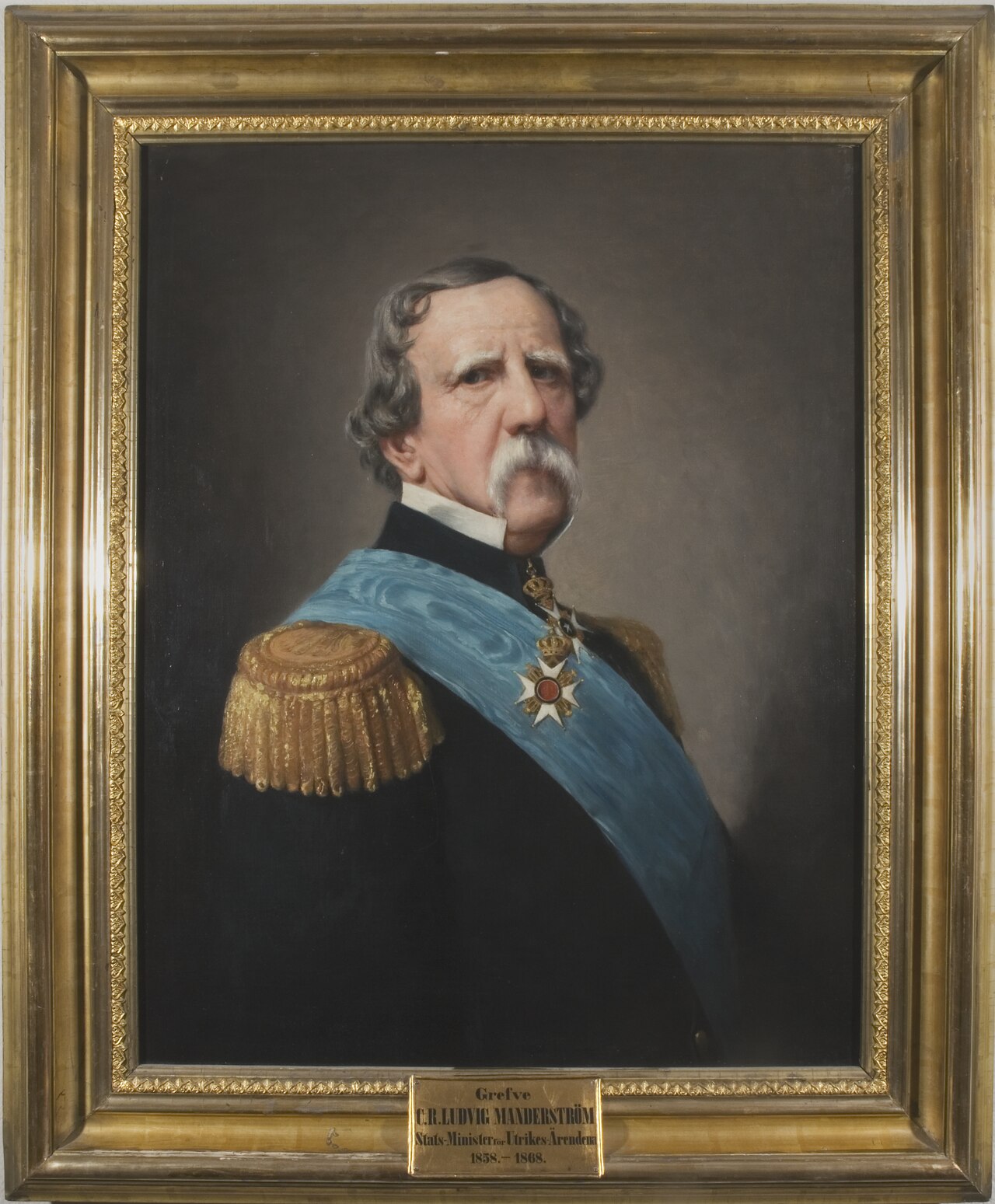
Major works - **Ludvig Christoffer Rutger Manderström (1806‑1873)** – This full‑length portrait depicts the Swedish count, baron, and foreign‑minister in a dignified pose. Gertner rendered the intricate embroidery of Manderström’s uniform with exacting detail, while the softened light across the sitter’s face conveys both authority and approachability. The work is a prime example of Gertner’s ability to blend formal portrait conventions with a realistic treatment of texture. - **Johanne Marie Gertner, f. Lassen (1846)** – A tender portrait of the artist’s mother, this painting demonstrates Gertner’s personal side. The gentle modelling of the face, the subtle play of light on the modest garments, and the intimate, almost domestic setting distinguish it from his more formal commissions. It also showcases his skill in capturing emotional nuance within a restrained compositional framework. - **Thorvaldsen’s Studio in the Royal Academy of Fine Arts, Copenhagen (1836)** – In this interior scene Gertner turned his gaze to the workshop of the famed sculptor Bertel Thorvaldsen. The composition records the studio’s clutter of marble fragments, tools, and unfinished statues, rendered with a documentary precision that anticipates later realist genre painting. The work reflects Gertner’s interest in the artistic process itself, as well as his ability to convey atmosphere through careful observation of light falling on varied surfaces. - **Blokkedrejer ved Holmen (1840)** – Translating to “Block Cutter at Holmen,” this genre painting portrays a worker, likely Gertner’s own father, engaged in his trade at the naval shipyard. The piece is notable for its sympathetic depiction of labour, a subject rarely treated with such dignity in Danish art of the period. Gertner’s handling of the coarse wooden blocks and the glint of metal tools demonstrates his mastery of texture and his empathy for everyday subjects. - **En hyrdedreng, der driver en flok får (1838)** – This early work shows a young shepherd boy guiding a flock of sheep across a pastoral landscape. The painting’s naturalistic lighting and the accurate rendering of the boy’s clothing and the animals’ wool highlight Gertner’s early commitment to realism, predating his more celebrated portraiture.
Influence and legacy Johan Vilhelm Gertner occupies a transitional position in Danish art history. While rooted in the academic training of the Golden Age, his incorporation of realist detail and photographic precision anticipated the later realism of Danish painters such as Peder Severin Krøyer and the Skagen artists. Gertner’s portraits continued to be exhibited in Danish museums throughout the 19th and 20th centuries, serving as reference points for the study of 19th‑century dress and portrait conventions. Moreover, his genre scenes, particularly *Blokkedrejer ved Holmen*, contributed to a modest but meaningful shift toward the dignified representation of working‑class subjects in Danish visual culture. Today, his works are valued both for their technical excellence and for the insight they provide into the social and artistic milieu of Denmark’s late Golden Age.
Frequently asked questions
Who was Johan Vilhelm Gertner?
Johan Vilhelm Gertner (1818–1871) was a Danish painter best known for his highly realistic portraiture and for being one of the last students of the influential teacher Christoffer Wilhelm Eckersberg.
What style or movement is he associated with?
Gertner is linked to the late Golden Age of Danish painting, blending academic classicism with emerging Realist tendencies and early photographic influences.
What are his most famous works?
His most recognised paintings include the portrait of Ludvig Christoffer Rutger Manderström, the portrait of his mother Johanne Marie Gertner (1846), *Thorvaldsen’s Studio* (1836), *Blokkedrejer ved Holmen* (1840), and the shepherd scene *En hyrdedreng, der driver en flok får* (1838).
Why does he matter in art history?
Gertner bridges the disciplined classicism of the Danish Golden Age with the realism that followed, influencing later portraitists and contributing to a more accurate visual record of 19th‑century Danish society.
How can I recognise a Gertner painting?
Look for meticulous surface detail, especially in fabrics and metal, a restrained colour palette, subtle chiaroscuro, and a smooth, photographic‑like finish that captures the sitter’s likeness with striking realism.