Johan Rohde
1856 – 1935
In short
Johan Rohde (1856–1935) was a Danish painter, lithographer and designer who co‑founded the independent exhibition society Den Frie Udstilling in 1891. He is noted for his versatile landscapes, portraits and contributions to modern Danish art beyond the Academy’s conventions.
Notable works

Early life Johan Gudmann Rohde was born in 1856 in the provincial town of Randers, Denmark. He grew up during a period when Danish art was dominated by the Royal Academy, which prescribed a strict hierarchy of subjects and techniques. Rohde’s early education included basic drawing lessons typical of the time, but his talent quickly outgrew the conventional curriculum. By his late teens he was already experimenting with lithography, a medium that would later become a hallmark of his practice. In the 1870s he moved to Copenhagen, where he enrolled at the Royal Danish Academy of Fine Arts. While the Academy provided formal training, Rohde found its emphasis on historical and mythological subjects limiting, prompting him to seek alternative artistic circles.
Career and style After completing his studies, Rohde began a career that straddled painting, printmaking and design. He worked as a lithographer for commercial firms, producing posters and book illustrations, but he also pursued a personal oeuvre that reflected the changing visual language of the late 19th century. Influenced by the naturalism of the Skagen painters and the emerging Symbolist tendencies in Europe, Rohde’s style combined a faithful observation of light and atmosphere with a subtle, sometimes lyrical, treatment of form.
In the early 1890s Rohde became a central figure in a group of artists dissatisfied with the Academy’s selection criteria. In 1891 he helped found Den Frie Udstilling (The Free Exhibition), an independent platform that allowed artists to exhibit works outside the Academy’s conservative jury. This initiative placed him at the heart of Denmark’s avant‑garde movement, even though he never formally aligned himself with a single stylistic school. His paintings from this period display a blend of realistic detail and a growing interest in colour harmony, foreshadowing the later developments of Danish modernism.
Signature techniques Rohde’s versatility stemmed from his command of several media. As a lithographer, he mastered the dry‑point technique, using the medium’s capacity for fine line work to render delicate tonal variations. In his oil paintings, he favoured a layered approach, applying thin glazes to build depth while preserving the immediacy of the initial brushstroke. His colour palette often juxtaposed muted earth tones with occasional bursts of saturated blues or reds, a strategy that highlighted focal points without overwhelming the composition.
Another characteristic of Rohde’s work is his compositional balance. Whether portraying a solitary figure or a sweeping landscape, he positioned key elements along diagonal or triangular axes, creating a sense of movement that guides the viewer’s eye. This structural awareness, combined with his lithographic precision, gave his prints a graphic clarity that distinguished them from more painterly contemporaries.
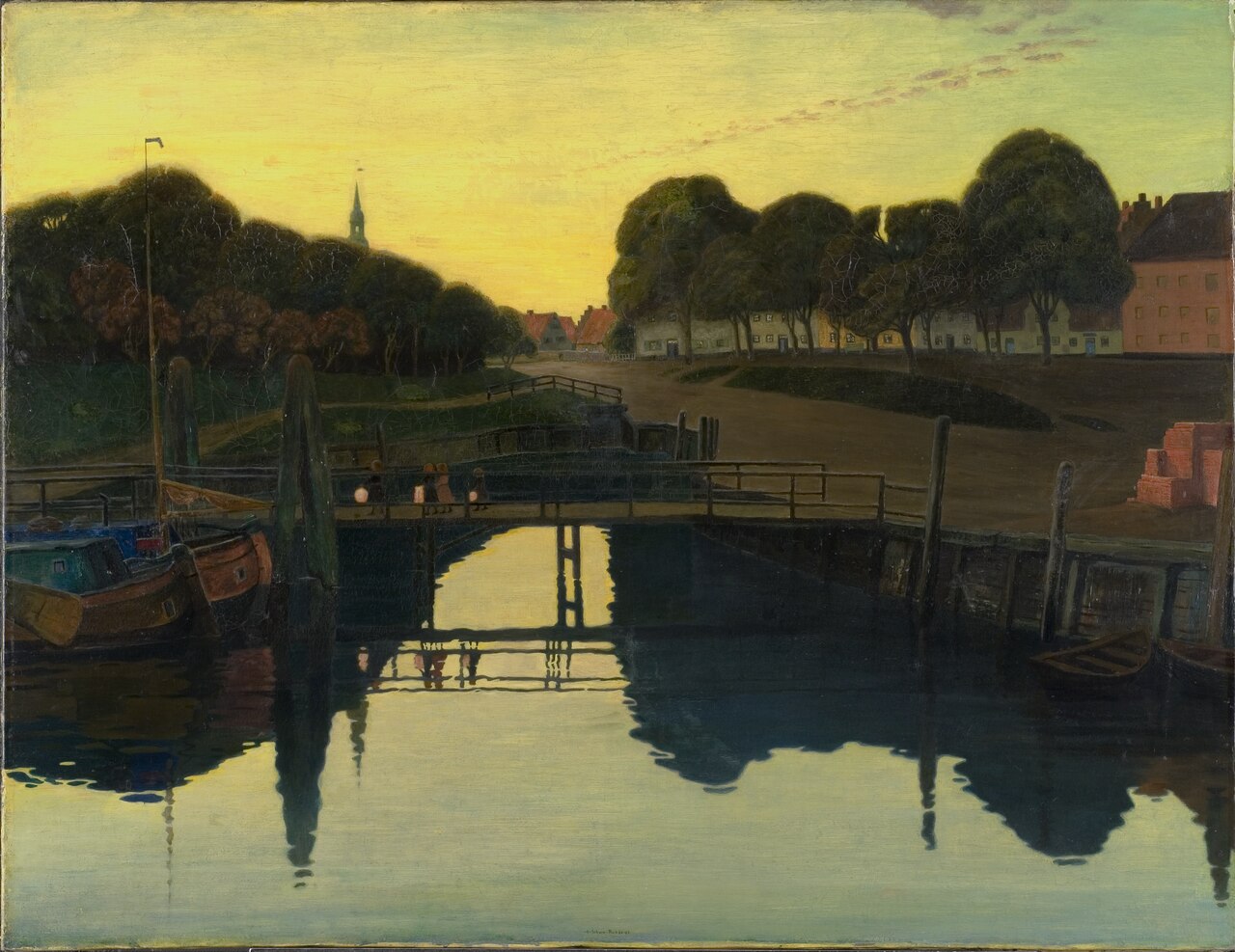
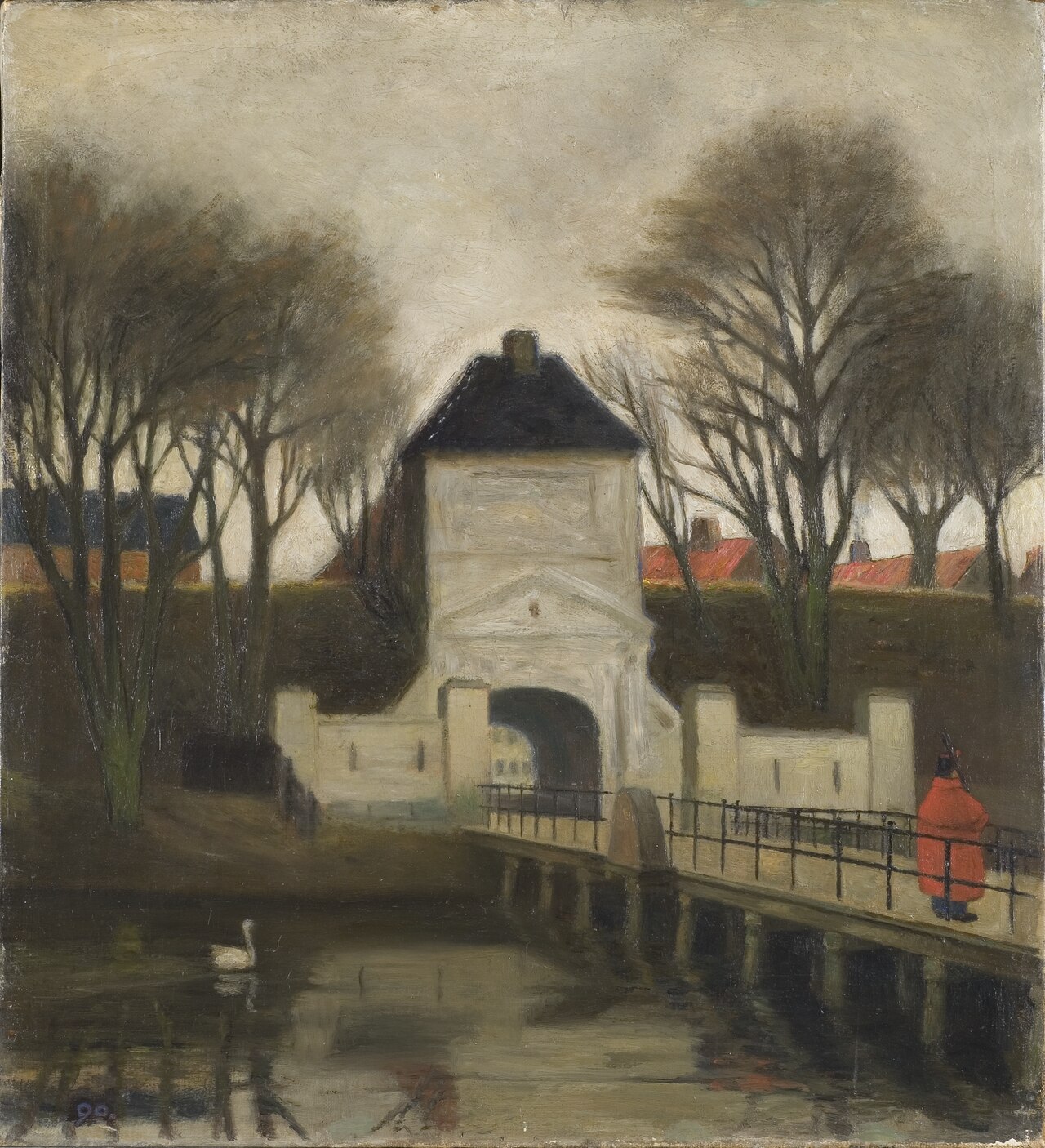
Major works Rohde’s oeuvre includes several works that illustrate his range. **"View of ‘Kastellet’, Copenhagen" (1890)** captures the historic fortress with a softened skyline, where the muted sky contrasts with the crisp outlines of the bastions, reflecting his interest in urban subject matter. **"Summer night at Tönning" (1893)** portrays a quiet coastal scene under a deepening dusk; the subtle gradations of blue convey the fleeting quality of twilight, while the distant figures are rendered with a faint, almost ethereal brushwork.
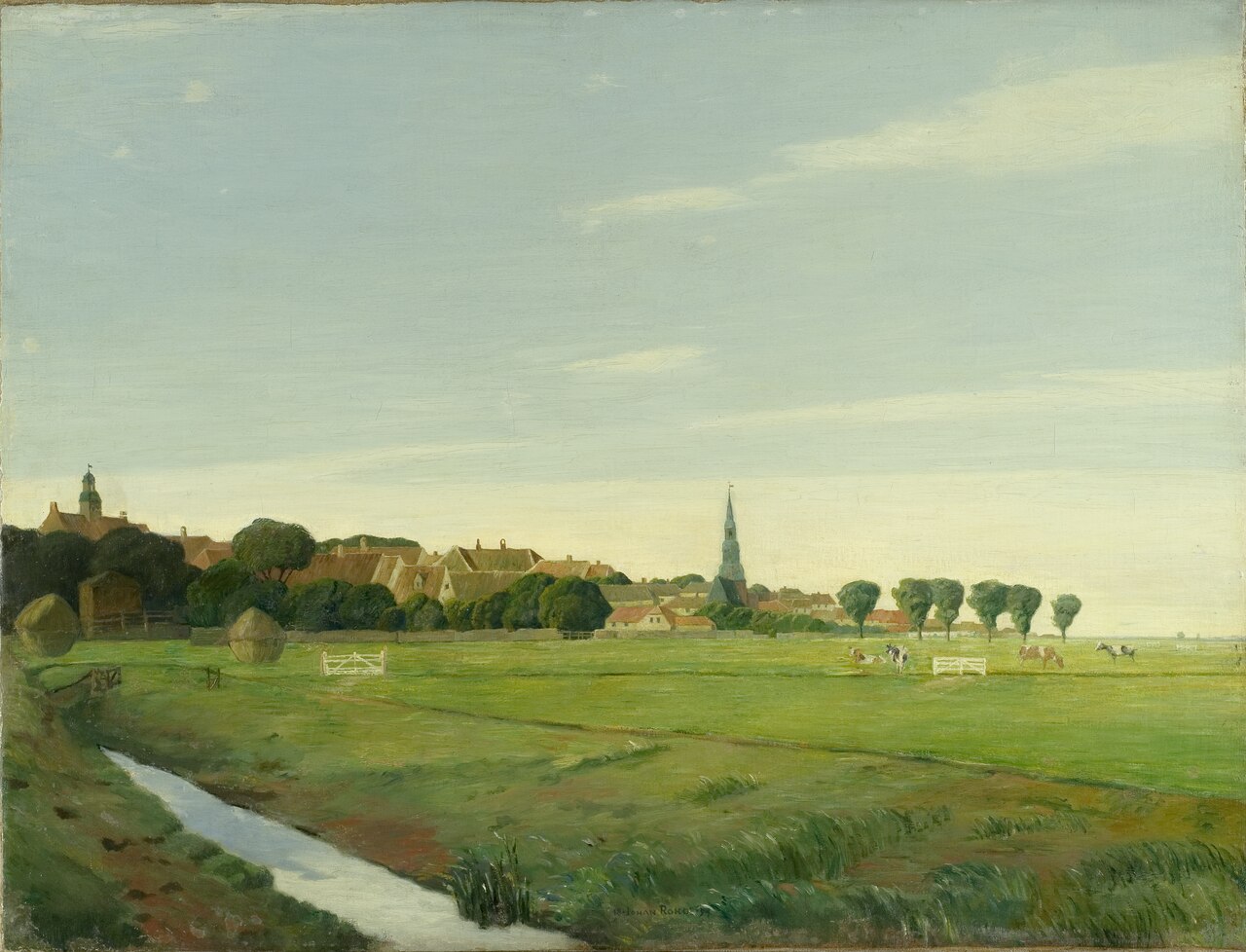
In "Landscape with a Town" (1894) Rohde combines an expansive countryside with a modest settlement, employing a balanced composition that draws the viewer from the foreground fields to the distant rooftops. The work demonstrates his skill in integrating human habitation within a natural setting without sacrificing either element’s visual importance.
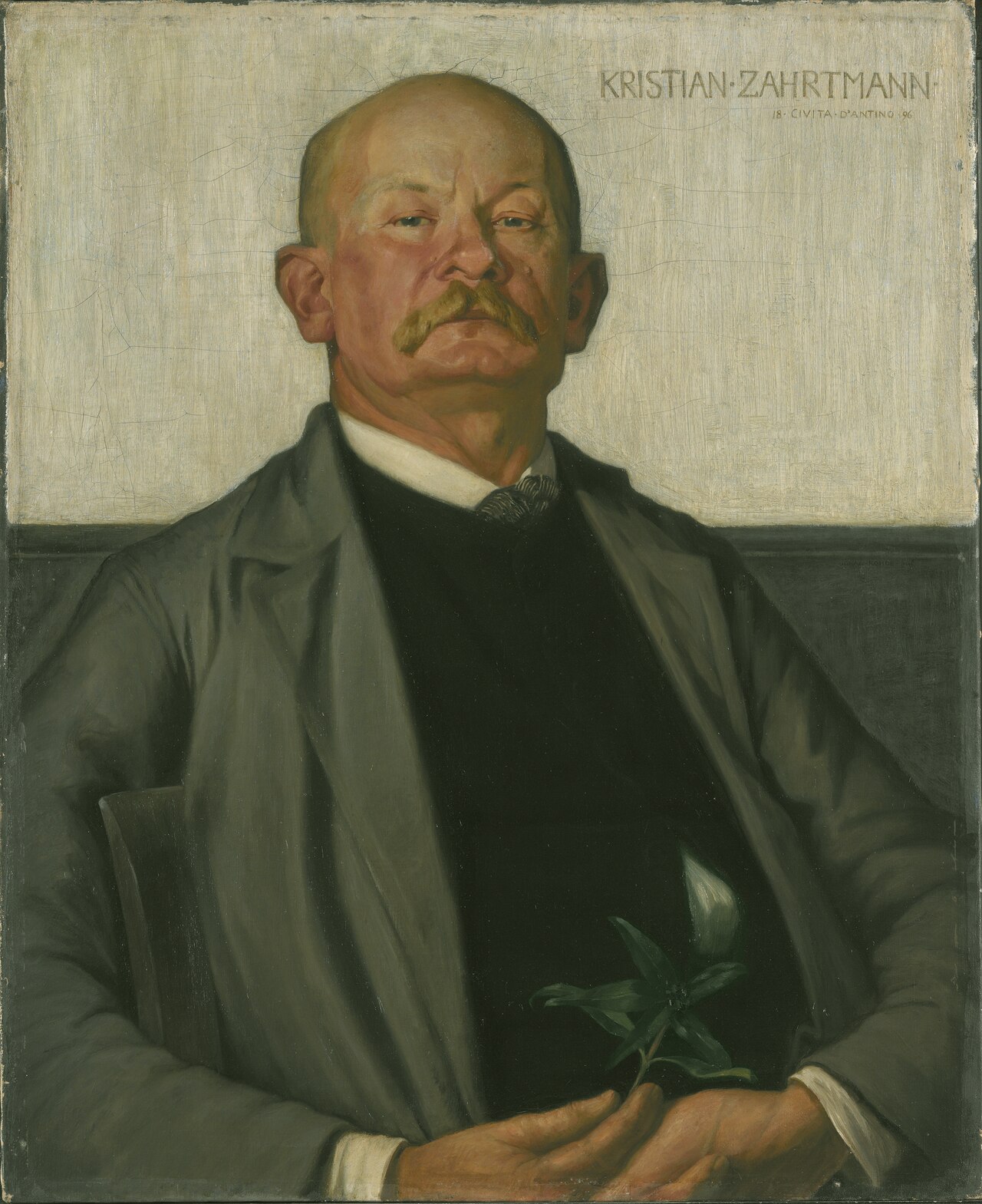
Rohde also produced portraiture, exemplified by "Kristian Zahrtmann, the Danish Painter" (1896). This portrait presents the fellow artist in a relaxed pose, the background rendered through delicate tonal washes that focus attention on Zahrtmann’s expressive face. The piece reveals Rohde’s ability to capture personality through restrained yet insightful detailing.
Finally, "Portræt af den svenske maler Gustaf Wolmar" (1902) showcases his later period, where a more refined handling of light and texture emerges. The portrait’s subtle chiaroscuro and the careful rendering of the subject’s attire hint at Rohde’s continued exploration of graphic effects within oil painting.
These works, together with his lithographic prints, illustrate a career that traversed traditional subjects and progressive techniques, positioning Rohde as a bridge between academic training and modern Danish art.
Influence and legacy Johan Rohde’s contribution to Danish art extends beyond his paintings. By co‑founding Den Frie Udstilling, he helped establish a venue that nurtured generations of artists who sought creative freedom outside institutional constraints. The society’s enduring presence attests to Rohde’s vision of an inclusive, artist‑driven exhibition model.
His dual practice as a painter and lithographer influenced younger artists who recognized the value of cross‑disciplinary skills. Moreover, his balanced approach to composition and colour informed the early 20th‑century Danish modernists, who admired his ability to fuse realism with a subtle, expressive palette.
Today, Rohde’s works are held in several Danish museum collections, and his prints remain a reference for students studying the evolution of graphic art in Scandinavia. While his name may not be as widely known internationally as some of his contemporaries, his role in shaping an independent artistic community and his contributions to both painting and printmaking secure his place in Danish art history.
Frequently asked questions
Who was Johan Rohde?
Johan Rohde (1856–1935) was a Danish painter, lithographer and designer, best known for co‑founding the independent exhibition society Den Frie Udstilling in 1891.
What style or movement is he associated with?
Rohde did not belong to a single movement; his work blends naturalistic observation with emerging Symbolist and early modernist tendencies, reflecting a transition from academic to independent Danish art.
What are his most famous works?
Key works include "View of ‘Kastellet’, Copenhagen" (1890), "Summer night at Tönning" (1893), "Landscape with a Town" (1894), "Kristian Zahrtmann, the Danish Painter" (1896) and the portrait "Portræt af den svenske maler Gustaf Wolmar" (1902).
Why does he matter in art history?
Rohde’s importance lies in his role as a catalyst for artistic independence in Denmark and his versatile practice that bridged painting and printmaking, influencing later modernist artists.
How can I recognise a Johan Rohde painting?
Look for balanced compositions with subtle colour contrasts, a layered glazing technique, and a graphic clarity that often stems from his lithographic background.