Jean Pierre François Lamorinière
1828 – 1911
In short
Jean Pierre François Lamorinière (1828–1911) was a Belgian landscape painter from Antwerp who worked in the tradition of the Barbizon school, bridging Romantic and Realist approaches with meticulous, light‑filled depictions of his native countryside.
Notable works

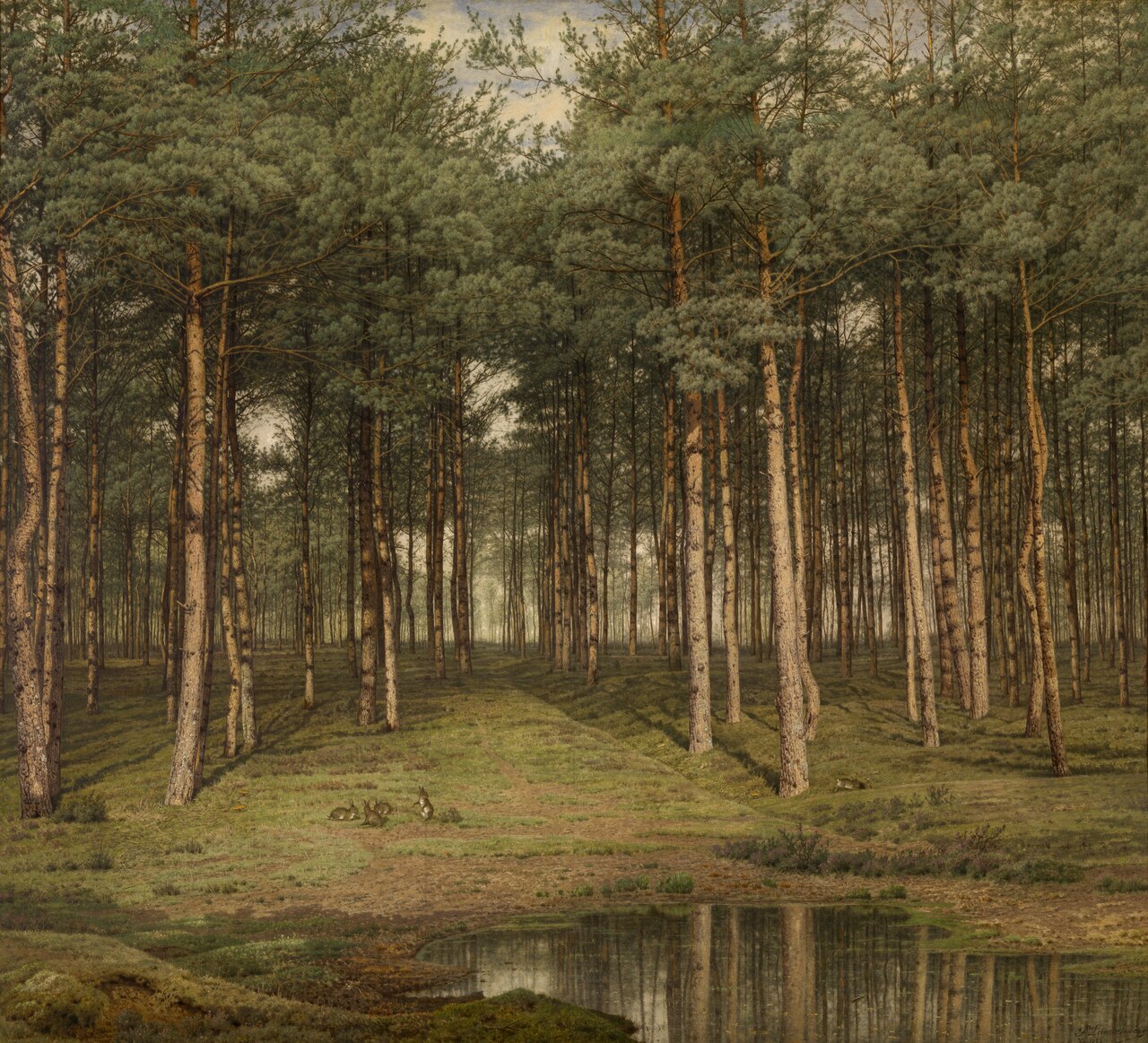
Early life Jean Pierre François Lamorinière was born in 1828 in the bustling port city of Antwerp, Belgium. Little is recorded about his family background, but the city’s vibrant artistic community provided a fertile environment for a young talent. Like many aspiring painters of his generation, Lamorinière likely entered the Royal Academy of Fine Arts in Antwerp, where he would have received a classical foundation in drawing, composition, and the study of nature. The academy’s curriculum stressed both studio practice and the observation of the natural world, a duality that would later define his career.
Career and style After completing his formal training, Lamorinière embarked on a career that coincided with a period of rapid change in European landscape painting. The early 19th‑century Romantic tradition, characterised by dramatic, emotive scenery, was giving way to a more empirical, realist sensibility. Lamorinière’s work occupies a transitional space between these currents. He travelled extensively throughout Belgium, sketching and painting en plein air, a practice that mirrored the French Barbizon school’s emphasis on direct observation.
His paintings are distinguished by a restrained palette, careful modulation of light, and an almost scientific attention to atmospheric conditions. While he retained the Romantic affection for the countryside, his compositions are grounded in realistic detail, avoiding the overtly theatrical gestures of earlier Romantic masters. This balance of feeling and fidelity made his landscapes appealing to both academic collectors and the emerging bourgeois market that prized authentic depictions of national scenery.
Signature techniques Lamorinière’s technique centres on layered glazing and fine brushwork. He would first lay down a thin underpainting to establish tonal values, then apply multiple translucent glazes to achieve depth and luminosity. This method allowed him to render subtle shifts in sky colour, the diffused glow of sunrise, and the muted tones of mist‑laden fenlands. His palette typically featured earth tones—ochres, umbers, and muted greens—punctuated by occasional highlights of cadmium yellow or vermilion to capture reflections on water.
A hallmark of his work is the precise rendering of foliage and vegetation. He often employed a stippling technique, using small, controlled strokes to suggest the texture of leaves and grasses without overwhelming the composition. In addition, Lamorinière paid close attention to the structure of clouds, using soft, feathered brushstrokes to convey their volumetric presence. The overall effect is a calm, measured atmosphere that invites the viewer to linger in the scene.
Major works - **Prinsenvijver on the Isle of Walcheren (1876)** – This painting captures a tranquil pond surrounded by reeds and low trees on the Dutch island of Walcheren. Lamorinière’s handling of the water’s surface, with delicate ripples reflecting the sky, demonstrates his mastery of light. The composition’s low horizon line and the subtle gradation of green tones convey a sense of stillness that is typical of his later work.
- Fir Wood at Putte (1883) – In this later piece, the artist turns his focus to a dense stand of firs near the village of Putte. The vertical thrust of the trees creates a rhythmic pattern, while the muted winter light filters through the canopy, producing a cool, silvery atmosphere. The painting exemplifies his ability to render the texture of bark and the play of shadow with disciplined brushwork.
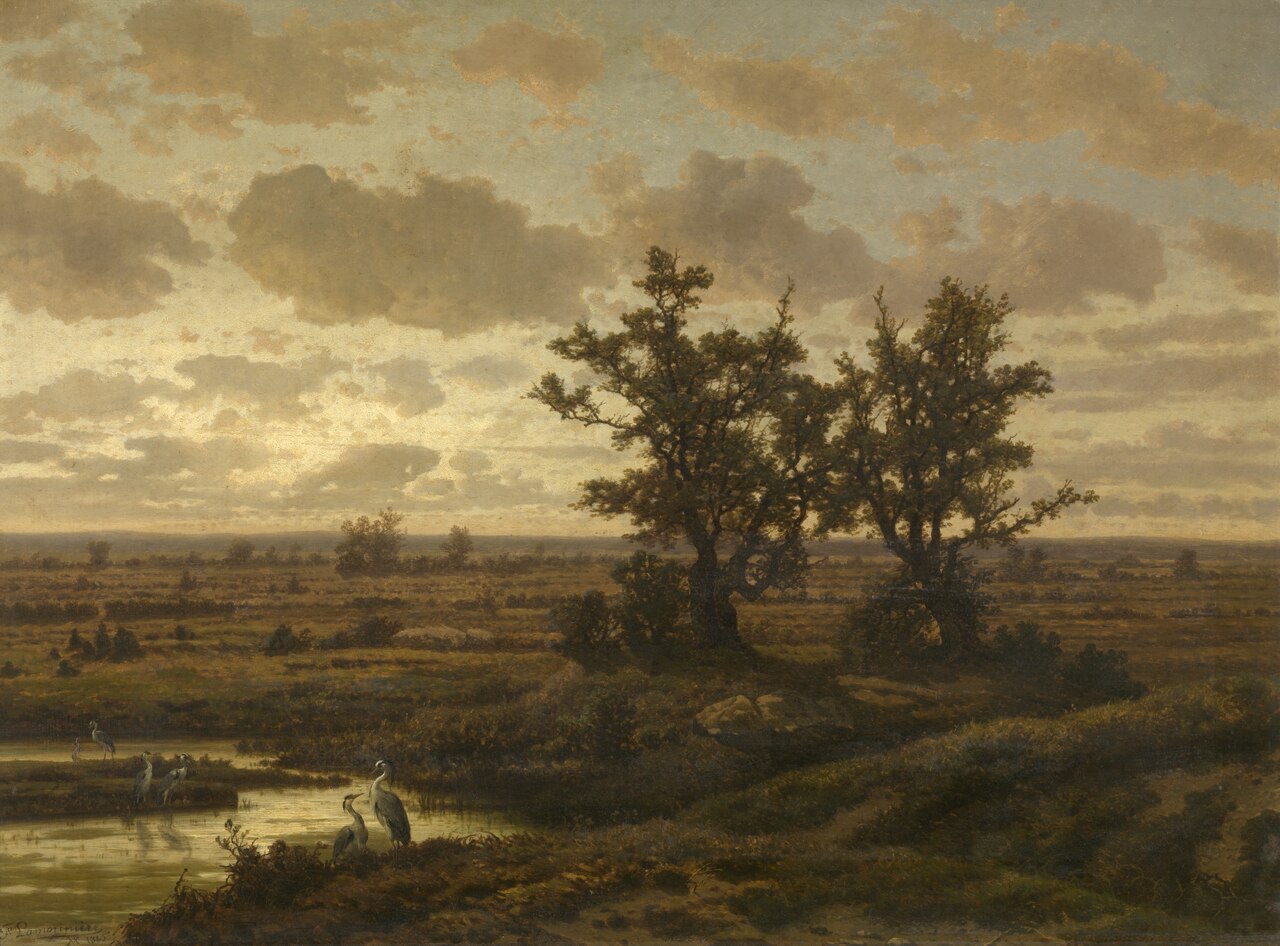
- Fen in the Kempen (1865) – One of his earlier landscape studies, this work depicts the marshy heathland of the Kempen region. Lamorinière captures the expansive, mist‑filled sky that dominates the canvas, with a shallow foreground of reeds and water. The painting’s restrained colour scheme and careful rendering of atmospheric perspective illustrate his shift toward realism.
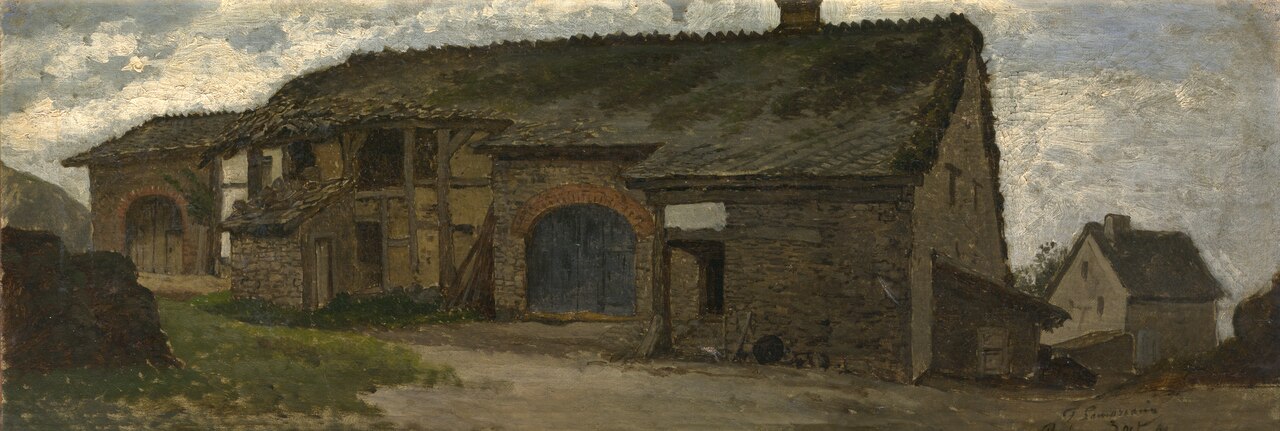
- Farm in Rahier (1864) – Here the artist records a modest farmstead set against a gently rolling countryside. The structure is rendered with simple, geometric forms, allowing the surrounding fields and sky to dominate the visual narrative. The work’s calm mood and balanced composition reflect the influence of both Romantic sentiment and a growing realist precision.
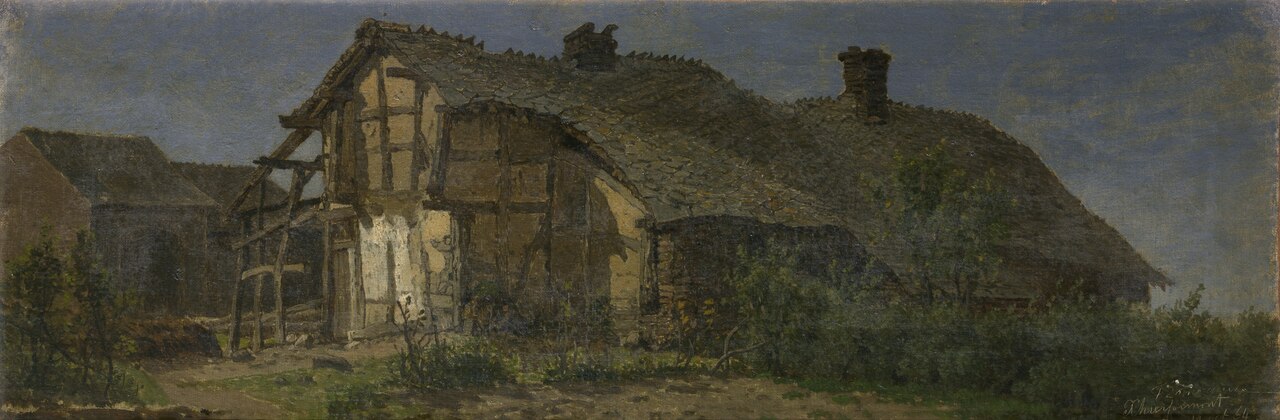
- An Old Farm in Xhierformont (1864) – This painting portrays a weathered farmhouse amid a quiet rural landscape. Lamorinière’s attention to the aged stonework and the subtle colour variations of the surrounding vegetation demonstrates his commitment to observational accuracy. The subdued lighting and muted palette reinforce the timeless quality of the scene.
Together, these works illustrate Lamorinière’s evolving approach to light, atmosphere, and the Belgian countryside, while also highlighting his consistent interest in modest, everyday subjects.
Influence and legacy Lamorinière’s contribution to Belgian art lies in his role as a bridge between the Romantic landscape tradition and the emerging realist school. By integrating the Barbizon school’s emphasis on direct observation with a disciplined, detailed technique, he helped shape a distinctly Belgian approach to landscape painting. His works were widely exhibited in Antwerp’s salons and were acquired by private collectors seeking authentic representations of the nation’s rural heritage.
Later generations of Belgian painters—particularly those associated with the Société des Artistes belges—cited Lamorinière as an exemplar of disciplined naturalism. His paintings continue to be displayed in the Royal Museum of Fine Arts Antwerp and other regional institutions, where they serve as reference points for the study of 19th‑century landscape art. Scholars note that his careful treatment of light and atmosphere prefigured some of the concerns of early Impressionist painters, albeit within a more restrained visual language.
In contemporary art‑history curricula, Lamorinière is recognised as a pivotal figure who documented the Belgian countryside with both affection and factual precision, offering valuable insight into the nation’s cultural identity during a period of rapid industrialisation. His legacy endures through the continued appreciation of his serene, meticulously rendered landscapes, which remain a touchstone for collectors and scholars alike.
Frequently asked questions
Who was Jean Pierre François Lamorinière?
He was a Belgian landscape painter (1828–1911) from Antwerp, known for realistic depictions of his native countryside.
What style or movement did Lamorinière belong to?
Lamorinière worked in the tradition of the Barbizon school, bridging Romantic sentiment with a realist, observational approach.
What are his most famous works?
Key works include *Prinsenvijver on the Isle of Walcheren* (1876), *Fir Wood at Putte* (1883), *Fen in the Kempen* (1865), *Farm in Rahier* (1864) and *An Old Farm in Xhierformont* (1864).
Why is Lamorinière important in art history?
He helped transition Belgian landscape painting from Romantic idealisation to a more realistic, light‑focused representation, influencing later artists and enriching the national visual heritage.
How can I recognise a Lamorinière painting?
Look for calm, meticulously rendered countryside scenes, a restrained palette, layered glazing that creates subtle light effects, and precise, stippled foliage.