Jan van Amstel
1490 – 1537
In short
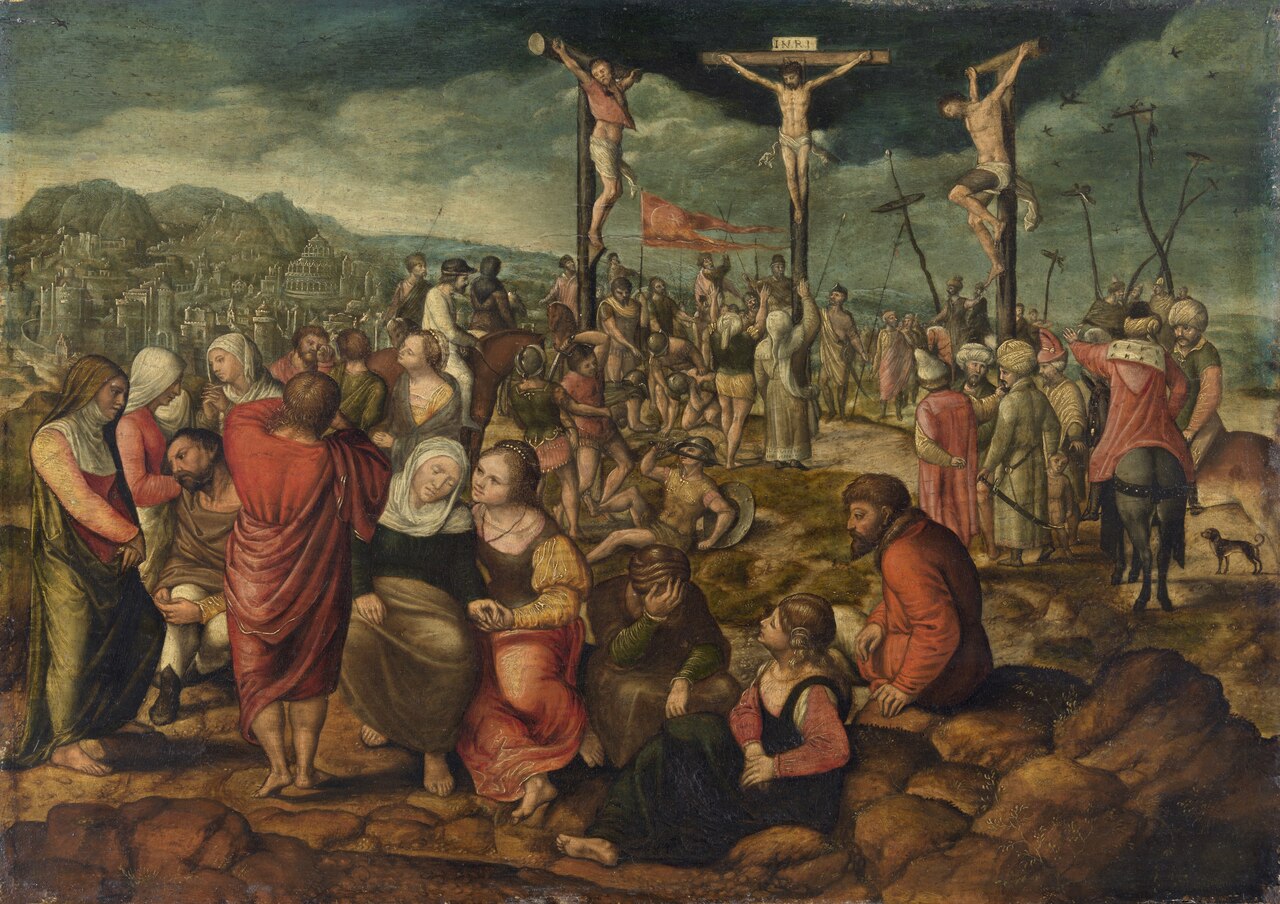
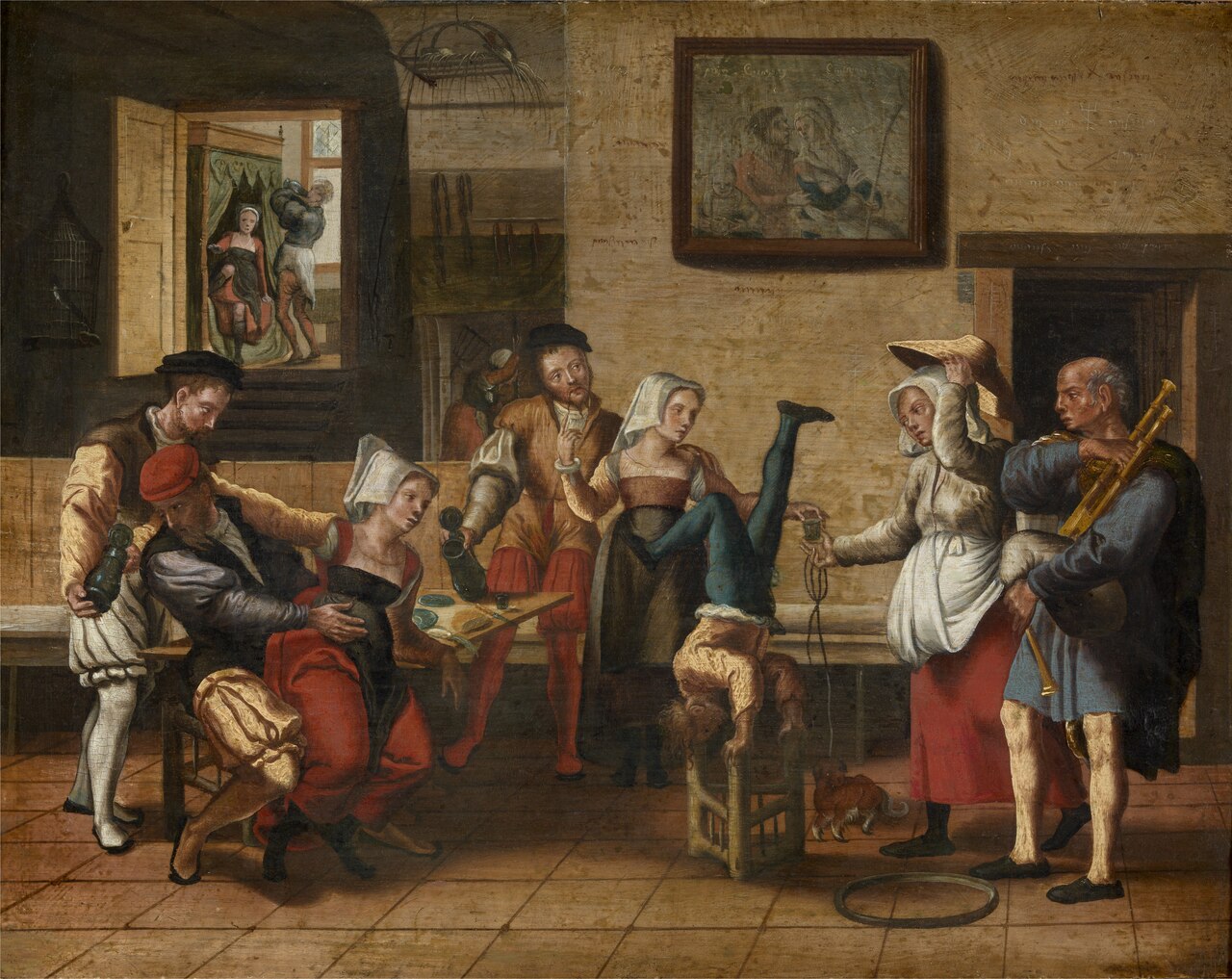
Jan van Amstel (1490–1537) was a Dutch Northern Renaissance painter, also known as Jan de Hollander, who worked in the Low Countries during the early 16th century. He is noted for religious scenes, genre paintings such as tavern interiors, and early landscape works, including a Crucifixion, a 1524 Tavern Scene, and a Landscape with the Flight into Egypt.
Notable works
_-_Landscape_with_the_Flight_into_Egypt_-_B.M.117_-_Bowes_Museum.jpg)
Early life Jan van Amstel was born in Amsterdam around 1490, at a time when the city was emerging as a commercial hub within the Burgundian Netherlands. Little is recorded about his family background, and his precise nationality remains uncertain, though contemporary references identify him as a Dutch painter. The nickname "Jan de Hollander" (John the Hollander) suggests a possible connection to the broader Dutch cultural sphere rather than a specific regional origin. His formative years would have been shaped by the thriving artistic environment of the Low Countries, where the legacy of the Early Netherlandish masters such as Jan van Eyck and Rogier van der Weyden still resonated strongly.
Career and style Van Amstel's career unfolded primarily in the first half of the 16th century, a period marked by the transition from the medieval Gothic idiom to the humanist influences of the Northern Renaissance. He is believed to have spent much of his professional life in Antwerp, a city that was rapidly becoming a centre for artistic production and trade. While documentary evidence of his workshop activities is scarce, the surviving works demonstrate a painter comfortable with both sacred and secular subjects.
His style reflects the synthesis of detailed observation and narrative clarity that characterised the Northern Renaissance. In religious compositions, van Amstel employed a balanced composition, careful modelling of figures, and a restrained colour palette that emphasized the spiritual gravitas of the scenes. In genre works, such as tavern interiors, he turned his attention to everyday life, depicting figures with a naturalistic attention to clothing, gesture, and interior furnishings. Landscape elements appear in his compositions as more than mere backgrounds; they often carry symbolic weight, aligning with the contemporary practice of embedding theological meaning within natural settings.
Signature techniques Van Amstel’s paintings are distinguished by several recurring technical traits:
* Fine underdrawing and meticulous brushwork – Infrared examinations of his panels reveal precise underdrawings, suggesting a disciplined preparatory process. The final surface displays fine, controlled brushstrokes that render textures ranging from the sheen of metal to the softness of fabric. * Atmospheric perspective – In his landscape scenes, van Amstel employs gradual tonal shifts to convey depth, a technique that anticipates the more elaborate atmospheric effects later perfected by Flemish masters. * Layered glazing – The luminous quality of his colour fields, particularly in sky and foliage, indicates the use of thin glazes applied over a pigmented ground, creating a subtle depth of colour. * Narrative detail – Even in compact compositions, van Amstel includes secondary details—such as background figures, animals, or architectural elements—that enrich the narrative without distracting from the main action.
These techniques combine to produce works that are both visually coherent and rich in symbolic nuance.
Major works
### Crucifixion One of van Amstel’s most compelling religious pieces, the *Crucifixion* presents the central figure of Christ on the cross surrounded by a mournful assembly of saints and onlookers. The composition is anchored by a strong vertical axis, while the surrounding figures are arranged in a semi‑circular formation that guides the viewer’s eye toward the crucified Christ. The painting exemplifies van Amstel’s skill in rendering emotional expression through subtle gestures and facial expressions, as well as his ability to integrate a landscape background that hints at a distant horizon, reinforcing the theological theme of salvation extending beyond the immediate scene.
### Tavern Scene (1524) The *Tavern Scene* dated 1524, offers a rare glimpse into everyday life in early 16th‑century Antwerp. The work depicts a bustling interior where patrons engage in drinking, conversation, and music. Van Amstel captures the play of light entering through a doorway, illuminating the wooden tables and the varied textures of clothing. The painting’s compositional rhythm is achieved through the placement of figures in groups, creating a dynamic yet balanced tableau. This work is noteworthy for its early treatment of genre painting, predating the more celebrated tavern scenes of later Flemish artists.
### Landscape with the Flight into Egypt In the *Landscape with the Flight into Egypt*, van Amstel merges a biblical narrative with an expansive natural setting. The Holy Family is shown travelling across a gently rolling countryside, framed by distant hills and a sky rendered with delicate cloud formations. The painting demonstrates van Amstel’s competence in rendering atmospheric perspective, as the colour and detail of the landscape recede into the background. The work also reflects the period’s interest in integrating scriptural stories with contemporary landscape observation, a practice that would become a hallmark of Northern Renaissance art.
Influence and legacy Although Jan van Amstel is not as widely recognised as some of his contemporaries, his contributions helped shape the visual vocabulary of early 16th‑century Netherlandish painting. His integration of detailed genre scenes alongside traditional religious subjects anticipated the later flourishing of genre painting in Antwerp, where artists such as Pieter Bruegel the Elder expanded upon the everyday themes van Amstel explored. Moreover, his handling of landscape as an integral narrative component influenced subsequent generations of Flemish painters who would elevate landscape to a primary subject in its own right.
Van Amstel’s works survive in several museum collections across Europe, where they continue to be studied for their technical proficiency and their role in the transition from medieval to Renaissance visual culture in the Low Countries. While the documentary record of his life remains fragmentary, the surviving paintings attest to an artist who navigated the evolving artistic currents of his time with a distinctive blend of devotional reverence and keen observation of daily life.
In contemporary scholarship, Jan van Amstel is regarded as a representative figure of the Northern Renaissance’s middle period, bridging the achievements of early Netherlandish masters with the burgeoning naturalism of the later 16th century. His oeuvre offers valuable insight into the artistic practices, thematic interests, and technical innovations that characterised the vibrant artistic landscape of early modern Holland and Flanders.
Frequently asked questions
Who was Jan van Amstel?
Jan van Amstel (1490–1537) was a Dutch Northern Renaissance painter, also known as Jan de Hollander, active in Amsterdam and Antwerp.
What style or movement is he associated with?
He worked within the Northern Renaissance, combining detailed observation, religious narrative, and early genre painting.
What are his most famous works?
His notable works include a Crucifixion, the 1524 Tavern Scene, and the Landscape with the Flight into Egypt.
Why is Jan van Amstel important in art history?
He helped bridge early Netherlandish painting with later Flemish naturalism, influencing genre and landscape painting in the Low Countries.
How can I recognise a Jan van Amstel painting?
Look for fine underdrawing, meticulous brushwork, subtle glazing, atmospheric perspective, and detailed narrative elements within both religious and everyday scenes.