Jan Cossiers
1600 – 1671
In short
Jan Cossiers (1600–1671) was a Flemish Baroque painter from Antwerp, known for his transition from Caravaggesque genre scenes to history, religious subjects and portraits. He emerged as a leading colourist and draughtsman in 17th‑century Flanders, succeeding Rubens as one of Antwerp’s foremost artists.
Notable works


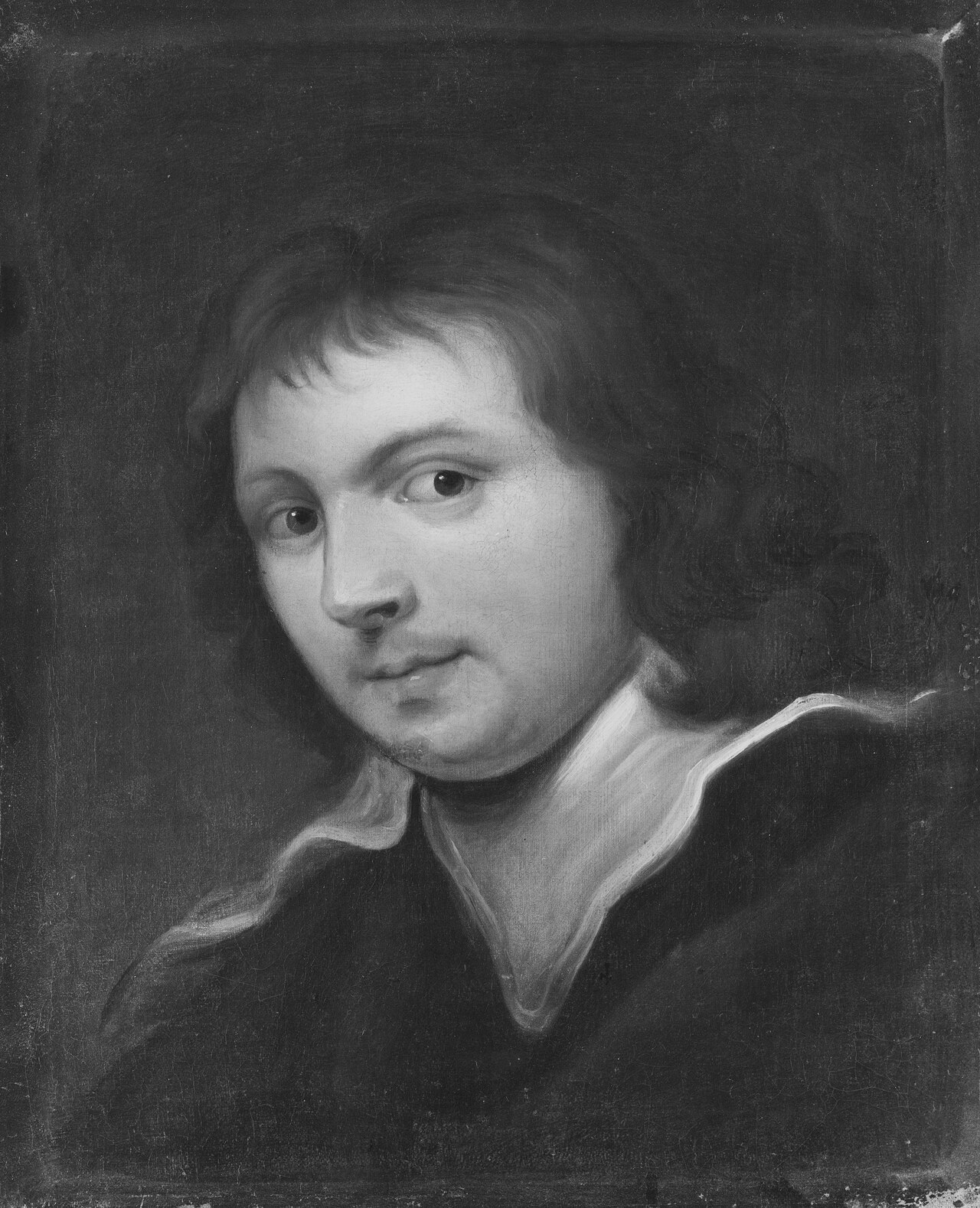

Early life Jan Cossiers was born in 1600 in Antwerp, a vibrant commercial hub of the Habsburg Netherlands. Little is recorded about his family background, but the city’s rich artistic environment provided ample opportunity for apprenticeship. Antwerp’s guild system required formal training, and Cossiers most likely entered the Guild of Saint Luke as a journeyman in his teens, where he would have been exposed to the flourishing Baroque workshop culture that dominated the city.
Career and style Cossiers’s earliest surviving works demonstrate a strong Caravaggesque influence, characterised by dramatic chiaroscuro and a focus on low‑life subjects such as tavern scenes and musicians. This phase reflects the broader diffusion of Caravaggio’s style into the Low Countries during the early 17th century, where Flemish painters incorporated the Italian master’s tenebrism into their own vernacular. By the late 1620s, Cossiers began to shift his emphasis toward more elevated themes. He embraced the grand narratives favoured by the Catholic Counter‑Reformation, producing history and religious paintings that combined dynamic composition with a luminous palette.
The death of Peter Paul Rubens in 1640 opened a vacuum in Antwerp’s artistic hierarchy. Cossiers, now an established painter, stepped into a leading role, catering to both local patrons and the international market. His later output is distinguished by a sophisticated use of colour—rich, saturated tones that enhance the emotional resonance of his subjects. While he never achieved Rubens’s monumental fame, Cossiers’s work was celebrated for its originality within the Flemish Baroque idiom.
Signature techniques Cossiers’s paintings reveal several recurring technical hallmarks. First, his handling of light is nuanced: he often employs a soft, diffused illumination that bathes figures in a warm glow, contrasting with the harsher tenebrism of his early period. Second, his brushwork is fluid yet controlled, allowing for subtle modelling of flesh and fabric while retaining a sense of immediacy. Third, his draughtsmanship is evident in the underlying drawings that precede many of his works; these sketches display a confident line, varied in pressure, suggesting a spontaneous approach to portraiture. Finally, his colour palette—dominated by deep reds, golden ochres, and verdant greens—contributes to a distinctive visual identity that makes his paintings instantly recognisable.
Major works - **Ecce Homo (1620)** – One of Cossiers’s earliest known dated pieces, this work exemplifies his Caravaggesque phase. The composition centres on Christ presented before the crowd, rendered with stark chiaroscuro that heightens the emotional tension. The background is largely dark, allowing the central figures to emerge with dramatic clarity. - **Portrait of a Man in a Wide‑Brimmed Hat (1631)** – This portrait showcases Cossiers’s transition to refined portraiture. The sitter is depicted with a direct gaze, the wide‑brimmed hat casting a gentle shadow over his features. The colour treatment—subtle blues and warm flesh tones—demonstrates Cossiers’s growing mastery of colour harmony. - **Prometheus Carrying Fire (1636)** – In this mythological scene, Cossiers applies his mature Baroque sensibility. The muscular figure of Prometheus is illuminated against a dark, storm‑tossed sky, his torch of fire providing a focal point. The work reflects both classical subject matter and a heightened emotional intensity. - **Narcissus (1636)** – Another mythological work, Narcissus captures the moment of self‑contemplation. The painter’s use of reflective water and delicate foliage creates a tranquil yet introspective atmosphere, while the figure’s idealised features reveal Cossiers’s skill in rendering the human form. - **Young Man with Long Hair** – Though undated, this portrait aligns with Cossiers’s later style. The subject’s flowing hair and relaxed pose convey a sense of individuality, and the background’s muted tones allow the figure’s colours to dominate the composition.
These works collectively illustrate Cossiers’s artistic evolution—from the stark realism of his early genre paintings to the refined elegance of his later historical and portrait commissions.
Influence and legacy Jan Cossiers occupied a pivotal position in Antwerp’s mid‑17th‑century art scene. By bridging the Caravaggesque realism of the early Baroque with the sumptuous colourism that defined later Flemish painting, he influenced a generation of younger artists who sought to balance dramatic narrative with painterly beauty. His drawings, noted for their fluid line and varied execution, were studied by contemporaries and later collectors as exemplars of effective portraiture preparation.
Although his name is less prominent than Rubens or Van Dyck, Cossiers’s contribution to Flemish Baroque painting endures through the surviving canvases in European museums and private collections. Modern scholars regard him as an original colourist whose work provides valuable insight into the stylistic transitions of the period. His paintings continue to be exhibited in thematic exhibitions on Baroque art, and his portraits remain reference points for connoisseurs assessing the quality of 17th‑century Flemish portraiture.
Frequently asked questions
Who was Jan Cossiers?
Jan Cossiers (1600–1671) was a Flemish Baroque painter from Antwerp who worked in genre, history, religious and portrait painting, becoming a leading artist in the city after Rubens’s death.
What style or movement is he associated with?
He is associated with the Flemish Baroque, initially adopting Caravaggesque tenebrism before developing a distinctive, colour‑rich style typical of mid‑17th‑century Flanders.
What are his most famous works?
Key works include *Ecce Homo* (1620), *Portrait of a Man in a Wide‑Brimmed Hat* (1631), *Prometheus Carrying Fire* (1636), *Narcissus* (1636), and the portrait *Young Man with Long Hair*.
Why does Jan Cossiers matter in art history?
He helped bridge early Caravaggesque realism with the richer colourism of later Flemish Baroque, influencing younger artists and contributing to Antwerp’s artistic prominence after Rubens.
How can I recognise a Jan Cossiers painting?
Look for a warm, saturated palette, fluid brushwork, soft illumination that highlights flesh tones, and a confident, varied drawing style underlying the composition.