Herman Vedel
1875 – 1948
In short
Herman Vedel (1875–1948) was a Danish painter renowned as the foremost portraitist of early‑20th‑century Denmark. Based in Copenhagen, he produced a series of acclaimed portraits and genre scenes that combined realistic observation with a subtle, expressive use of colour.
Notable works


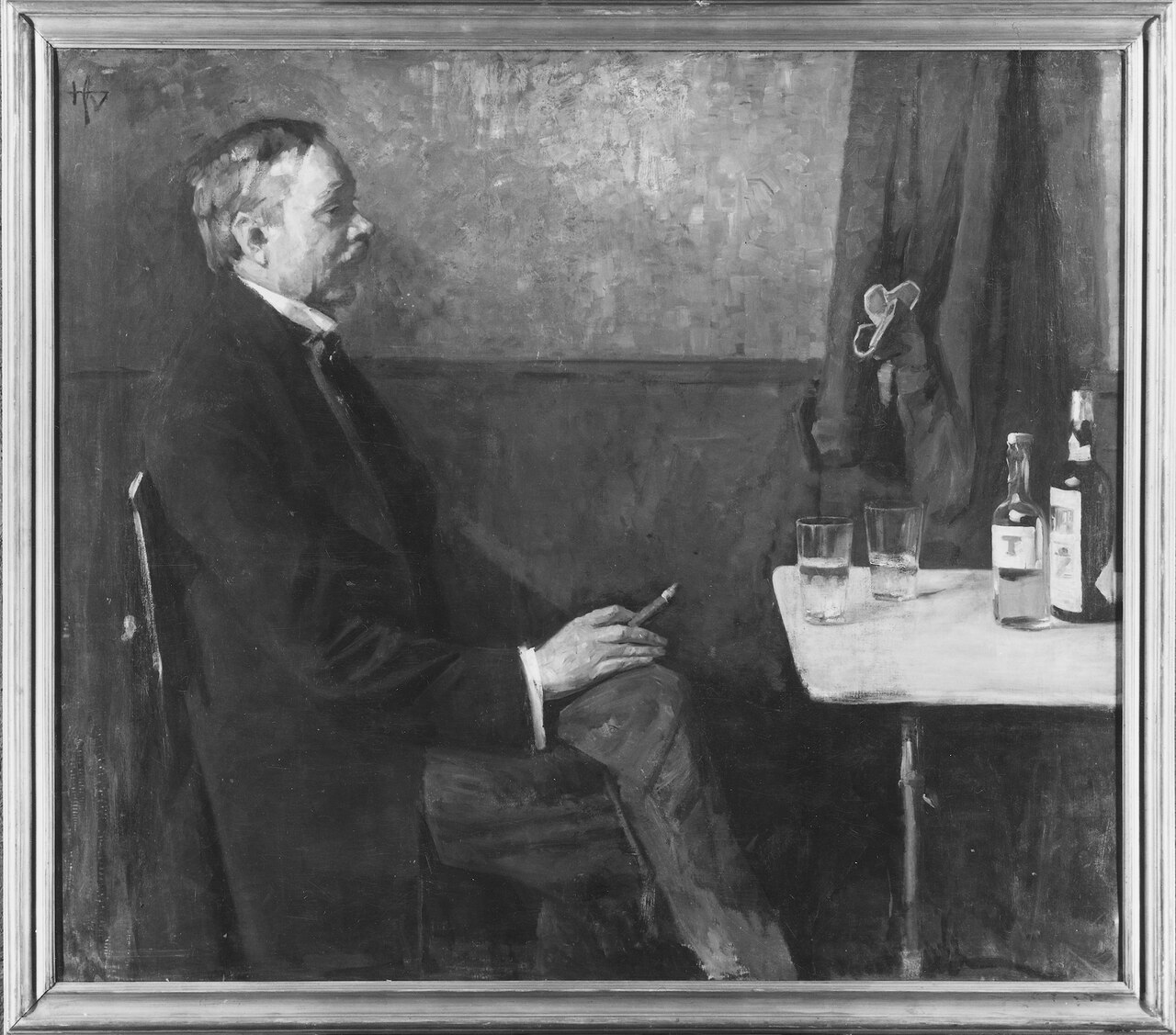


Early life Herman Vedel was born in Copenhagen in 1875, into a modest middle‑class family that valued education and the arts. His father, a civil servant, encouraged his son’s early interest in drawing, and Vedel began formal training at the Royal Danish Academy of Fine Arts while still a teenager. The Academy’s curriculum emphasized rigorous drawing from casts and live models, providing Vedel with a solid grounding in academic techniques. During his student years he was exposed to the work of the Danish Golden Age painters, whose emphasis on faithful representation and delicate colour would later inform his own portrait practice.
Career and style After graduating in the late 1890s, Vedel quickly established himself as a portrait specialist, securing commissions from Copenhagen’s cultural elite and the expanding bourgeoisie. His career coincided with a period of rapid social change in Denmark, and his portraits captured both the traditional dignity of the older generation and the emerging confidence of the new. While he did not align himself with any avant‑garde movement, Vedel’s style can be described as a synthesis of academic realism and the more intimate, psychological approach that characterised early modern portraiture. He favoured a restrained palette, often employing muted earth tones punctuated by carefully rendered highlights that brought the sitter’s features into sharp relief.
Throughout the 1910s and 1920s Vedel diversified his output, producing genre scenes and landscapes that retained the meticulous observation of his portrait work. He maintained a consistent approach to composition, typically placing the subject slightly off‑centre, allowing surrounding elements to suggest narrative context without distracting from the figure’s presence. This balance of detail and restraint gave his work a timeless quality that appealed to both contemporary patrons and later collectors.
Signature techniques Vedel’s paintings are distinguished by several recurring technical choices:
* Layered glazing – He built up colour through thin, translucent layers, a method that produced depth and a subtle luminosity, especially in skin tones. * Controlled brushwork – Fine, almost invisible brushstrokes rendered the flesh and fabric with a smooth finish, while broader strokes were reserved for background elements such as drapery or foliage. * Atmospheric lighting – Vedel often employed a soft, diffused light source that fell across the subject’s face, creating gentle chiaroscuro without the dramatic contrasts of Baroque lighting. * Attention to detail in attire – The textures of clothing, jewellery and accessories are rendered with meticulous care, providing insight into the sitter’s social status and personal taste. * Psychological emphasis – Rather than merely recording external appearance, Vedel sought to capture the inner character of his subjects, using subtle facial expression and posture to suggest mood.
These techniques combined to give his portraits a sense of immediacy and intimacy that made them highly sought after.
Major works The following works exemplify Vedel’s range and mastery:
* Portræt af en ung pige (1900) – This early portrait of a young girl showcases Vedel’s ability to render delicate skin tones and the softness of childhood innocence. The composition is simple, focusing on the sitter’s direct gaze and a hint of a smile, while the background is rendered in muted tones that do not compete with the figure.
* Dameportræt. Frøken Schmiegelow (1905) – A portrait of a young woman of the Danish upper class, this painting demonstrates Vedel’s skill in depicting luxurious fabrics and jewellery. The sitter is positioned slightly off‑centre, with a subtle play of light across her face that highlights both her poise and the nuanced expression of contemplation.
* Hjalmar Söderberg, Author (1910) – This portrait of the Swedish novelist captures the intellectual intensity of its subject. Vedel uses a restrained palette of greys and browns, allowing the focus to remain on Söderberg’s thoughtful eyes and the slight furrow of his brow, suggesting the writer’s inner world.
* Evening gathering (1920) – In this genre scene, Vedel moves beyond the single portrait to depict a small group sharing a quiet moment. The composition balances the figures against a dimly lit interior, using the same careful glazing technique to render the glow of lamplight on faces and objects.
* A river landscape (1920) – Although primarily a portraitist, Vedel’s foray into landscape demonstrates his capacity to translate his atmospheric lighting approach to natural settings. The river is rendered with smooth brushwork, and the surrounding foliage is suggested rather than detailed, creating a serene, almost lyrical effect.
* Negotiating the 1915 Constitution (not listed but widely recognised) – This large‑scale historical painting, displayed in Christiansborg Palace, illustrates Vedel’s ability to work on a grand civic scale. While the composition includes many figures, his characteristic attention to individual expression remains evident, linking the work back to his portrait origins.
Influence and legacy Herman Vedel’s reputation as Denmark’s leading portraitist of his era endured throughout his lifetime and continued after his death in 1948. His work set a benchmark for realistic yet psychologically nuanced portraiture, influencing a generation of Danish artists who sought to balance academic rigour with personal expression. Museums across Denmark, including the National Gallery in Copenhagen, hold several of his works, and his paintings remain a reference point for scholars studying early‑20th‑century Scandinavian art. The continued presence of his portraits in public buildings, such as the 1915 Constitution scene in Christiansborg Palace, attests to his lasting cultural significance. Though he never embraced radical modernist movements, Vedel’s commitment to craft and his subtle integration of contemporary sensibility ensured that his art remains both historically important and aesthetically resonant.
In contemporary art‑historical discourse, Vedel is frequently cited as a bridge between the nineteenth‑century realist tradition and the more introspective portraiture of the interwar period. His meticulous technique, combined with an ability to convey the inner life of his subjects, continues to inform curatorial narratives and educational programmes on Danish art. Today, collectors and institutions value his works not only for their technical excellence but also for the window they provide into the social and cultural fabric of early twentieth‑century Denmark.
Frequently asked questions
Who was Herman Vedel?
Herman Vedel (1875–1948) was a Danish painter celebrated as the leading portraitist of early‑20th‑century Denmark.
What style or movement is he associated with?
He worked in a realist‑based style that blended academic technique with a subtle, psychological approach, rather than aligning with a specific avant‑garde movement.
What are his most famous works?
Key works include Portræt af en ung pige (1900), Dameportræt. Frøken Schmiegelow (1905), Hjalmar Söderberg, Author (1910), Evening gathering (1920), A river landscape (1920), and the historic scene Negotiating the 1915 Constitution in Christiansborg Palace.
Why does he matter in art history?
Vedel set the standard for realistic, psychologically nuanced portraiture in Denmark, influencing subsequent generations and securing a lasting place in the nation’s cultural heritage.
How can I recognise a Herman Vedel painting?
Look for smooth, layered glazing, restrained colour, fine brushwork on faces, careful rendering of clothing, and a soft, diffused light that highlights the sitter’s expression.