Govardhan
1600 – 1700
In short
Govardhan (c.1600–1700) was a Mughal‑court painter of Hindu background who worked in the imperial ateliers from the reign of Akbar through Shah Jahan, noted for his rich colour, soft modelling and courtly subjects.
Notable works


Early life Govardhan was born around 1600 in the Mughal Empire, a culturally vibrant realm that spanned much of the Indian subcontinent. His father, Bhavani Das, was a minor painter employed in the imperial workshop, providing Govardhan with early exposure to the techniques and aesthetics of the Mughal school. Like many artists of the period, Govardhan was a Hindu, a fact that did not impede his participation in the largely Persian‑influenced court culture. The family’s artistic lineage, combined with the patronage structures of the empire, set the stage for his entry into the imperial atelier.
Career and style Govardhan entered imperial service during the later years of Emperor Akbar’s reign. The Mughal workshop at that time was a collaborative environment where artists from diverse backgrounds—Persian, Central Asian, and Indian—worked side by side. Govardhan continued his career under Emperor Jahangir and reached the height of his activity during Shah Jahan’s rule. Throughout these reigns, his work reflected the court’s evolving tastes: a shift from the vigorous naturalism of Akbar’s early period to the more refined, decorative sensibility favoured by Shah Jahan.
His paintings are characterised by a sensuous colour palette, often employing deep reds, verdant greens and luminous golds. Forms are softly modelled, giving figures a subtle three‑dimensionality that contrasts with the flatter decorative elements typical of earlier Mughal works. Govardnan’s compositions balance Persian miniature conventions—such as intricate borders and stylised foliage—with an increasing interest in realistic portraiture, a hallmark of Jahangir’s court.
Signature techniques Govardhan’s technique combined meticulous brushwork with a mastery of pigment preparation. He favoured fine, tapered brushes to render delicate facial features and the intricate details of textiles. His handling of colour involved layered washes that produced depth and a glowing effect, especially in the rendering of skin tones and silk fabrics. In addition, he employed a restrained use of gold leaf and mica to accentuate royal regalia and architectural elements.
A notable aspect of his style is the integration of perspective: architectural interiors are depicted with a measured sense of space, allowing viewers to sense depth without abandoning the flat decorative plane. This balance of realism and ornamentation became a defining trait of late Mughal painting.
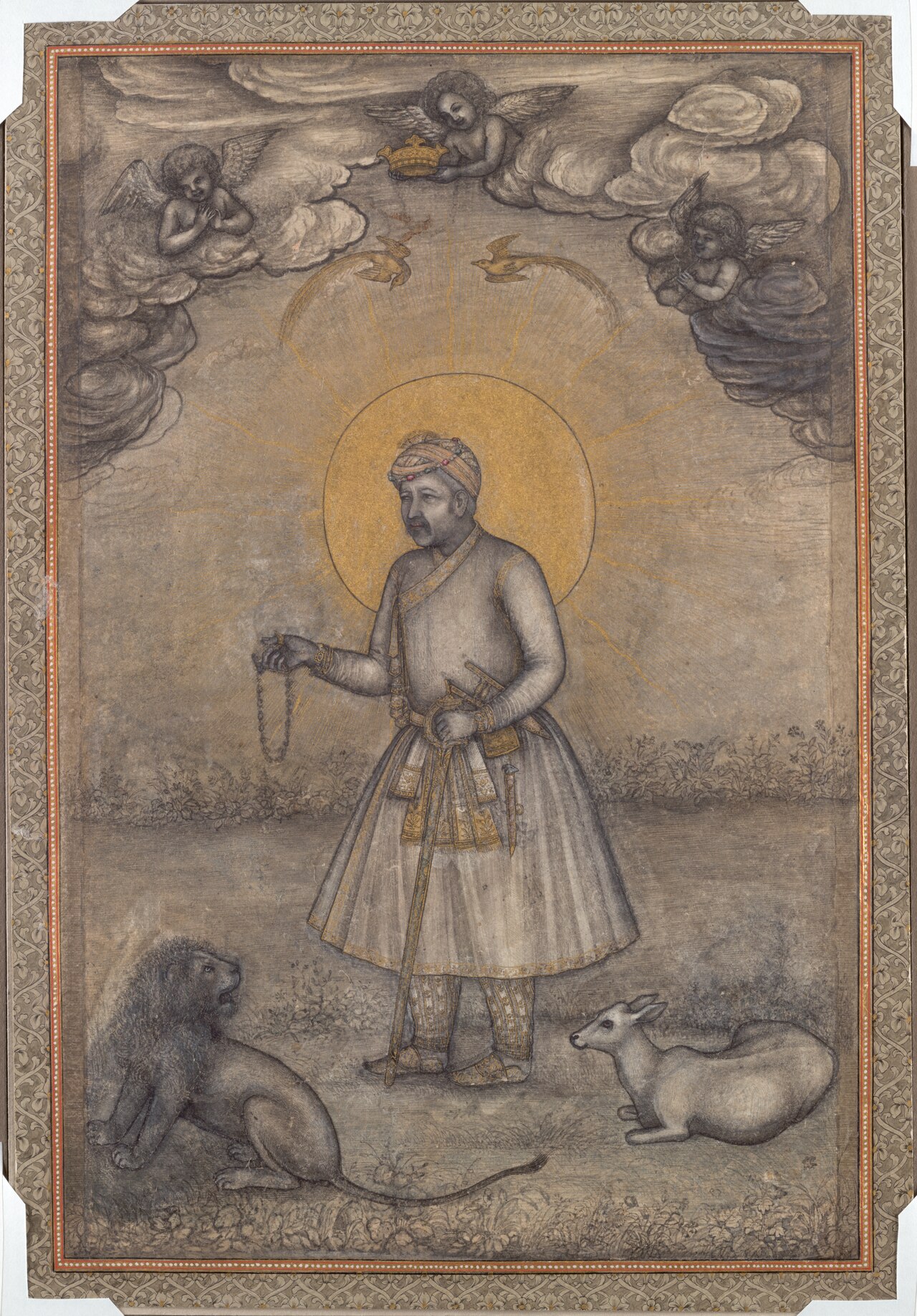
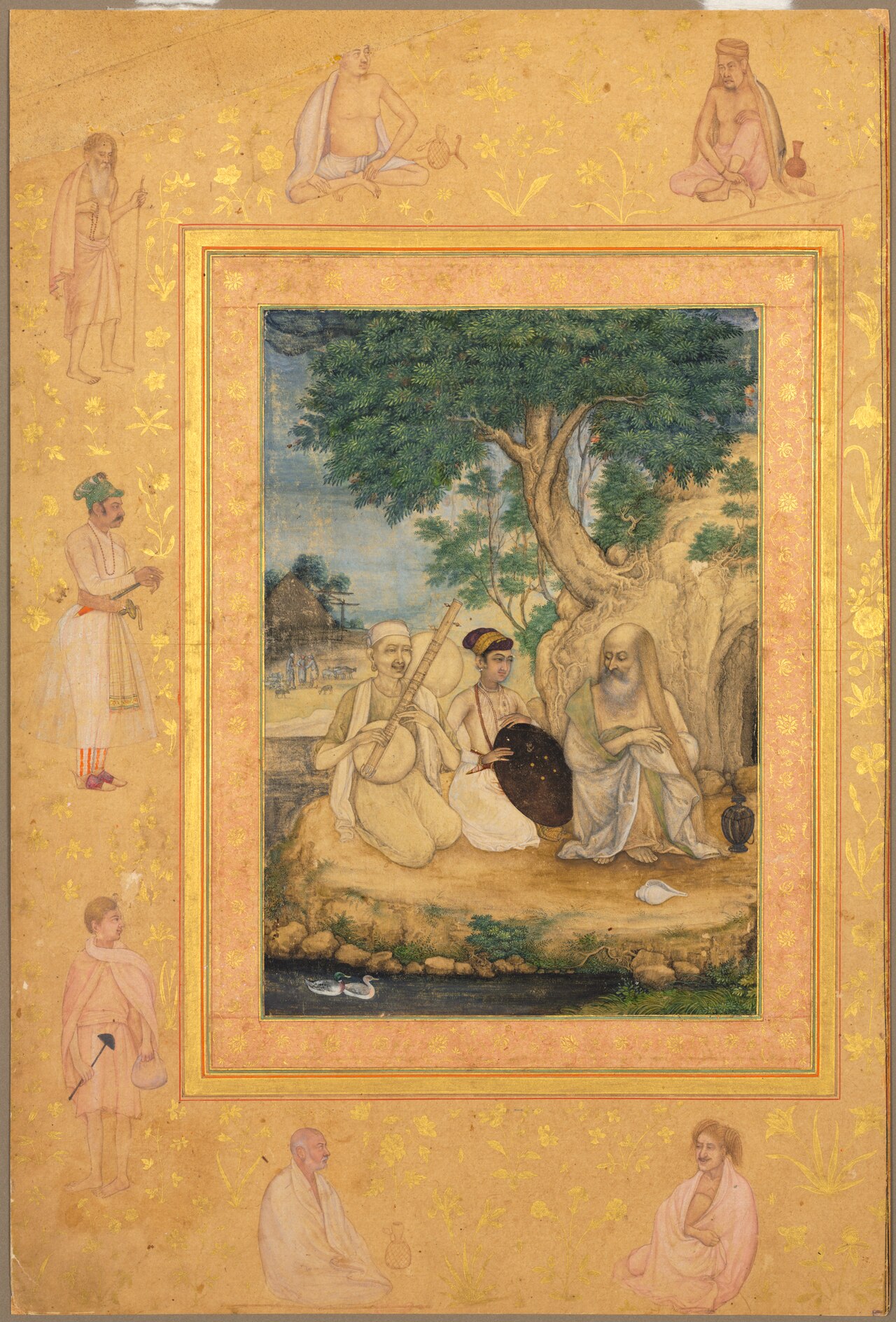
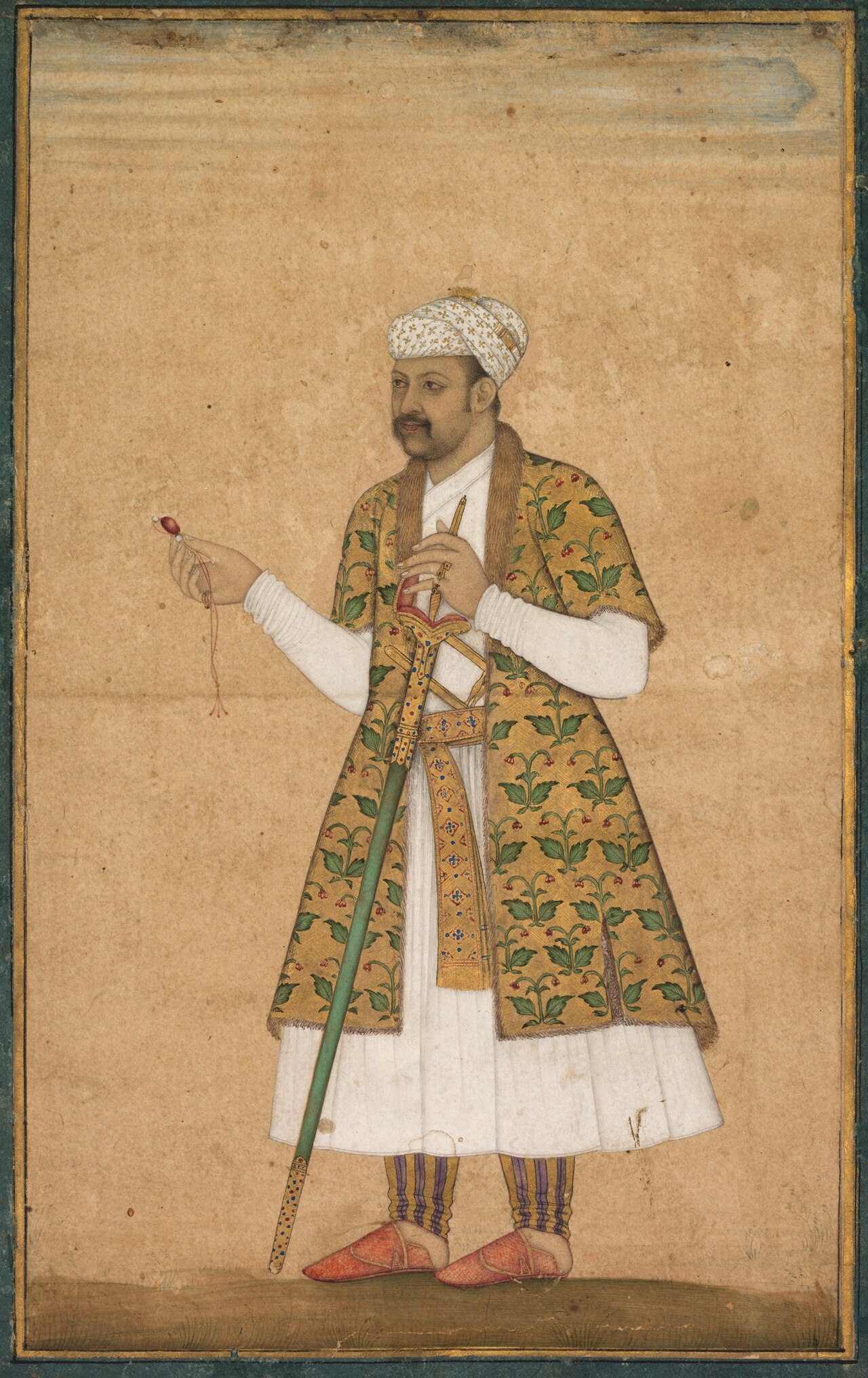
Major works - **Akbar With Lion and Calf, Folio from the Shah Jahan Album (1580)** – Although the folio predates Govardhan’s birth, it is attributed to his hand based on stylistic analysis. The painting shows Emperor Akbar in a contemplative pose beside a lion and a calf, symbolising his dominion over nature. The rich, warm tones and gentle modelling of the animals align with Govardhan’s known aesthetic. - **Jahangir Visiting the Ascetic Jadrup (1620)** – This work captures a moment of imperial piety, depicting Jahangir in the company of the ascetic Jadrup. Govardhan’s delicate brushwork conveys the spiritual atmosphere, while the muted background highlights the figures. - **Portrait of the Aged Akbar (1645)** – A later portrait that presents an older Akbar with a dignified bearing. The painting is distinguished by its subtle use of chiaroscuro to model the emperor’s face, a technique Govardhan refined over his career. - **Page from the Late Shah Jahan Album: Prince and Ascetics (1630)** – This miniature illustrates a princely figure surrounded by ascetics, reflecting the court’s interest in religious and philosophical themes. Govardhan’s handling of textile patterns and the soft colour transitions exemplify his mature style. - **A Courtier, Possibly Khan Alam, Holding a Spinel and a Deccan Sword (1607)** – One of the earliest works associated with Govardhan, this piece portrays a courtier with a precious gemstone and a distinctive sword. The precise rendering of the spinel’s facets and the intricate detailing of the sword’s hilt demonstrate his early technical skill.
Each of these works showcases Govardhan’s ability to blend narrative content with refined visual elegance, contributing to the richness of Mughal visual culture.
Influence and legacy Govardhan’s career spanned three major reigns, positioning him as a bridge between the early experimental phase of Mughal painting and its later ornamental apex. His synthesis of Persian miniature traditions with Indian colour sensibility influenced younger artists who continued to work in the Shah Jahan atelier. Moreover, his status as a Hindu painter in a predominantly Muslim court exemplifies the pluralistic nature of Mughal artistic patronage.
Later scholars credit Govardhan with advancing the use of soft modelling and nuanced colour, elements that became hallmarks of late Mughal painting. Although many of his works survive only as attributions, the consistency of his style across the listed pieces affirms his role in shaping the visual language of the imperial court. Today, his paintings are studied for their technical mastery and as visual documents of the cultural dynamics of 17th‑century Mughal India.
Frequently asked questions
Who was Govardhan?
Govardhan was a Mughal‑court painter (c.1600–1700) of Hindu background who worked for the imperial ateliers from Akbar’s reign through Shah Jahan’s.
What style or movement did Govardhan belong to?
He painted in the Mughal school of painting, mixing Persian miniature conventions with Indian colour sensibility and soft modelling of forms.
What are Govardhan’s most famous works?
His notable works include “Akbar With Lion and Calf,” “Jahangir Visiting the Ascetic Jadrup,” “Portrait of the Aged Akbar,” the “Prince and Ascetics” page from the Late Shah Jahan Album, and a courtier portrait possibly of Khan Alam.
Why does Govardhan matter in art history?
He helped transition Mughal painting toward a richer colour palette and more naturalistic portraiture, influencing later court artists and exemplifying the empire’s multicultural patronage.
How can I recognise a Govardhan painting?
Look for sensuous, layered colours, softly modelled figures, fine brushwork on textiles and jewellery, and a balanced blend of Persian decorative borders with realistic interior space.