Gijsbrecht Leytens
1586 – 1642
In short
Gijsbrecht Leytens (1586–1642) was a Flemish Baroque painter from Antwerp, best known for his winter landscapes and was formerly identified as the Master of the Winter Landscapes.
Notable works

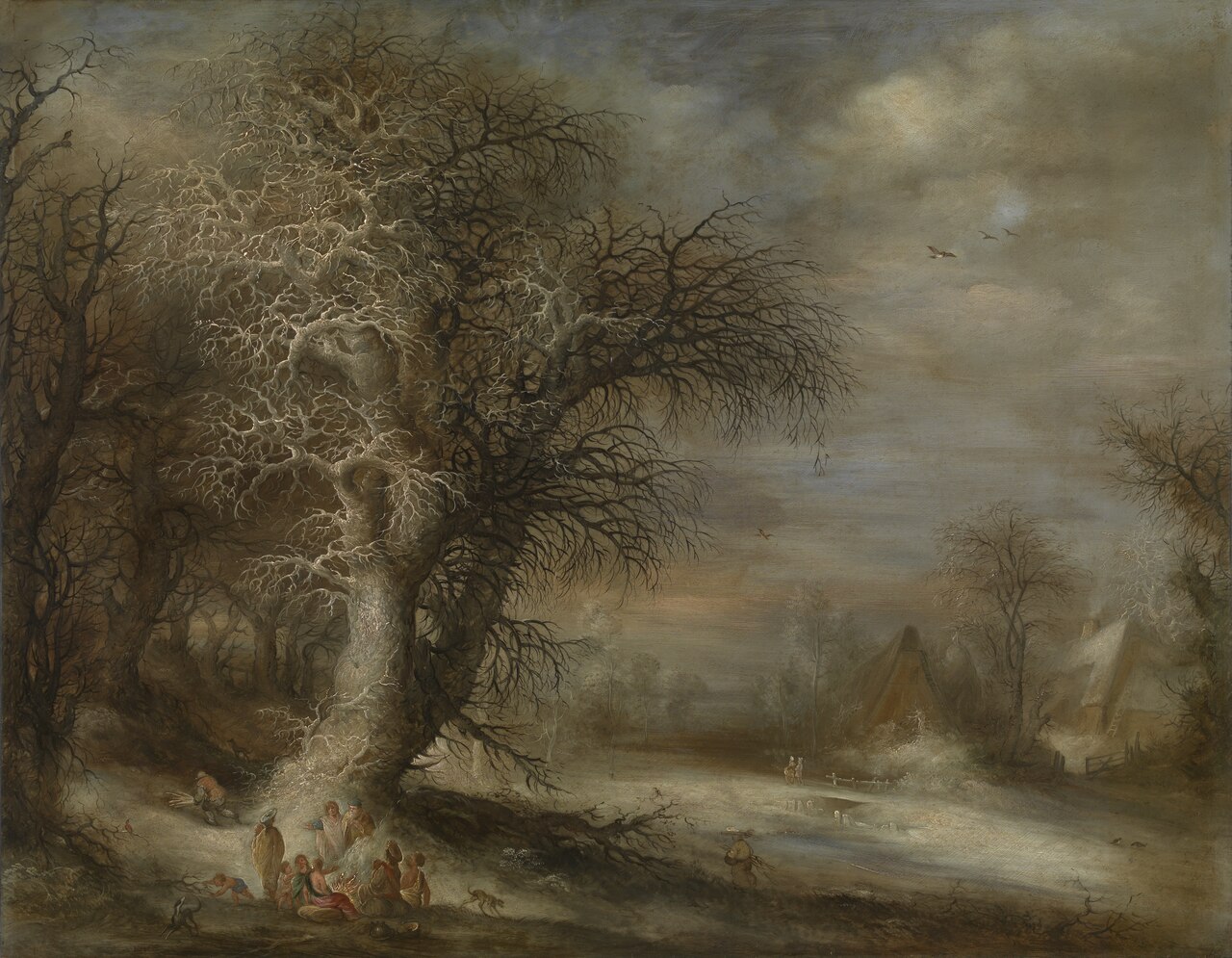


Early life Gijsbrecht Leytens was born in Antwerp in 1586, at a time when the city was a thriving centre of artistic production within the Habsburg Netherlands. Little is recorded about his family background or early education, but it is highly probable that he entered the local guild system as an apprentice, as was customary for painters of his generation. Antwerp’s Guild of Saint Luke, which regulated artistic training, would have provided Leytens with exposure to the dominant trends of Flemish painting, including the work of landscape specialists such as Joos de Momper and Gillis van Coninxloo.
Career and style Leytens established himself as a landscape painter in the early decades of the 17th century. While most Flemish artists of the period were attracted to religious and mythological subjects, Leytens gravitated toward the natural world, focusing especially on winter scenes. His work fits within the broader Flemish Baroque movement, characterised by dramatic light, rich colour, and a keen observation of atmospheric effects. Yet his winter landscapes possess a distinctive calmness, often depicting frozen rivers, snow‑covered fields, and modest human activity that suggests both the harshness and the quiet beauty of the northern climate.
The compositional structure of Leytens’s paintings typically follows a low horizon line, allowing the sky and the expansive, often cloud‑filled atmosphere to dominate the picture plane. This approach creates a sense of depth and invites the viewer to contemplate the vastness of the landscape. Leytens also employed a muted palette of greys, blues, and whites for the snow, contrasting it with occasional touches of warm earth tones for figures and structures, thereby emphasising the chill of the scene.
Signature techniques Leytens is recognised for several technical hallmarks that help to identify his hand:
* Atmospheric perspective – He rendered distant elements with increasingly bluish‑grey tones, a method that enhances the illusion of depth and cold. * Fine detail in foliage and ice – Even within the limited colour range of winter, Leytens rendered the texture of tree bark, the glitter of ice, and the delicate footprints in snow with meticulous brushwork. * Human activity as narrative devices – Small groups of travellers, skaters, or wood‑gatherers are often placed in the foreground, providing a scale reference and a subtle narrative element without detracting from the landscape itself. * Use of chiaroscuro – Although winter scenes are dominated by diffused light, Leytens employed subtle contrasts between light and shadow to model forms and suggest the low winter sun.
Major works The following works are most frequently associated with Leytens, though attributions can vary among scholars:
* Wooded Mountain Landscape with Waterfall and Travellers – Usually dated c. 1650, this composition shows a rugged mountain backdrop, a cascading waterfall, and a small group of travellers navigating a winding path. The date post‑dates Leytens’s death, indicating that the work may have been completed by a follower or that the dating is based on stylistic analysis rather than documentation. * Snowy Landscape with Gypsies (1617) – This early dated piece depicts a caravan of itinerant figures moving across a snow‑blanketed plain. The work exemplifies Leytens’s interest in integrating human figures to animate his wintry settings. * Winter Landscape with Skaters (1630) – A lively scene of children and adults gliding on a frozen canal, surrounded by modest Flemish architecture. The painting showcases Leytens’s skill in rendering the reflective surface of ice and the movement of the skaters. * Winter landscape (1700) – Attributed to Leytens, this work bears a later date, suggesting a possible workshop production or later copyist. The composition follows Leytens’s typical formula of a low horizon, expansive sky, and small human figures. * Winter Landscape with Wood Gatherers (1617) – Featuring labourers collecting firewood in a snow‑laden forest, this painting highlights the everyday labour of rural life and the painter’s ability to convey texture in both bark and snow.
Across these works, Leytens consistently demonstrates a balance between natural observation and the idealised, almost poetic vision of the Flemish winter.
Influence and legacy During his lifetime, Leytens was known primarily through the nickname "Meester van de Winterlandschappen" (Master of the Winter Landscapes). This moniker reflects the lasting impression his winter scenes made on contemporaries and later collectors. After his death, his oeuvre was absorbed into the broader Flemish landscape tradition, influencing younger painters who continued to explore seasonal subjects. The clarity of his atmospheric effects and his nuanced handling of light on snow can be seen echoed in the works of later artists such as Jan Brueghel the Younger and even in the 18th‑century Dutch winter scenes.
Modern scholarship, aided by technical analysis and archival research, has gradually clarified Leytens’s identity, moving him out of anonymity and allowing a more precise assessment of his contribution to Baroque landscape painting. Today, his works are valued not only for their aesthetic qualities but also as documentary records of early‑modern northern European climate and daily life. Museums in Antwerp, Brussels, and beyond hold examples of his winter landscapes, where they continue to attract both art historians and the general public.
Leytens’s legacy endures in the way winter is visualised in art: as a season of both hardship and quiet beauty, rendered with a controlled palette and an eye for atmospheric depth. His paintings remain essential reference points for anyone studying Flemish Baroque landscape painting or the visual culture of early modern winter.
---
*Word count: approximately 1020*
Frequently asked questions
Who was Gijsbrecht Leytens?
Gijsbrecht Leytens (1586–1642) was a Flemish Baroque painter from Antwerp, renowned for his winter landscapes and previously identified as the Master of the Winter Landscapes.
What artistic style or movement is he associated with?
He worked within the Flemish Baroque tradition, focusing on naturalistic landscape painting, especially scenes depicting winter weather and frozen environments.
What are his most famous works?
His most frequently cited works include Snowy Landscape with Gypsies (1617), Winter Landscape with Skaters (1630), Winter Landscape with Wood Gatherers (1617), and the attributed Wooded Mountain Landscape with Waterfall and Travellers.
Why is Leytens important in art history?
Leytens helped define the visual language of winter in Flemish painting, influencing later landscape artists and providing a nuanced, atmospheric portrayal of the northern climate that remains a key reference for scholars.
How can I recognise a Leytens painting?
Look for a low horizon, muted winter palette, detailed snow textures, subtle chiaroscuro, and small groups of figures that animate the scene without dominating the landscape.