Gerhard von Kügelgen
1772 – 1820
In short
Gerhard von Kügelgen (1772–1820) was a Prussian painter renowned for his portraits and history paintings, a professor at the Dresden Academy of Fine Arts, and a member of both the Prussian and Russian Imperial Academies of Arts.
Notable works


Early life Franz Gerhard von Kügelgen was born in 1772 in the small town of Bacharach, located on the left bank of the Rhine in what was then the Kingdom of Prussia. He was the eldest of a family with artistic inclinations; his twin brother, Karl von Kügelgen, also pursued a career in painting. The brothers were raised in an environment that valued cultural education, and Gerhard received his first formal instruction in drawing from a local master before moving to larger artistic centres to continue his training. Early exposure to the classical traditions of the Enlightenment, combined with the burgeoning Romantic ideas circulating in German lands, shaped his artistic sensibility from a young age.
Career and style By the late 1790s Gerhard von Kügelgen had established himself in Dresden, a city that was rapidly becoming a hub for artistic activity in Central Europe. He secured a position as a professor at the Dresden Academy of Fine Arts, where he taught drawing and painting to a new generation of artists. His work is characterised by a blend of rigorous academic draftsmanship and a growing interest in the emotive potential of subject matter, a synthesis that places him at the crossroads of late‑Baroque classicism and early Romanticism. Although he is not formally linked to a specific movement, his portraits convey a psychological depth that anticipates later Romantic portraiture, while his history paintings retain the compositional clarity of neoclassical ideals.
Signature techniques Kügelgen’s technique rests on a meticulous approach to drawing, with a preference for fine, controlled lines that define the anatomy of his figures. He employed oil paint in thin, translucent layers to achieve a subtle modelling of flesh and drapery, often using chiaroscuro to enhance three‑dimensionality. A hallmark of his style is the careful rendering of textures—whether the sheen of polished metal, the softness of silk, or the roughness of stone—each treated with a distinct brushstroke that adds realism without sacrificing the overall harmony of the composition. In portraiture, he placed particular emphasis on the eyes, using delicately blended highlights to capture the sitter’s inner life.
Major works **Saul and David (1807)** – This history painting depicts the biblical confrontation between the deposed king Saul and the young shepherd‑warrior David. Kügelgen arranges the two figures in a dramatic diagonal, with Saul’s anguished expression contrasting sharply with David’s composed demeanor. The work showcases his ability to convey narrative tension through posture and lighting, while the background architecture hints at a classical setting.
The Painter Caspar David Friedrich (1808) – In this portrait, Kügelgen renders his contemporary, the landscape painter Caspar David Friedrich, at a moment of quiet contemplation. The composition balances Friedrich’s thoughtful gaze with a restrained palette of muted earth tones, allowing the sitter’s personality to dominate the canvas. The painting is notable for its psychological insight, capturing the intellectual atmosphere of early‑19th‑century German art circles.
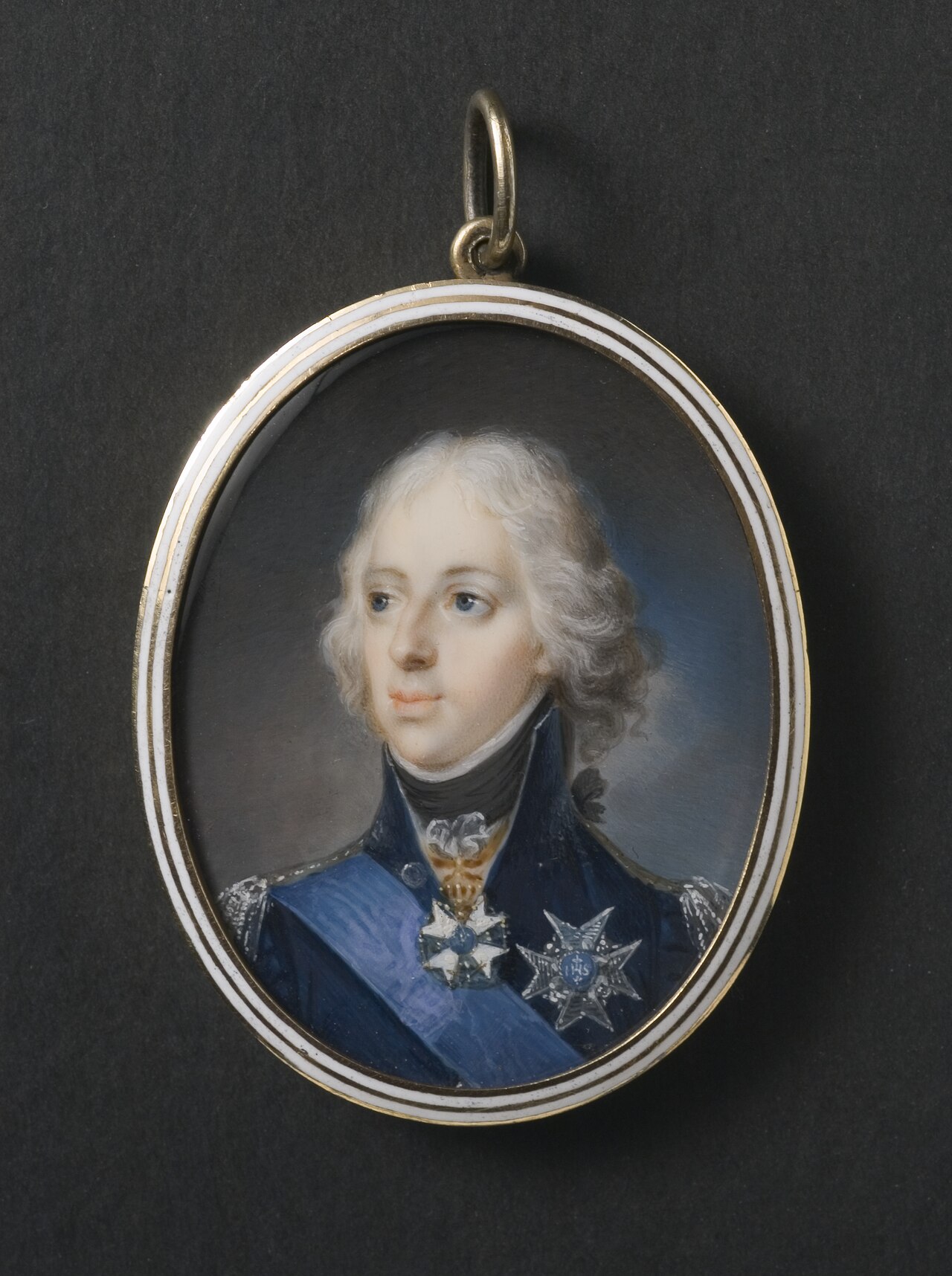
Gustav IV Adolf (1802) – This portrait of the Swedish monarch Gustav IV Adolf presents the king in regal attire, seated against a backdrop of subtle drapery. Kügelgen emphasizes the monarch’s authority through a composed pose and the careful rendering of insignia such as the royal scepter. The work demonstrates his skill in official portraiture, marrying formal representation with a nuanced depiction of the sitter’s character.
Influence and legacy Gerhard von Kügelgen’s impact on the German art world extended beyond his own canvases. As a professor at the Dresden Academy, he mentored numerous pupils who would go on to shape the Romantic movement in Central Europe. His membership in both the Prussian and Russian Imperial Academies of Arts underscores the transnational respect he commanded during his lifetime. Although his name is less widely recognised today than some of his contemporaries, his contributions to portraiture and history painting helped to define the aesthetic transition from Enlightenment classicism to Romantic expressiveness. The artistic partnership with his twin brother Karl also highlights a familial legacy of creative production that enriched the cultural landscape of the early 19th century.
Frequently asked questions
Who was Gerhard von Kügelgen?
Gerhard von Kügelgen (1772–1820) was a Prussian painter noted for his portraits and history paintings, who taught at the Dresden Academy of Fine Arts and was a member of both the Prussian and Russian Imperial Academies of Arts.
What style or movement is his work associated with?
His work bridges late‑Baroque classicism and early Romanticism, combining academic draftsmanship with an emerging interest in psychological depth and emotive storytelling.
What are his most famous works?
Key works include the history painting *Saul and David* (1807), the portrait *The Painter Caspar David Friedrich* (1808), and the royal portrait *Gustav IV Adolf* (1802).
Why is Gerhard von Kügelgen important in art history?
He played a pivotal role in the transition from Enlightenment classicism to Romanticism, influenced a generation of artists as a professor, and earned international recognition through his academy memberships.
How can I recognise a painting by Gerhard von Kügelgen?
Look for meticulous line work, subtle chiaroscuro, finely rendered textures, and a focus on the eyes that convey the sitter’s inner character, often set within balanced, classically influenced compositions.