Gerard Seghers
1591 – 1651
In short
Gerard Seghers (1591–1651) was a Flemish Baroque painter from Antwerp who became a leading figure in the Flemish Caravaggisti after a formative stay in Italy, later shifting to large altarpieces for local churches. He is remembered for works such as the Resurrection of Christ (1620) and The Jolly Drinker (1624).
Notable works


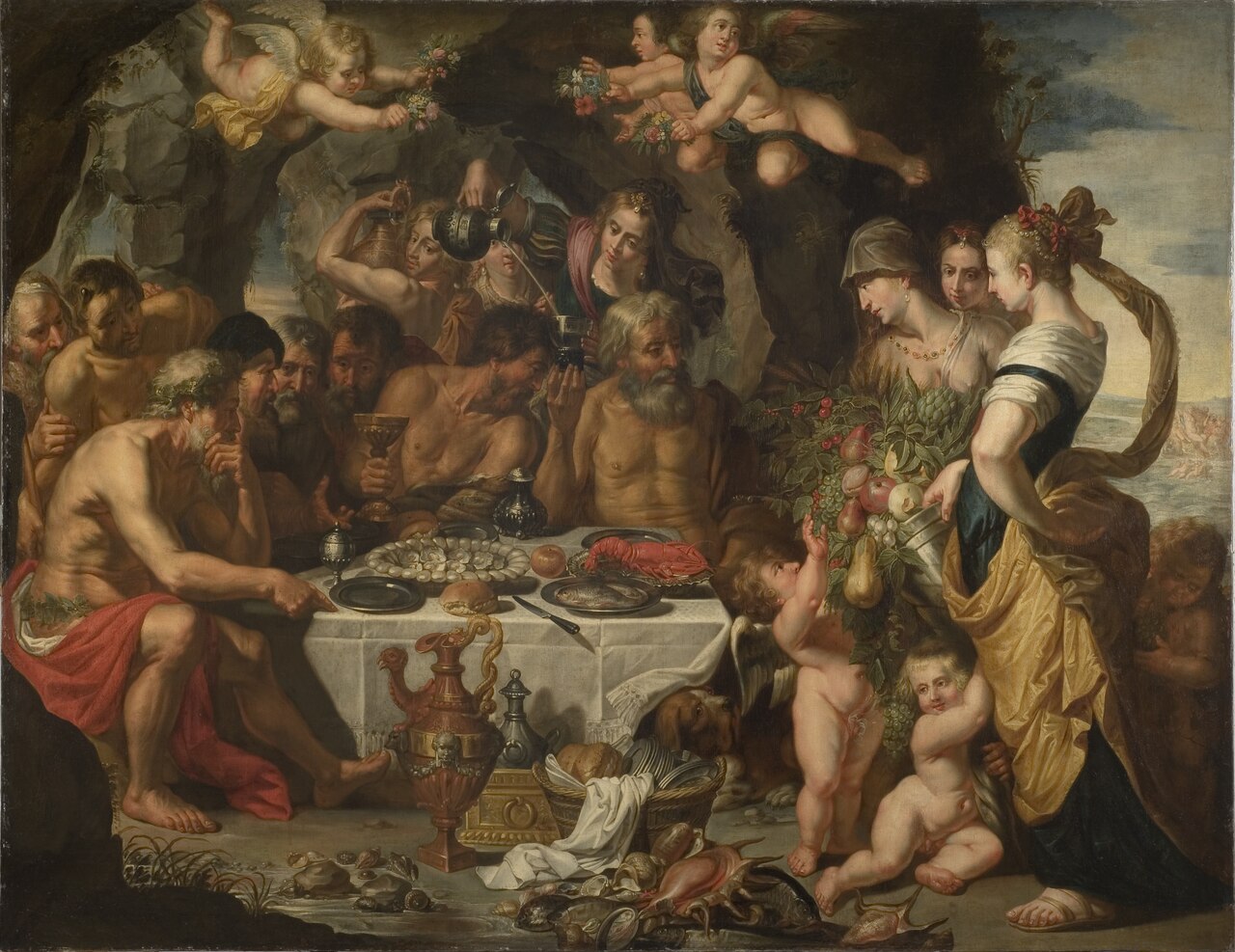

.jpg)
Early life Gerard Seghers was born in Antwerp in 1591, within the Habsburg Netherlands. Little is recorded about his family background, but the city’s vibrant artistic community provided ample opportunity for an aspiring painter. Antwerp’s guild system, notably the Guild of Saint Luke, regulated training and professional practice, and Seghers likely began his apprenticeship there. The city’s bustling trade and cultural links also meant that young artists could be exposed to a wide range of artistic influences, including the works of Rubens and the emerging trends from Italy.
Career and style Seghers’ early career was shaped by a period of study and residence in Italy, probably in the 1610s. While the exact cities he visited are not documented, the Italian artistic environment of the time was dominated by the dramatic realism of Caravaggio and his followers. Seghers absorbed the tenebrism and naturalistic detail that characterised Caravaggist painting, and upon his return to Flanders around the early 1620s he positioned himself among the leading Flemish Caravaggisti.
In Antwerp, Seghers quickly secured commissions for religious and genre scenes, employing the stark light‑and‑dark contrasts that had become his hallmark. By the mid‑1620s his reputation had grown, and he began to receive larger ecclesiastical commissions. Around the late 1620s he gradually abandoned the overt Caravaggist idiom, moving towards a more classical Baroque language that aligned with the tastes of Antwerp’s churches and patrons. This stylistic shift coincided with his increasing involvement as an art collector and dealer, activities that broadened his network and reinforced his status in the local art market.
Signature techniques Seghers is best known for his use of dramatic chiaroscuro, a technique that illuminates figures against dark backgrounds to heighten emotional intensity. His early works display a keen observation of texture—flesh, fabric, and metal are rendered with tactile realism. He often composed his scenes with a limited colour palette dominated by earth tones and deep reds, allowing the light to become the primary visual focus. In later altarpieces Seghers adopted a more balanced lighting scheme, integrating softer illumination and richer colour harmonies while retaining a sense of movement and theatricality. His brushwork varies from tight, detailed passages in close‑up figures to broader, more fluid strokes in background elements, demonstrating a versatility that suited both intimate genre scenes and grand religious narratives.
Major works - **Resurrection of Christ (1620)** – This early masterpiece exemplifies Seghers’ Caravaggist phase. The composition centres on the risen Christ bathed in a luminous glow, while surrounding figures are shrouded in deep shadow, creating a powerful spiritual contrast. - **The Jolly Drinker (1624)** – A genre scene that captures a convivial moment with a single figure, the work showcases Seghers’ skill in rendering texture and expression, as well as his ability to convey narrative through a solitary subject. - **Feast of the Gods in a Cave near the Sea Shore (1628)** – Though mythological rather than religious, this painting reflects Seghers’ expanding repertoire. The scene merges naturalistic detail with a theatrical setting, employing atmospheric perspective to suggest depth. - **The Repentant Magdalen (1628)** – Demonstrating his transition toward a more classical approach, this work balances dramatic lighting with a softer, more contemplative mood, emphasizing the saint’s inner remorse. - **Christ and the Repentant Sinners (1630)** – One of Seghers’ later religious commissions, it illustrates his mature Baroque style. The figures are arranged in a harmonious composition, and the lighting is diffused, underscoring the theme of redemption.
These works, together with numerous altarpieces for Antwerp churches, cement Seghers’ reputation as a versatile painter capable of handling both intimate genre scenes and large‑scale ecclesiastical projects.
Influence and legacy Gerard Seghers occupies an important place in the history of Flemish Baroque painting. As one of the foremost Flemish Caravaggisti, he helped introduce the chiaroscuro techniques of Caravaggio to the Low Countries, influencing contemporaries such as Jan Janssens and later painters who blended realism with Baroque drama. His later shift to more conventional Baroque altarpieces mirrored broader trends in Antwerp, aligning his output with the city’s dominant artistic currents and ensuring a steady stream of commissions.
Beyond his paintings, Seghers’ activities as an art collector and dealer contributed to the circulation of Italian and Flemish works within Antwerp, fostering artistic exchange. Although his name is less widely known than that of Rubens, scholars recognise Seghers for his role in bridging the dramatic realism of early Caravaggism with the grandiosity of the High Baroque. His surviving works continue to be exhibited in major European collections, offering insight into the stylistic evolution of Flemish painting in the first half of the 17th century.
Frequently asked questions
Who was Gerard Seghers?
Gerard Seghers (1591–1651) was a Flemish Baroque painter from Antwerp who became a leading figure in the Flemish Caravaggisti before later specialising in large altarpieces.
What style or movement is he associated with?
He is associated with the Flemish Caravaggisti, a group that adopted Caravaggio’s dramatic lighting, and later with the broader Flemish Baroque tradition.
What are his most famous works?
His most famous works include the Resurrection of Christ (1620), The Jolly Drinker (1624), Feast of the Gods in a Cave near the Sea Shore (1628), The Repentant Magdalen (1628) and Christ and the Repentant Sinners (1630).
Why does he matter in art history?
Seghers helped introduce Caravaggist chiaroscuro to the Low Countries and later contributed major altarpieces, influencing the development of Flemish Baroque painting.
How can I recognise a painting by Gerard Seghers?
Look for strong contrasts of light and shadow, realistic textures, and a transition from dramatic tenebrism in early works to softer, more balanced lighting in his later altarpieces.