Francesco Conti
1682 – 1760
In short
Francesco Conti was a prominent painter of religious scenes, active from the late 17th to the mid-18th century. Born and died in Florence, his work reflects the stylistic influences of his time. Conti's paintings, such as the Glory of Saint Catherine of Alexandria, showcase his skill in capturing the essence of religious narratives.
Notable works


_-_The_Assumption_of_the_Virgin_-_1983.58_-_Manchester_Art_Gallery.jpg)

Early life Francesco Conti was born in Florence in 1682. While specific details about his early life and training are not well-documented, it is known that he was active in Florence, a city that was a hub for artistic innovation and tradition during the Baroque period. The artistic environment of Florence would have played a significant role in shaping Conti's early development as a painter.
Career and style Conti's career as a painter spanned several decades, during which he primarily focused on religious themes. His style, reflective of the broader artistic currents of his time, suggests an adherence to the principles of the Baroque, characterized by dramatic lighting, intense emotions, and highly stylized decoration. Although the exact nature of his artistic influences and affiliations is not certain, his work demonstrates a mastery of composition and a deep understanding of the religious narratives he depicted.
Signature techniques Conti's paintings are distinguished by their use of light and shadow, creating a sense of depth and drama that was typical of the Baroque style. His ability to capture the emotional intensity of his subjects, whether in the ecstasy of saints or the tenderness of familial scenes, is a hallmark of his technique. The use of rich, vibrant colors and intricate details also marks his work, indicating a high level of craftsmanship.
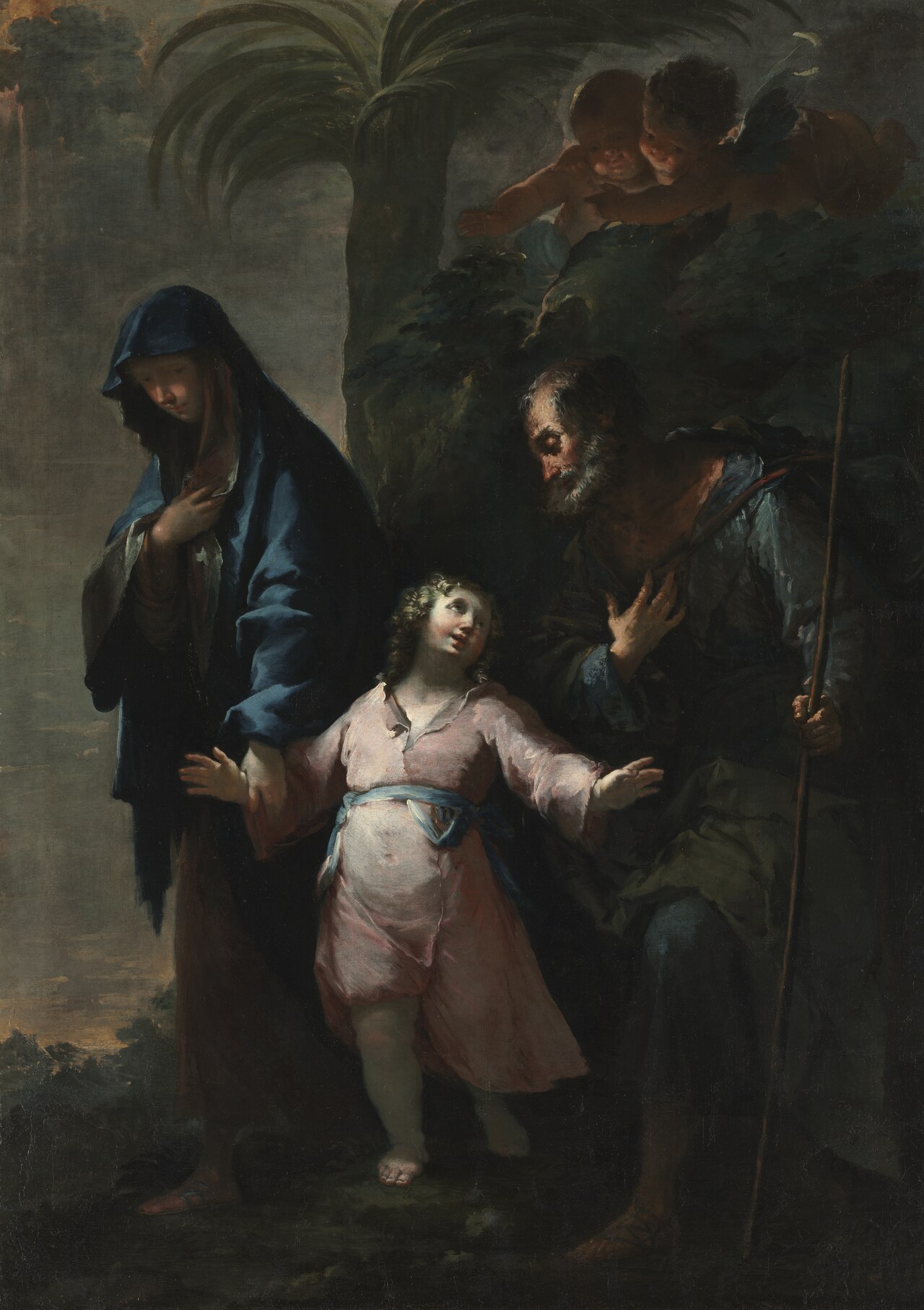
Major works Among Conti's notable works are the Glory of Saint Catherine of Alexandria (1737), Return to Nazareth (1735), Saint Philip Neri in Glory among Angels (1700), The Assumption of the Virgin, and Madonna with Christ. The Glory of Saint Catherine of Alexandria, painted in 1737, exemplifies Conti's skill in capturing the glory and majesty of religious subjects. The Return to Nazareth, completed two years earlier, demonstrates his ability to convey the intimacy and humanity of biblical narratives. Saint Philip Neri in Glory among Angels, an early work from 1700, shows Conti's talent for depicting joyous and celebratory scenes. The Assumption of the Virgin and Madonna with Christ further illustrate his devotion to religious themes and his proficiency in rendering them with grace and beauty.
Influence and legacy Francesco Conti's influence on the artistic landscape of his time, while not widely documented, can be inferred from the quality and thematic consistency of his work. His dedication to religious subjects and his mastery of the Baroque style place him within a broader tradition of European painting. The legacy of Conti's work lies in its contribution to the visual representation of religious narratives, offering insights into the artistic, cultural, and spiritual values of the 18th century.
Frequently asked questions
Who was Francesco Conti?
Francesco Conti was a painter of religious scenes, born in Florence in 1682 and active until his death in 1760.
What style or movement was Francesco Conti associated with?
Conti's work reflects the influences of the Baroque style, characterized by dramatic lighting, intense emotions, and stylized decoration.
What are Francesco Conti's most famous works?
His notable works include the Glory of Saint Catherine of Alexandria, Return to Nazareth, Saint Philip Neri in Glory among Angels, The Assumption of the Virgin, and Madonna with Christ.
Why does Francesco Conti matter in the history of art?
Conti matters for his contribution to the visual representation of religious narratives, showcasing the artistic, cultural, and spiritual values of the 18th century through his mastery of the Baroque style.
How can I recognize a work by Francesco Conti?
Look for dramatic use of light and shadow, intense emotional depictions, and a focus on religious themes, all characteristic of the Baroque style and Conti's particular approach to it.