Edward William Cooke
1811 – 1880
In short
Edward William Cooke (1811–1880) was a British painter renowned for his marine and landscape scenes, often depicting European coastal subjects, and he was also an avid gardener. His work combines meticulous observation with a lyrical treatment of light and atmosphere.
Notable works
_-_Canal_of_the_Giudecca,_Venice_-_N01780_-_National_Gallery.jpg)
_-_A_North_Sea_Breeze_on_the_Dutch_Coast_-_BHC1246_-_Royal_Museums_Greenwich.jpg)
_-_San_Giorgio_Maggiore_and_the_Salute,_Venice,_with_Fishing_Craft_of_Chioggia_and_the_Lagoon_-_1230225_-_National_Trust.jpg)
Early life Edward William Cooke was born in London in 1811, the son of a family that valued both art and the natural world. From an early age he displayed a talent for drawing, especially of ships and seascapes, a predilection encouraged by the bustling maritime activity of the Thames and the Royal Navy’s presence in the capital. He received formal training at the Royal Academy Schools, where he honed his technical skills under the guidance of established landscape artists. Cooke’s apprenticeship also involved a period of work in a horticultural setting, an experience that would later inform his careful attention to botanical detail.
Career and style Cooke’s professional career took off in the 1830s, when his watercolours of ships and harbours began to appear in the exhibitions of the Royal Society of British Artists. He quickly earned a reputation for the precision of his draughtsmanship and his ability to capture the fleeting effects of weather on water. While his early work aligns with the Romantic tradition of dramatic seascapes, Cooke gradually incorporated a more naturalistic approach, reflecting the influence of Dutch marine painters such as Willem van de Velde the Younger. His palette softened over time, favouring muted blues, greys, and earth tones that conveyed the atmospheric haze of early morning or mist‑filled evenings.
In addition to marine subjects, Cooke painted a series of inland landscapes and garden scenes, often integrating the cultivated flora of his own garden. This dual interest in the cultivated and the wild gave his oeuvre a distinctive balance between the ordered beauty of horticulture and the untamed vigor of the sea.
Signature techniques Cooke’s technique combined meticulous line work with subtle washes of colour. He typically began with a precise pencil or ink sketch to define the hull of a vessel, the rigging, and the surrounding shoreline. Once the structural elements were established, he applied transparent watercolours in layered glazes, allowing the underdrawing to show through and adding depth. His handling of light was especially noteworthy: he rendered the reflection of the sun on water with fine, almost imperceptible strokes, creating a shimmering surface that suggests movement without overt brushwork. In his garden paintings, he employed a tighter brush for foliage, often using a stippling method to suggest leaf texture while maintaining overall atmospheric cohesion.
Cooke also made extensive use of field studies. He travelled to the coasts of the Netherlands, Belgium, and Italy, sketching directly from the scene. These studies were later refined in his studio, where he could control the composition and colour balance. His dedication to accurate depiction of ships, rigging, and local architecture earned him the respect of both artists and naval officers.
Major works - **Canal of the Giudecca, Venice (1867)** – This watercolour captures the tranquil canal that separates the island of Giudecca from the historic centre of Venice. Cooke renders the soft glow of late afternoon light on the water, while the surrounding Venetian architecture is suggested with delicate line work. The composition balances the bustling activity of gondolas with a quiet, reflective mood.
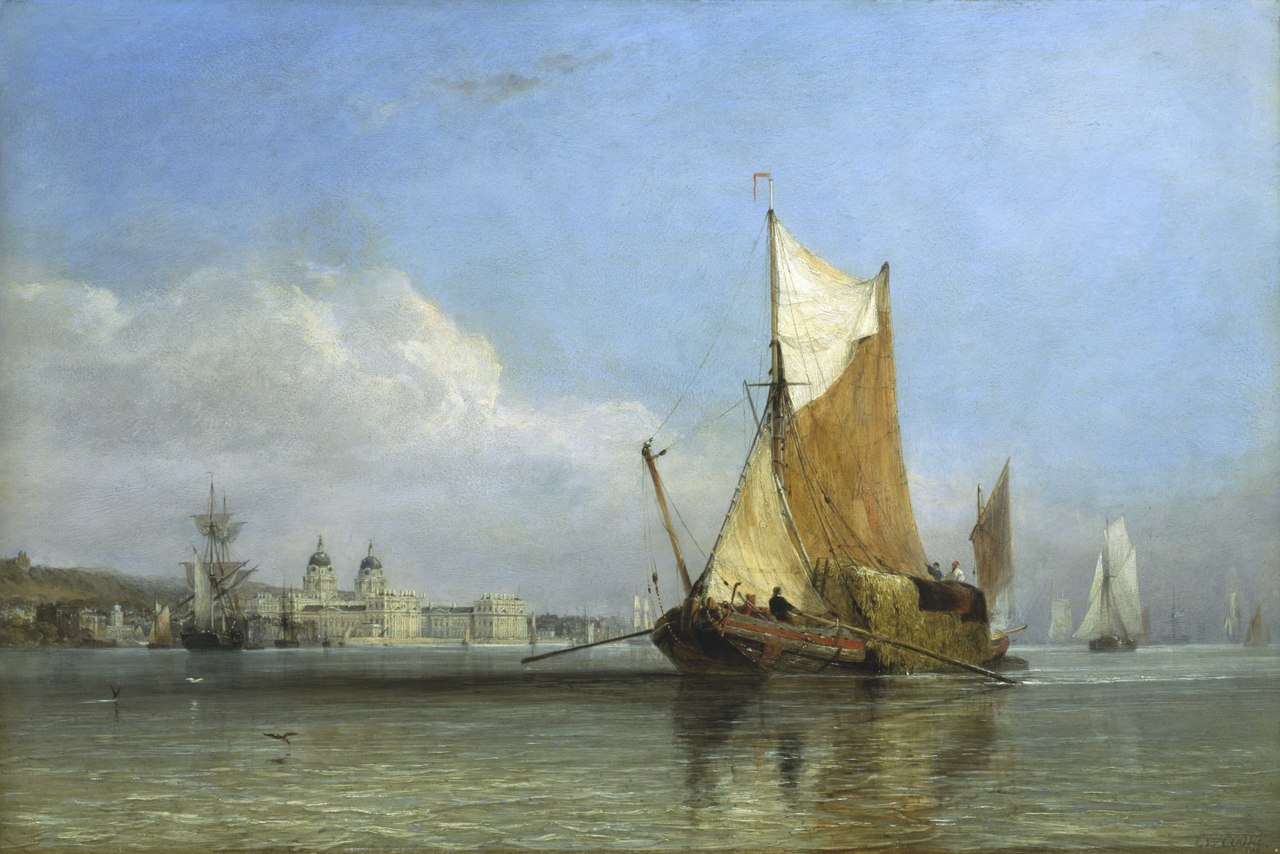
- Hay Barge off Greenwich (1835) – One of Cooke’s earliest marine pieces, it depicts a hay‑laden barge navigating the Thames near Greenwich. The work is notable for its accurate rendering of the barge’s hull and the atmospheric conditions of a hazy morning, illustrating Cooke’s skill in integrating human industry into a natural setting.
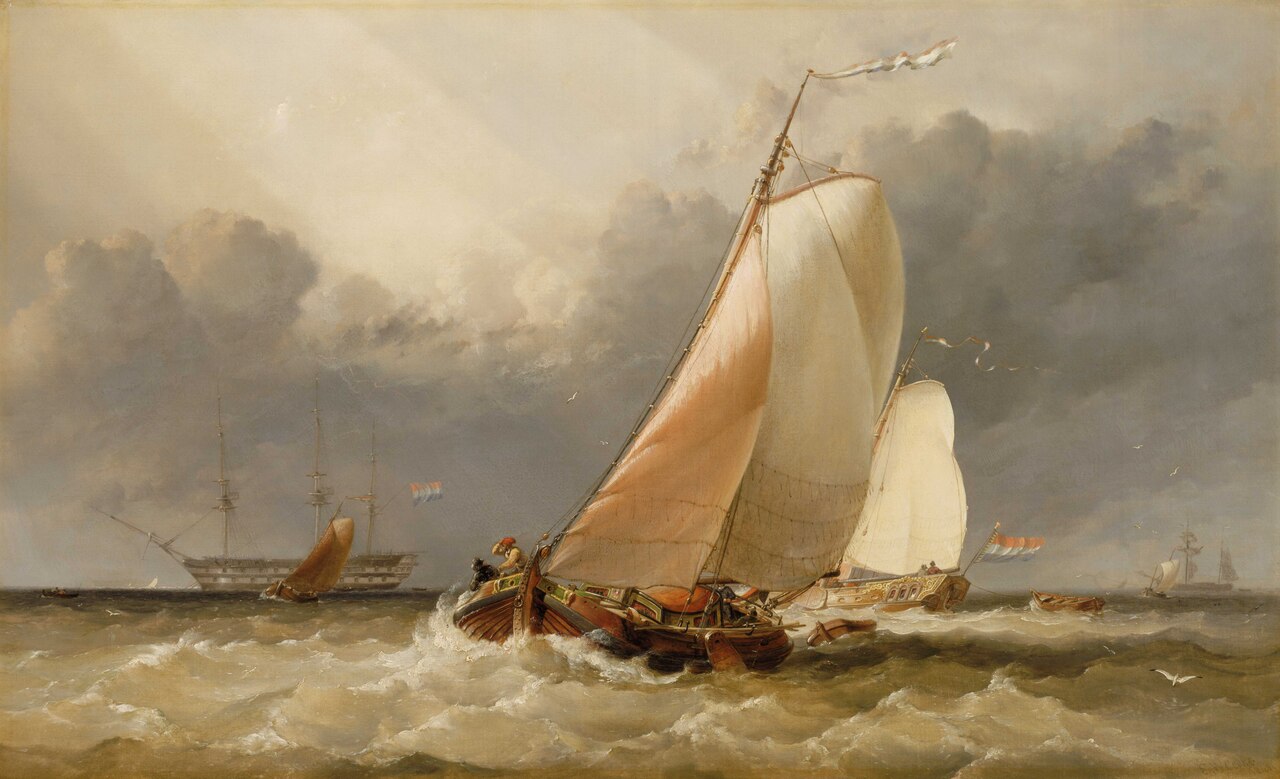
- A North Sea Breeze on the Dutch Coast (1855) – Inspired by his trips to the Netherlands, this painting shows a windswept coastline dotted with low‑lying dunes and fishing vessels. Cooke emphasizes the movement of the wind through the bending of grasses and the billowing of sails, using a cool palette that conveys the bracing sea air.
- Dutch Yachting on the Zuider Zee (1848) – In this work, Cooke portrays leisure sailing on the Zuider Zee, a large inland sea in the Netherlands. The composition is dominated by a fleet of yachts gliding across smooth water under a bright sky, with the distant horizon rendered in muted blues, highlighting the painter’s capacity to convey both recreation and the expansive Dutch maritime landscape.
- San Giorgio Maggiore and the Salute, Venice, with Fishing Craft of Chioggia and the Lagune (1852) – This complex composition juxtaposes iconic Venetian landmarks—the church of San Giorgio Maggiore and the Basilica di Santa Maria della Salute—with the working vessels of the nearby fishing town of Chioggia. Cooke’s careful placement of architectural elements and his nuanced colour modulation create a harmonious blend of grandeur and everyday life.
Influence and legacy Edward William Cooke’s contribution to 19th‑century British art lies in his synthesis of precise marine observation with a poetic treatment of light. His works were widely reproduced in engravings and lithographs, making his images of European coasts accessible to a broad audience. Contemporary artists admired his ability to fuse technical accuracy with atmospheric subtlety, and his paintings influenced later marine artists such as William W. Linton and J. M. W. Turner’s followers.
Beyond his artistic output, Cooke was an active member of several societies, including the Royal Society of British Artists and the Royal Horticultural Society. His dual passion for painting and gardening reflected a Victorian fascination with the natural world, and his garden sketches contributed to the period’s growing interest in botanical illustration.
Today, Cooke’s paintings are held in major public collections, including the Victoria and Albert Museum and the British Museum, and they continue to be referenced in scholarly studies of marine art. His ability to document the maritime heritage of Britain and continental Europe, while simultaneously exploring the aesthetic possibilities of water and sky, secures his place as a bridge between the Romantic tradition and the emerging realism of the late 19th century.
--- Cooke’s legacy endures not only through his canvases but also through the educational value of his meticulous approach. Art historians regard his work as an important visual record of 19th‑century naval architecture, coastal commerce, and the leisure pursuits of the era. As such, Edward William Cooke remains a pivotal figure for scholars of marine art and for anyone interested in the intersection of landscape, seascape, and horticultural illustration.
Frequently asked questions
Who was Edward William Cooke?
Edward William Cooke (1811–1880) was a British painter celebrated for his marine and landscape works, and he was also an enthusiastic gardener.
What artistic style or movement is he associated with?
Cooke’s style blends Romantic drama with a naturalistic, Dutch‑inspired realism, characterised by precise ship detail and subtle atmospheric colour.
What are his most famous works?
His best‑known paintings include *Canal of the Giudecca, Venice* (1867), *Hay Barge off Greenwich* (1835), *A North Sea Breeze on the Dutch Coast* (1855), *Dutch Yachting on the Zuider Zee* (1848), and *San Giorgio Maggiore and the Salute, Venice* (1852).
Why is Edward William Cooke important in art history?
He documented 19th‑century maritime life with technical accuracy, influenced later marine painters, and bridged Romantic and realistic approaches, making his work both artistic and historical.
How can I recognise an Edward William Cooke painting?
Look for meticulous ship and architectural drawing, a restrained palette of blues and greys, and delicate water reflections that convey light and atmosphere with subtle washes.