Euphrosine Beernaert
1831 – 1901
In short
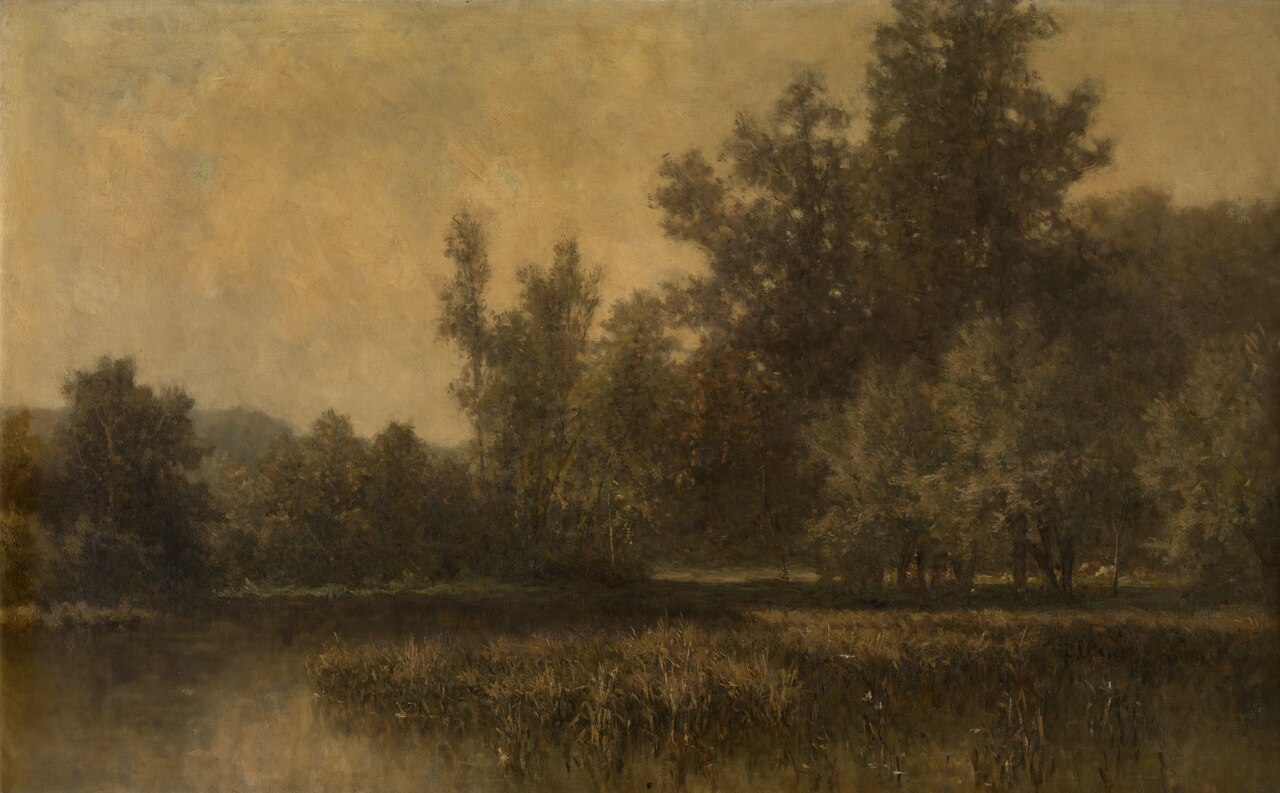
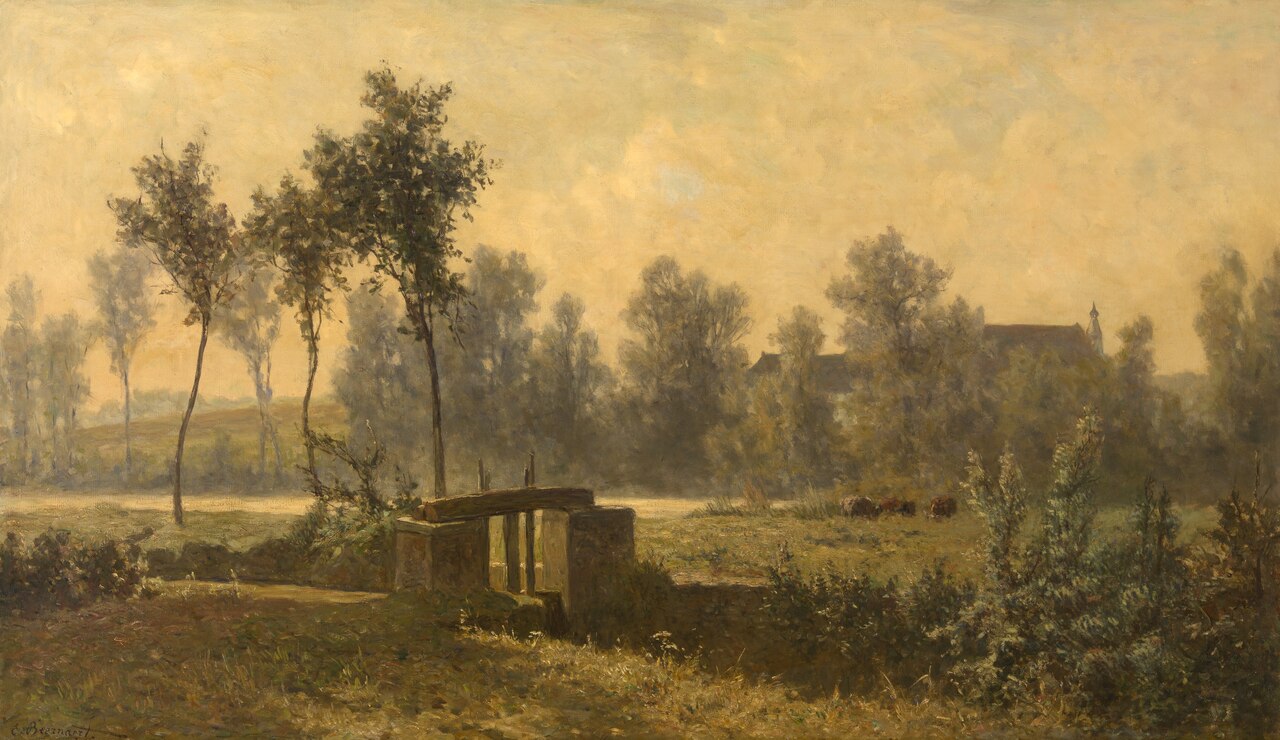
Euphrosine Beernaert (1831–1901) was a Belgian landscape painter born in Ostend and active in the late 19th century. She is noted for atmospheric depictions of rural scenes such as Heather near Oosterbeek (1885), Swamp, The Lock, and Pool in the Kempen.
Notable works

.jpg)
Early life Euphrosine Beernaert was born in 1831 in the coastal town of Ostend, Belgium. Little is recorded about her family background, but she grew up in a region where the sea and the surrounding dunes provided a vivid natural environment. This early exposure to varied landscapes is thought to have nurtured her lifelong fascination with the natural world. As a young woman, Beernaert pursued artistic training at a time when formal opportunities for women were limited, likely attending private ateliers or academies that admitted female students. Her education would have included drawing from nature, a practice that was increasingly encouraged among emerging landscape artists in Belgium during the mid‑19th century.
Career and style By the 1860s Beernaert began exhibiting her work publicly, joining the growing community of Belgian painters who turned away from historical and religious subjects in favour of the countryside. Although her precise artistic affiliation is not recorded, her paintings reflect the broader currents of Romanticism and Realism that shaped European landscape painting in the latter half of the 19th century. She favoured a subdued palette, careful observation of light, and a quiet, contemplative mood that set her work apart from the more dramatic, heroic landscapes of earlier generations. The subjects of her canvases—wet marshes, winding canals, and open heathland—speak to a deep engagement with the changing rural scenery of Belgium and the neighbouring Netherlands.
Signature techniques Beernaert’s technique is characterised by a delicate handling of atmosphere. She often employed thin glazes to build layers of colour, allowing the underlying tones to shimmer through and create a sense of depth. Her brushwork varies from fine, almost stippled strokes for foliage to broader, smoother passages for sky and water, giving each element a distinctive texture. She was adept at rendering the subtle transitions of light at dawn or dusk, using muted blues and greys to suggest mist or fog. In addition, she frequently used a low horizon line, which expands the sky and accentuates the expansive feeling of the landscape. These compositional choices contribute to a meditative quality that invites viewers to linger within the scene.
Major works - **Heather near Oosterbeek (1885)** – This work is one of Beernaert’s few dated pieces. It portrays a rolling heath dotted with delicate heather blossoms, captured under a soft, overcast sky. The composition balances the foreground’s texture with a distant horizon, illustrating her skill in atmospheric perspective. - **Swamp** – In this painting, Beernaet renders a wetland scene with a calm, reflective surface. The muted greens and browns convey the soggy earth, while the occasional glint of water hints at hidden depth. The work demonstrates her ability to convey the quiet resilience of marshland ecosystems. - **The Lock** – Featuring a canal lock surrounded by trees and low-lying fields, this piece reflects Beernaert’s interest in the interplay between human engineering and nature. The lock’s stonework is rendered with precise detail, while the surrounding foliage is softened by mist, creating a harmonious juxtaposition. - **Pool in the Kempen** – Depicting a tranquil pond set within the Kempen region’s heathland, this painting showcases her talent for capturing water’s reflective qualities. The surface mirrors the sky and surrounding vegetation, while subtle colour shifts suggest the passage of time.
Influence and legacy Euphrosine Beernaert occupies a modest but significant place in Belgian art history. As a woman who achieved professional recognition in a male‑dominated field, she contributed to the gradual acceptance of female artists within academic circles and exhibition venues. Her landscapes, while not revolutionary in style, exemplify the careful observation and lyrical sensitivity that characterised late‑19th‑century Belgian painting. Contemporary scholars cite her work as an example of how regional artists interpreted the natural environment beyond the grandiose narratives of earlier romantic painters. Though she did not found a distinct movement, her oeuvre adds depth to the understanding of Belgian landscape traditions and provides a reference point for later generations of women artists seeking to work outdoors and portray the subtle moods of the countryside.
Frequently asked questions
Who was Euphrosine Beernaert?
Euphrosine Beernaert (1831–1901) was a Belgian painter known for her lyrical landscape works, active in the late 19th century.
What style or movement is she associated with?
She is generally linked to the Romantic‑Realist tradition of 19th‑century landscape painting, though no specific movement is recorded for her.
What are her most famous works?
Her best‑known paintings include Heather near Oosterbeek (1885), Swamp, The Lock, and Pool in the Kempen.
Why does she matter in art history?
Beernaert is significant as a professional female landscape painter in Belgium, illustrating the growing acceptance of women artists and enriching the country's natural‑scene tradition.
How can I recognise a painting by Euphrosine Beernaert?
Look for serene rural scenes rendered with subtle colour washes, atmospheric light, low horizons, and a delicate balance between detailed foreground elements and softly diffused backgrounds.