Dong Yuan
934 – 962
In short
Dong Yuan (934–962) was a Chinese painter of the Southern Tang dynasty, celebrated for pioneering a lyrical, mist‑laden landscape style that later shaped the Southern School of ink painting. His works, such as Xiao and Xiang Rivers, exemplify the soft, atmospheric approach that influenced generations of Chinese artists.
Notable works


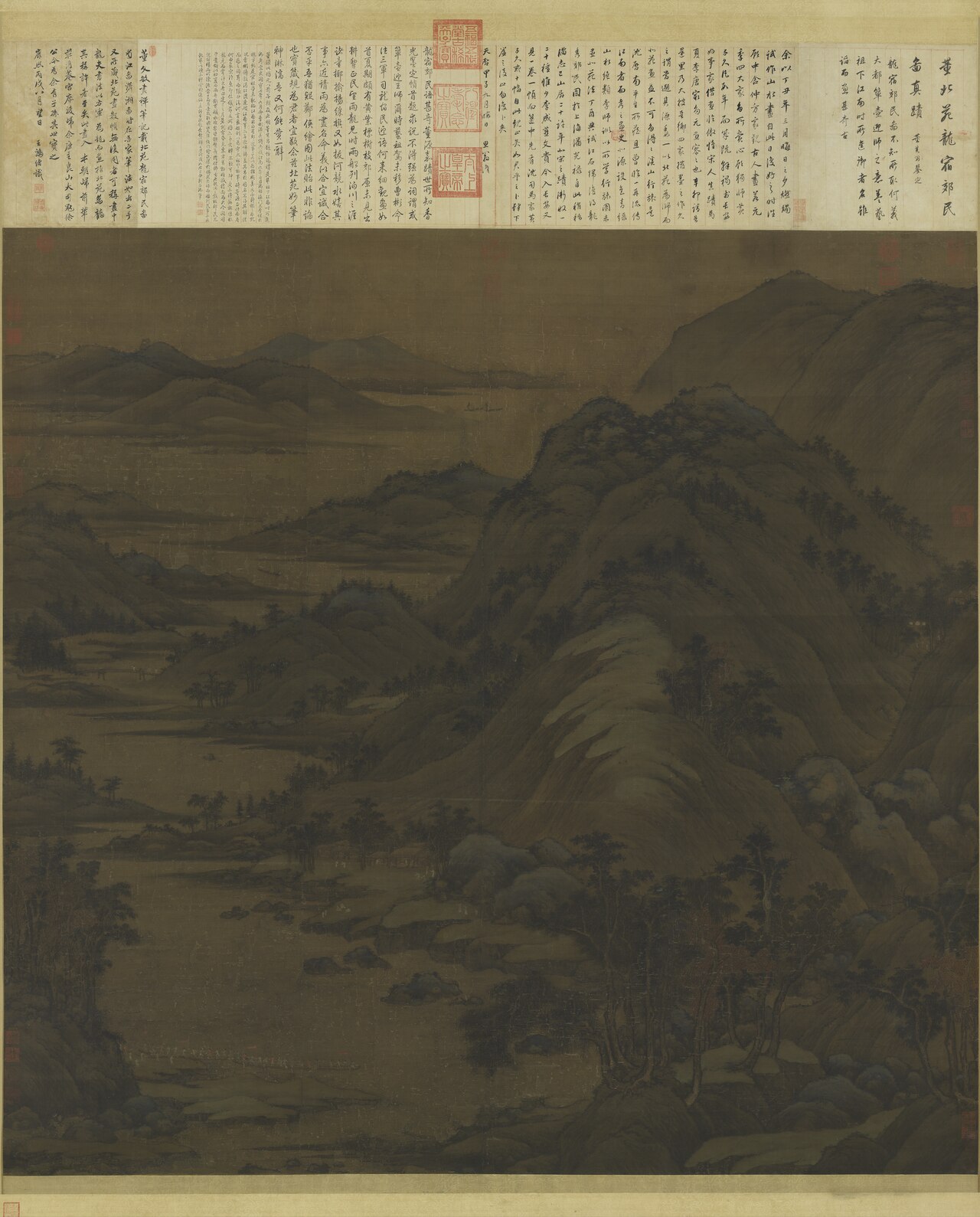
Early life Dong Yuan was born in 934 in Nanjing, a major cultural centre of the Southern Tang kingdom. Little is recorded about his family background, but the city’s vibrant artistic milieu provided ample exposure to the traditions of court painting and the burgeoning literati culture. Dong’s courtesy name was Shuda (叔達), a name by which he is sometimes referenced in historical texts. The Southern Tang period was marked by relative political stability and a flourishing of the arts, allowing young talents like Dong to study under established masters and to develop a personal aesthetic.
Career and style Dong Yuan emerged as a leading figure in landscape painting during the mid‑10th century. Working primarily in ink and wash, he departed from the more rigid, detailed brushwork of earlier Northern styles, favouring a softer, more impressionistic rendering of natural scenery. His compositions often evoke a sense of mist and distance, achieved through layered washes and subtle tonal variations. This approach reflected the Southern Tang’s appreciation for poetry and philosophy, where the landscape served as a visual counterpart to literary expression. While the precise titles of any official positions he held are not documented, Dong’s reputation grew through the patronage of aristocratic collectors and the inclusion of his works in private studios.
Signature techniques Dong Yuan is credited with refining several techniques that became hallmarks of the Southern School:
* Soft‑brushed washes – He employed diluted ink to create a hazy atmosphere, allowing forms to emerge gradually from the background. * Rounded, horizontal brushstrokes – Known as the "cattle‑hide" stroke, these broadened, sweeping lines suggested the undulating contours of hills and riverbanks. * Layered texture – By building up successive layers of ink, Dong achieved depth and a sense of distant space, a method that later artists such as Ma Yuan and Xia Gui would adopt and develop further. * Emphasis on void – Rather than filling every part of the canvas, Dong left portions of the paper unpainted, inviting the viewer’s imagination to complete the scene.
These techniques combined to produce a lyrical, almost poetic visual language that distinguished his work from the more literal realism of earlier periods.
Major works Although attribution can be complex for works from this era, several paintings are traditionally linked to Dong Yuan and illustrate his distinctive style:
* Xiao and Xiang Rivers (950) – This handscroll depicts the confluence of the Xiao and Xiang rivers, rendered with delicate washes that capture the river’s gentle flow and the surrounding mist‑shrouded mountains. The composition balances detailed foreground foliage with expansive, softly rendered background terrain.
* Riverbank – In this piece, Dong portrays a quiet riverside scene where a few solitary figures contemplate the water. The use of light ink washes creates an ethereal ambience, while the subtle suggestion of rocks and reeds demonstrates his mastery of minimal brushwork.
* The Immortal Paradise Building in the Mountain (950) – This painting combines architectural elements with natural scenery, showing a pavilion perched among misty peaks. The building is rendered with precise, yet restrained, line work, contrasting with the atmospheric treatment of the surrounding landscape.
* Late Scenery Along a Riverbank – Here Dong captures the transition from day to night, employing darker tones to suggest twilight while maintaining the characteristic softness of his earlier works. The composition conveys a tranquil, contemplative mood.
* Residents on the Outskirts of the Capital (950) – This work illustrates a bustling settlement near a capital city, juxtaposing human activity with the natural environment. Dong’s brushwork conveys both the liveliness of the figures and the serene backdrop, emphasizing the harmony between civilization and nature.
These works collectively showcase Dong Yuan’s ability to blend detailed observation with an overarching sense of poetic atmosphere, a balance that became a defining trait of later Chinese landscape painting.
Influence and legacy Dong Yuan’s contribution to Chinese art lies chiefly in his development of a lyrical, mist‑laden landscape idiom that diverged from the more rigid Northern styles. His approach laid the groundwork for the Southern School of painting, which flourished during the Song dynasty and beyond. Later masters such as Ma Yuan (c. 1160–1225) and Xia Gui (c. 1195–1224) explicitly built upon Dong’s techniques, refining the use of negative space and atmospheric washes.
Beyond technical influence, Dong’s works embody the philosophical ideals of the Southern Tang elite, where nature served as a conduit for scholarly reflection and personal expression. By integrating poetic sensibility into visual art, he helped shape a tradition where landscape painting became a vehicle for intellectual and spiritual contemplation.
In modern scholarship, Dong Yuan is recognised as one of the pivotal figures who transitioned Chinese painting from the meticulous realism of the early Tang period to the more expressive, ink‑focused aesthetics that dominate later centuries. His surviving attributed works continue to be exhibited in major museums and are frequently cited in academic studies of Chinese landscape painting. The enduring appeal of his misty, atmospheric scenes attests to his lasting impact on both historical and contemporary appreciations of Chinese art.
Frequently asked questions
Who was Dong Yuan?
Dong Yuan (934–962) was a Chinese painter of the Southern Tang dynasty, renowned for pioneering a soft, atmospheric style of landscape painting.
What style or movement is Dong Yuan associated with?
He is linked to the early Southern School of Chinese painting, characterised by misty washes, subtle brushwork and an emphasis on poetic atmosphere.
What are Dong Yuan's most famous works?
His most cited works include Xiao and Xiang Rivers (950), The Immortal Paradise Building in the Mountain (950), Riverbank, Late Scenery Along a Riverbank, and Residents on the Outskirts of the Capital (950).
Why does Dong Yuan matter in art history?
Dong Yuan’s techniques and aesthetic shaped the Southern School, influencing later masters such as Ma Yuan and Xia Gui and establishing a lyrical approach that became central to Chinese landscape painting.
How can I recognise a painting by Dong Yuan?
Look for soft, layered ink washes, rounded horizontal brushstrokes, expansive misty backgrounds, and a balance of detailed foreground elements with spacious, unpainted areas that suggest depth.