Claude Arnulphy
1697 – 1786
In short
Claude Arnulphy (1697–1786) was a French portrait painter born in Lyon and active mainly in Provence. He is known for his refined, often formal portraits of military officers and aristocrats, including several notable works from the 1740s and 1750s.
Notable works
_-_Captain_Henry_Osborn_(1697%E2%80%931771)_-_BHC2925_-_Royal_Museums_Greenwich.jpg)

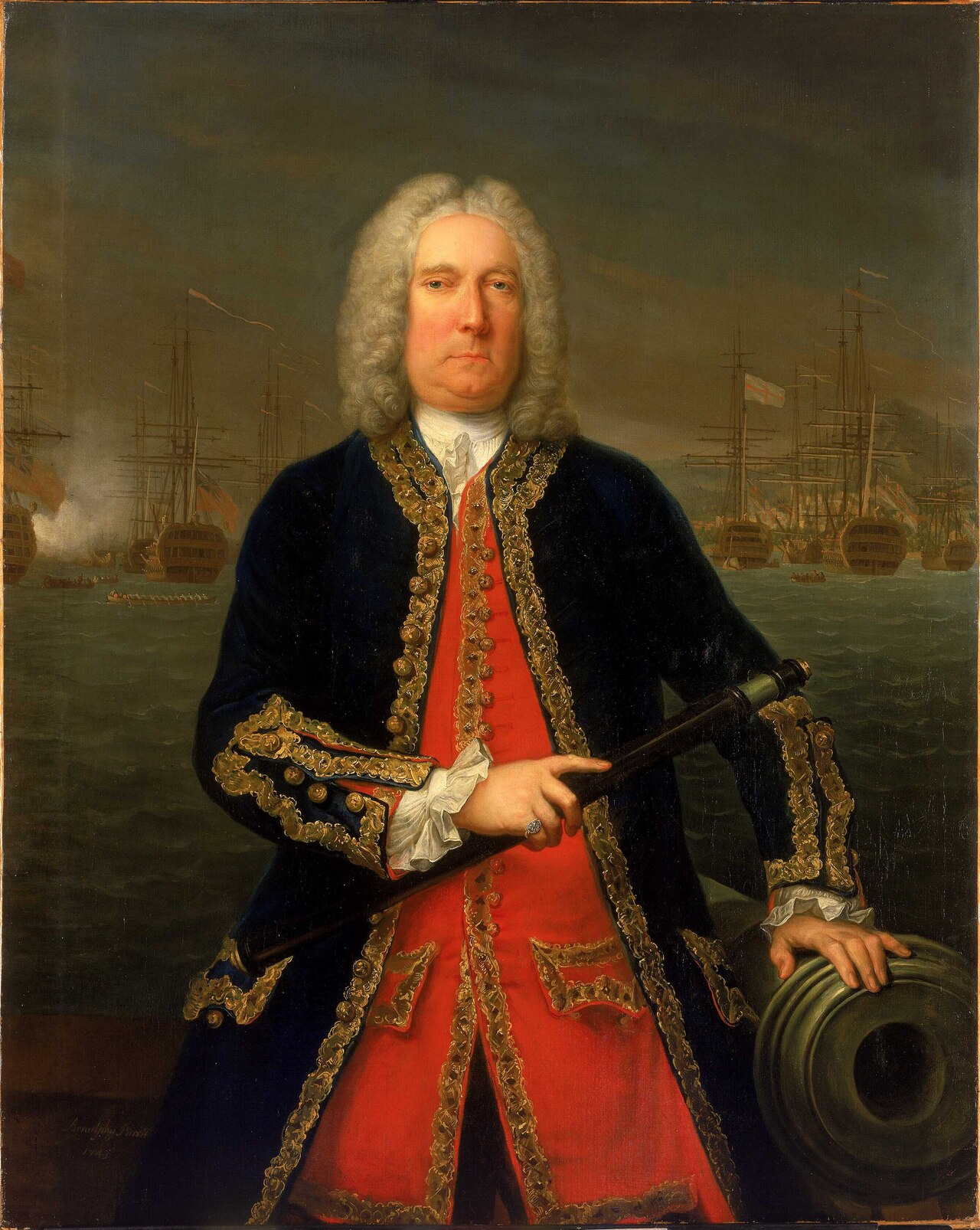


Early life Claude Arnulphy was born in Lyon in 1697, a city with a thriving artistic community that produced a number of prominent painters in the 17th and 18th centuries. Little is recorded about his family background, but archival sources suggest that he was introduced to drawing and painting through local guild workshops. By his teenage years he was already apprenticed to a master painter, a common route for aspiring artists of the period. This early training gave him a solid grounding in the academic principles of drawing, anatomy, and the use of chiaroscuro, which would later become hallmarks of his portraiture.
Career and style Arnulphy’s career took a decisive turn when he moved to Aix‑en‑Provence, a cultural hub of the Provençal aristocracy. The city’s affluent patrons, many of whom were military officers stationed in the region, provided a steady stream of commissions. Arnulphy quickly established a reputation for capturing the dignity and status of his sitters with a restrained yet elegant approach. His style aligns with the late Baroque sensibility that still favoured rich colour palettes and a subtle play of light, but it also anticipates the more restrained classicism that would dominate French portraiture in the mid‑18th century. The compositions are typically formal, with sitters presented in half‑length or three‑quarter‑length poses, often against a neutral or subtly patterned backdrop that does not distract from the figure.
Signature techniques Arnulphy’s technique is distinguished by a meticulous handling of surface texture. He layered thin glazes to achieve a luminous skin tone, a method that allowed him to render the delicate translucency of flesh while preserving the underlying structure of the face. In the rendering of fabrics, particularly silk and velvet, he employed fine, controlled brushstrokes that suggest the sheen of the material without excessive detail. Light is used strategically: a soft, diffused illumination falls across the face, highlighting the eyes and cheekbones, while the background recedes into a gentle chiaroscuro. This contrast not only emphasises the sitter’s features but also creates a sense of depth that was unusual in provincial portraiture of the time.
Major works Among Arnulphy’s most celebrated portraits are three naval officers painted in the early 1740s. *Captain Henry Osborn* (1743) depicts the Englishman in a dark coat with a gold‑trimmed lapel, his gaze directed slightly off‑canvas, conveying both authority and introspection. The portrait is notable for its precise rendering of the captain’s uniform and the subtle modelling of his facial features, which exemplify Arnulphy’s capacity to blend realism with a dignified idealisation.
*Captain Arthur Scott* (1744) follows a similar compositional formula but introduces a richer colour scheme, with a deep burgundy background that enhances the subject’s white cravat and silver epaulettes. The work demonstrates Arnulphy’s skill in integrating decorative elements without overwhelming the sitter.
*Admiral Thomas Mathews* (1743) presents a more senior figure, with the admiral’s uniform adorned with medals and a decorative sash. Here Arnulphy’s attention to detail is evident in the accurate depiction of the admiral’s insignia, a testament to his careful study of military regalia.
In 1750 Arnulphy painted *Portrait of Louis‑Philippe de Vaudreuil*, a French nobleman who later became an influential political figure. The portrait captures Vaudreuil in an opulent velvet coat, his hand resting on a table laden with books, suggesting both intellectual pursuits and aristocratic refinement. The painting’s background, featuring a faint architectural motif, adds a sense of gravitas to the composition.
Another work, *Portrait of a Gentleman Seated at a Desk with Books, Papers and a Sheet of Music*, showcases Arnulphy’s ability to convey a narrative within a portrait. The sitter, surrounded by symbols of learning and culture, is portrayed with a relaxed posture, hinting at a cultivated, perhaps musical, personality. The inclusion of a sheet of music is a rare detail that underscores the artist’s willingness to incorporate personal attributes into his formal portraiture.
These works collectively illustrate Arnulphy’s consistent approach: a focus on the sitter’s social rank, a restrained yet expressive colour palette, and an emphasis on fine detail that elevates the portrait beyond mere likeness.
Influence and legacy Although Claude Arnulphy never achieved the fame of Parisian contemporaries such as Hyacinthe Rigaud or Nicolas de Largillière, his contribution to provincial French portraiture is significant. By maintaining high standards of technical execution and adapting the grand manner of court portraiture to a regional context, he helped raise the aesthetic expectations of patrons in Provence. His portraits served as visual records of the military and aristocratic elite during a period of expanding French influence abroad.
Later artists in the region, including Jean‑Baptiste van Loo’s descendants, drew upon Arnulphy’s balanced compositions and his nuanced treatment of light. The clarity of his brushwork and his ability to render luxurious fabrics with economy influenced subsequent generations of portrait painters working outside the capital. In contemporary scholarship, Arnulphy is increasingly recognised as a bridge between the baroque grandeur of the early 18th century and the emerging neoclassical restraint that would dominate French art in the latter half of the century.
Today, his paintings are housed in regional museums, such as the Musée Granet in Aix‑en‑Provence, and they continue to be studied for their insight into the social hierarchies and aesthetic preferences of mid‑18th‑century France. While his name may not appear in mainstream art histories, specialized studies of provincial portraiture consistently acknowledge his skillful synthesis of technique, elegance, and cultural documentation.
Frequently asked questions
Who was Claude Arnulphy?
Claude Arnulphy (1697–1786) was a French portrait painter from Lyon who worked mainly in Aix‑en‑Provence, creating refined portraits of military officers and aristocrats.
What style or movement is he associated with?
Arnulphy’s work sits between the late Baroque and early Neoclassical periods, combining rich colour and chiaroscuro with a restrained, classicising compositional approach.
What are his most famous works?
His best‑known paintings include the portraits of Captain Henry Osborn (1743), Captain Arthur Scott (1744), Admiral Thomas Mathews (1743), Louis‑Philippe de Vaudreuil (1750), and a gentleman at a desk with books and music.
Why does he matter in art history?
Arnulphy elevated provincial French portraiture, providing a high‑quality model for provincial patrons and influencing later Provençal artists with his technical skill and elegant style.
How can I recognise a Claude Arnulphy portrait?
Look for meticulous skin glazing, finely rendered fabrics, a subtle yet dignified lighting scheme, and a formal pose often set against a muted background that highlights the sitter’s status.