Bertha Wegmann
1847 – 1926
In short
Bertha Wegmann (1847–1926) was a Danish portrait painter of Swiss ancestry, recognised as the first woman to hold a chair at the Royal Danish Academy of Fine Arts, and celebrated for her psychologically keen, academically trained portraits of contemporaries.
Notable works
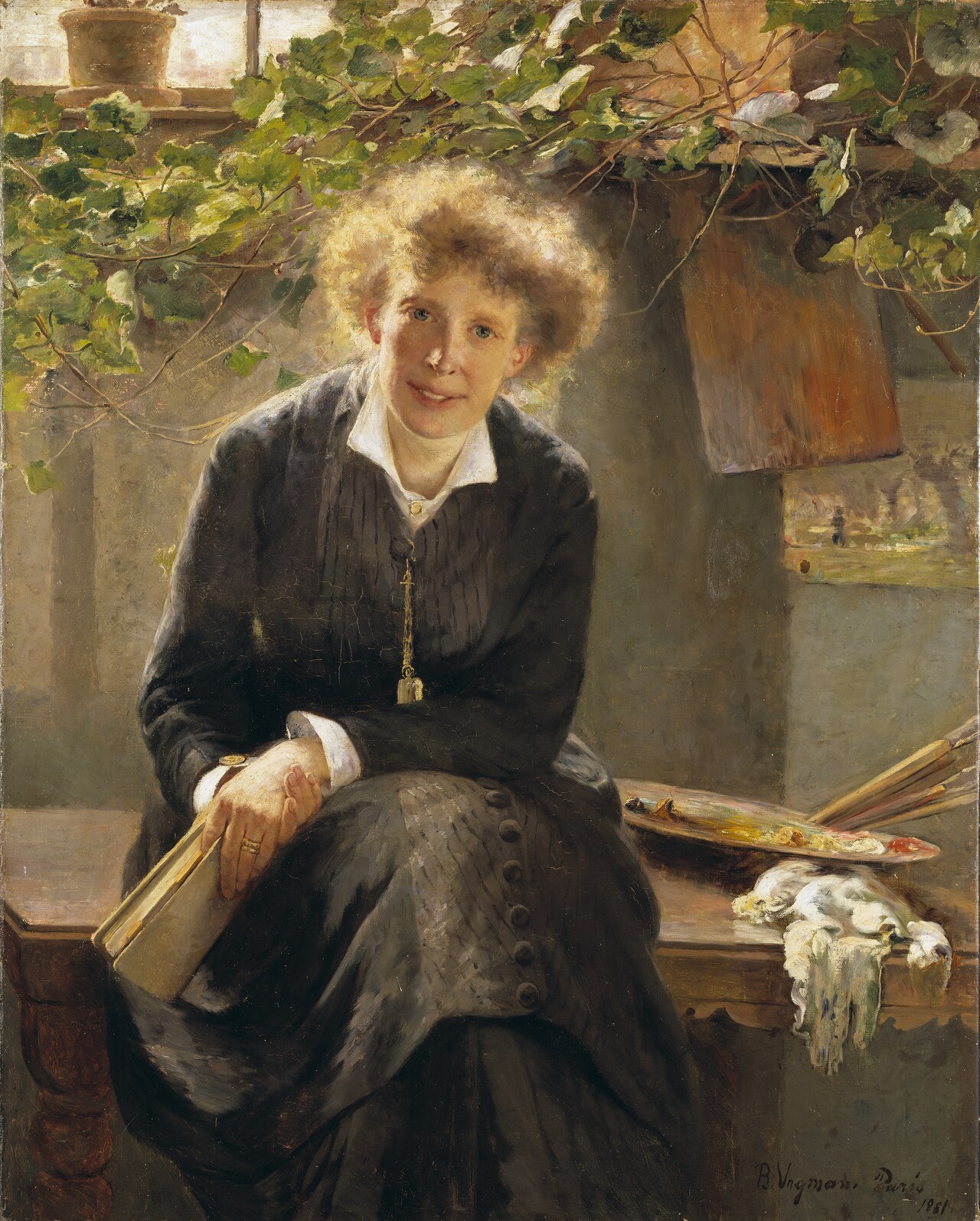

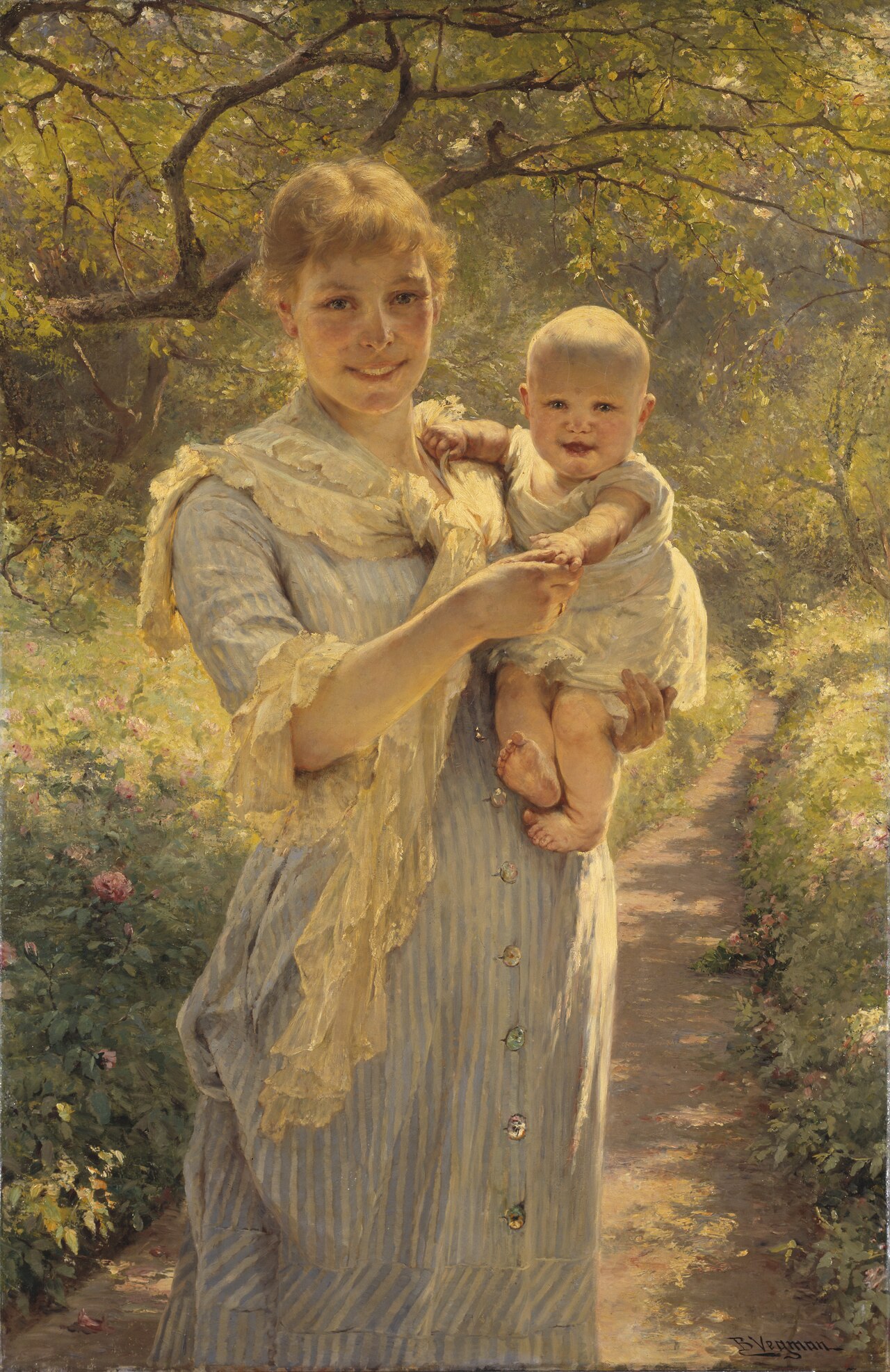
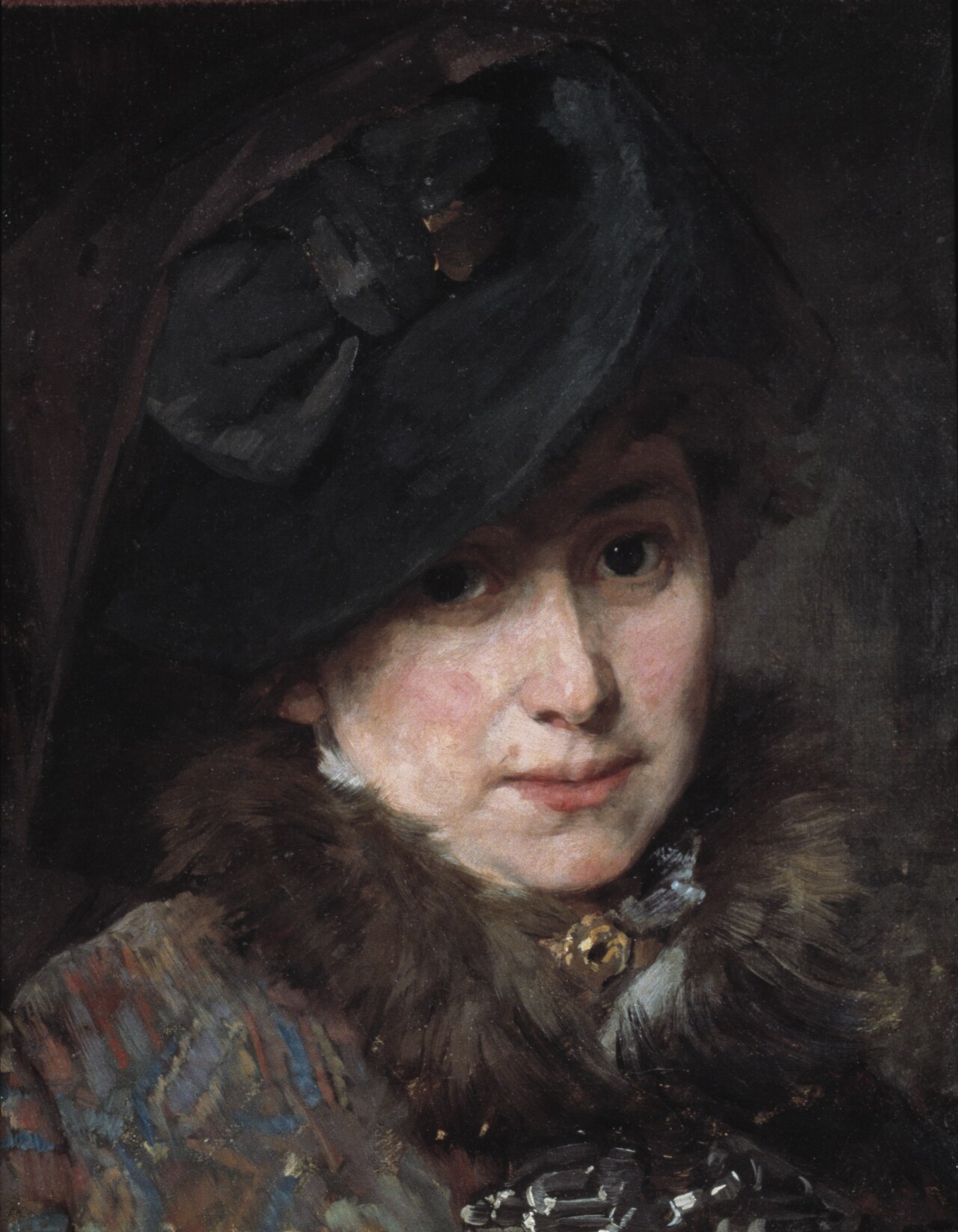

Early life Bertha Wegmann was born in 1847 in the Alpine village of Soglio, then part of the Kingdom of Lombardy‑Venetia, to a family of Swiss descent. Her father, a merchant, moved the family to Denmark when Bertha was a child, and she grew up in Copenhagen. From an early age she displayed an aptitude for drawing, copying religious icons and family portraits. The cultural milieu of late‑19th‑century Copenhagen, with its burgeoning interest in naturalistic representation, provided the backdrop for her first informal lessons. By her teenage years she was attending drawing schools that catered to women, a relatively new development in the Danish art world.
Career and style Wegmann’s professional formation continued at the Royal Danish Academy of Fine Arts, where she was admitted as a student in the 1860s—a period when few women were permitted to study alongside men. She later supplemented her training with study trips to Paris, the centre of academic portraiture, where she observed the work of contemporaries such as Jean‑Léon Gérôme and Jules Bastien-Lepage. The influence of these French academicians is evident in Wegmann’s precise draftsmanship and restrained palette. Her mature style combines the realism of the Danish Golden Age with a subtle psychological depth: figures are rendered with careful attention to facial expression, posture, and the surrounding interior, creating a sense of intimacy rather than mere likeness.
Signature techniques Wegmann’s portraits are distinguished by three recurring technical approaches. First, she employed a layered glazing technique, building thin, translucent colour washes over a well‑drawn underpainting; this gave her skin tones a luminous quality and allowed subtle shifts of light to model the face. Second, she favoured a limited, earthy palette—ochres, muted greens, and soft blues—that reinforced the naturalism of her subjects while avoiding the flamboyancy of contemporaneous Symbolist trends. Third, her compositional choices often placed the sitter within a domestic or studio setting, using carefully rendered objects (books, musical instruments, pets) as visual cues to the subject’s personality and social standing. These elements together create portraits that feel both observationally accurate and psychologically resonant.
Major works Among Wegmann’s most frequently cited works are several portraits that exemplify her skill and thematic interests.
- Portrait of the painter Jeanna Bauck (1881) – This painting captures the German‑Swedish artist Jeanna Bauck at her easel, brush in hand. Wegmann renders Bauck’s focused expression with soft modelling, while the muted background of the studio space emphasizes the artist’s concentration. The work is notable for its subtle interplay of light on Bauck’s hair and the delicate handling of the surrounding tools of paint.
- Madam Anna Seekamp, the Artist’s Sister (1882) – In this intimate portrait, Wegmann depicts her sister seated by a window, a book lying open on her lap. The composition highlights the quiet domestic sphere, and the painter’s use of a cool colour scheme underscores the contemplative mood. The sitter’s gaze, directed slightly away from the viewer, invites speculation about her inner thoughts.
- Young Mother with a Child in a Garden – Though the exact date is uncertain, this work demonstrates Wegmann’s capacity to move beyond studio portraiture into an outdoor setting. The mother’s protective posture and the child’s playful reach are rendered with a gentle handling of foliage, employing the same glazing technique that gives the figures a warm, lived‑in feel.
- Hildegard Thorell, the Artist (1880) – This portrait of fellow artist Hildegard Thorell shows the subject with a palette and sketchbook, underscoring her professional identity. Wegmann’s careful rendering of Thorell’s hands—often a focal point in portraiture—conveys both skill and the tactile relationship between artist and medium.
- Lady with a Cat in her Lap – A later work, this painting illustrates Wegmann’s continued interest in the domestic sphere. The cat, rendered with fine fur detail, serves as a symbol of affection and comfort. The sitter’s relaxed pose, combined with the subtle chiaroscuro on her face, exemplifies Wegmann’s mature command of light and texture.
Each of these works reflects Wegmann’s consistent commitment to portraying the inner lives of her subjects, whether they were fellow artists, family members, or anonymous figures.
Influence and legacy Bertha Wegmann’s career broke several gender barriers in Danish art institutions. In 1908 she was appointed to a professorial chair at the Royal Danish Academy of Fine Arts—making her the first woman to hold such a position. This appointment not only recognised her artistic achievements but also opened the door for subsequent generations of women artists to pursue academic careers. Wegmann taught portrait techniques to a small cohort of students, emphasizing observational accuracy and psychological insight, a pedagogical legacy that persisted in Danish art schools well into the mid‑20th century.
Beyond her institutional impact, Wegmann’s body of work contributed to the evolution of Danish portraiture from the idealised classicism of the early 19th century toward a more realistic, character‑focused approach. Her paintings are held in the collections of the National Gallery of Denmark and several regional museums, where they continue to be exhibited as exemplars of late‑19th‑century portraiture. Art historians cite her as a bridge between the Golden Age painters and the modernist tendencies that followed, noting how her restrained palette and psychological depth prefigured the concerns of early 20th‑century modern portraitists.
In contemporary scholarship, Wegmann is often discussed in the context of women’s contributions to the European art academies, and her life story is used to illustrate the gradual opening of professional artistic spaces to women. Her portraits remain a valuable visual record of the social circles, fashion, and interior environments of her time, offering scholars and enthusiasts alike a window into the cultural fabric of late‑Victorian Denmark.
Overall, Bertha Wegmann’s artistic output, teaching career, and pioneering academic appointment cement her status as a pivotal figure in Danish art history, whose work continues to inform both scholarly research and public appreciation of portrait painting.
Frequently asked questions
Who was Bertha Wegmann?
Bertha Wegmann (1847–1926) was a Danish portrait painter of Swiss ancestry, best known for becoming the first woman to hold a professorial chair at the Royal Danish Academy of Fine Arts.
What artistic style or movement is she associated with?
Wegmann worked within the academic realist tradition, combining the naturalism of the Danish Golden Age with a subtle psychological approach typical of late‑19th‑century portraiture.
What are her most famous works?
Her most celebrated paintings include the Portrait of the painter Jeanna Bauck (1881), Madam Anna Seekamp, the Artist’s Sister (1882), Young Mother with a Child in a Garden, Hildegard Thorell, the Artist (1880), and Lady with a Cat in her Lap.
Why is she important in art history?
She broke gender barriers by securing the first female professorial chair at Denmark’s premier art academy, influencing generations of women artists and shaping the evolution of Danish portraiture toward greater realism and psychological depth.
How can I recognise a Bertha Wegmann painting?
Look for finely layered glazing, a restrained earthy palette, intimate domestic settings, and a focus on the sitter’s expression and posture that together convey a calm, psychologically nuanced portrait.