Bartolomeo Caporali
1420 – 1505
In short
Bartolomeo Caporali (c.1420–1505) was an Umbrian painter and miniaturist active in Perugia, known for his devotional panels, illuminated missals and decorative commissions that blend the influences of early Renaissance masters such as Gozzoli, Boccati and later Perugian artists.
Notable works


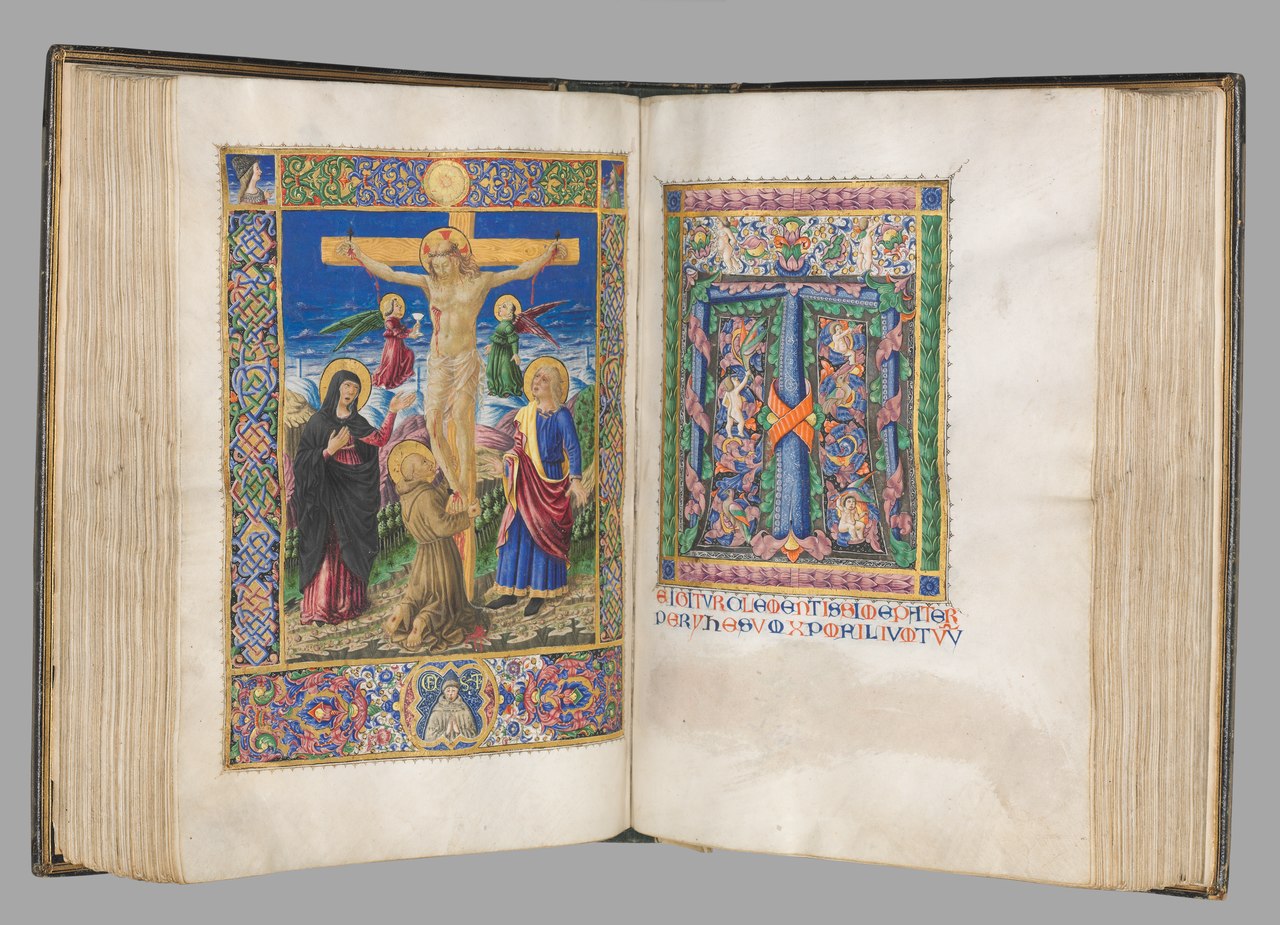


Early life Bartolomeo Caporali was born around 1420 in Perugia, the principal city of the Umbria region. Little is recorded about his family background or formal training, but documentary evidence places him firmly within the artistic milieu of Perugia in the mid‑15th century. Early in his career he is thought to have worked under the guidance of two prominent Umbrian masters, the fresco painter Benozzo Gozzoli and the miniaturist Giovanni Boccati. These apprenticeships provided Caporali with a solid grounding in both large‑scale narrative painting and the meticulous hand‑work required for illuminated manuscripts.
Career and style Caporali’s professional activity spanned more than six decades, during which he produced altarpieces, panel paintings, illuminated missals and a variety of ornamental works such as banners, armorials and gilded decorations. His style reflects a synthesis of the decorative richness of the early Renaissance and the emerging naturalism of later Umbrian artists. From Gozzoli he inherited a vivid colour palette and a taste for elaborate, narrative detail; from Boccati he absorbed a refined handling of line and a careful attention to surface texture. As younger painters such as Fiorenzo di Lorenzo, Perugino and Pinturicchio entered the Perugian scene, Caporali’s work began to absorb their softer modelling of figures and more atmospheric spatial arrangements, creating a hybrid visual language that remained recognisable as his own.
Signature techniques Caporali is distinguished by several recurring technical choices. First, his use of gold leaf and tempera on panel allowed him to achieve both luminous highlights and a decorative sheen that suited devotional contexts. Second, his miniaturist background is evident in the fine, almost calligraphic outlines that define the edges of garments and architectural elements. Third, he often employed a layered compositional structure: a central sacred figure is flanked by attendant saints or angels, each set within a shallow, gilded architectural niche that creates a sense of depth without abandoning the flat decorative surface. Finally, his colour scheme frequently juxtaposes deep ultramarine blues with warm ochres, a combination that reinforces the spiritual intensity of his subjects.
Major works - **Madonna del Fanciullo (1459)** – This panel depicts the Virgin holding the infant Christ, a motif common in Umbrian devotional art. Caporali renders the figures with delicate modelling, while the background features a gilded tapestry that underscores the painting’s liturgical purpose. - **Annunciation (1462)** – Executed for a private chapel, the work presents the Angel Gabriel delivering the divine message to a serene Virgin. The composition balances a restrained architectural setting with a subtle play of light, illustrating Caporali’s gradual shift toward the softer spatial treatment seen in later Umbrian art. - **Nicholas, St Lawrence, St Peter Martyr, St Antony the Abbot (1452)** – This multi‑saint panel groups four male saints, each identifiable by their traditional attributes. The figures are arranged in a symmetrical register, and the use of gold‑leaf halos ties the scene to Caporly’s broader decorative vocabulary. - **The Caporali Missal (1469)** – An illuminated manuscript that showcases Caporali’s skill as a miniaturist. The missal contains richly coloured initials, intricate marginalia and occasional narrative vignettes that echo the compositional strategies of his panel paintings. - **Altarpiece at Sant'Antonio Abate (1480)** – One of his later large‑scale commissions, this altarpiece combines a central Madonna and Child with a surrounding cast of saints. The figures display a softened modelling reminiscent of Perugino, while the gilded ornamental framework remains a hallmark of Caporali’s earlier style.
Influence and legacy Although Bartolomeo Caporali never achieved the fame of some of his contemporaries, his work played a pivotal role in the artistic continuity of Perugia between the early and high Renaissance. By integrating the decorative intensity of the 1440s with the emerging naturalism of the 1470s, he provided a visual bridge for younger Umbrian artists who would go on to dominate the Italian art scene at the turn of the 16th century. His illuminated manuscripts, in particular, contributed to the preservation of a regional decorative tradition that might otherwise have been eclipsed by the rise of oil painting. Modern scholarship recognises Caporali as a versatile craftsman whose oeuvre offers insight into the collaborative workshop practices of 15th‑century Umbria, and his surviving works continue to be studied for their technical brilliance and nuanced synthesis of stylistic currents.
Frequently asked questions
Who was Bartolomeo Caporali?
Bartolomeo Caporali was an Umbrian painter and miniaturist active in Perugia between roughly 1420 and 1505, noted for devotional panels, illuminated missals and decorative commissions.
What artistic style or movement is he associated with?
He worked within the early Renaissance tradition, blending the decorative richness of Gozzoli and Boccati with the softer naturalism later introduced by Perugian artists such as Perugino and Pinturicchio.
What are his most famous works?
Key works include the Madonna del Fanciullo (1459), the Annunciation (1462), the multi‑saint panel of Nicholas, St Lawrence, St Peter Martyr and St Antony (1452), the Caporali Missal (1469), and the altarpiece for Sant'Antonio Abate (1480).
Why does Caporali matter in art history?
Caporali serves as a stylistic bridge between early and high Renaissance art in Umbria, preserving decorative techniques while embracing emerging naturalism, and his illuminated manuscripts exemplify the region’s rich manuscript tradition.
How can I recognise a painting by Caporali?
Look for finely outlined figures, a bright gold‑leaf background, a balanced register of saints or angels, and a colour palette that mixes deep blues with warm ochres, all executed in tempera on panel.