Artus Wolffort
1581 – 1641
In short
Artus Wolffort (1581–1641) was a Flemish Baroque painter from Antwerp, renowned for his history paintings that combined religious and mythological subjects with a disciplined, academic style.
Notable works


_-_Portrait_of_a_monk_in_prayer.jpg)

Early life Artus Wolffort was born in Antwerp in 1581, a city that was then part of the Habsburg Netherlands and a thriving centre of artistic production. Little is known about his family background, but the cosmopolitan atmosphere of Antwerp, with its bustling markets, guilds and workshops, provided a fertile environment for a young artist. Wolffort likely began his training in one of the local guilds, where apprentices learned drawing, composition and the handling of oil paint under the supervision of established masters. The city's close ties to the broader Flemish artistic tradition meant that his early education would have been steeped in the legacy of earlier masters such as Pieter Bruegel the Elder and the emerging influence of the Italian Renaissance.
Career and style Wolffort emerged as a professional painter in the early decades of the 17th century, a period when the Counter‑Reformation was commissioning an abundance of religious art for churches and private chapels. His work displays a clear affinity with the Flemish Baroque style that was championed by Peter Paul Rubens, although Wolffort never achieved the same level of fame. He blended the dramatic chiaroscuro and vigorous composition typical of the Baroque with a measured, academic approach that echoed the teachings of the Antwerp Academy. This synthesis resulted in paintings that were both emotionally resonant and structurally coherent.
Wolffort’s subject matter was dominated by history paintings—large‑scale depictions of biblical narratives, saints’ lives and classical myths. He worked for both ecclesiastical patrons and private collectors, adapting his visual language to the expectations of each. In religious commissions, he emphasized clarity of narrative and the devotional intensity required by the Counter‑Reformation, while his mythological scenes allowed for a more relaxed treatment of the human figure and a subtle exploration of allegorical themes.
Signature techniques Wolffort’s technique was characterised by a restrained palette dominated by earth tones, deep reds and muted blues, which he layered to achieve a sense of depth without the overtly saturated colours favoured by some of his contemporaries. He employed a careful underdrawing, often executed in charcoal, that guided the placement of figures and architectural elements. His brushwork varied between smooth, almost invisible passages for flesh tones and more expressive strokes for drapery and background foliage, creating a contrast that heightened the three‑dimensionality of his subjects.
Another hallmark of his practice was the careful modelling of light. Wolffort used a single, strong light source to illuminate the central figures, casting soft shadows that gave a sculptural quality to bodies and objects. This illumination often served a narrative purpose, drawing the viewer’s eye to a focal point—such as the infant Christ in a Nativity or the heroine in a mythological tableau. He also paid close attention to the rendering of textiles, rendering the sheen of silk and the weight of velvet with meticulous detail, a skill that added realism to his compositions.
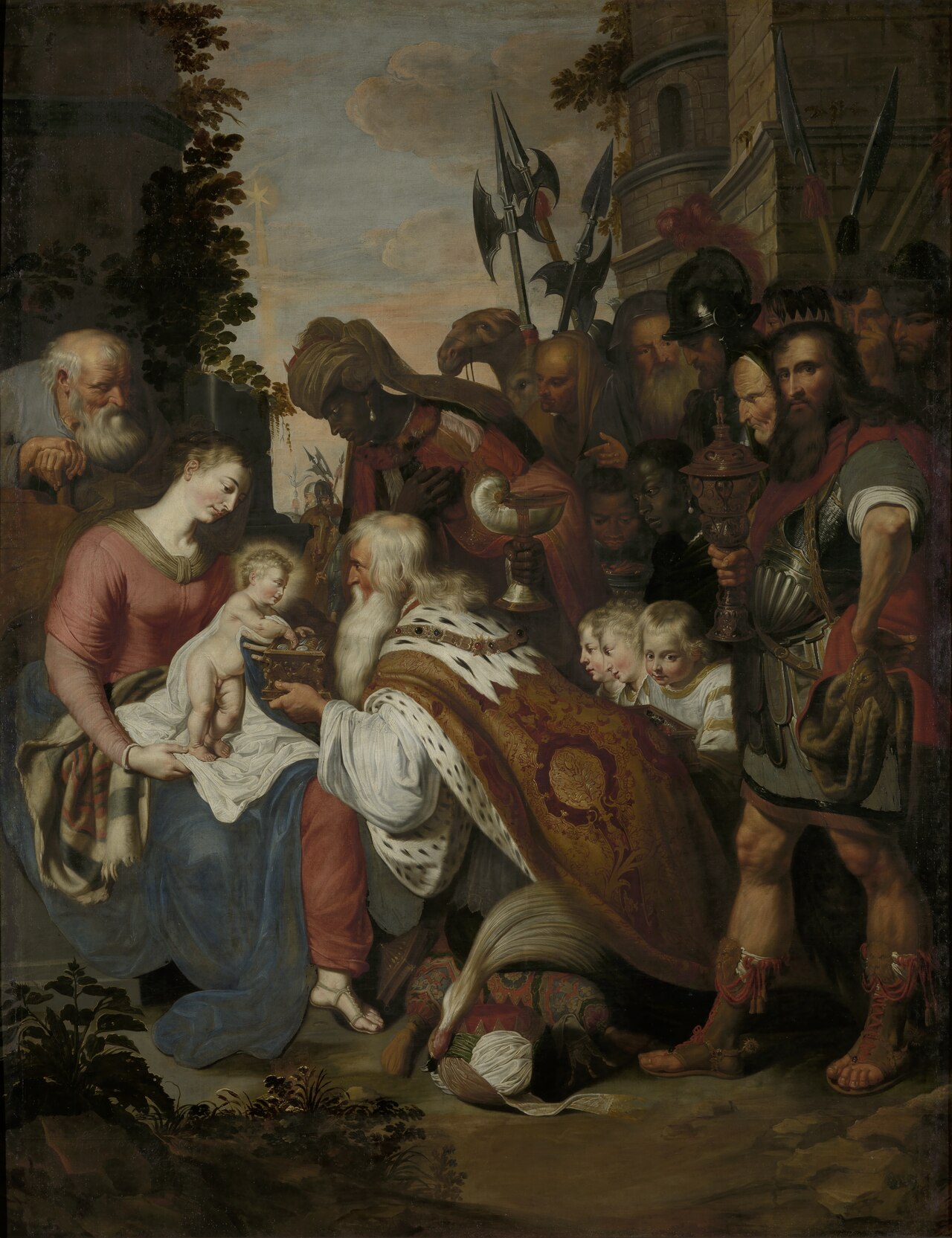
Major works Among Wolffort’s surviving oeuvre, several works illustrate his mastery of the Baroque idiom. **The Adoration of the Magi (1615)** showcases a balanced composition in which the three kings are positioned around the infant Christ, each illuminated by a subtle, golden light that suggests both reverence and the exotic riches of the East. The painting’s architectural backdrop, a modest ruin, underscores the timeless nature of the biblical episode.
Évangéliste, though less documented, reflects Wolffort’s capacity to convey spiritual intensity. The work likely portrays an evangelist in a moment of contemplation, with a muted colour scheme that foregrounds the saint’s expression and the delicate handling of his garments.
The Four Elements (1641), completed in the final year of his life, is an allegorical series that personifies earth, air, fire and water. Each element is rendered as a distinct figure surrounded by symbolic attributes—rocky terrain for earth, airy clouds for air, flickering flames for fire, and flowing currents for water. The composition demonstrates Wolffort’s continued interest in combining classical allegory with a disciplined, academic style.
The Portrait of a monk in prayer (1618) offers insight into Wolffort’s skill as a portraitist. The monk is depicted in a simple habit, his hands clasped in prayer, the subtle play of light across his face suggesting a contemplative mood. The background is intentionally sparse, ensuring that the viewer’s attention remains on the devotional act.
Finally, Esther’s Toilet in the Harem of Ahasuerus (1620) illustrates Wolffort’s engagement with biblical narratives that contain a degree of sensuality. The scene captures Queen Esther preparing herself before meeting the Persian king, a moment imbued with both elegance and tension. The painting’s rich fabrics, the delicate treatment of skin tones and the careful arrangement of space highlight Wolffort’s ability to render narrative drama while maintaining compositional harmony.
Influence and legacy Artus Wolffort never attained the widespread renown of Rubens or Van Dyck, but his work contributed to the diffusion of the Baroque style throughout the Southern Netherlands. By adhering to the academic principles taught in Antwerp’s artistic institutions, he helped sustain a workshop tradition that balanced rigorous draftsmanship with the emotive power of Baroque visual language. His paintings were collected by regional patrons and occasionally circulated beyond Antwerp, influencing younger artists who sought a measured approach to religious and mythological subjects.
In modern scholarship, Wolffort is recognised as a representative figure of the early‑to‑mid‑17th‑century Flemish school, bridging the more restrained late‑Renaissance aesthetic with the full‑blown dynamism of the Baroque. His surviving works provide valuable insight into the tastes of Counter‑Reformation patrons and the technical practices of Antwerp painters. Though not prolific in the historical record, his paintings continue to appear in exhibitions that explore the breadth of Flemish Baroque art, reaffirming his place within the broader narrative of European painting.
Overall, Artus Wolffort’s career exemplifies the synthesis of disciplined academic training with the expressive possibilities of the Baroque, offering a nuanced perspective on the artistic currents that shaped the Habsburg Netherlands during a period of profound cultural and religious change.
Frequently asked questions
Who was Artus Wolffort?
Artus Wolffort (1581–1641) was a Flemish Baroque painter from Antwerp, best known for his religious and mythological history paintings.
What artistic movement did Wolffort belong to?
He worked within the Flemish Baroque style, combining dramatic composition with an academic approach rooted in Antwerp’s artistic traditions.
What are Wolffort’s most famous works?
His notable works include *The Adoration of the Magi* (1615), *Évangéliste*, *The Four Elements* (1641), *Portrait of a monk in prayer* (1618) and *Esther’s Toilet in the Harem of Ahasuerus* (1620).
Why is Wolffort important in art history?
Wolffort exemplifies the transition from late‑Renaissance restraint to full Baroque expression in the Southern Netherlands, illustrating how academic training supported the era’s religious and mythological imagery.
How can I recognise a painting by Wolffort?
Look for balanced compositions, a restrained colour palette, careful modelling of light from a single source, and meticulous rendering of fabrics and textures that together create a dignified, narrative‑driven scene.