Albrecht De Vriendt
1843 – 1900
In short
Albrecht De Vriendt (1843–1900) was a Belgian painter, water‑colourist and etcher who specialised in genre scenes, historical subjects and interior views, working in the Romantic‑historical tradition and later serving as director of the Royal Academy of Fine Arts in Antwerp.
Notable works


Early life Albrecht Frans Lieven De Vriendt was born in 1843 in Ghent, a city that at the time was a centre of Flemish artistic activity. He grew up in a family that valued the visual arts; his brother, Juliaan De Vriendt, also became a painter, and the two would later collaborate on a number of decorative projects. Albrecht received his first training locally, before moving to Antwerp to study at the Royal Academy of Fine Arts. The academy’s curriculum, which combined rigorous drawing practice with exposure to the great masters of the Flemish Baroque, laid the foundations for his lifelong interest in historical and narrative painting.
Career and style After completing his studies, De Vriendt established himself as a versatile artist. He worked across several media – oil, water‑colour, etching and drawing – and was equally comfortable producing intimate genre scenes as he was large‑scale history paintings. His style can be placed within the late‑19th‑century Belgian Romantic‑historical school, a movement that sought to revive the grandeur of earlier Flemish art while adapting it to contemporary tastes. Even after the style fell out of favour elsewhere, De Vriendt continued to champion its ideals, producing works that combined meticulous draftsmanship with a narrative richness reminiscent of the Old Masters.
De Vriendt’s career was marked by a series of official commissions, particularly for public monuments and commemorative paintings. His reputation as a reliable interpreter of national history earned him the trust of patrons and institutions, and he frequently collaborated with his brother on decorative schemes for civic buildings. In addition to his studio practice, De Vriendt was an active author and publisher, producing writings on artistic technique and the role of art in society. His involvement in the monumentalist movement reflected a broader Belgian interest in using visual art to construct a shared historical memory.
Signature techniques De Vriendt’s work is distinguished by several technical hallmarks. First, his drawing is exceptionally precise; he employed a tight, controlled line that conveyed both the texture of fabrics and the solidity of architectural elements. In oil paintings, he favoured a restrained palette of earth tones, punctuated by richer reds and blues to highlight focal points. His use of chiaroscuro – the contrast of light and shadow – added depth and drama, especially in interior scenes where artificial lighting sources are depicted.
In water‑colour, De Vriendt demonstrated a mastery of layered washes that allowed subtle tonal variations while retaining the medium’s inherent luminosity. As an etcher, he employed fine cross‑hatching to render atmospheric effects and to suggest the passage of time in his historical compositions. Across media, he often incorporated detailed costume research, ensuring that the clothing and accessories in his paintings were historically accurate, thereby reinforcing the narrative credibility of his works.
Major works De Vriendt’s oeuvre includes several paintings that have become reference points for Belgian historical art. **Charles V (1843)** portrays the Holy Roman Emperor in a regal pose, emphasizing the political authority that the young emperor once wielded over the Low Countries. The composition is notable for its careful rendering of imperial regalia and the subtle interplay of light that highlights the subject’s face.
Mary of Burgundy (1843) presents the duchess at a moment of personal contemplation, surrounded by the rich interiors of a Flemish palace. The painting showcases De Vriendt’s skill in depicting luxurious fabrics and the reflective quality of polished surfaces, while also conveying a sense of quiet dignity.
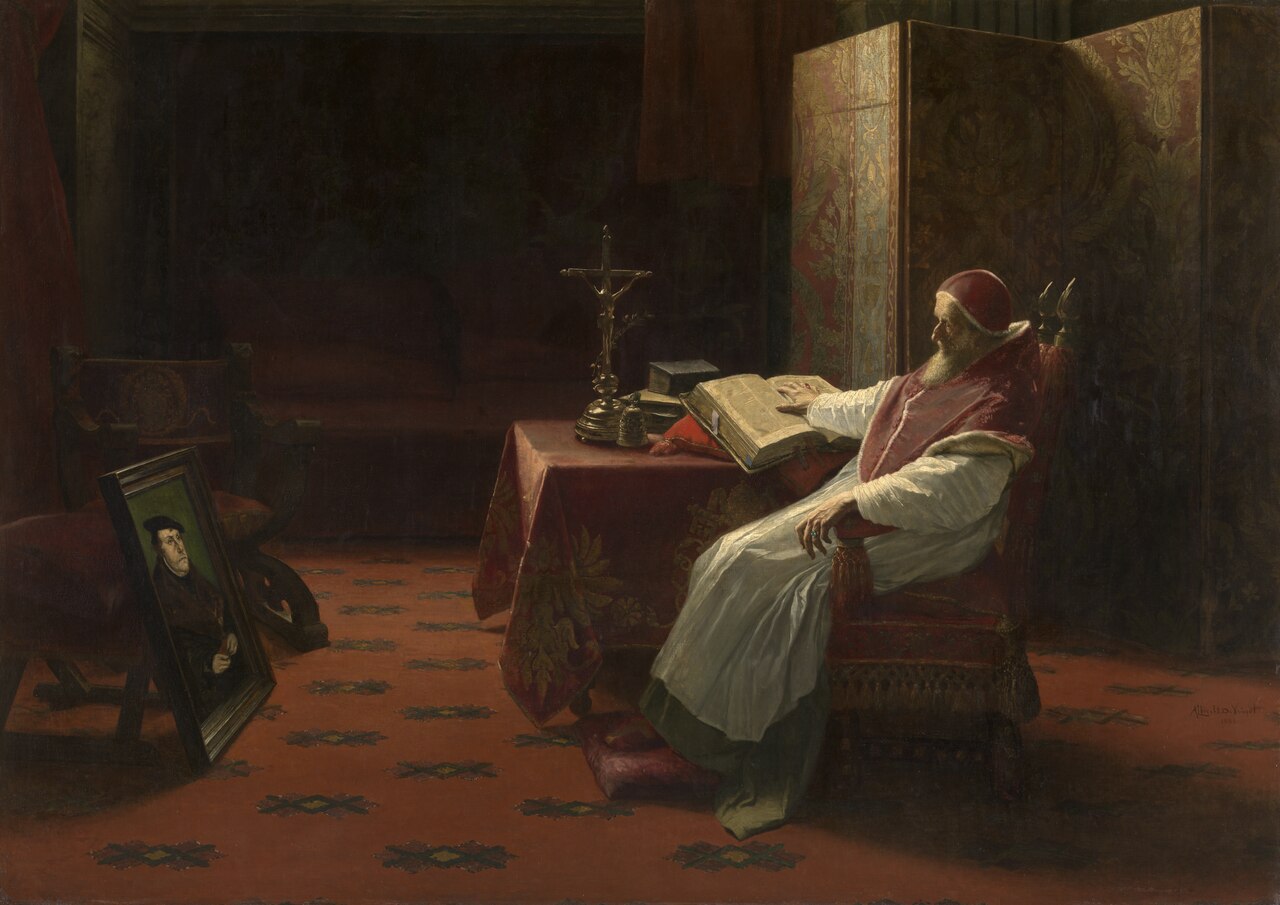
In Pope Paul III in front of the Portrait of Luther (1883), De Vriendt tackles a complex theological narrative. The work juxtaposes the papal figure with a portrait of Martin Luther, inviting viewers to contemplate the Reformation’s legacy. The composition’s dramatic lighting and the careful placement of symbolic objects underscore the tension between authority and reform.
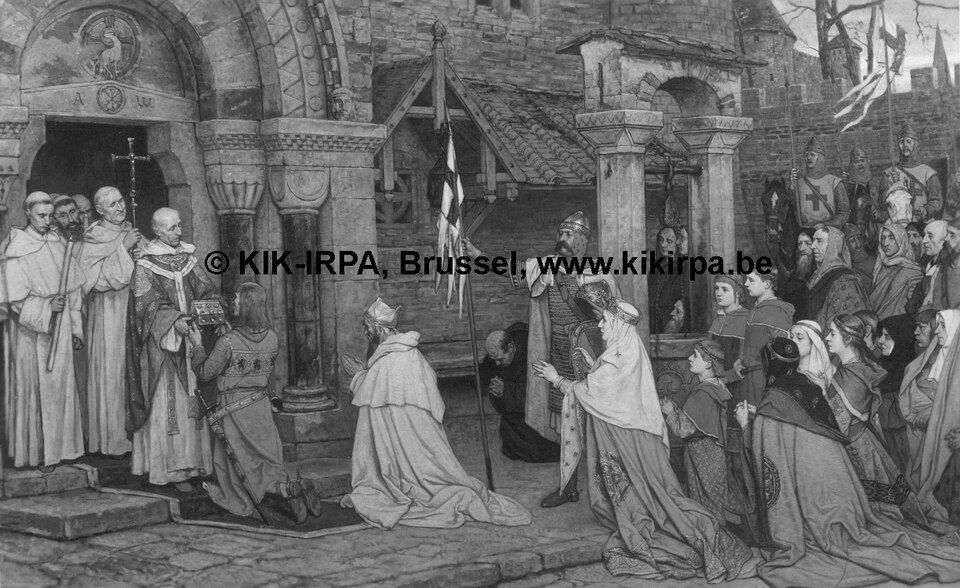
Thierry of Alsace Brings the Holy Blood to Bruges (1896) is a large‑scale history painting that commemorates a legendary episode in Bruges’ civic myth. De Vriendt depicts Thierry of Alsace, Count of Flanders, presenting a relic of the Holy Blood to the city’s inhabitants. The painting’s crowded composition, rich colouration and detailed rendering of medieval architecture exemplify his commitment to narrative clarity.
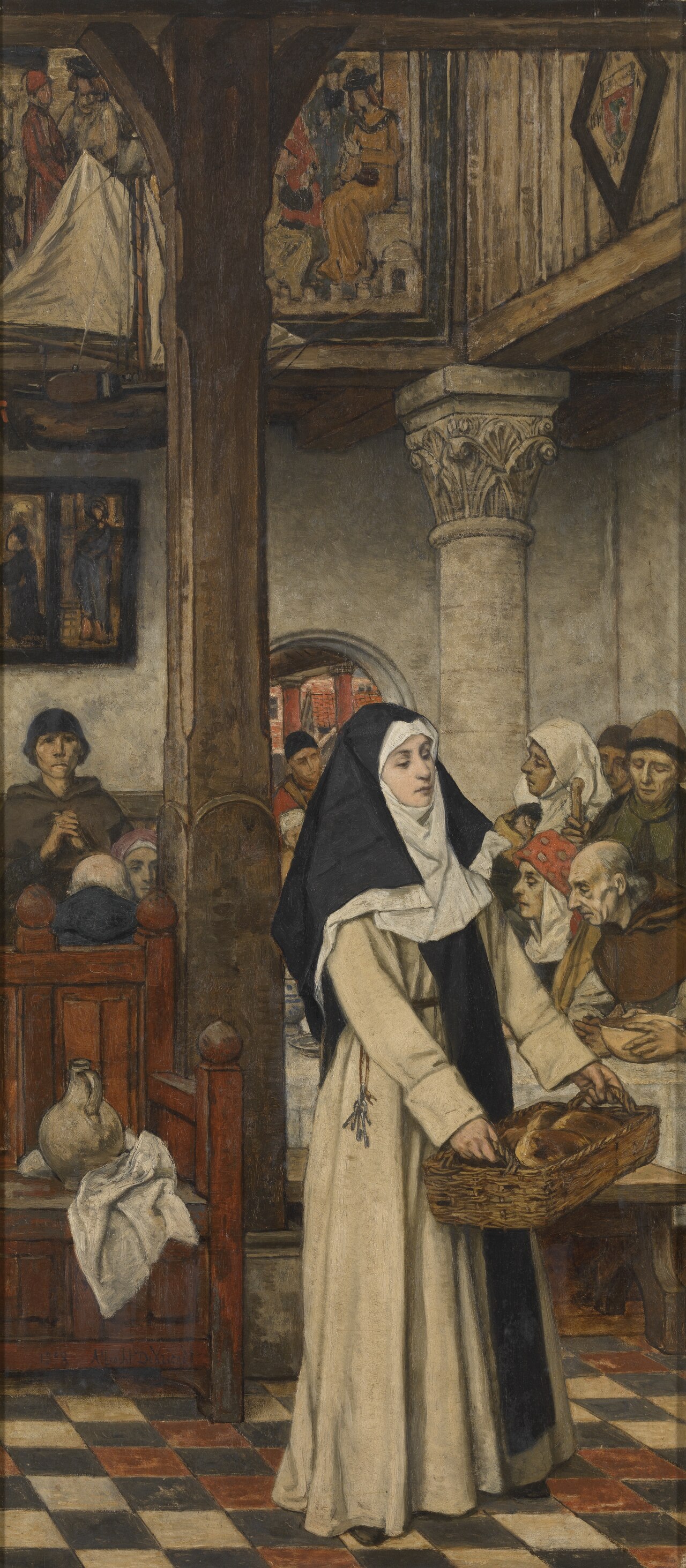
Finally, Poor Relief (1898) offers a more socially oriented subject. Here De Vriendt turns his attention to contemporary charitable activity, portraying a group of volunteers distributing food to the needy. The work is characterised by a compassionate tone, softened lighting, and a focus on the humanity of both giver and receiver, reflecting a subtle shift in his later period toward social realism.
Influence and legacy Albrecht De Vriendt’s influence extended beyond his own canvases. As director of the Royal Academy of Fine Arts in Antwerp, he helped shape the next generation of Belgian artists, encouraging a disciplined approach to drawing and a respect for historical subjects. His commitment to the Romantic‑historical tradition provided a counter‑point to the emerging avant‑garde movements, preserving a strand of Belgian artistic identity that valued narrative and craftsmanship.
Through his publications and collaborative projects, De Vriendt also contributed to the broader discourse on the role of art in nation‑building. His decorative works, many of which remain in public buildings, continue to be viewed by visitors, reinforcing the visual language he helped to define. While the style he championed fell out of mainstream favor in the early 20th century, recent scholarly reassessments have highlighted his technical skill and his role in sustaining a uniquely Belgian artistic heritage.
De Vriendt died in Antwerp in 1900, leaving behind a body of work that bridges the academic traditions of the 19th century with the evolving concerns of a modernising society. Contemporary exhibitions and catalogues now often include his paintings as key examples of late Romantic historicism, ensuring that his contributions remain part of the ongoing conversation about Belgium’s artistic past.
Frequently asked questions
Who was Albrecht De Vriendt?
Albrecht De Vriendt (1843–1900) was a Belgian painter, water‑colourist and etcher known for genre and historical paintings, who later directed the Royal Academy of Fine Arts in Antwerp.
What artistic style or movement is he associated with?
He worked within the Belgian Romantic‑historical tradition, continuing the historicist approach that emphasised narrative, detailed costume and a reverence for Flemish Baroque precedents.
What are his most famous works?
Key works include *Charles V* (1843), *Mary of Burgundy* (1843), *Pope Paul III in front of the Portrait of Luther* (1883), *Thierry of Alsace Brings the Holy Blood to Bruges* (1896) and *Poor Relief* (1898).
Why is Albrecht De Vriendt important in art history?
He preserved and promoted the Romantic‑historical school in Belgium, influenced generations of artists as director of the Antwerp Academy, and contributed to national visual identity through public commissions and publications.
How can I recognise a De Vriendt painting?
Look for precise draftsmanship, careful costume detail, a restrained yet rich colour palette, and a clear narrative focus often set within historically accurate interiors or monumental settings.