Yitzhak Danziger
1916 – 1977
In short
Yitzhak Danziger (1916–1977) was a German‑born Israeli sculptor associated with the Canaanite and Ofakim Hadashim movements. He is best known for works such as Nimrod (1939) and the Monument to the memory of Shlomo Ben‑Yosef (1957).
Notable works


Early life Yitzhak Danziger was born in 1916 in Berlin, Germany, into a family that valued both education and cultural engagement. Growing up during a period of intense political change, he was exposed early to the tensions between tradition and modernity that would later shape his artistic outlook. After completing his secondary education, Danziger pursued formal training in the visual arts, focusing on sculpture, a medium that offered him a three‑dimensional language for expressing his ideas.
In the early 1930s, the rise of anti‑Jewish legislation in Germany prompted Danziger to emigrate to what was then the British Mandate of Palestine. Arriving in the region in his late teens, he settled in the nascent Jewish community, where he encountered a vibrant cultural scene that was actively seeking a new visual identity rooted in the land’s ancient heritage.
Career and style Danziger quickly became involved with the Canaanite Movement, a group of artists and intellectuals who advocated for a cultural renewal based on the mythic and archaeological past of the Levant. The movement’s emphasis on indigenous symbols, biblical narratives, and a break from European artistic conventions resonated with Danziger’s own desire to forge a distinct artistic voice.
In the late 1940s, Danziger joined the Ofakim Hadashim (New Horizons) collective, which championed abstract expression and modernist aesthetics. While the group’s overall direction leaned toward non‑representational forms, Danziger maintained a personal synthesis of abstraction and figurative reference, integrating the symbolic language of the Canaanite ethos with the formal concerns of contemporary sculpture.
His work is characterised by a restrained yet powerful use of material, often employing stone, bronze, and later, synthetic media. Danziger’s sculptures convey a sense of timelessness, drawing on ancient motifs while engaging with the modernist preoccupation with form, volume, and surface texture.
Signature techniques Danziger’s technical repertoire evolved throughout his career. Early pieces were primarily carved from local limestone, a material that allowed him to highlight the natural grain and colour of the stone, thereby reinforcing connections to the landscape of the Holy Land. He employed a direct carving method, shaping the stone with chisels and hammers to reveal the essential form within the block.
In the 1960s, Danziger began experimenting with bronze casting, a shift that expanded his ability to produce more intricate and dynamic compositions. His bronze works often feature a subtle patina that enhances the interplay of light and shadow across the surface.
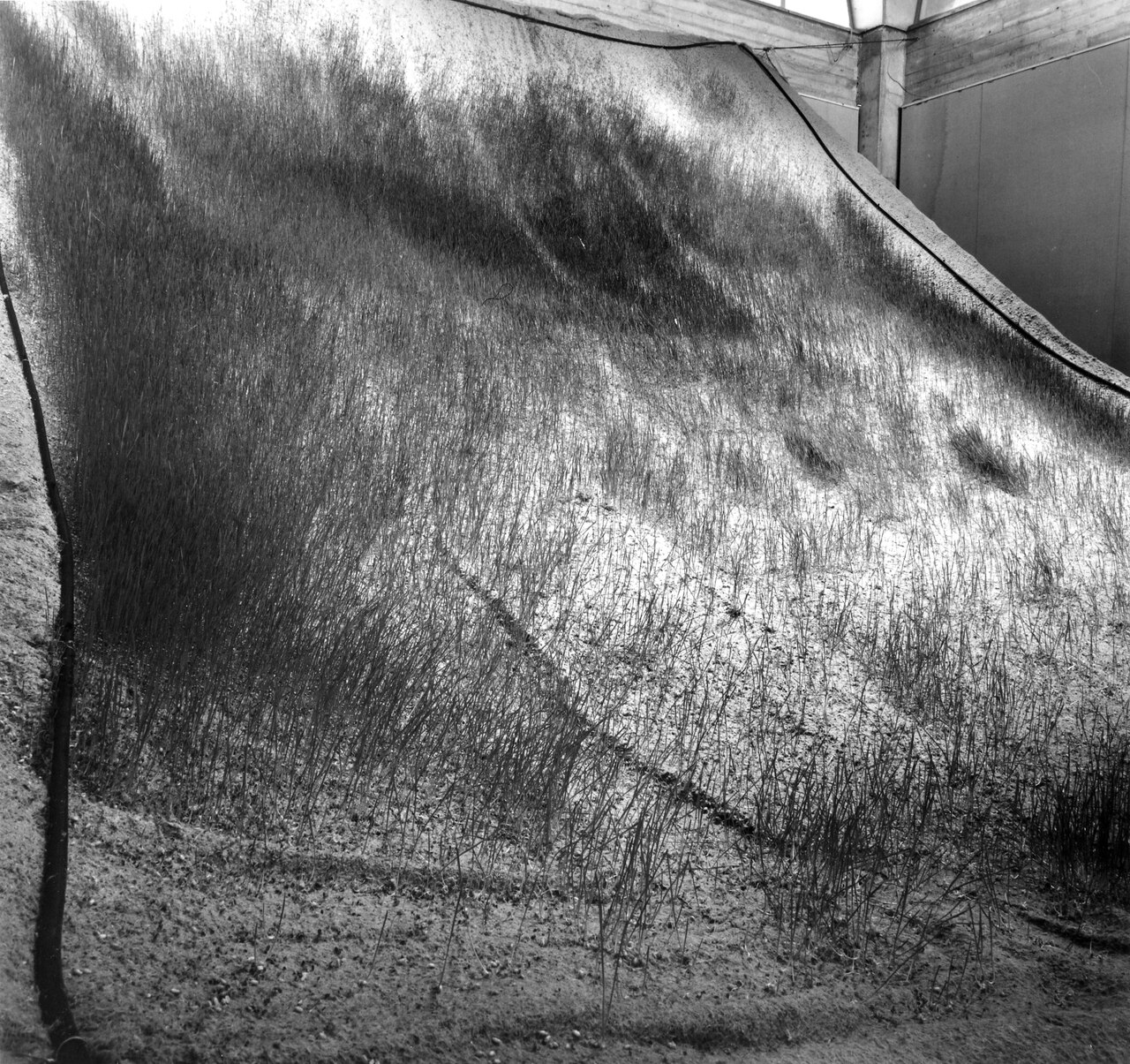
A notable departure from traditional sculptural media came with his 1971 work "Sowing of a Surface with Plastic Emulsion," where he applied a synthetic emulsion to a prepared base, creating a textured, almost painterly surface. This piece illustrates his willingness to explore new materials while retaining an underlying concern for the tactile qualities of the work.
Major works - **Nimrod (1939)** – One of Danziger’s earliest and most celebrated pieces, this bronze sculpture portrays the biblical hunter‑king Nimrod in a stylised, muscular form. The work’s simplified anatomy and emphasis on geometric planes reflect the Canaanite aspiration to merge ancient narrative with modernist abstraction. - **Shebaziya (1939)** – Created in the same year as Nimrod, Shebaziya is a stone relief that references a legendary figure from local folklore. Its low relief technique and reliance on stark, linear carving underscore Danziger’s exploration of narrative through minimal visual language. - **Monument to the memory of Shlomo Ben‑Yosef (1957)** – Erected in memory of the first Jewish fighter killed during the 1938 Arab revolt, this monument combines a stark, upright stone column with a subtle, flowing inscription. The piece serves both as a commemorative marker and a statement on the resilience of the emerging Israeli identity. - **Sowing of a Surface with Plastic Emulsion (1971)** – This experimental work diverges from Danziger’s earlier stone and bronze pieces, employing a synthetic emulsion to create a textured surface that suggests the act of planting. The piece reflects his ongoing interest in the relationship between material and metaphor. - **Serpentine (1975)** – One of his final major sculptures, Serpentine is a sinuous bronze form that evokes the movement of a snake. The composition’s fluid lines and polished surface demonstrate Danziger’s mature command of metalworking and his continued engagement with organic motifs.
These works collectively illustrate Danziger’s trajectory from mythic representation toward an increasingly abstract, material‑focused practice, while always retaining a dialogue with the cultural narratives of his adopted homeland.
Influence and legacy Yitzhak Danziger occupies a pivotal position in the development of Israeli sculpture. By bridging the Canaanite Movement’s mythic symbolism with the modernist ambitions of Ofakim Hadashim, he helped shape a visual language that was simultaneously rooted in the region’s ancient past and forward‑looking in its formal experimentation.
His teaching tenure at various art institutions in Israel further disseminated his approach, influencing a generation of sculptors who embraced both material innovation and cultural specificity. Critics have noted that Danziger’s works remain relevant in contemporary discussions of national identity, as they embody a nuanced negotiation between historical memory and artistic modernity.
In recent years, exhibitions of his oeuvre have travelled to museums abroad, underscoring the international appreciation of his contribution to 20th‑century sculpture. His legacy endures not only in the public monuments that punctuate Israeli cities but also in the continued scholarly interest that positions him as a key figure in the narrative of modern Israeli art.
Frequently asked questions
Who was Yitzhak Danziger?
Yitzhak Danziger was a German‑born Israeli sculptor (1916–1977) who played a leading role in the Canaanite Movement and later joined the Ofakim Hadashim group.
What artistic style or movement is he associated with?
He is linked to the Canaanite Movement’s mythic symbolism and the modernist Ofakim Hadashim (New Horizons) collective, blending ancient motifs with abstract form.
What are his most famous works?
His most renowned pieces include Nimrod (1939), Shebaziya (1939), the Monument to the memory of Shlomo Ben‑Yosef (1957), Sowing of a Surface with Plastic Emulsion (1971), and Serpentine (1975).
Why is Yitzhak Danziger important in art history?
He helped define a distinctly Israeli sculptural language, merging cultural heritage with modernist aesthetics, and his work continues to influence discussions of national identity in art.
How can I recognise a Danziger sculpture?
Look for a restrained use of stone or bronze, geometric simplification of figures, references to biblical or mythic themes, and a tactile surface that often emphasizes texture or patina.