Yamamoto Baiitsu
1783 – 1856
In short
Yamamoto Baiitsu (1783–1856) was a Japanese Edo‑period painter whose work is noted for its elegant depictions of natural subjects such as pine, bamboo and plum trees. He died in Nagoya and is remembered for a handful of celebrated pieces, including Pine Tree and The Shadow Dancers.
Notable works


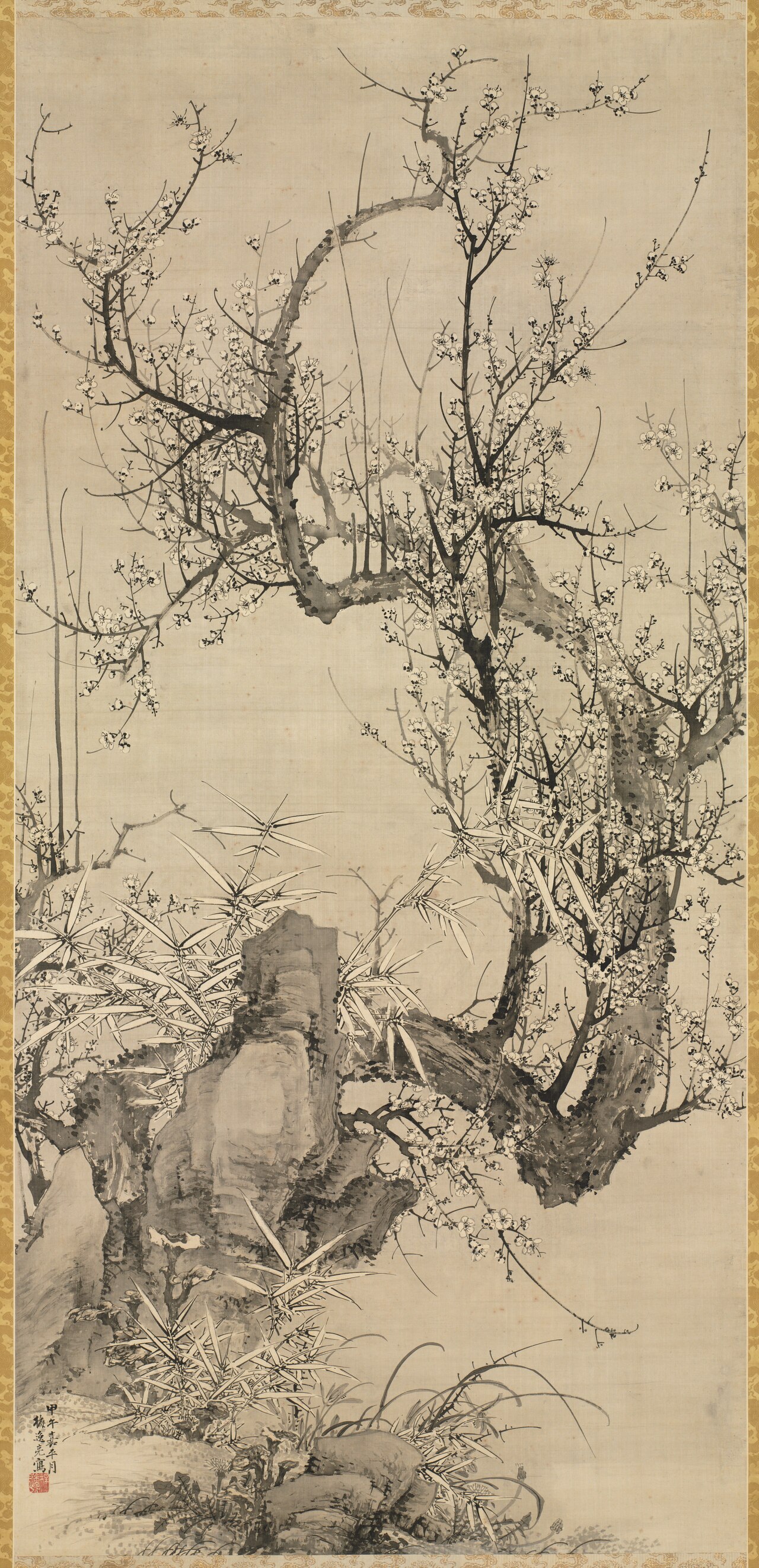

Early life Yamamoto Baiitsu was born in 1783, though the precise location of his birth remains undocumented in surviving records. He lived his entire life within the cultural milieu of Edo‑period Japan, a time when the arts were heavily patronised by both the merchant class and the samurai elite. Little is known about his family background or early education, but the conventions of the period suggest that he would have received a classical education that included calligraphy, poetry and the fundamentals of painting. By the late 1790s, he was likely apprenticed to a local master, as was customary for aspiring artists seeking to hone their technique.
Career and style Baiitsu’s career unfolded against the backdrop of a flourishing urban art market. He worked primarily in the nanga (Southern School) tradition, which drew inspiration from Chinese literati painting while adapting it to Japanese sensibilities. This style favoured a spontaneous brushstroke, an emphasis on scholarly subjects, and a poetic approach to landscape. Although specific details of his professional affiliations are sparse, it is evident that Baiitsu cultivated a reputation for his graceful rendering of flora and subtle atmospheric effects. His paintings often combine a restrained palette with delicate ink washes, reflecting the aesthetic ideals of wabi‑sabi—an appreciation of imperfection and transience.
Signature techniques Baiitsu’s signature techniques revolve around three core elements:
1. Ink‑and‑wash layering – He employed multiple translucent layers of ink to build depth, allowing the paper’s texture to emerge through lighter washes. This method creates a sense of mist and distance, particularly in works featuring water or mountainous backdrops. 2. Elegant brushwork – His brushstrokes are noted for their controlled fluidity. When rendering pine needles, bamboo shoots or plum blossoms, he used swift, tapered strokes that capture the vitality of the subject while maintaining a disciplined compositional balance. 3. Negative space utilisation – Baiitsu often left expanses of untouched paper to suggest clouds, sky or water. This deliberate use of emptiness not only heightens the visual impact of the painted elements but also aligns with the philosophical underpinnings of Zen that permeated Edo‑period art.
Major works Baiitsu’s extant oeuvre includes several works that have become reference points for his style:
- Pine Tree – A study in monochrome ink that showcases his mastery of line and texture. The composition centres on a solitary pine, its gnarled trunk rendered with bold, confident strokes, while the surrounding space is rendered in soft washes that evoke a quiet, contemplative atmosphere. - Summer Bamboo by a Waterfall – This piece combines the dynamic energy of cascading water with the serene elegance of bamboo. The waterfall is depicted through layered ink washes that suggest movement, whereas the bamboo is painted with crisp, vertical lines that contrast with the fluid background. - Untitled Landscape (1851) – One of his later works, this landscape demonstrates a mature synthesis of his earlier techniques. The painting features a distant mountain range rendered in subdued tones, foreground trees that are more detailed, and a sky that is suggested rather than fully defined, highlighting his skillful use of negative space. - Plums, Bamboo, and Orchid (1834) – A classic trinity of the three favoured subjects of literati painters. Each element is treated with a distinct brush technique: the plum blossoms are rendered with delicate, stippled dots; the bamboo shafts are drawn with strong, sweeping strokes; and the orchid petals are suggested with soft, curving lines. The work exemplifies his ability to convey individuality within a harmonious whole. - The Shadow Dancers (1833) – Diverging from his typical natural subjects, this composition portrays figures in motion, possibly a reference to local folk performances. The figures are rendered in subdued ink, their forms barely emerging from the background, creating an ethereal quality that underscores the fleeting nature of performance.
Collectively, these works illustrate Baiitsu’s consistent engagement with natural motifs, his refined command of ink, and his capacity to infuse poetic resonance into visual form.
Influence and legacy Yamamoto Baiitsu occupies a modest yet respected position within the broader narrative of Edo‑period painting. While he did not found a distinct school, his adherence to the nanga aesthetic and his subtle innovations in brushwork have been cited by later Japanese artists seeking to blend traditional literati techniques with emerging Western influences in the late 19th century. Scholars note that his treatment of negative space and his nuanced layering of ink anticipate some of the compositional concerns later explored by Meiji‑era painters.
His works are held in several Japanese museum collections, and reproductions appear in academic publications on Edo‑period art. The continued scholarly interest in his paintings reflects a recognition of his contribution to the refinement of ink‑and‑wash painting, particularly in the realm of botanical subjects. Moreover, his ability to convey atmosphere with minimal means offers a valuable study model for students of East Asian art, reinforcing his lasting pedagogical relevance.
In summary, Yamamoto Baiitsu’s legacy endures through the quiet elegance of his compositions, the disciplined yet expressive brushwork that defines his pieces, and the way his paintings continue to embody the philosophical values of his time while resonating with contemporary audiences.
Frequently asked questions
Who was Yamamoto Baiitsu?
Yamamoto Baiitsu (1783–1856) was a Japanese Edo‑period painter noted for his refined ink‑and‑wash depictions of natural subjects such as pine, bamboo and plum trees.
What style or movement is he associated with?
He worked within the nanga (Southern School) tradition, a Japanese adaptation of Chinese literati painting that emphasizes spontaneous brushwork and poetic landscapes.
What are his most famous works?
His most recognised pieces include Pine Tree, Summer Bamboo by a Waterfall, Untitled Landscape (1851), Plums, Bamboo, and Orchid (1834) and The Shadow Dancers (1833).
Why does Yamamoto Baiitsu matter in art history?
He exemplifies the elegant, scholarly approach of Edo‑period ink painting, and his subtle innovations in layering and negative space influenced later Japanese artists transitioning into the Meiji era.
How can I recognise a Yamamoto Baiitsu painting?
Look for delicate, layered ink washes, crisp brushstrokes that render foliage with controlled fluidity, and generous use of empty paper to suggest mist, sky or water.