Willem van Herp
1614 – 1677
In short
Willem van Herp (c.1614–1677) was a Flemish Baroque painter from Antwerp who specialised in religious scenes and small genre works, running a sizable workshop that helped disseminate the Flemish Baroque style across Europe.
Notable works


_-_Peasant_Yard.jpg)
Early life Willem van Herp was born around 1614 in Antwerp, the commercial and artistic hub of the Habsburg Netherlands. Little is known about his family background, but the city’s vibrant guild system provided a clear pathway for aspiring painters. He likely entered the Guild of Saint Luke as an apprentice in his teens, receiving training that combined the rigorous drawing techniques of the Flemish tradition with the dramatic visual language of the Baroque. Antwerp at this time was still reaping the benefits of Peter Paul Rubens’s workshop, and the influence of Rubens’s dynamic compositions and colouristic richness would shape van Herp’s early artistic outlook.
Career and style By the 1630s van Herp had established himself as an independent painter, although the exact date of his master’s registration remains undocumented. He operated a large workshop that produced both large‑scale religious canvases for churches and smaller cabinet paintings for private collectors. His output reflects the dual market of the period: devotional works for ecclesiastical patrons and genre scenes that appealed to the burgeoning bourgeois class.
Van Herp’s style is firmly rooted in the Flemish Baroque, characterised by vigorous movement, dramatic lighting, and rich, saturated colour palettes. He embraced the chiaroscuro techniques popularised by Rubens and later refined by Anthony van Dyck, using strong contrasts to model figures and to give depth to interior spaces. While his compositions often mirror the grand gestures of his better‑known contemporaries, van Herp favoured a more intimate scale, especially in his genre pieces, which allowed a focus on everyday details and human expression.
His religious paintings typically depict biblical narratives with a clear narrative thrust and a carefully balanced arrangement of figures. The compositions are populated by robust, often idealised, figures rendered with a smooth finish that underscores the spiritual gravitas of the subject. In contrast, his genre works—scenes of taverns, peasant yards, and beggars—exhibit a more observational quality, capturing the textures of clothing, the play of light on wooden surfaces, and the nuanced gestures of ordinary people. This duality demonstrates van Herp’s ability to navigate both the high‑drama of sacred art and the more modest, anecdotal world of low‑life genre painting.
Signature techniques Van Herp’s workshop employed several recurring techniques that help identify his hand:
1. Layered glazing – A thin, translucent oil glaze over a dry underpainting creates depth and a luminous quality, especially in flesh tones and drapery. 2. Dynamic diagonal compositions – Many works feature a strong diagonal axis that guides the viewer’s eye across the canvas, a hallmark of Baroque movement. 3. Fine brushwork in details – In his cabinet paintings, van Herp rendered intricate details—such as the pattern of a tablecloth or the texture of a wooden beam—with a fine, almost stippled brushstroke. 4. Rich, warm palette – Dominant reds, ochres, and deep blues dominate his colour scheme, often juxtaposed with cooler shadows to heighten drama. 5. Use of allegorical symbols – In religious works, he frequently incorporated symbolic objects (e.g., a lamb for Christ, a palm for martyrdom) that convey theological meaning without cluttering the narrative.
These techniques, combined with a consistently high level of finish, allowed van Herp’s paintings to compete with the output of larger workshops while retaining a recognizable personal touch.
Major works
- Escape to Egypt (1674) – This late work portrays the Holy Family’s flight into Egypt with a dramatic sky and a landscape that recedes into a distant horizon. The composition leverages a strong diagonal created by the path the family walks, while the lighting highlights the tender interaction between Mary and the infant Jesus. The painting reflects van Herp’s mature handling of atmospheric perspective and his ability to infuse a biblical episode with a sense of immediacy.
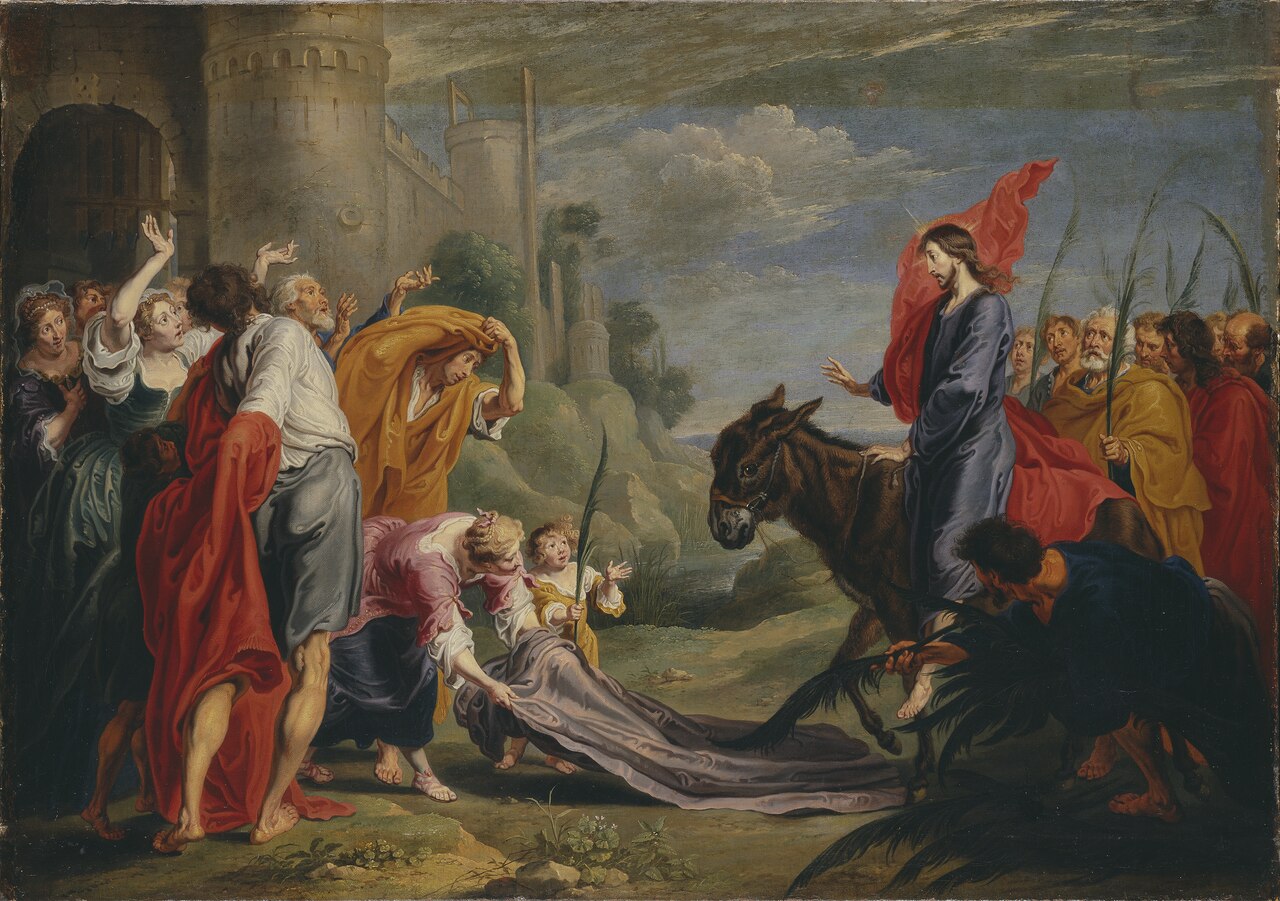
- The Entry into Jerusalem – In this piece, van Herp captures the triumphant moment of Christ’s arrival in Jerusalem. The scene is populated with a crowd of onlookers, each rendered with individual expressions that convey both reverence and curiosity. The use of vibrant reds for the palm fronds and the donkey’s harness underscores the celebratory atmosphere, while the background architecture subtly references contemporary Antwerp structures, a common practice among Flemish painters to make sacred stories relatable to local audiences.
- Landscape with Atalanta and Meleager Hunting the Calydonian Boar (1647) – Though the subject is drawn from classical mythology, van Herp treats it with a Baroque sensibility. The composition is dominated by a wooded landscape, with the figures of Atalanta and Meleager positioned in the foreground, their dynamic poses echoing the tension of the hunt. The painting demonstrates his facility with mythological narratives, a genre less common in his oeuvre, and showcases his skill in rendering both human anatomy and natural environments.
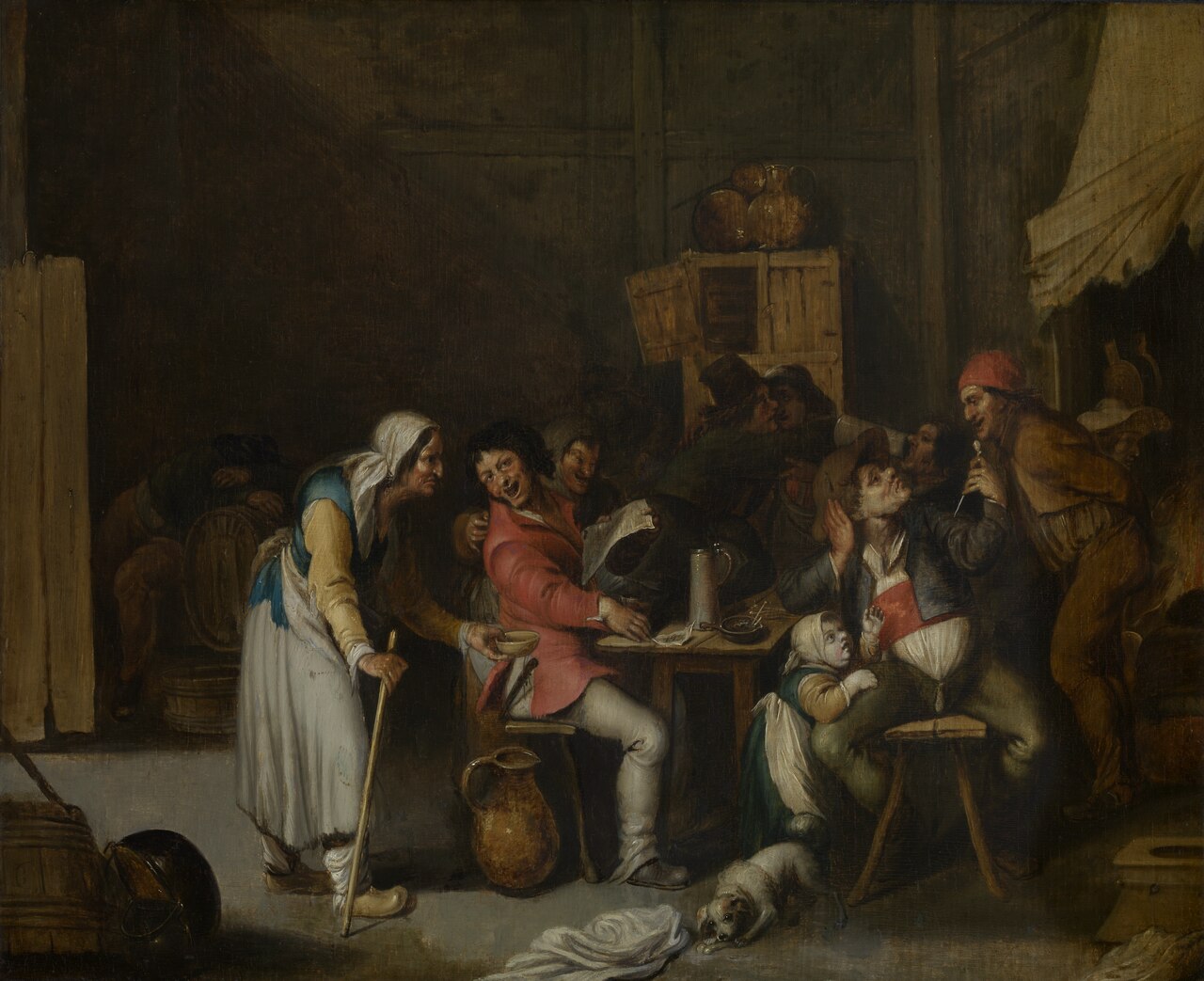
- Beggar Woman in a Tavern – This genre work exemplifies van Herp’s interest in low‑life scenes. A weather‑worn woman sits at a tavern table, her gaunt features illuminated by a single candle. The surrounding patrons are engaged in conversation, their lively gestures contrasting with the beggar’s melancholy. The painting’s intimate scale and the careful rendering of texture—such as the rough wooden table and the worn fabric of the woman’s cloak—highlight van Herp’s ability to capture the human condition within a modest setting.
- Peasant Yard (1660) – In this composition, a bustling courtyard is filled with peasants engaged in daily chores: washing, cooking, and trading goods. The scene is organized around a central well, which serves as a visual anchor. Van Herp’s use of warm, earthy tones and his attention to the play of sunlight across the courtyard floor create a vivid sense of place. The work is significant for its depiction of rural life, offering a window into 17th‑century Flemish society.
These works collectively illustrate van Herp’s versatility, ranging from grand religious narratives to intimate genre scenes, all executed with a consistent Baroque aesthetic.
Influence and legacy Willem van Herp’s legacy rests on his role as a conduit for the Flemish Baroque style beyond the borders of the Southern Netherlands. His workshop’s production capacity, coupled with strong relationships with Antwerp art dealers, facilitated the export of his paintings to markets in Spain, Italy, and the Dutch Republic. While he never achieved the fame of Rubens or van Dyck, van Herp’s works were widely collected by private patrons who appreciated the combination of high‑quality craftsmanship and accessible subject matter.
His genre paintings, in particular, contributed to the development of the “low‑life” tradition that would later flourish in Dutch Golden Age art. By portraying everyday scenes with a dignified yet realistic eye, van Herp helped lay the groundwork for later artists who specialised in domestic interiors and market scenes.
In modern scholarship, van Herp is recognised for his prolific output and for the way his oeuvre reflects the commercial realities of 17th‑century Antwerp’s art world. His paintings continue to appear in museum collections across Europe, and they are frequently cited in studies of Baroque diffusion and workshop practices. Though not a revolutionary figure, Willem van Herp remains an important example of a skilled painter who successfully navigated the artistic demands of his time while leaving a tangible imprint on the visual culture of the Baroque era.
Frequently asked questions
Who was Willem van Herp?
Willem van Herp (c.1614–1677) was a Flemish Baroque painter from Antwerp known for religious canvases and small genre scenes, and for running a large workshop that helped spread the Baroque style internationally.
What artistic style or movement is he associated with?
He worked within the Flemish Baroque tradition, employing dramatic lighting, dynamic compositions and a rich colour palette typical of the period.
What are his most famous works?
Key works include *Escape to Egypt* (1674), *The Entry into Jerusalem*, *Landscape with Atalanta and Meleager Hunting the Calydonian Boar* (1647), *Beggar Woman in a Tavern*, and *Peasant Yard* (1660).
Why is Willem van Herp important in art history?
He played a crucial role in disseminating Flemish Baroque aesthetics through his prolific workshop and dealer network, and his genre paintings contributed to the early development of low‑life scenes that influenced later Dutch art.
How can I recognise a painting by Willem van Herp?
Look for a warm, saturated palette, strong diagonal compositions, fine brushwork in details, layered glazing that gives a luminous finish, and subjects ranging from biblical narratives to everyday tavern or peasant scenes.