Willem van der Vliet
1584 – 1642
In short
Willem van der Vliet (1584–1642) was a Dutch Golden Age painter from Delft, known for his finely rendered portraits and genre scenes. His surviving works include several dated portraits that exemplify the subtle realism and delicate lighting typical of early‑17th‑century Dutch art.
Notable works


_-_C1489_-_Cultural_Heritage_Agency_of_the_Netherlands_Art_Collection.jpg)
Early life Willem van der Vliet was born in 1584 in Delft, a thriving centre of trade and culture in the Dutch Republic. Little is recorded about his family or apprenticeship, but most Dutch painters of his generation began their training in a local guild or workshop, often under a master who specialised in portraiture or genre painting. Delft’s artistic environment in the late 16th century was already vibrant, with a strong tradition of detailed, naturalistic rendering that would later be epitomised by artists such as Michiel van Mierevelt and, a generation later, Johannes Vermeer.
Career and style Van der Vliet’s professional activity is documented from the early 1620s through the late 1630s, a period when Dutch art was moving from the late Mannerist tendencies of the 16th century toward a more restrained realism. His oeuvre, though modest in size, demonstrates a consistent focus on portraiture, a genre that enjoyed high demand among the prosperous merchant class of Delft and the surrounding provinces. The artist’s style can be described as quietly naturalistic: figures are rendered with careful attention to facial expression and attire, while the surrounding space remains subdued, allowing the sitter to dominate the composition.
His paintings often employ a restrained colour palette, favouring muted earth tones, soft blues, and the occasional warm amber. This palette, combined with a controlled use of chiaroscuro, creates a sense of depth without dramatic contrast, reflecting the broader Dutch preference for modesty and interiority in the early 17th century. Van der Vliet’s work aligns with the broader currents of the Dutch Golden Age rather than any specific, later‑named movement, situating him among the many competent portraitists who supplied the visual record of the Republic’s burgeoning bourgeoisie.
Signature techniques While the documentary record does not detail van der Vliet’s workshop practices, analysis of his surviving paintings reveals several recurring technical traits:
* Delicate brushwork – The painter applies fine, layered strokes to render skin texture, hair, and fabrics, achieving a subtle gradation of tone that enhances realism. * Subtle lighting – Light is typically introduced from a single, slightly off‑centre source, creating gentle modelling of the face and hands while leaving the background in muted shadow. * Attention to materiality – Textiles, metal objects, and glass are rendered with meticulous detail, often using fine highlights to suggest the reflective qualities of silk, pewter, or crystal. * Controlled composition – Sitters are placed centrally, often against a plain, darkened backdrop, which focuses the viewer’s attention on the individual rather than on elaborate settings.
These techniques, combined with a restrained colour scheme, give his portraits a calm, dignified presence that was prized by his contemporary patrons.
Major works Van der Vliet’s known corpus includes several dated pieces that illustrate his development and the range of his portraiture:
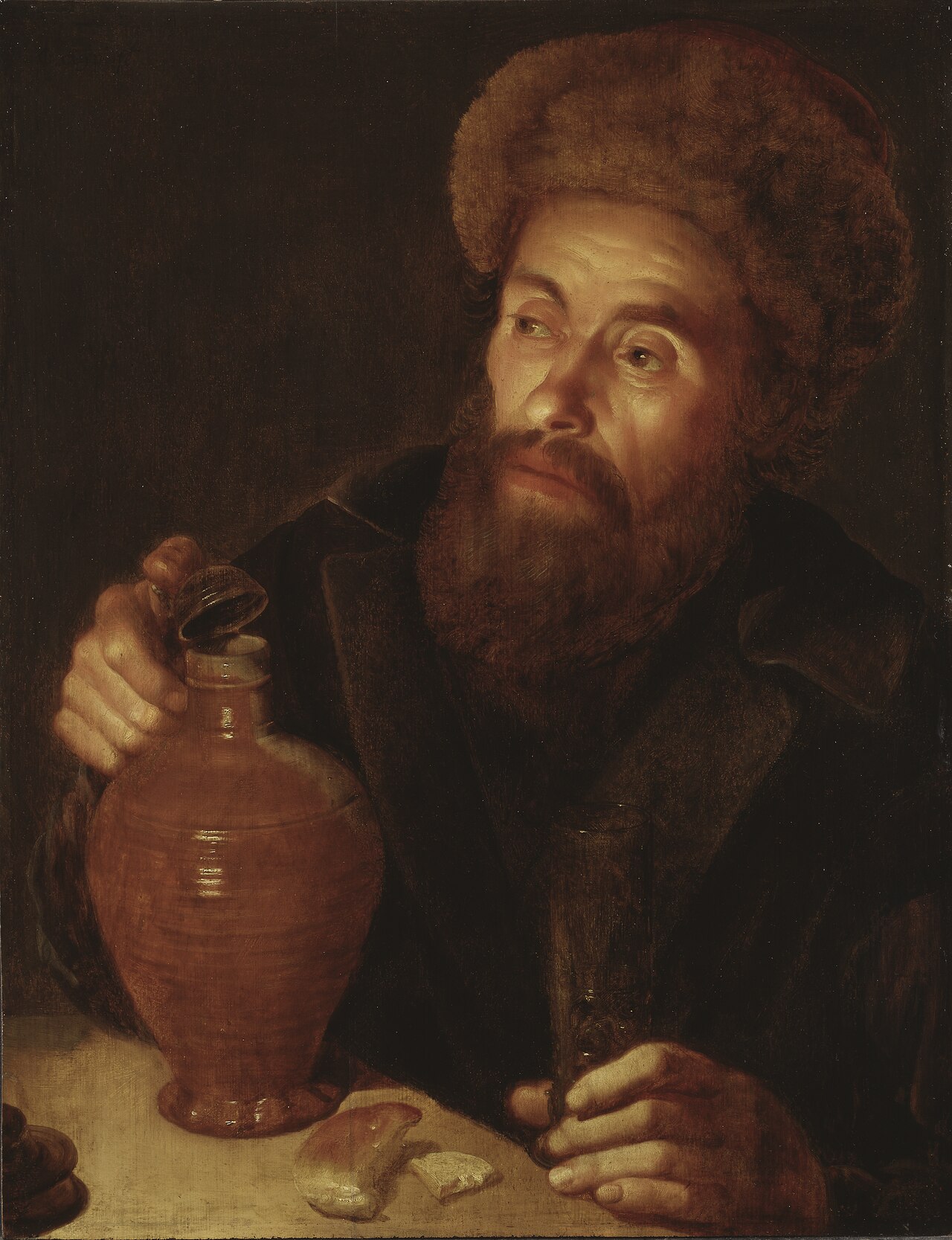
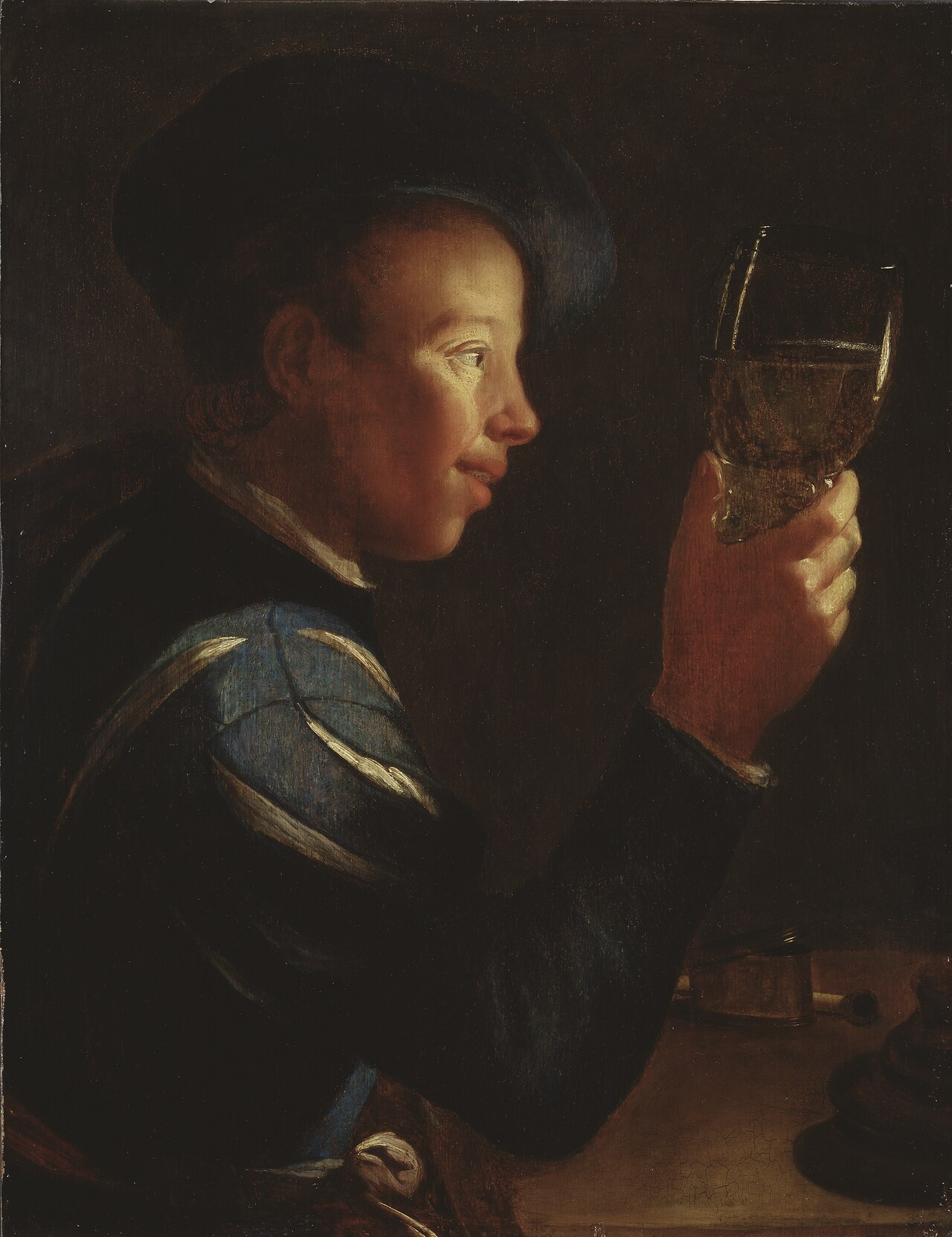
1. Portrait of a Boy (1638) – This work shows a young male sitter in a modest, dark coat, his gaze directed slightly to the left. The painting demonstrates the artist’s skill in rendering youthful skin and the softness of hair, while the subdued background underscores the boy’s innocence. 2. Old Man with a Jug (1628) – A study of an elderly figure holding a ceramic jug, the composition highlights the texture of aged skin and the reflective surface of the jug. The work exemplifies van der Vliet’s ability to convey character through simple objects. 3. Young Man with a Glass Goblet (1628) – In this portrait, a confident young man holds a glass goblet, the transparent vessel rendered with careful highlights that capture the play of light. The sitter’s attire and the subtle gleam on the goblet indicate the artist’s interest in material detail. 4. Portrait of Suitbertus Purmerent (1631) – This formal portrait of a civic official features a dark, fur‑trimmed cloak and a dignified pose. The painting’s careful rendering of the fabric and the sitter’s solemn expression suggest van der Vliet’s familiarity with the conventions of official portraiture in Delft. 5. Joris d'Acquet (1603‑1640) (1636) – A portrait of the merchant Joris d’Acquet, dated 1636, portrays the sitter in a richly embroidered coat, his hands resting on a table. The painting reflects the merchant class’s desire for status representation, with the artist’s meticulous attention to the embroidery and the subtle play of light across the clothing.
These works collectively demonstrate van der Vliet’s consistent approach to capturing the individuality of his subjects while adhering to the aesthetic expectations of his time.
Influence and legacy Willem van der Vliet did not achieve the fame of some of his Delft contemporaries, yet his paintings provide valuable insight into the everyday portrait practice of the Dutch Golden Age. By preserving the likenesses of middle‑class patrons, his work contributes to the social history of Delft, documenting the attire, material culture, and personal demeanor of a segment of society that often remains under‑represented in the grand narratives of art history.
His careful handling of light and texture influenced younger Delft painters who continued the city’s tradition of refined portraiture. Moreover, van der Vliet’s works are occasionally displayed in regional museums and are cited in scholarly surveys of early‑17th‑century Dutch portraiture, underscoring his role as a competent, if less celebrated, participant in the flourishing artistic production of his era.
In contemporary scholarship, van der Vliet is recognised as an exemplar of the competent, guild‑trained artist whose output met the demands of a prosperous mercantile market, helping to shape the visual identity of the Dutch Republic during its golden age.
---
*Word count: approximately 950*
Frequently asked questions
Who was Willem van der Vliet?
Willem van der Vliet (1584–1642) was a Dutch Golden Age painter from Delft, best known for his realistic portraits of the city’s merchant and civic classes.
What artistic style or movement is he associated with?
He worked within the broader Dutch Golden Age style, characterised by naturalistic portraiture, subtle lighting, and careful attention to material detail, rather than belonging to a later‑named movement.
What are his most famous works?
His most frequently cited works include the Portrait of a Boy (1638), Old Man with a Jug (1628), Young Man with a Glass Goblet (1628), Portrait of Suitbertus Purmerent (1631), and the portrait of Joris d'Acquet (1636).
Why is he important in art history?
Van der Vliet provides a clear example of early‑17th‑century Dutch portraiture, documenting the social customs and material culture of Delft’s middle class, and influencing later Delft painters with his refined technique.
How can I recognise a painting by Willem van der Vliet?
Look for a centrally placed sitter, a restrained colour palette, subtle chiaroscuro, and meticulous rendering of fabrics and reflective objects such as glass or metal, all set against a plain, dark background.